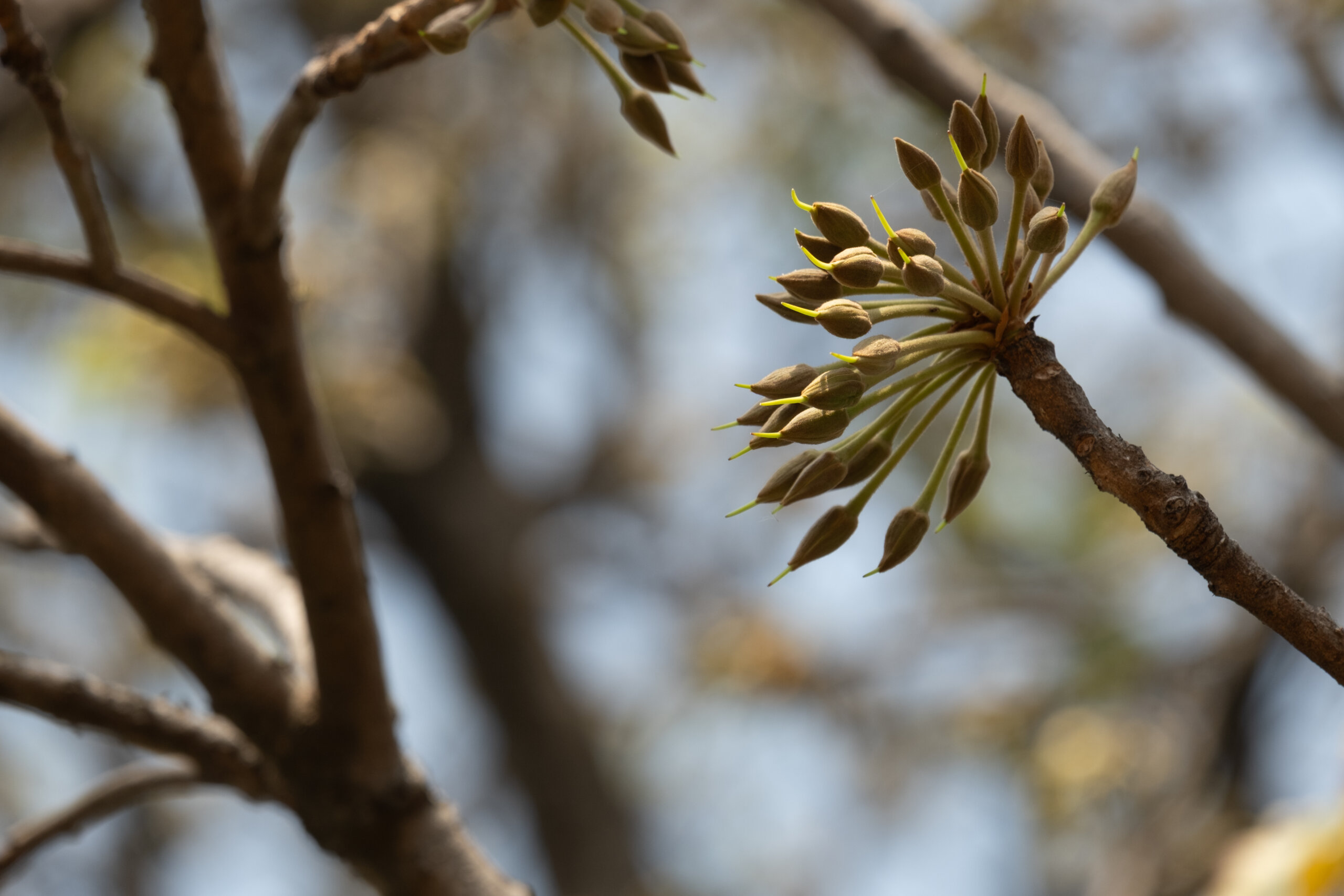
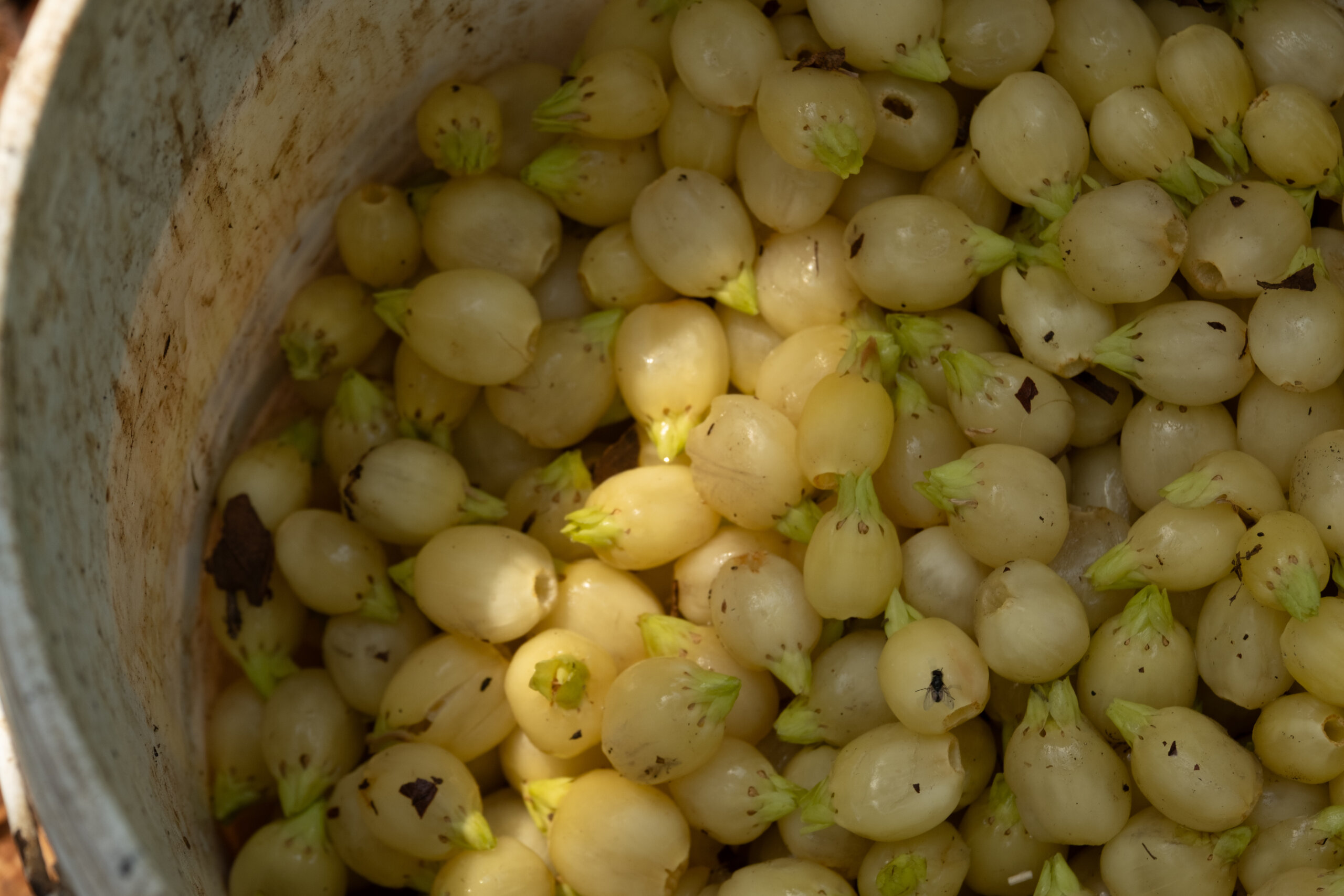
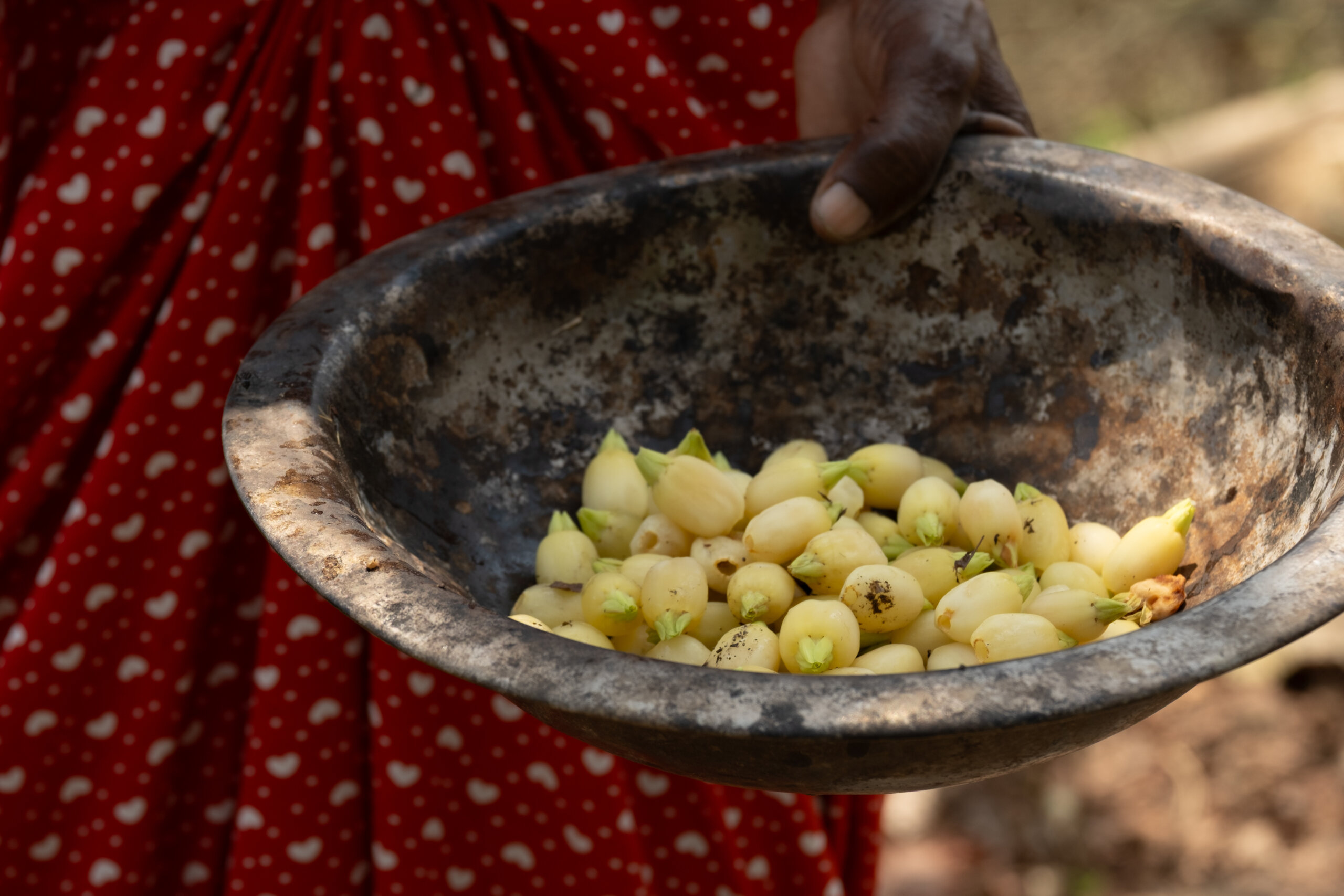
When Tabebuia rosea trees blossom in Bangalore and Hyderabad, carpeting streets in fluffs of pink, purple, and yellow, fleshy, cream-coloured flowers with a buttery hue bloom and fall to the ground in central India. And as you pass these flowering trees in the villages and forests of Jharkhand, Chhattisgarh, Madhya Pradesh, and Maharashtra, you’re met with a saccharine fragrance in the barely-blowing breeze—the unmistakable scent of the mahua flower.
Between March and May each year, we hear a sound reminiscent of the rhythm of rain under the canopy of mahua (Madhuca longifolia) trees. Tipr tapr is what the tribes indigenous to these areas call the sound, the flowers raining down over 15-20 days from each tree; a sound of prosperity to come, even if for a brief passing of time.
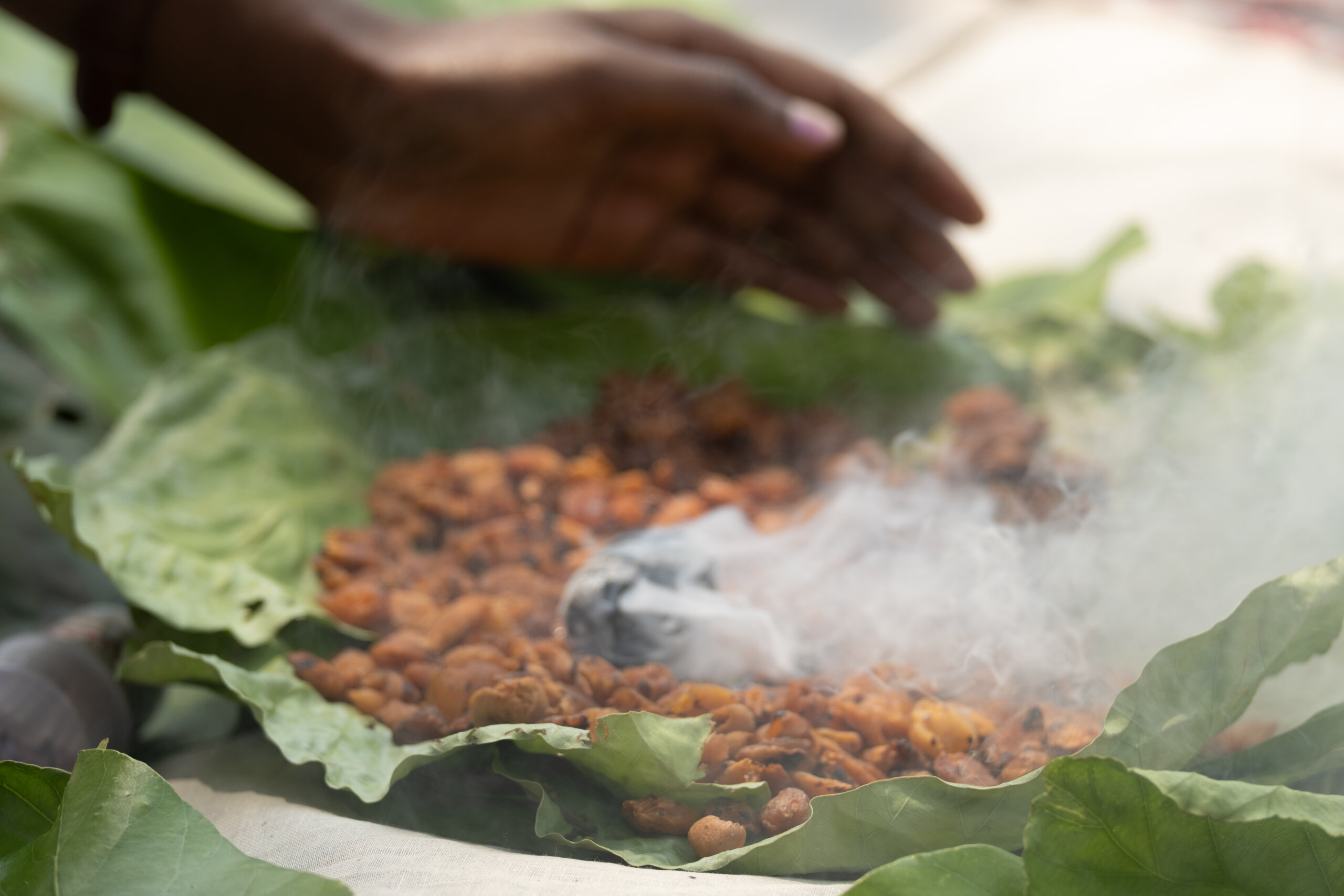
It is backbreaking work. To collect the fallen flowers in the baking heat, to sun-dry them till they turn into pods with raisin-like texture and taste, and then distill them into liquor.
The mahua tree is revered all through central India. Kalpavriksha—the wish-granting tree. Legends and stories supporting this reverence have long been part of the community’s way of life. But the roots of these generationally passed-down anecdotes lie in the tree’s utility. Its flowers, fruits, seeds, and bark have fed indigenous communities and their animals for years and years. It is medicine, it is drink, and it has an unshakeable place in the land and its people’s history.
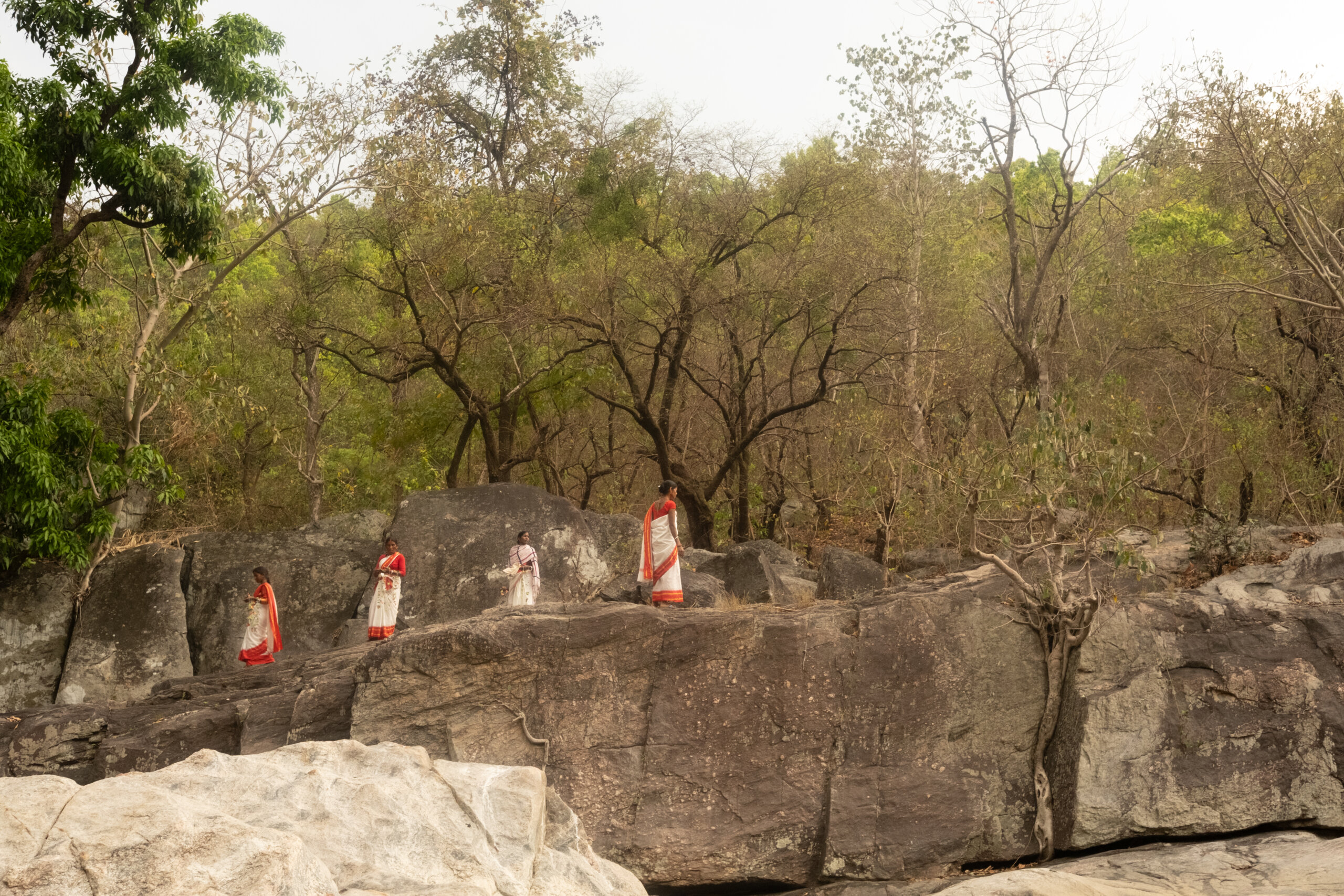
The Gond people—primarily residing in central Indian forests, typically in the Bastar region of Chhattisgarh and Chhindwara in Madhya Pradesh—believe that Koya Pen, the first Gond, was born under the shade of a Koya tree—their name for mahua. They call themselves koyatur—children of the mahua tree. Among the Santhal, Munda, Oraon, and Ho tribes of Jharkhand, this tree of life is worshipped, sung about, and featured across all stages of a community member’s life—from birth to death.
Mahua has provided sustenance to its children, particularly during famines. Boiled and crushed mahua flowers helped many families survive long periods of hardship under the British Raj.
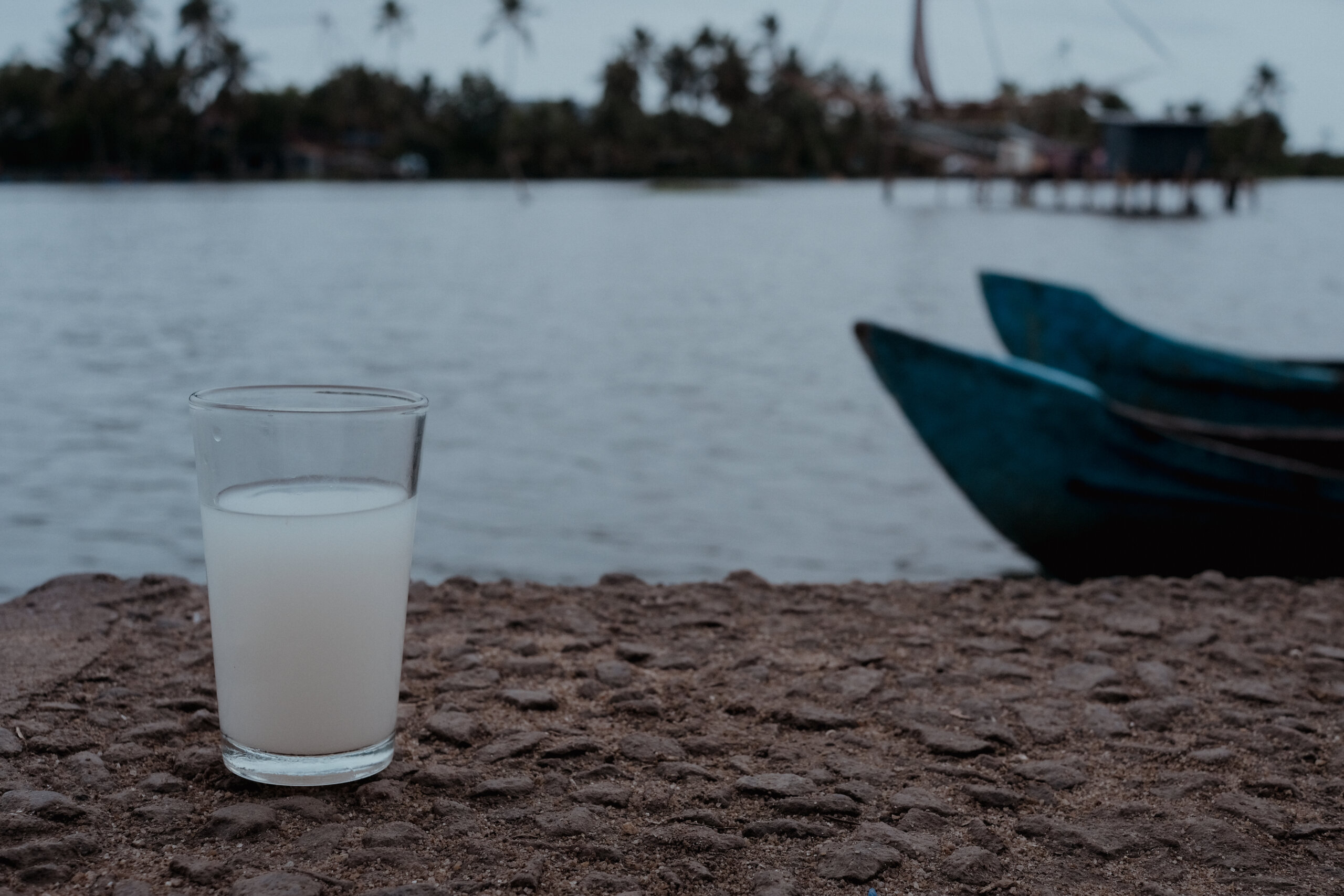
But for a tree whose gifts are utilized with nearly no waste, its reputation across India is discouraging. Mahua flowers have long been used to produce liquor known by many names—mahua, mahua sharab, irukkall, mahuli, and more. An indispensable part of the tribal people’s lives, the liquor has a flavour close to gin. But it is also earthy, fruity, herbaceous, and mildly sweet, warming and waking up tired bodies with its smooth flow down the throat. Clear and colourless, it packs a punch. There is none like it.
Most of the harvested flowers—around 90%—are used to make the liquor. Among many tribal groups, there are stories told, ones that illustrate the need for measured drinking of this intoxicating liquid. Pashupati, the lord of animals, a manifestation of Shiva, drinks mahua and begins chattering like a parrot. He consumes more liquor and begins to roar like a tiger. As more liquor goes into his being, he rolls around on the ground like a boar, unable to stand up.
Despite how ingrained the drink is in indigenous culture, the British banned the collection and storage of mahua flowers, while also clamping down on liquor production under the Bombay Abkari Act 1878 and the Mhowra Act 1892. In many places in the country, the bans are still in force, under different guises. In Maharashtra, mahua sharab has seen progress, transitioning from country liquor to Indian-Made Foreign Liquor (IMFL), post a 2022 policy shift. In Madhya Pradesh, it is recognized as a heritage liquor, one that can be brewed by tribal groups alone. In Jharkhand, mahua alcohol is still illegal. Police and excise officials continue to harass tribes for alcohol production. Youngsters from these communities are choosing more popular and mainstream forms of liquor over the heritage spirit. The result: mahua, even with its high utilitarian potential, has been viewed as a taboo topic and ingredient, stifling its true magic.
As food.
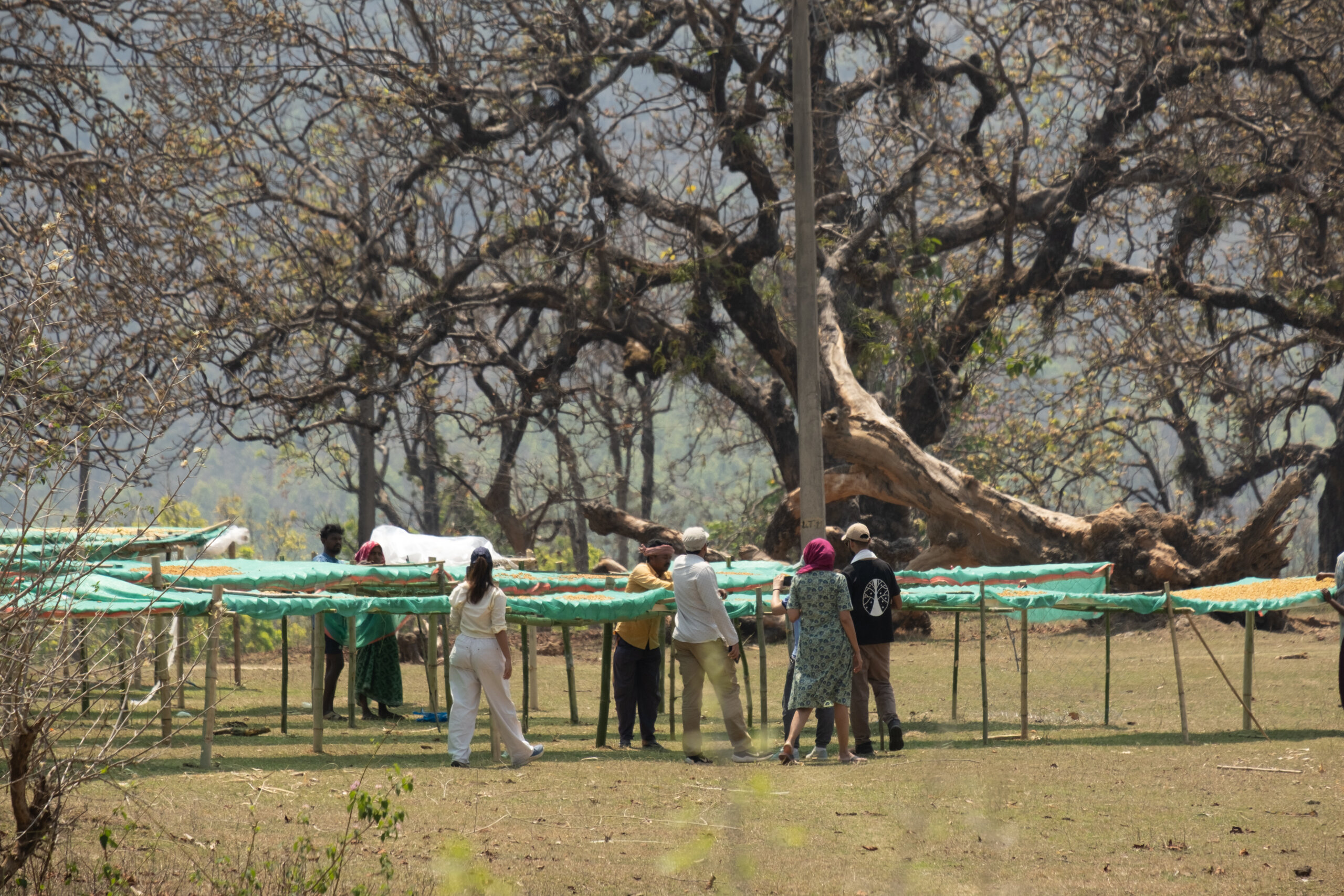
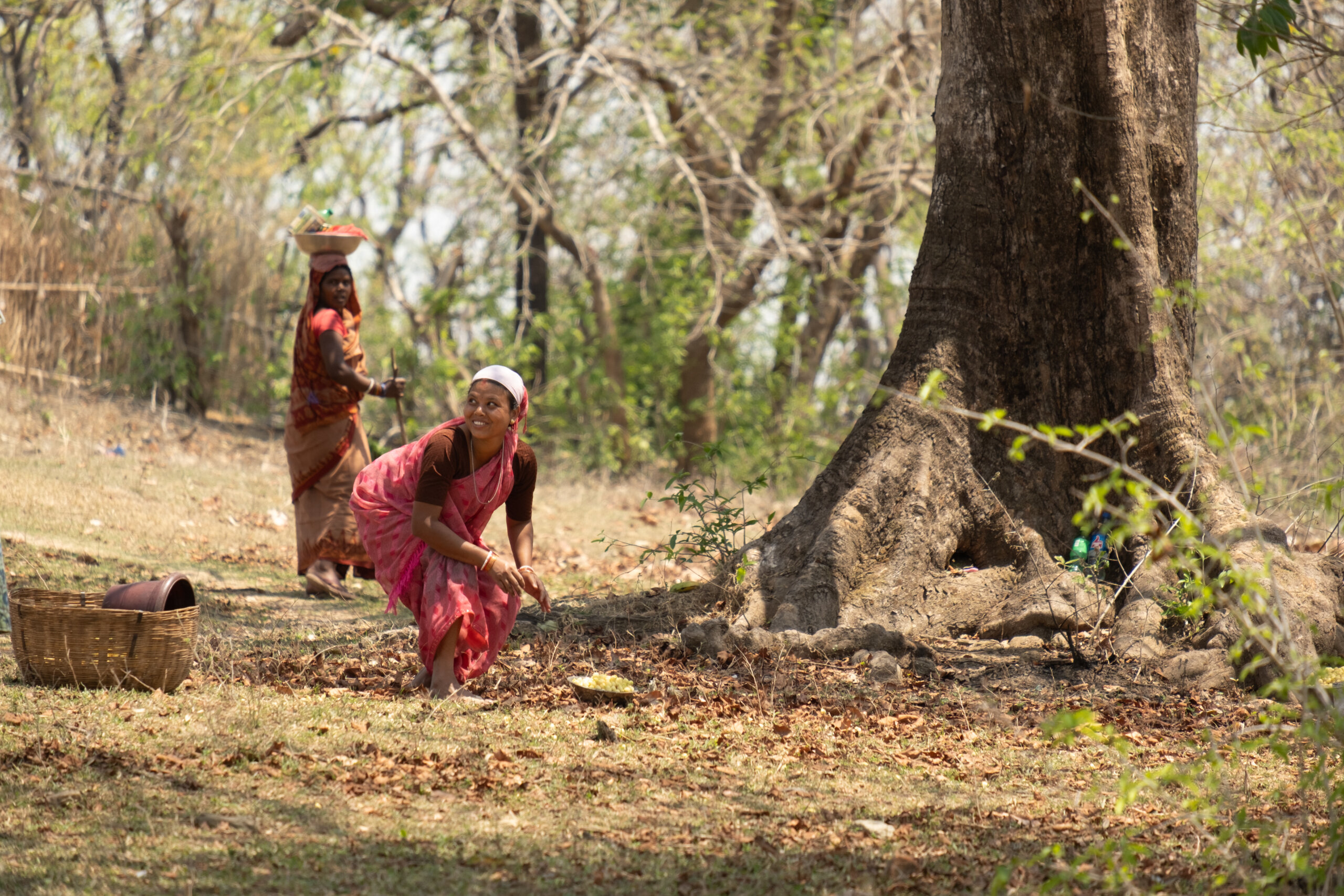
In Jharkhand’s Dumargari, we stop by a mahua tree. We are told that each tree takes around fifteen years to grow, reach maturity, and flower. And each tree lives on for a hundred years—almost human-like in its development and lifespan. Never cut down, mahua trees are owned by families and are passed down through generations. But if one doesn’t own a tree, they are invited to share in another family’s gifts.
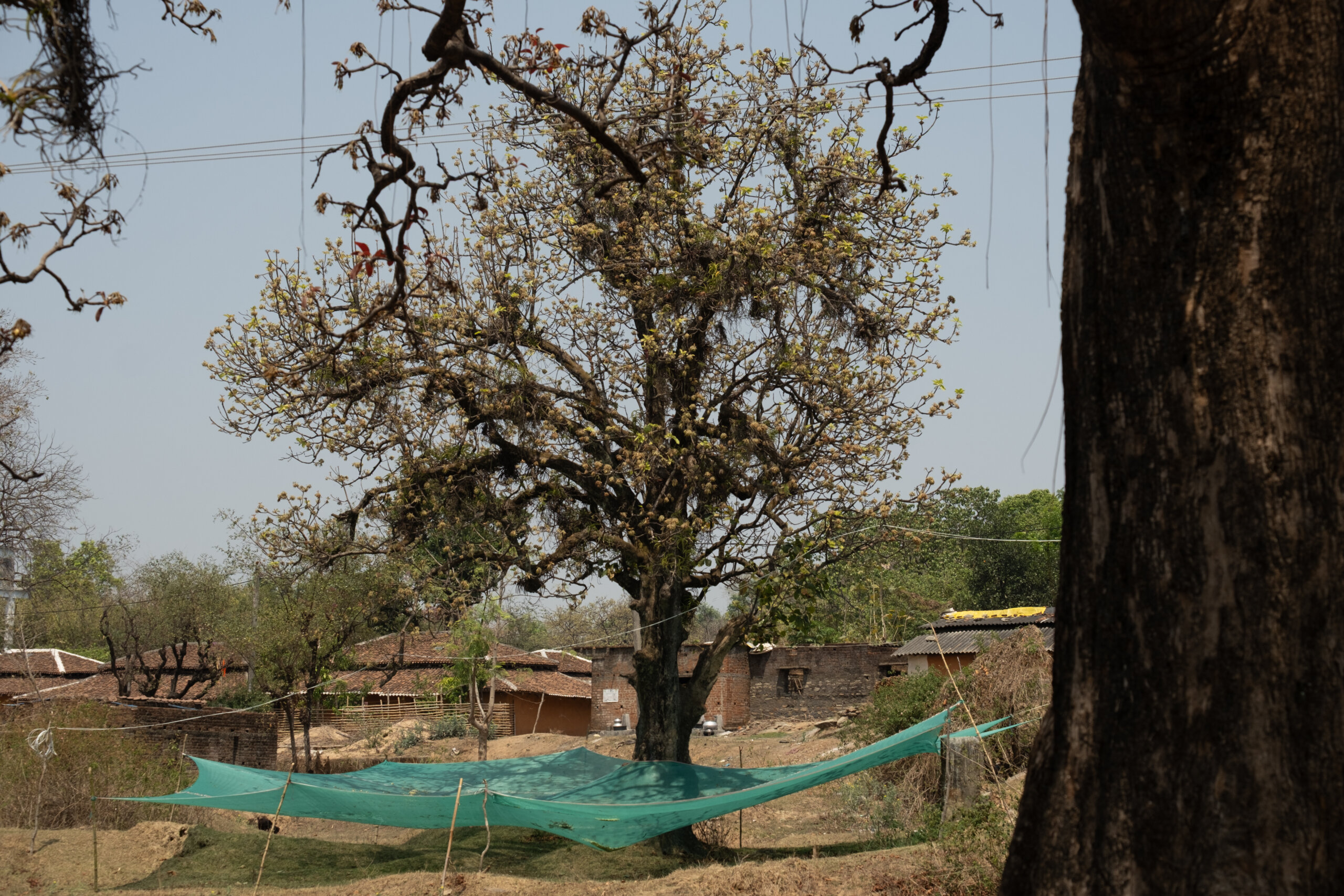
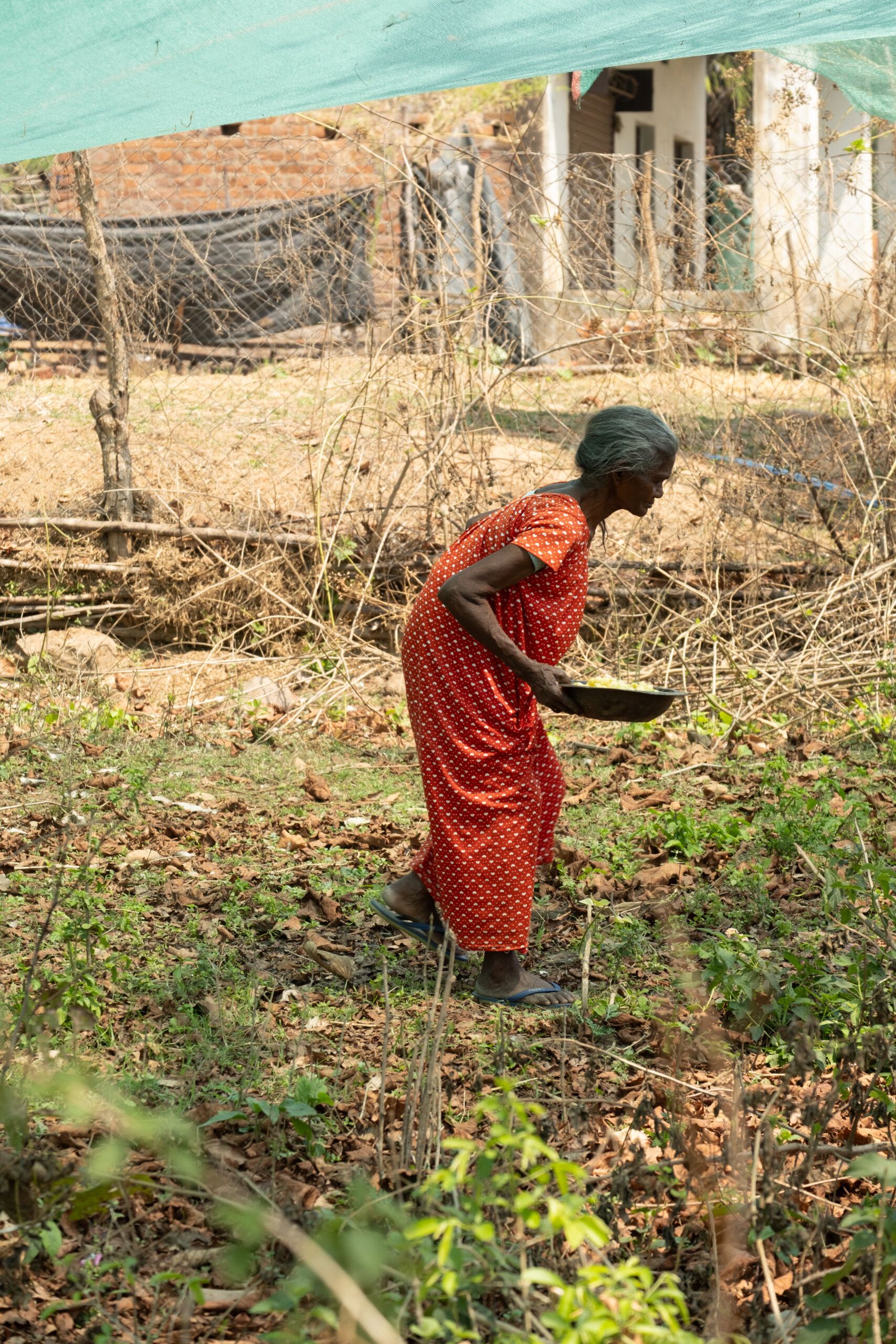
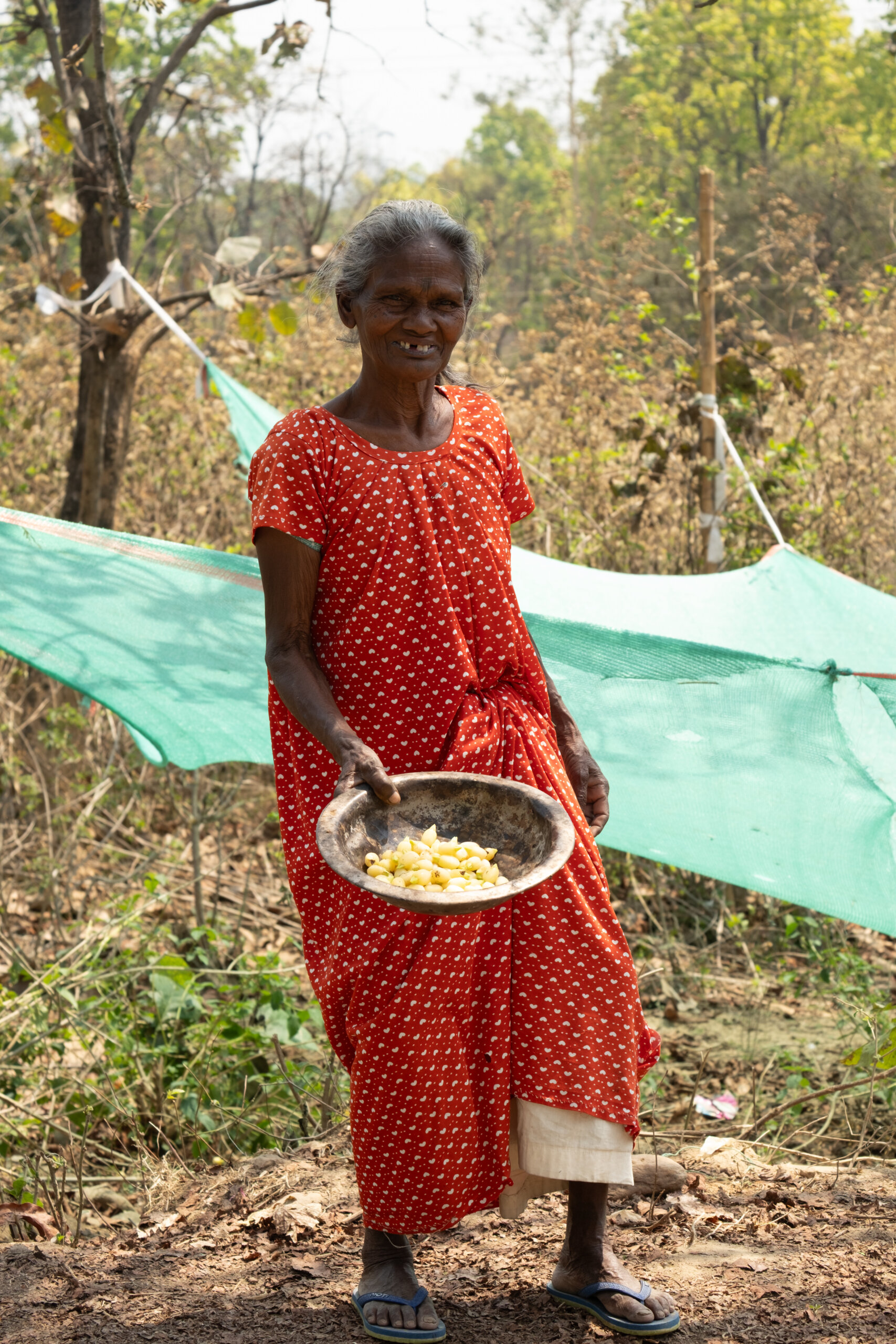
Under the tree is a bright green net, extending far outwards, mirroring the ghost of the canopy above—for the leaves shed first, and then the flowers rain down. We see an aged woman, bending to the ground, handpicking flowers that made it past the net. She looks at us and smiles with a toothy grin. I ask her –
“Kya yeh net aapke kaam aatha hai?” (Is the net collection helpful to you?)
“Haan ji” (yes), she replied, holding out her pan of collected mahua flowers for me to see.
The nets are a result of the long and arduous community work that Wild Harvest, a social enterprise and leading supplier of “ethically-sourced, scientifically harvested, food-grade mahua flowers” in the country, has spearheaded. Typically, the ground beneath a mahua tree would be covered with dried leaves, more so in forested areas. Mahua flowers would fall to the ground and remain hidden beneath a layer of crunchy brown shedding and soft, black humus, making harvesting difficult for the tribes. The accepted solution is to burn the leaves before the flowers fall, clearing the ground for easy collection.
But this well-meaning remedy carries with it two major flaws. First, the flowers, with their sticky and fleshy surfaces, would gather soot and ash from their fall, making them nearly impossible to clean. Such flowers would not pass the food-grade mark, making them only viable for liquor distillation—a solitary outcome from a flower with the potential for several uses, and varied income streams for the community.
The second: the fires set to burn the leaves would often spread to other parts of the forest, carried by gales of wind, fuelled by the forest floor covered with grass, dried undergrowth, and low-lying shrubs. Forest fires are common in warmer climates, and many are a result of human involvement.
Tribal communities would also walk all the way to their mahua trees, reaching them as early as 2 AM, so that they could collect the flowers before animals ate them, and before others could steal them.
The nets are a saving grace for the flower harvesters. They make collection easier, cleaner, and more ecologically friendly. In many ways, it’s a win-win.
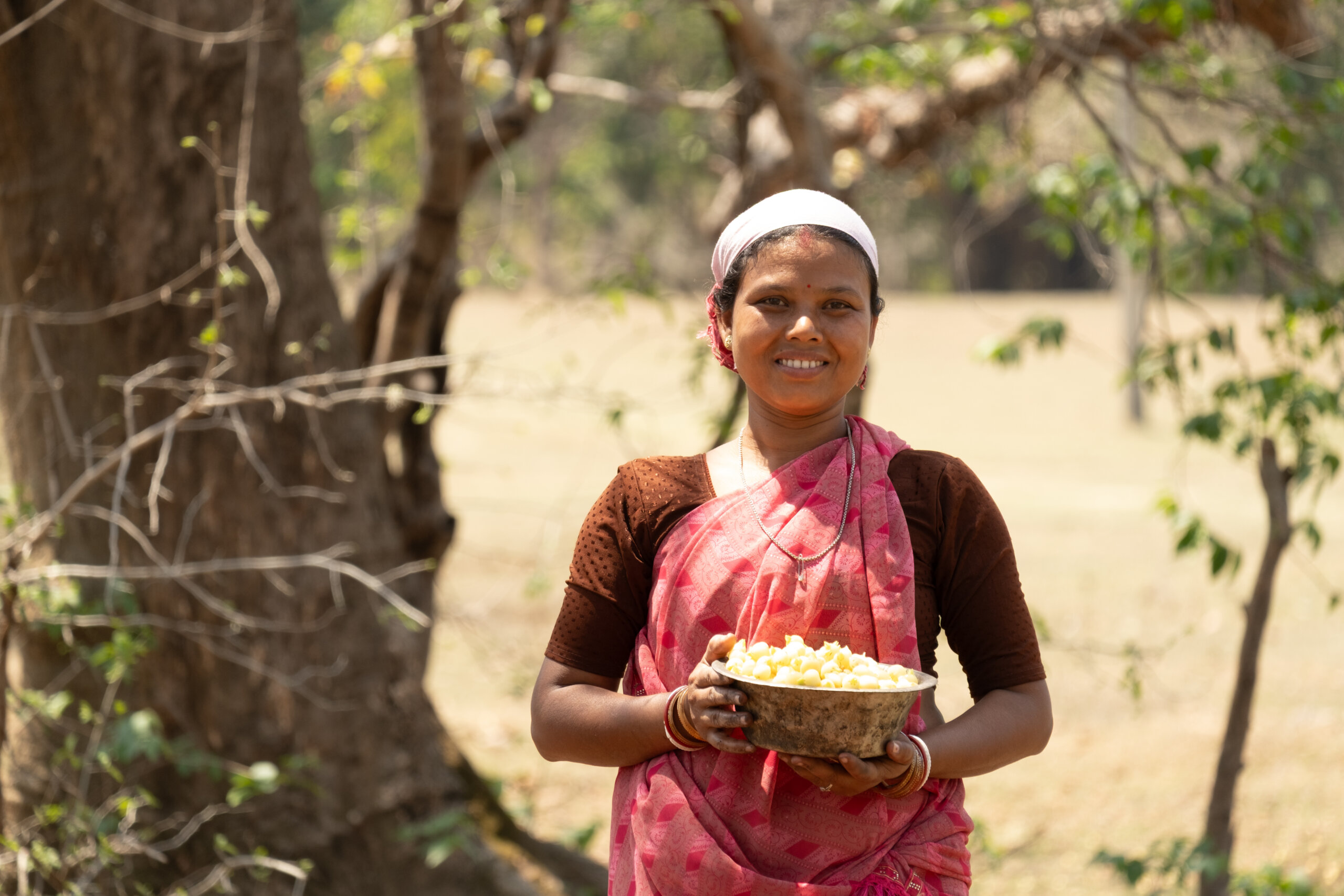
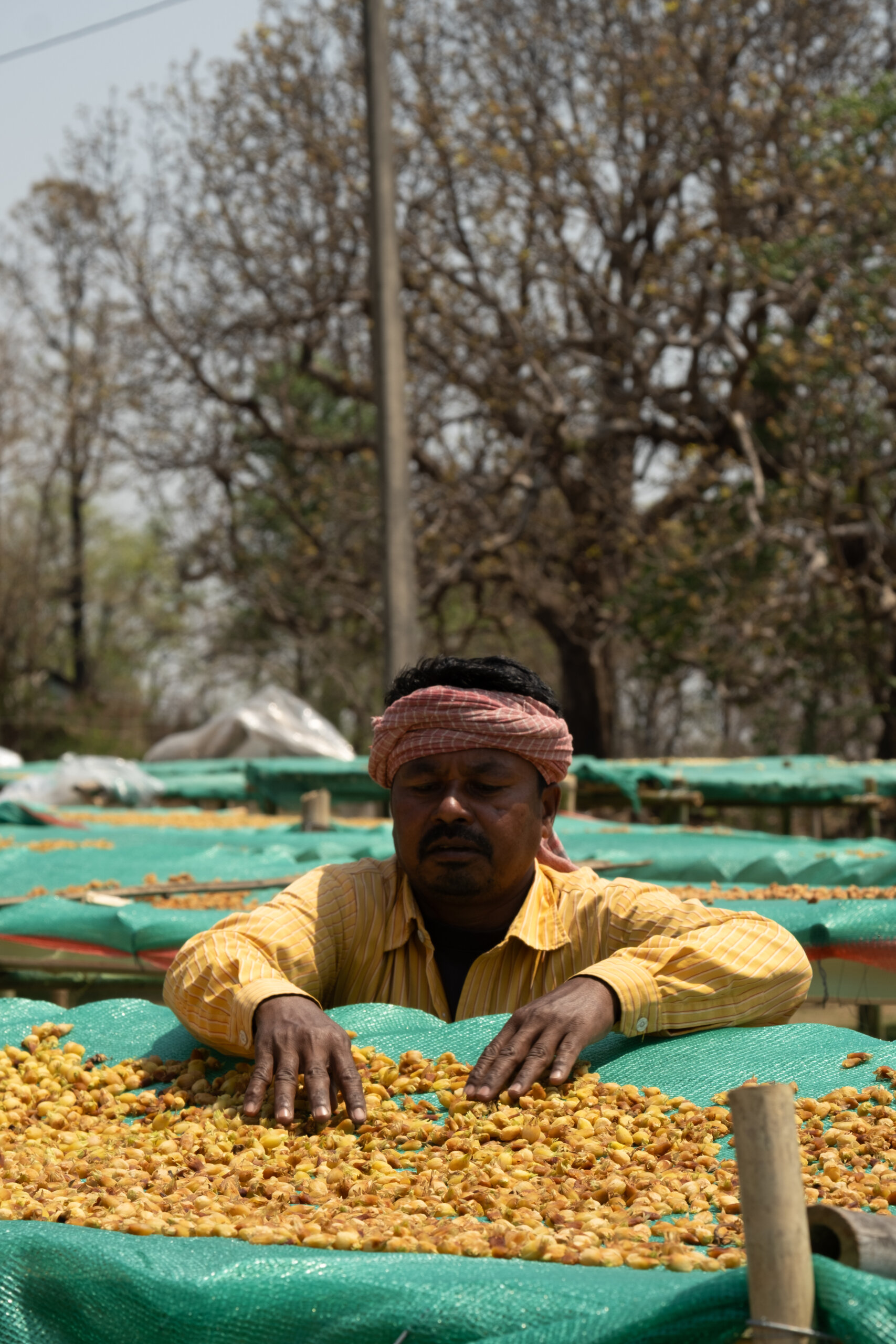
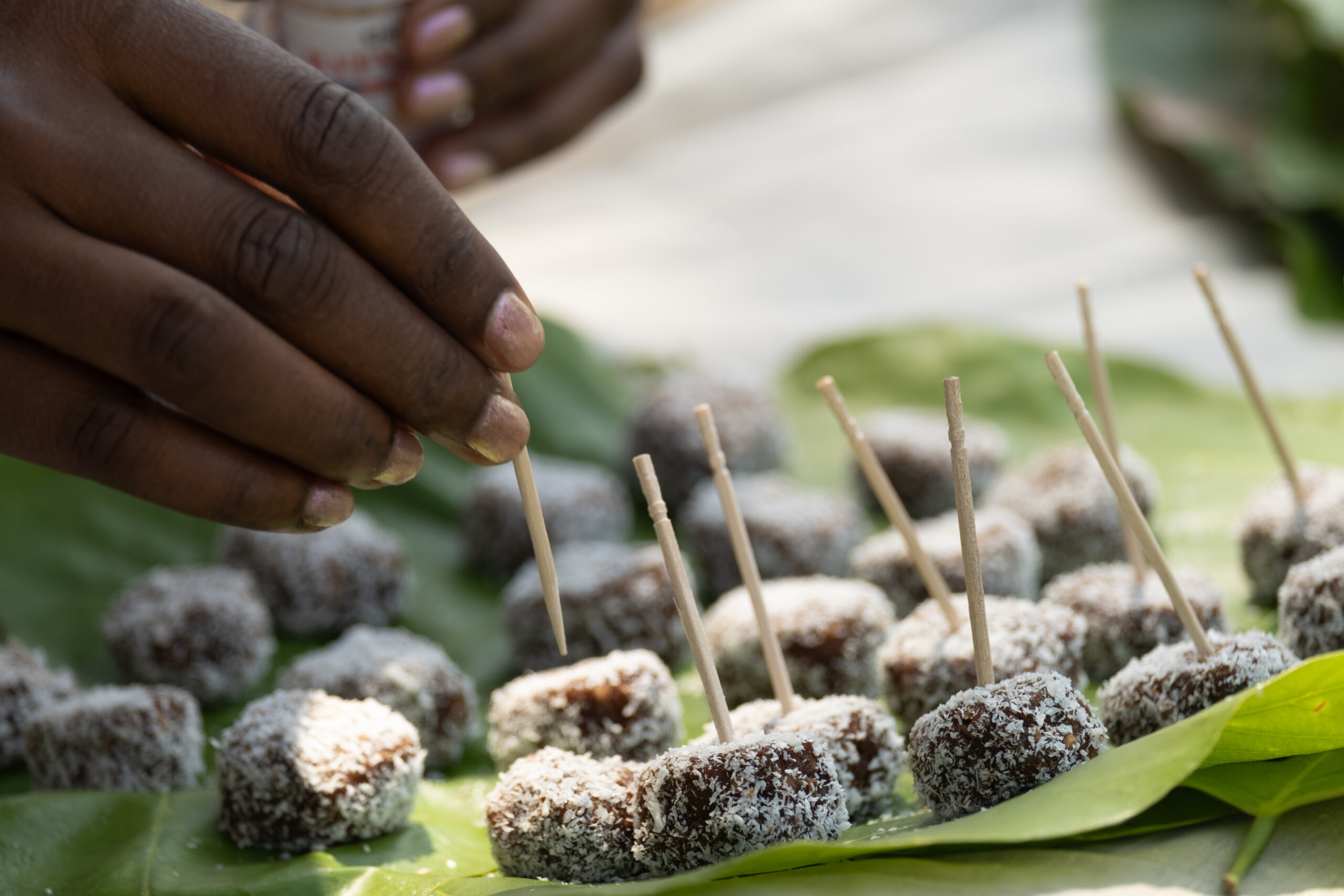
Clean, high-grade flowers open the doors for mahua to be used as ingredients in food production. A kilo of mahua fetches around INR 20 to INR 40. Wild Harvest aims for the flowers to fetch INR 70 to INR 100 per kilo. But it doesn’t stop there. From dried mahua flowers and mahua chocolate to mahua syrup and mahua oil, Wild Harvest works with communities and food scientists to co-create edible products, all from the flowers, fruits, and seeds of this incredibly versatile tree that was once viewed primarily as a source of alcohol.
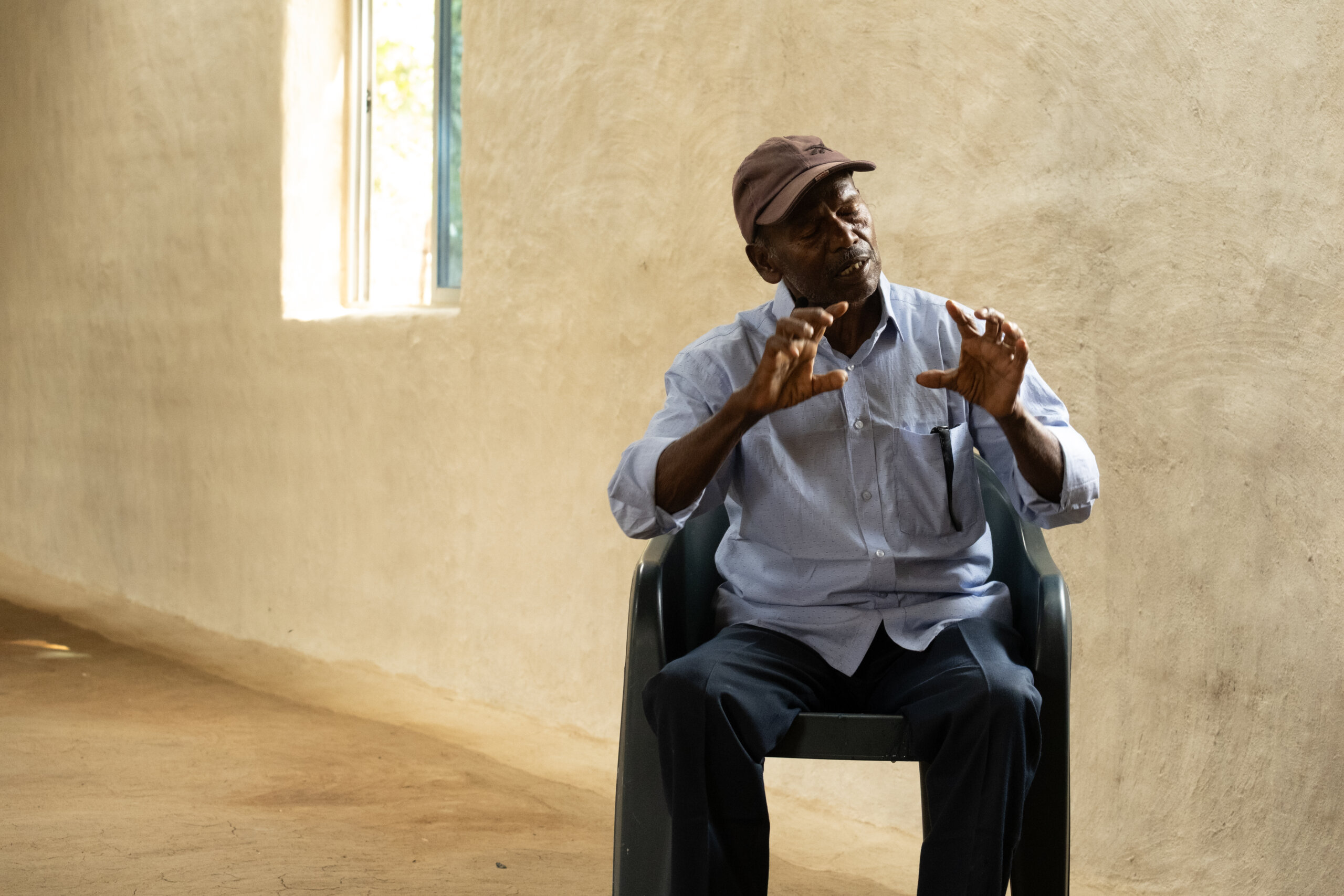
Rishabh Lohia, founder of Wild Harvest, tells us that Jharkhand harvests 2 lakh metric tonnes of mahua each year. Of this, 10 tonnes qualify as food-grade, while the rest is distilled for alcohol. Not much has changed over the years in terms of the proportionate breakdown of mahua’s uses. But there is hope for a more fruitful future, pun unintended.
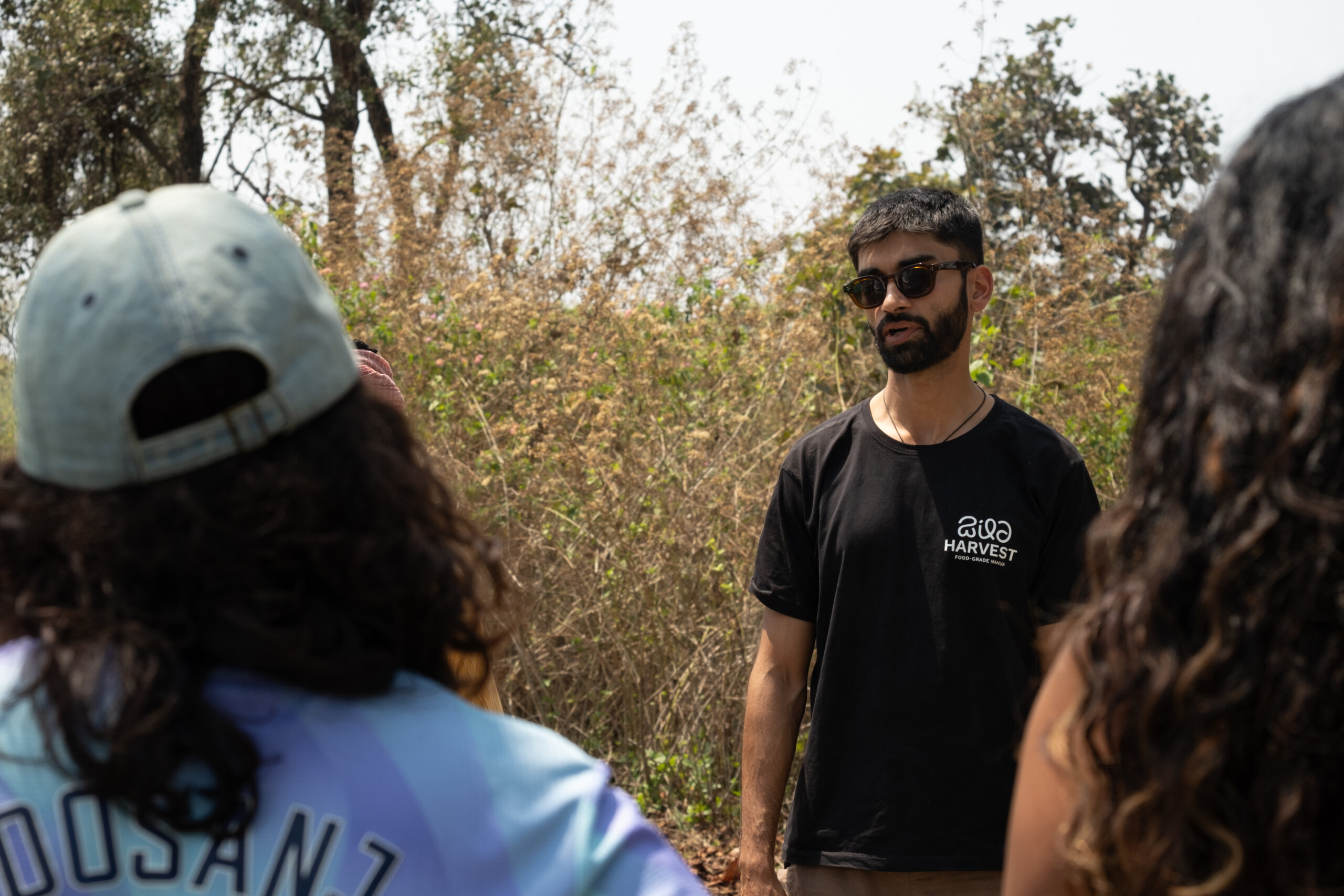
The villages are more accepting than resisting of the new harvesting process, he says. But it can take time to earn their trust.
We eat a handful of the fresh flowers that fell into the net. The petals, sugar-rich and mildly textured, burst in our mouths—a flavour on the cusp of caramel, with a faint nutty aftertaste. We can’t help ourselves from eating more. That’s when Rishabh warns us not to eat too many in one go, lest our noses start to bleed because of the high iron content in the flowers.
Mahua flowers are packed with nutrition. They’re rich in vitamins and minerals; no wonder then that in the 19th century, tribal communities relied on mahua to see them through some of the most brutal famines in Indian history.
Not only this, but people have paid for their education, and that of their children’s, with earnings from mahua. A wish-granting tree indeed.
But Madhuca longifolia trees blossom only once a year, and while the flowers are dried and stored, they don’t provide a sustainable source of income to tribal communities. Post-harvest, indigenous folk are engaged in rice farming, labour, household help, and mining. They take up jobs as cooks, and they sell forest produce in markets, like shellac harvested from Kusum and Ber trees.
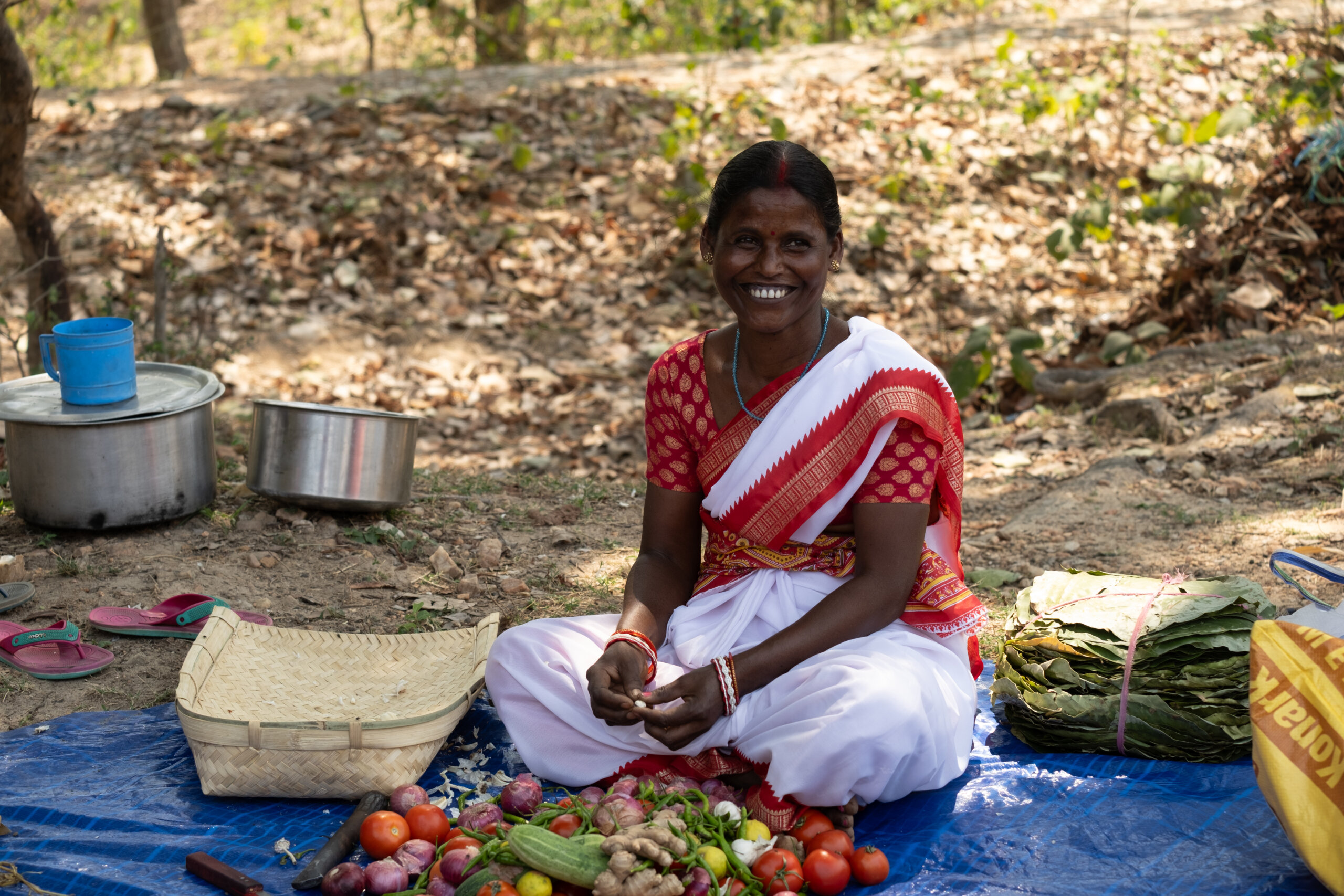
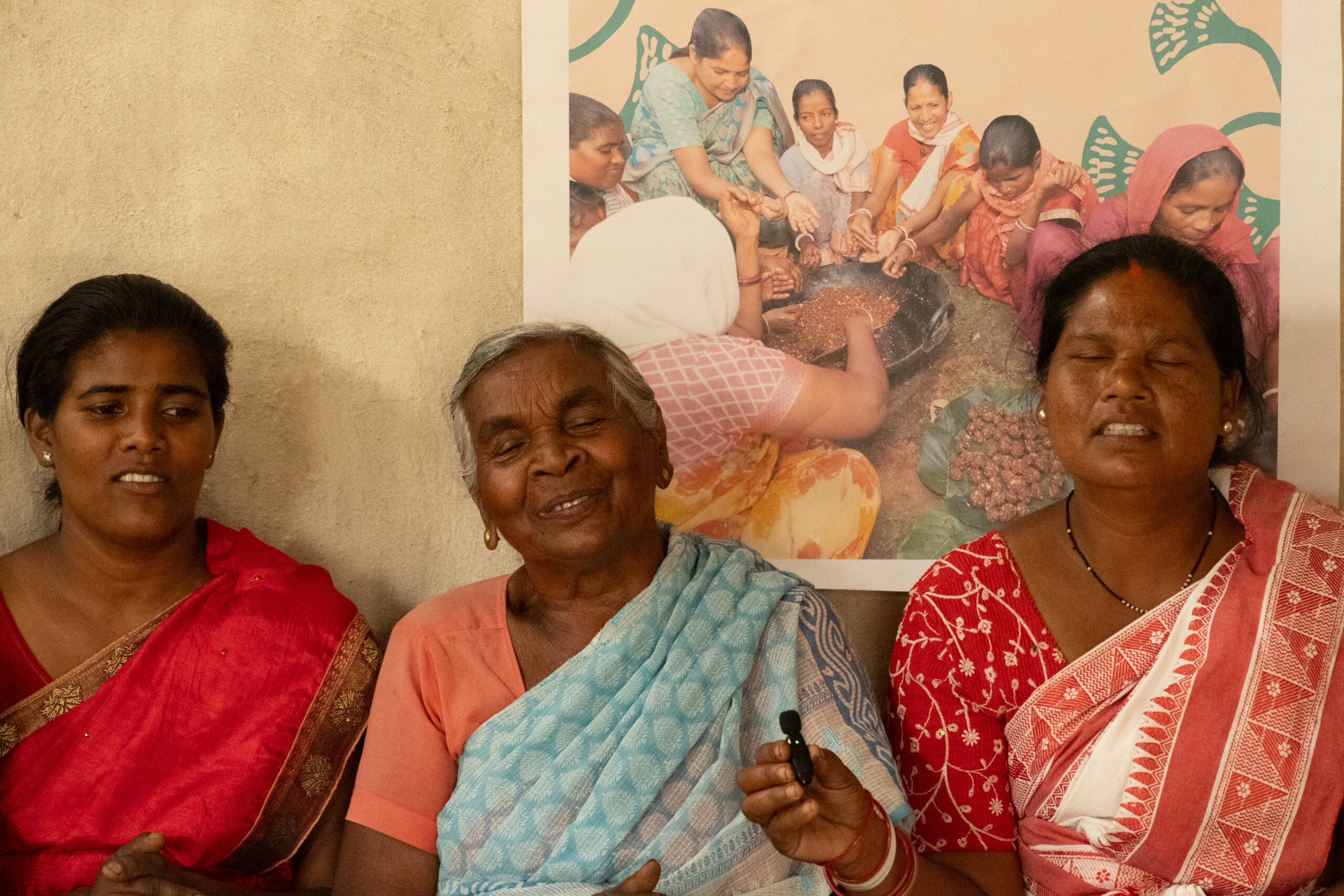
We head up to Deepa Toli in the Guradi village. Perhaps the only tola around whose inhabitants all follow the Christian faith, they were fasting for Lent when we visited. For Wild Harvest, Deepa Toli is a special place—it was there that they first started working with the mahua community.
But Deepa Toli is also a place that’s causing pain to its inhabitants. This year has been unseasonably hot; the mahua harvest has dropped by 80% across communities. Deepa Toli has had an especially rough season, with never-before-seen low yields and a lack of flowering. “It’s all climate change”, Rishabh mentions.
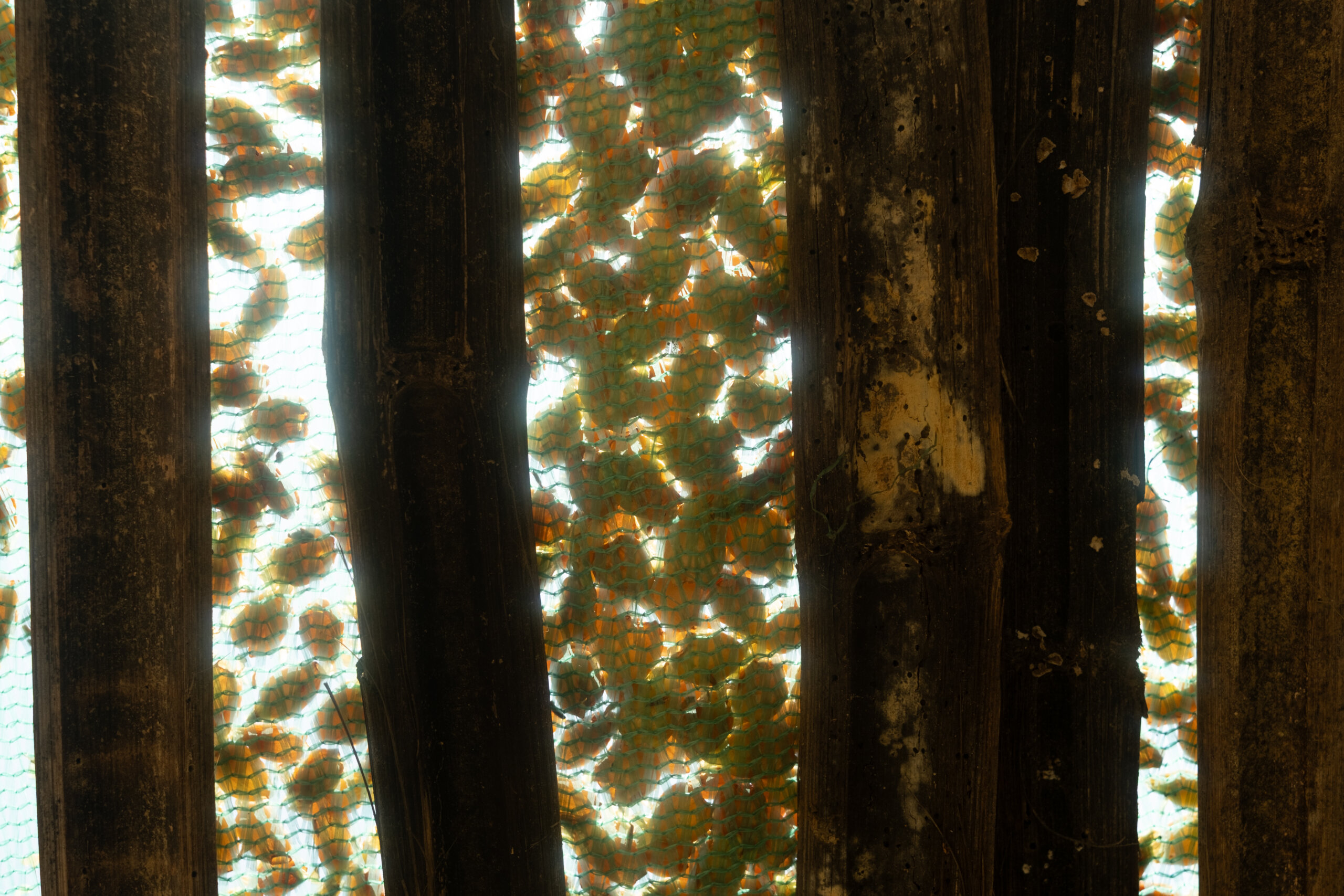
Last year, Deepa Toli’s streets were filled with mahua flowers laid to dry outside homes, on roofs, and in front yards. Swaths of mustard-yellow flowers, with pruney surfaces, some with flecks of ash, some without. The roads are barren this year. “It’s shocking how much less mahua there is this year compared to last year”, he adds later, as we sit on charpoys laid out by our host, thirstily drinking nimbu paani under a towering tree, seeking respite from the hot, dry weather that the communities endure every single day during these months, especially lately.
Besides the obvious warming of the weather, climate change also impacts indigenous pollinators like bees, insects, and bats—among the most vulnerable groups of fauna, both on their own and in relation to the communities that rely on forest produce, such as the mahua flower.
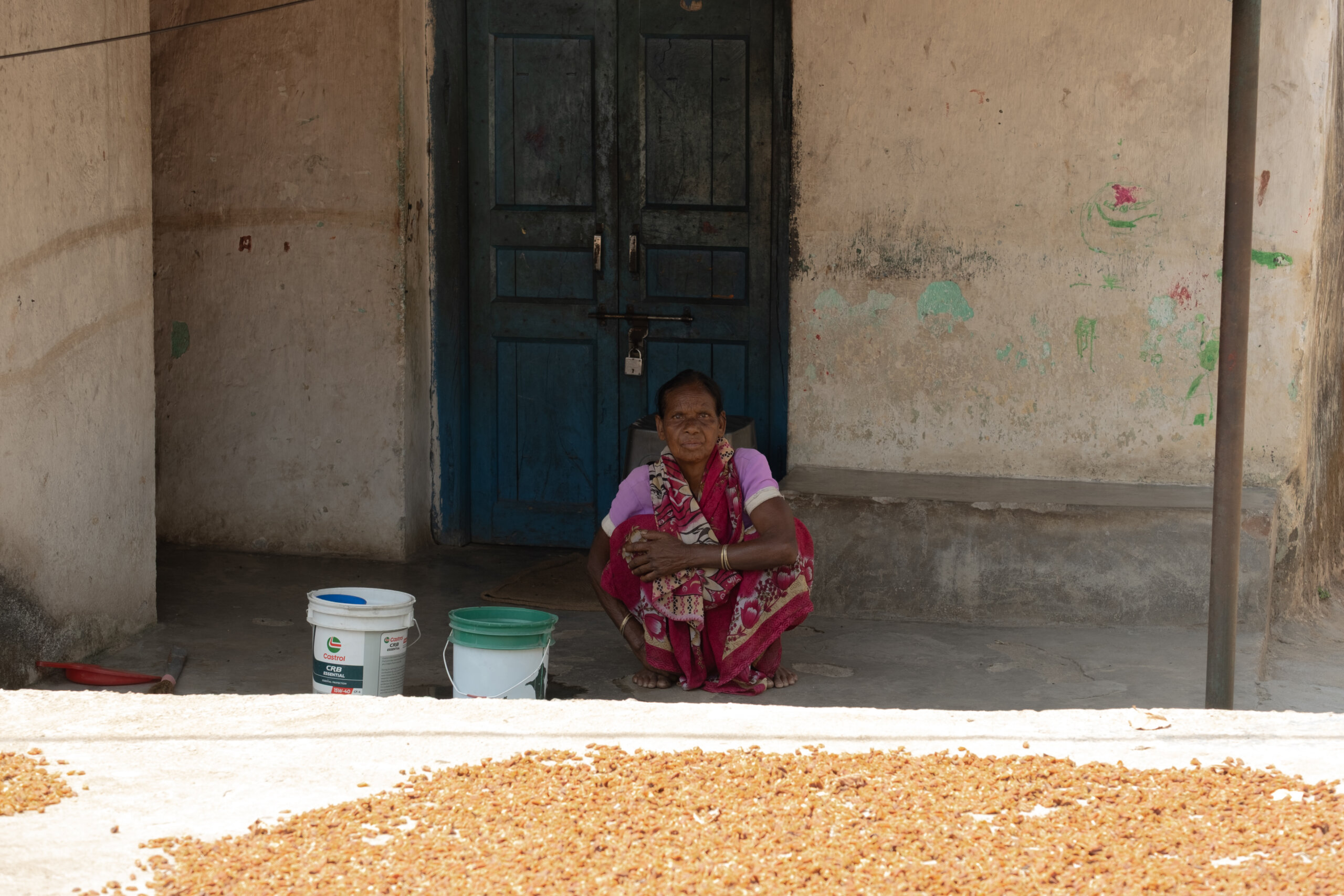
As of writing this, the flowers in Deepa Toli had fallen, but the harvest was extremely scant.
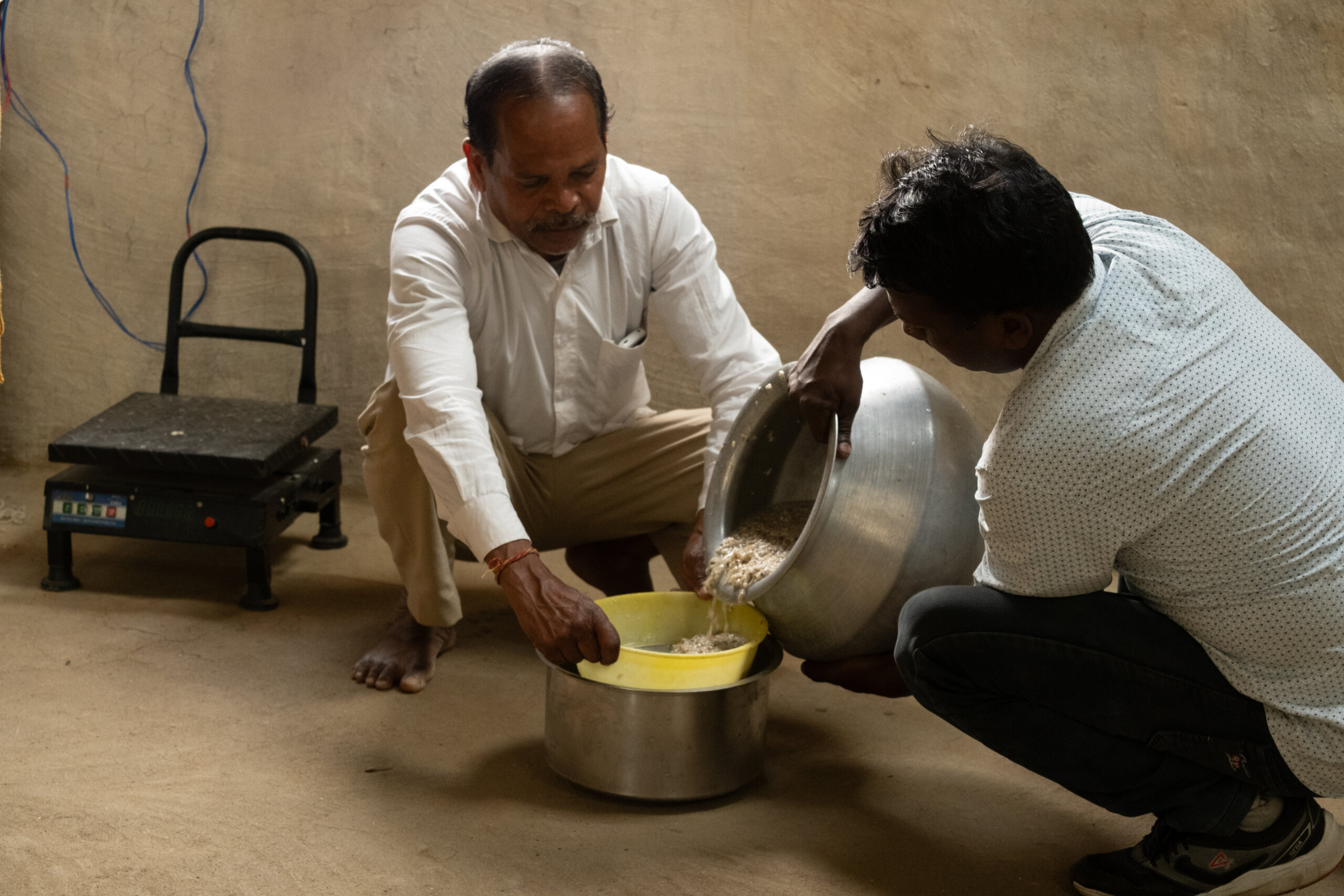
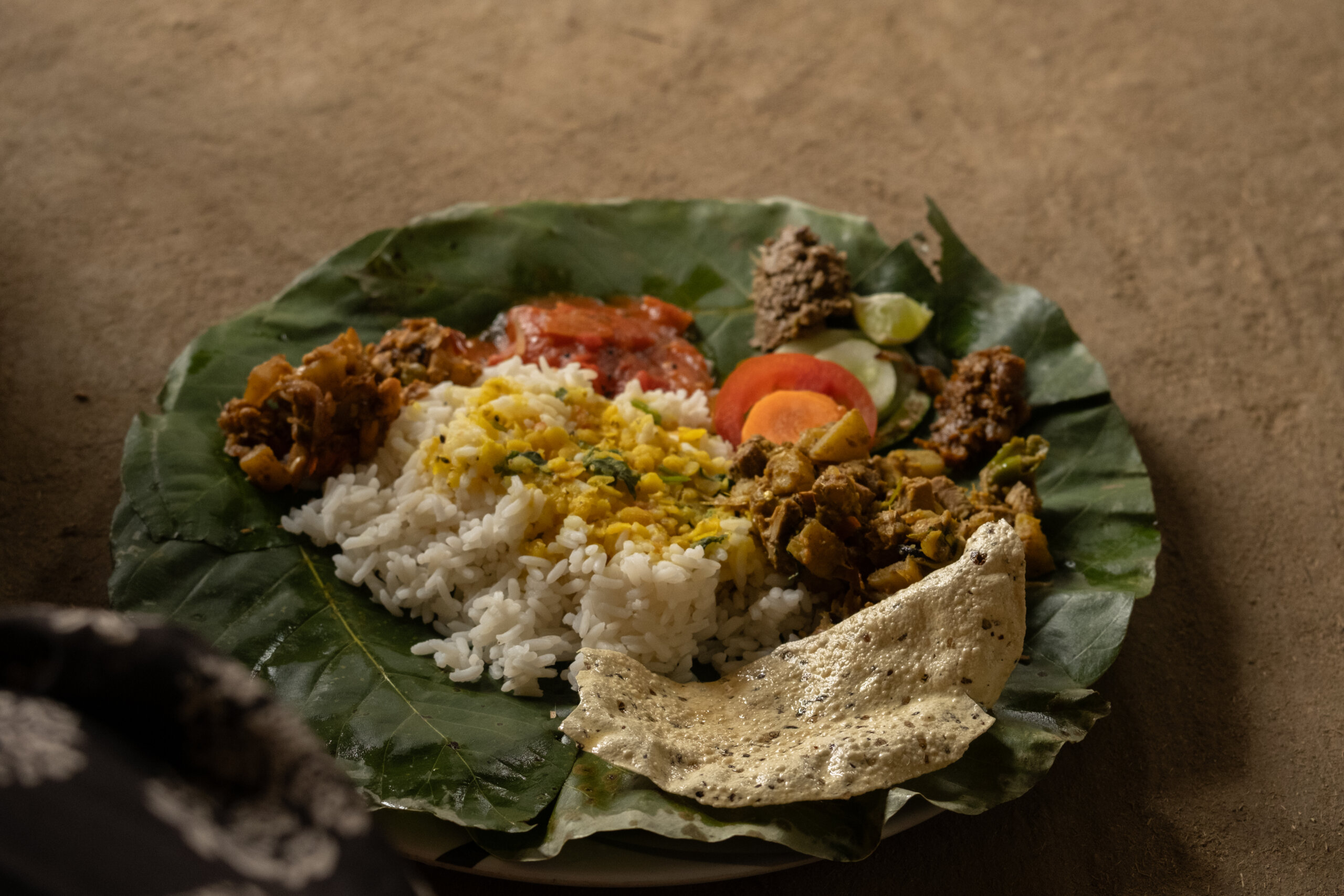
In the Toli, we step into an open space where Wild Harvest has set up a tasting table—mahua used in different, nouveau dishes and desserts. We leave some space in our tummies for a hearty local lunch, but not before we are welcomed with leaf crowns and kukhna stoles. After lunch and some handiya (local rice brew), we leave for our campsite. The community members guide us through rocky trails, down muddy descents, and up steep ascents, till we reach our destination—fairy lights cast a perimeter around the campsite, which sits next to a rivulet. In front of us, we see a rainbow, both ends disappearing into the forest – a colourful, gleeful child of the light rain that washed away our tiredness just a few minutes ago.
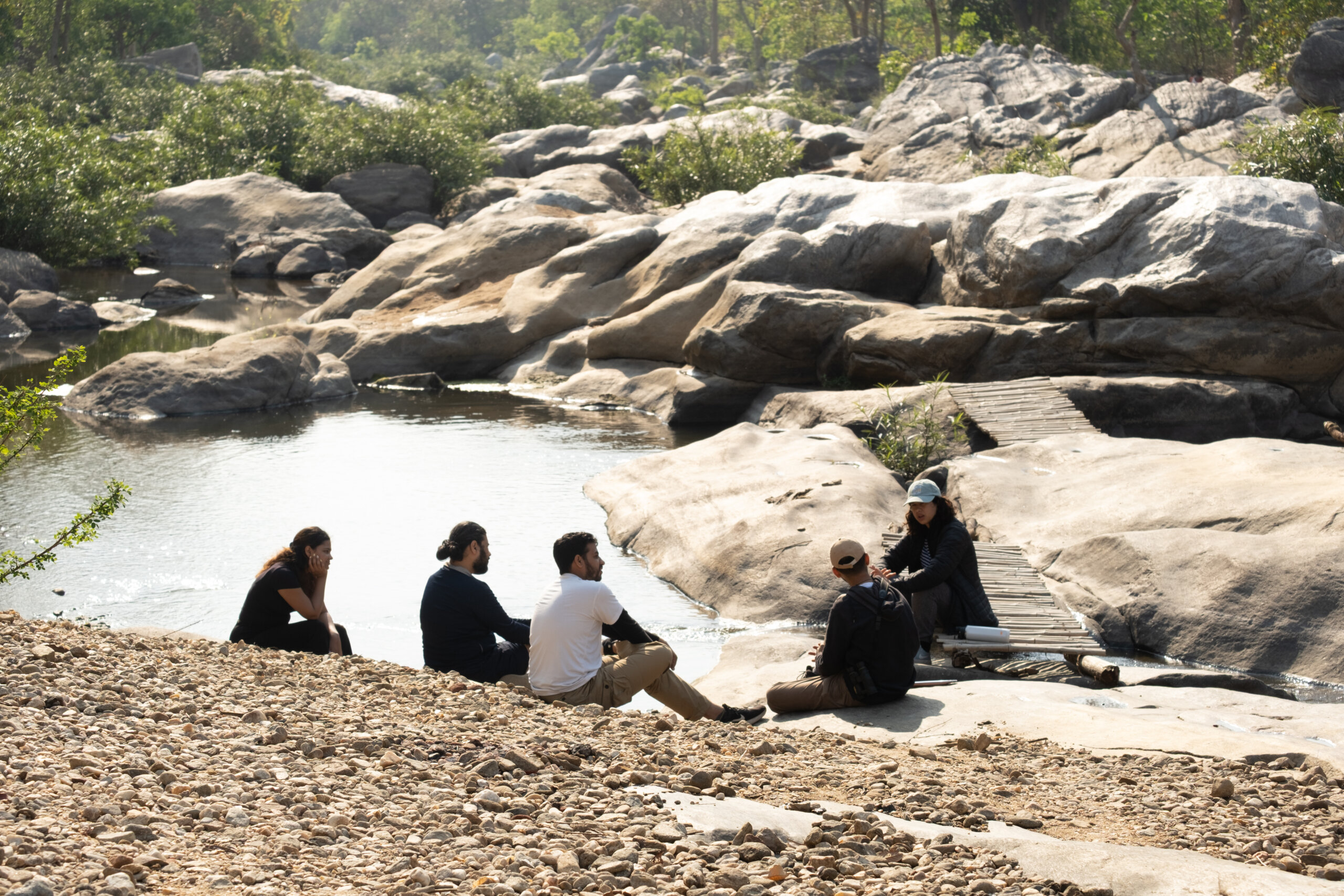
We swim in the cool rivulet and warm our bodies with mahua sharab. We gaze at fireflies—tiny golden bulbs flickering in the deep dark. We sit before a bonfire, the only sound coming from the bubbling brook in front of us. When it rains again, we run for cover into tents and share stories and songs as we wait for the downpour to relent.
This is what the little ivory flower does. It brings people together. Strangers become unlikely friends. Community becomes a space of comfort and belonging. Experiences melt and blend into each other’s perceptions, urging us to open our hearts to the unknown, the different, the chaos before the calm.
No matter its form—as sustenance, as spirit, as fodder, as balm, as a ceremonial tool—mahua’s place in India calls for an elevation, especially in the foodscape. Not just for serving nearly-infinite purposes, but for being a vehicle that spreads stories of the people and places—its children—that thrive because of it.
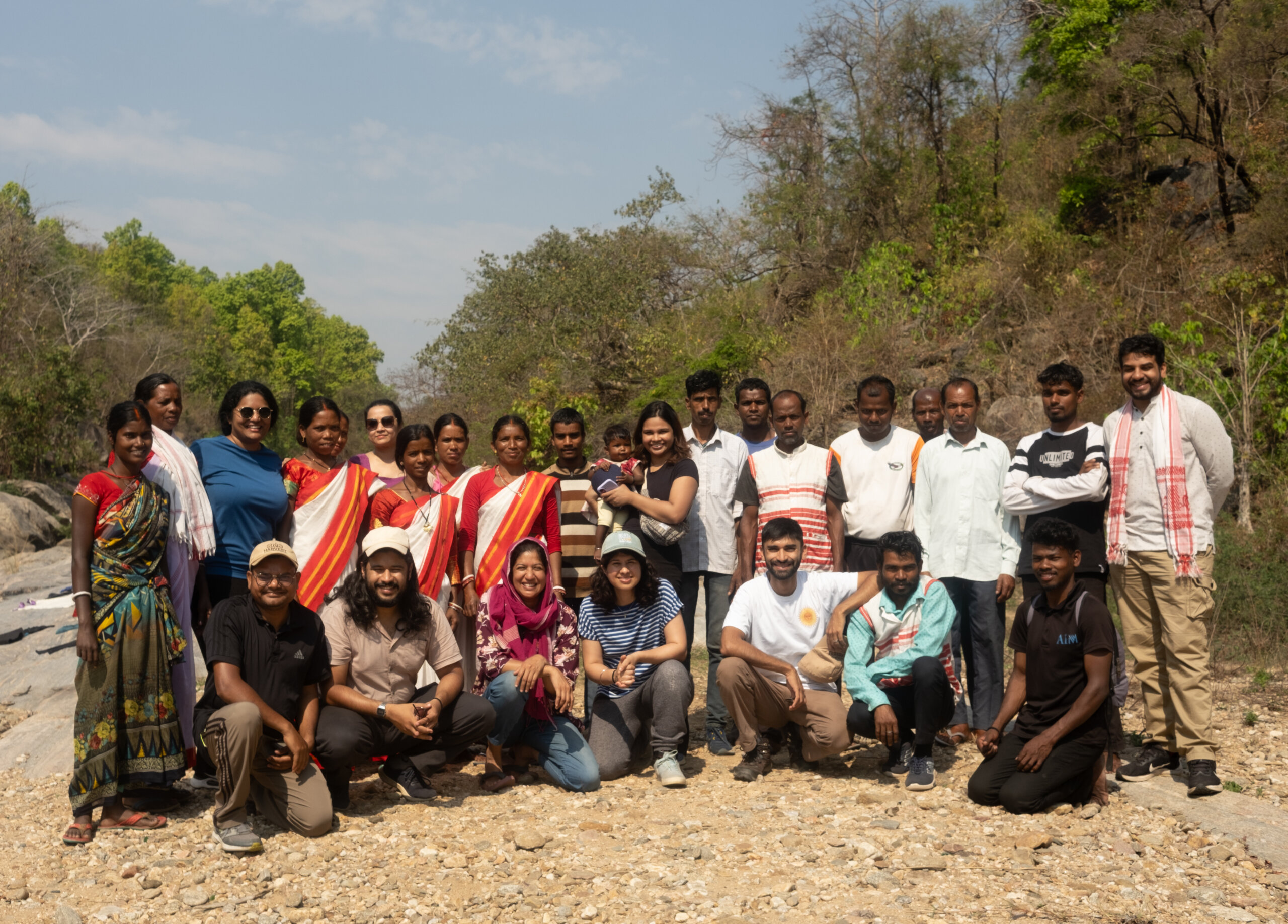
A debt of gratitude to the Wild Harvest team, the Locavore team, and the residents of Dumargari and Deepa Toli for welcoming us with warmth and care, and allowing us to partake in their stories.