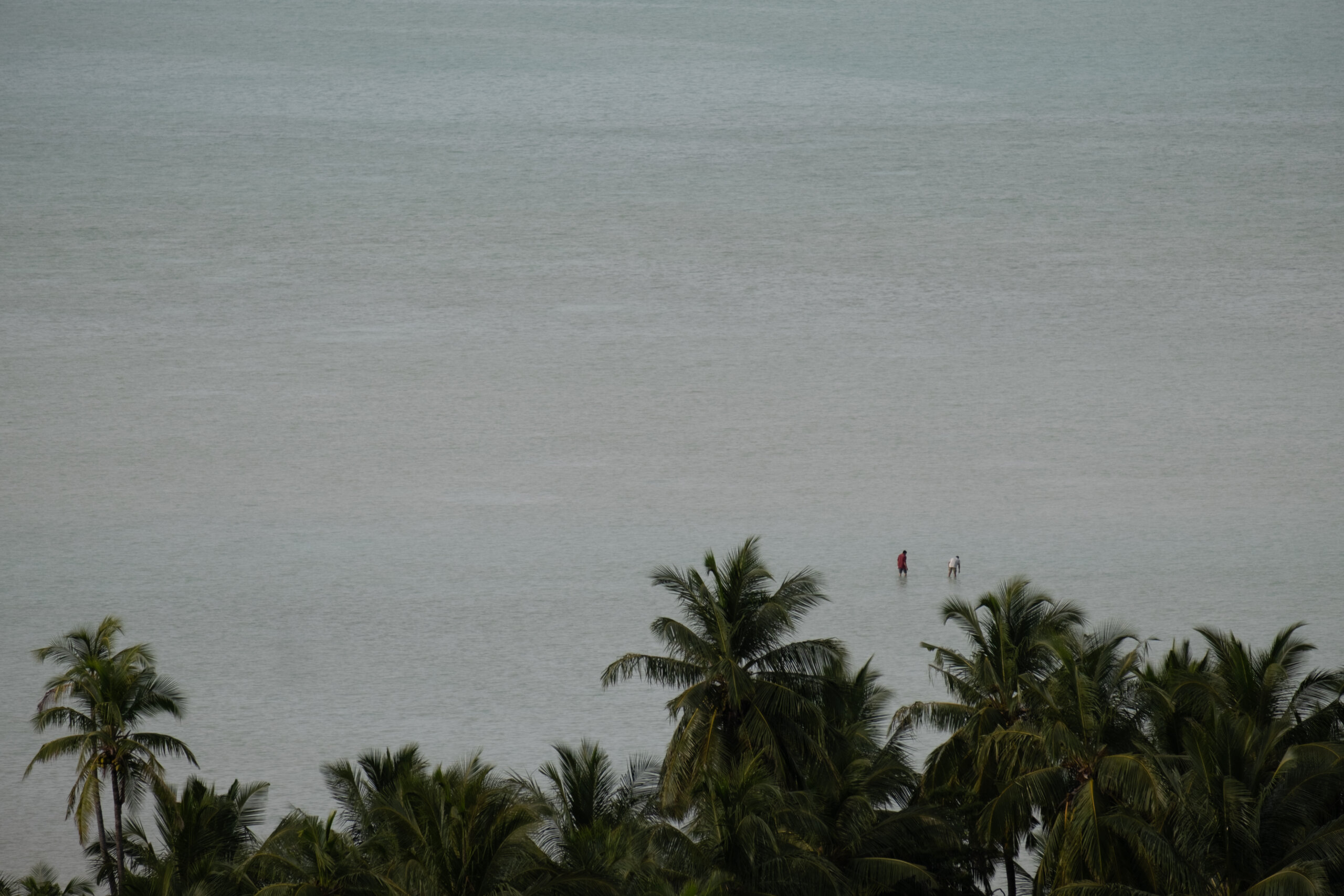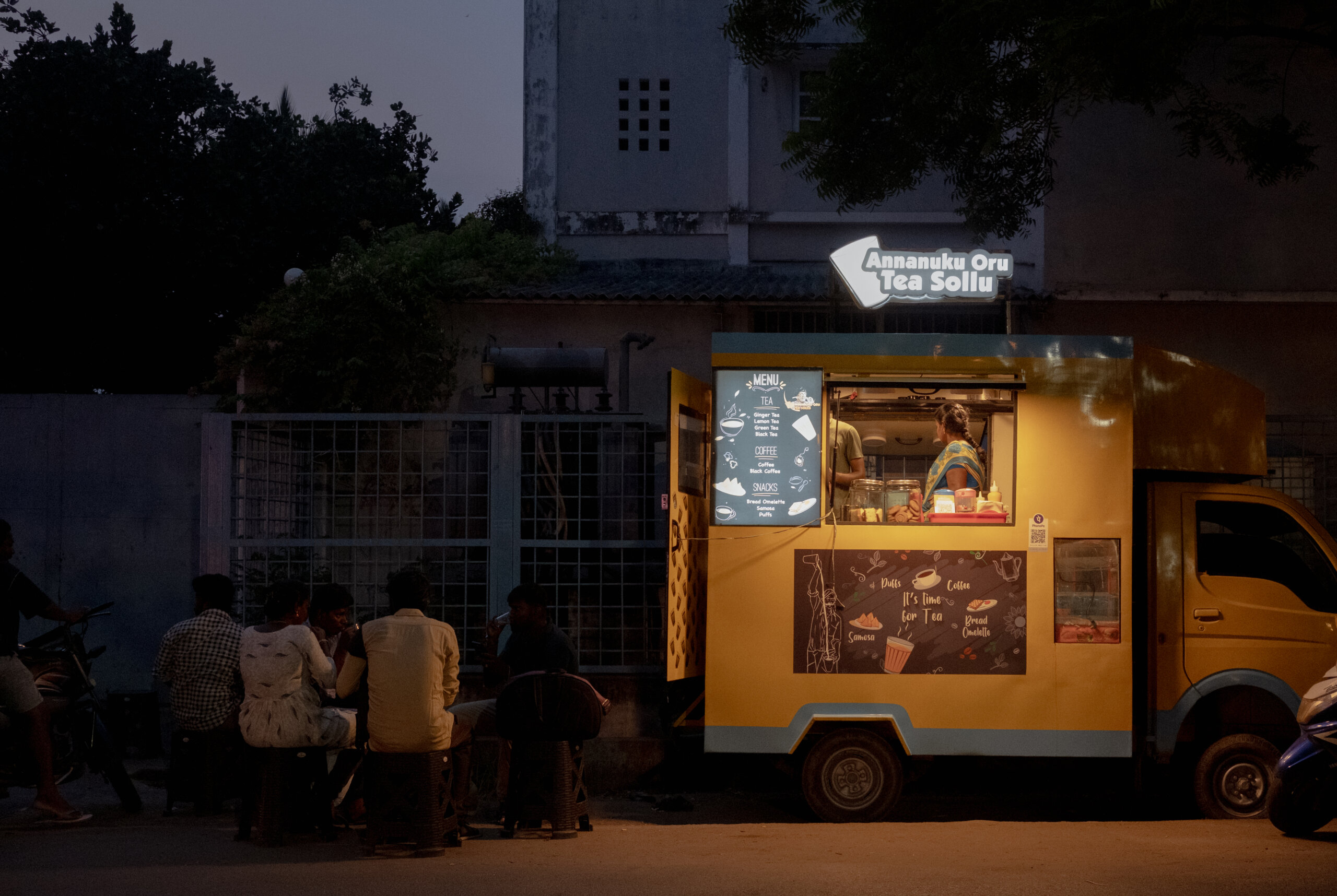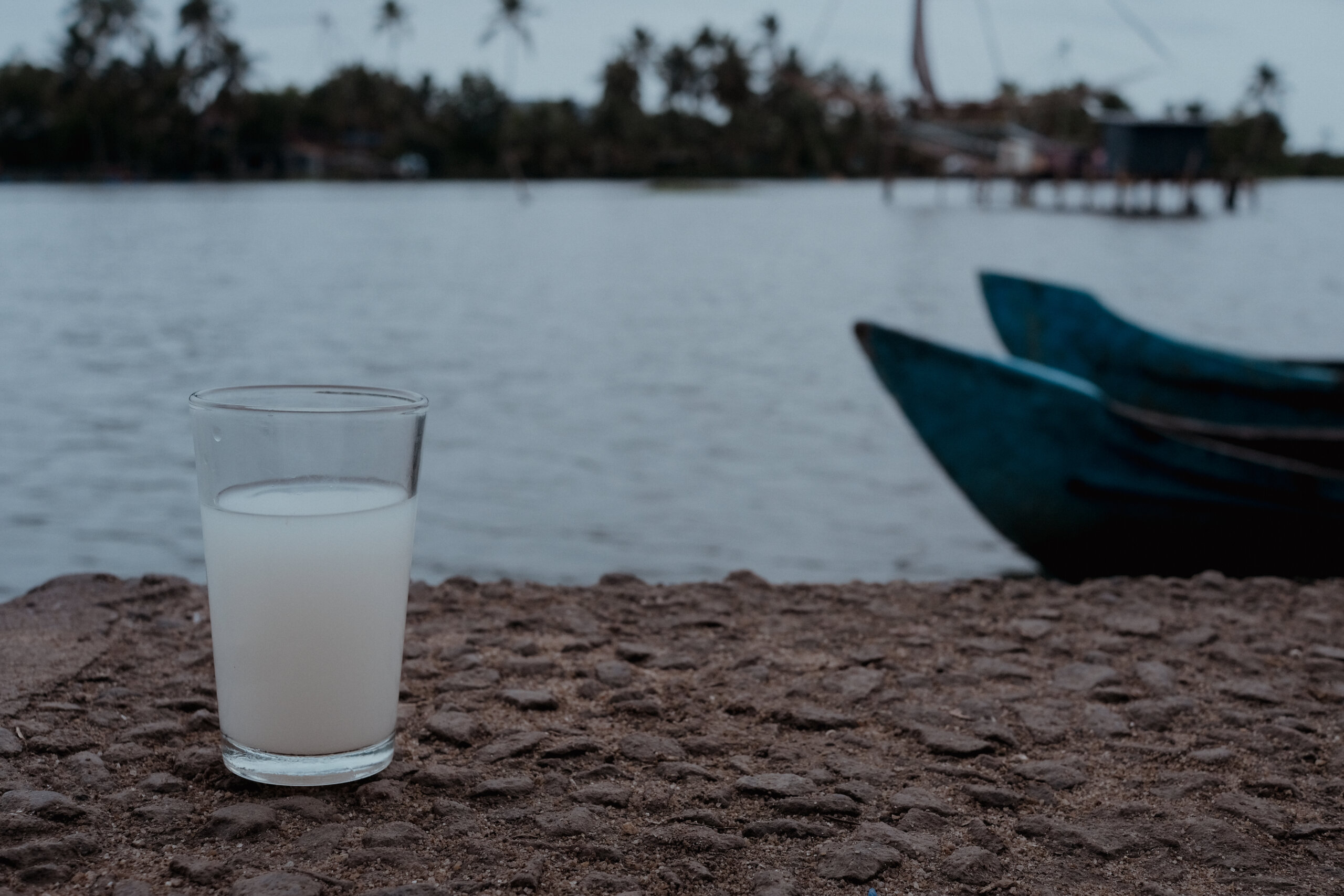
The first time I had toddy was in Lakshadweep, hundreds of kilometres from Kerala. In fact, it wasn’t even toddy, but neera—the non-alcoholic percussor that eventually ferments and becomes toddy. Fresh, sugary sap from the coconut palm, the perfect beverage after a sweltering day at sea.
A few years later, I travelled to Kadamakudy—a group of backwater islands a few hours’ drive from Kochi. This was a 34th birthday getaway—a weekend of solo tripping, slow exploring, drinking, and dining on fresh seafood. I planned to cycle around and chat up Pokalli rice farmers to learn their stories. But the July rain, coupled with the fatigue that’s synonymous with clinical depression, altered my plans. My overdue freelance projects didn’t help, nor did my period, which arrived in a gush, much like the monsoon swells of the backwaters.
And while I had asked a few friends to join me on this trip, which included a visit to a local toddy shop, that didn’t come to fruition either. But I know better than to rely on others, so off I went, umbrella in hand.
“Is there a shaap close by? How is it?” I enquired of the homestay owner’s wife. “Don’t go there, food is not that good,” she replied in broken Hindi. Unfortunately for her, that wasn’t reason enough to deter me.
I walked on the narrow, mucky pathway, water-logged paddy fields on either side of me. A slip, and I’d land face-first into the marshy fields, with my phone and my camera. But I held steady—I wasn’t tipsy yet, I told myself. Soon enough, I stood outside a modest blue-and-grey shack, a rather large one, with a corrugated tin roof to protect its innards from the elements.
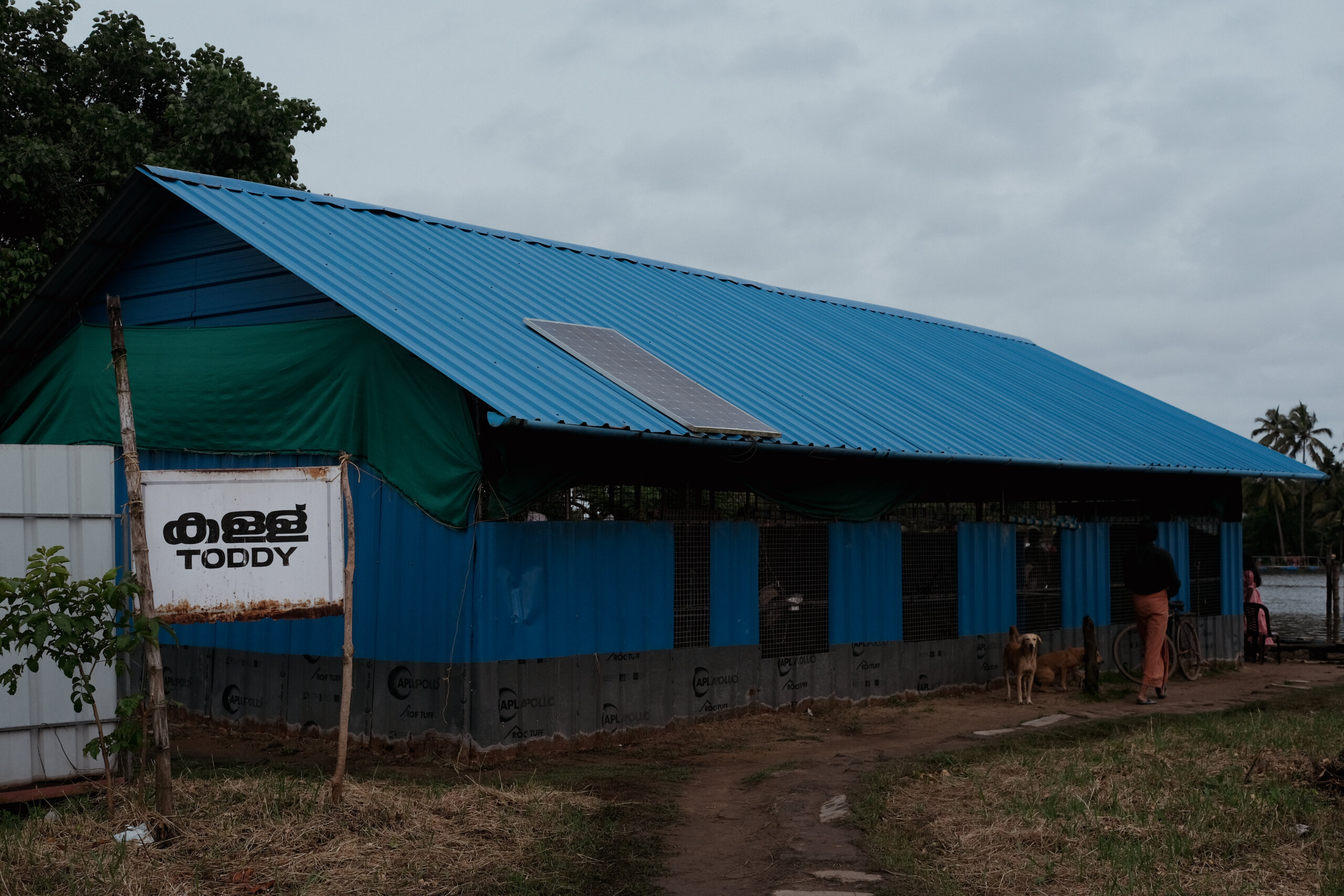
I stared at the structure in front of me— the Kadamakudy Kallu Kada (Malayalam for toddy shop), famous in its own right, written about by Lonely Planet and the like.
Toddy shops, or shaap—small, unpretentious, family-run resto-bars—are an important part of Kerala’s food culture, and date back centuries. In fact, the term “toddy” was a British colloquialism for kallu, a sweet, slightly pungent liquid made by tapping the sap of a palm or coconut tree. Once collected, the liquid is poured into tall jugs or clay pots, where it ferments over time into an alcoholic drink. Neera is fresh and non-alcoholic, with a taste reminiscent of tender coconut water, albeit with a little extra punch. But when left to sit, it turns into kallu within a few hours.
Suggested read: My story on Kallu Shaaps for The Culture Gully
Despite the passage of time, toddy shops are labelled dangerous for women. Once a stereotype is applied, it gets difficult to shake it off and earn a more acceptable, if not reputable, badge. A Reddit thread sums this up:
Q: Any toddy shops near Fort Kochi that are safe for girls at night?
A: Chumma risk edukkathe pode
A: Girls normally do not go to toddy shops. Toddy shops are dirty and smell bad. You can see only the labour class there, and it will be embarrassing for girls. Go to a good air-conditioned bar and drink.
My only other toddy shop experience was at a popular, family-friendly shaap in Nettoor, Kochi. For due diligence’s sake, I had asked a few friends if going to a toddy shop alone is recommended, and they, too, had some concerns. This reminded me of how my male friends in Bangalore wouldn’t let my female friends and me enter bars like Brigade Prince or Santhrupthi. And while we didn’t need their permission, we did rely on their knowledge of the safety ratings of these places.
Yet, despite what I had heard and read, I was taken back to all the experiences I had missed out on because of my gender. Not having anji-padnanji (Tamil for five-fifteen—five beef mince balls for fifteen rupees) in the back-alleys of Viveknagar in Bangalore, no late night strolls, no conversations with strangers to share stories over a local beer or a plate of chanka.
I was tired of the shackles that came with my gender, and the associated feelings of helplessness that stem from generations of conditioning, even if well-intentioned.
The stigma against women drinking alcohol in some parts of Kerala exists even today—a friend described her experience at a pub where her group of female friends wasn’t served alcohol, under the direction of the pub’s owner. We don’t serve women, he had said.
Yet, readings show that until the 1940s, toddy shops were the preferred after-work hangouts for men and women alike. Somehow, then, till a little over a decade ago, kallu shaaps were quintessentially male spaces.
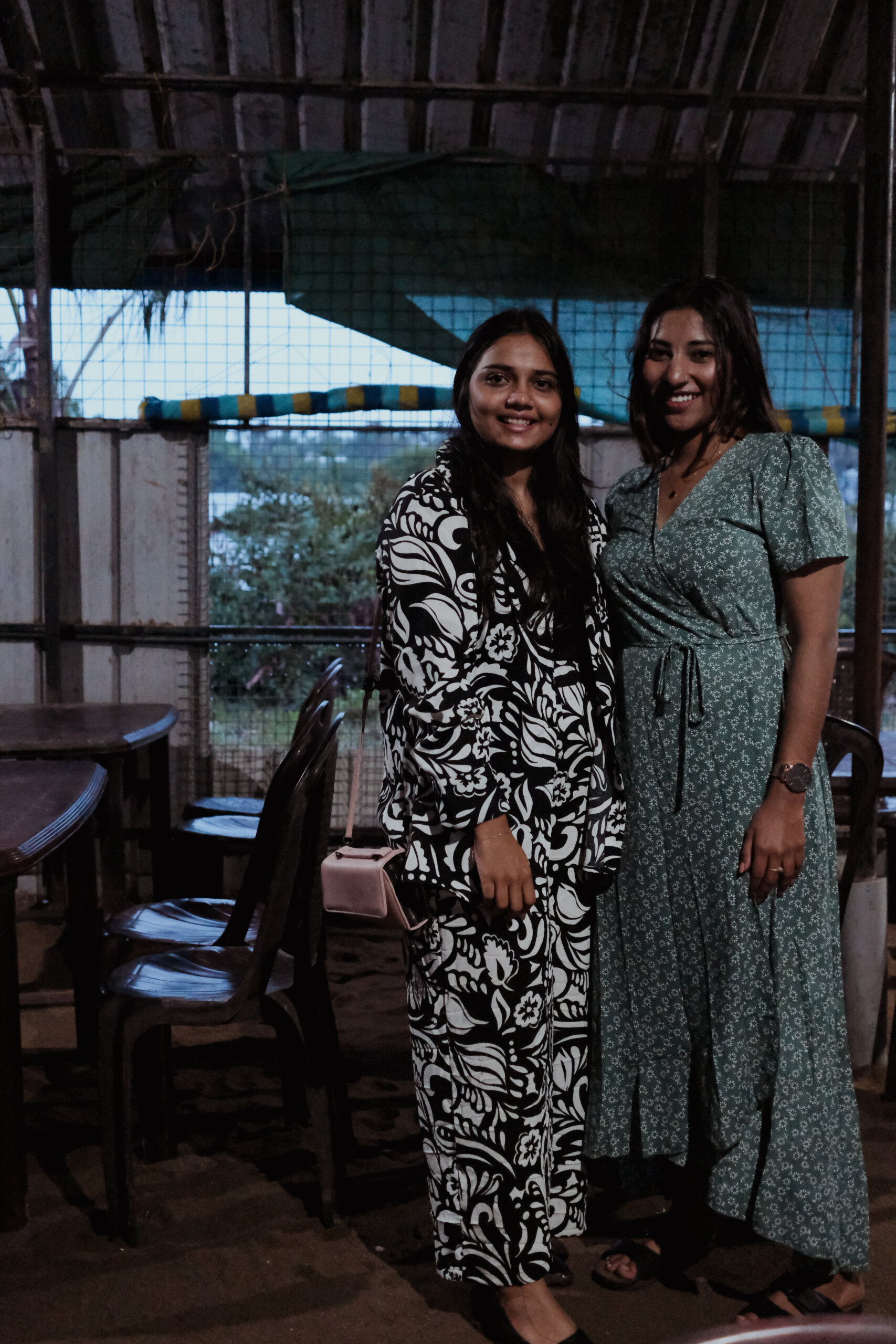
As I neared the Kadamakudy toddy shop, I saw some women stepping out, along with their male companions. I guess having male protection typically helps women access cordoned-off spaces. Still, I went in alone.
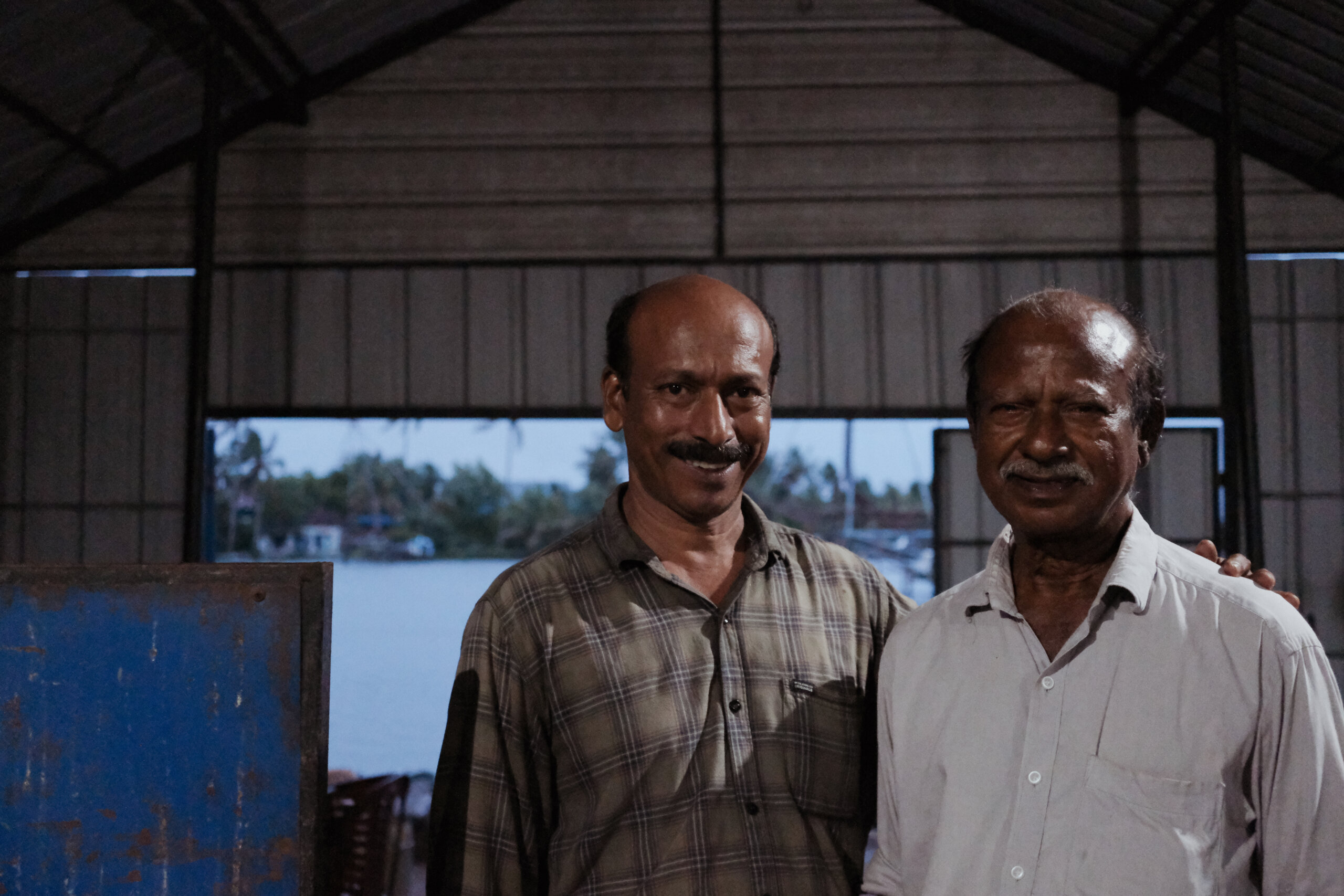
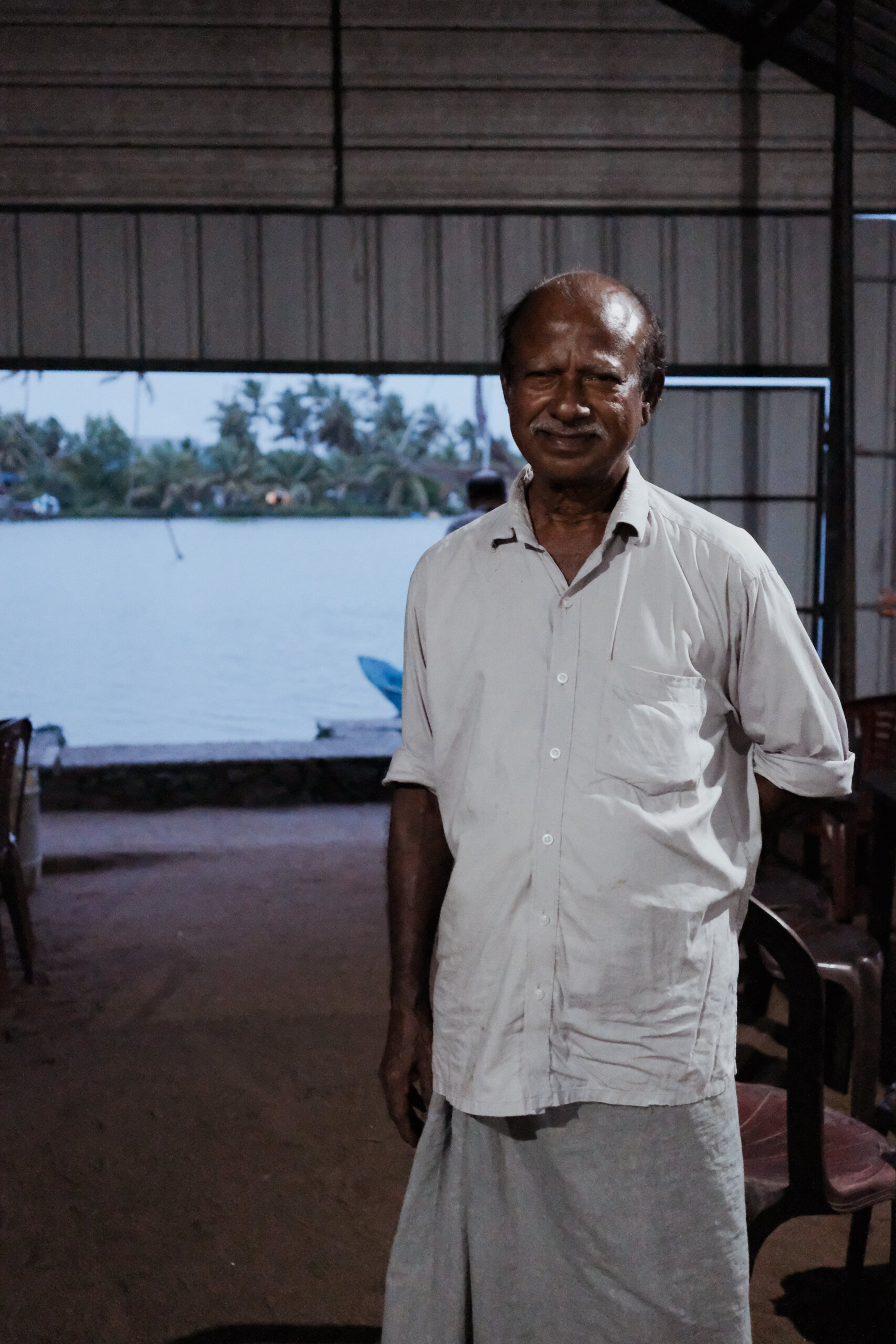
A friendly, round face, browned by the sun and etched with lines by the hands of time, greeted me at the door.
Enakku Malayalam ariyilla (I don’t understand Malayalam) was the very first thing I blurted out. He smiled, a grin stretching nearly ear-to-ear that instantly sent a warm wave of comfort coursing through my body.
“Hindi or English?” he asked.
“Both work for me,” I told him.
“I’m Janakan,” he replied in Hindi. “After Sita’s father in the Mahabharata,” he added.
I introduced myself and told him that I wanted some toddy.
“Bottle?” he asked.
“No,” I said.
“Half a bottle then?”
“No, but I’ll take a glass.”
“Anything to eat?”
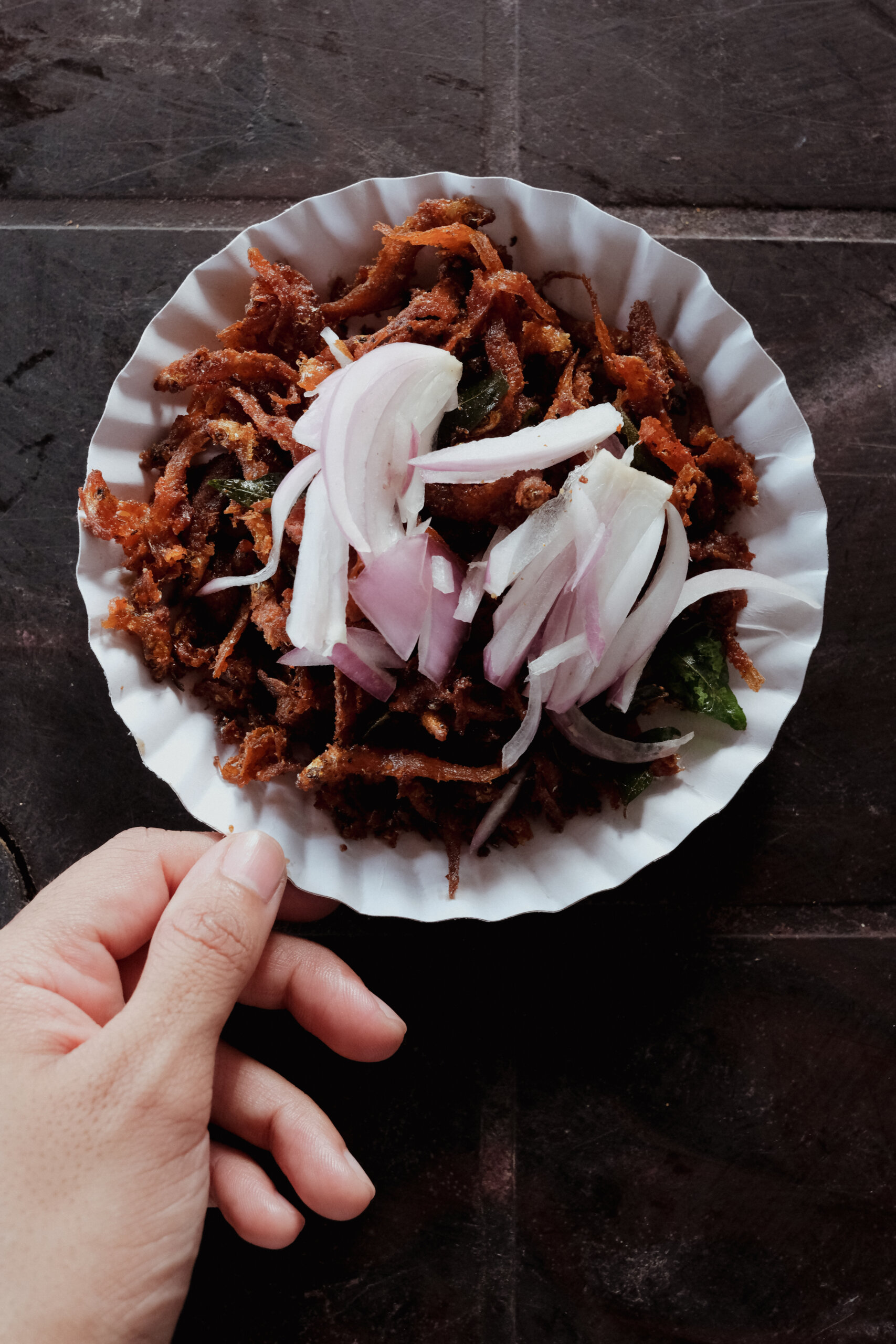
I played charades with him to indicate that I’d like a plate of the small fish fry.
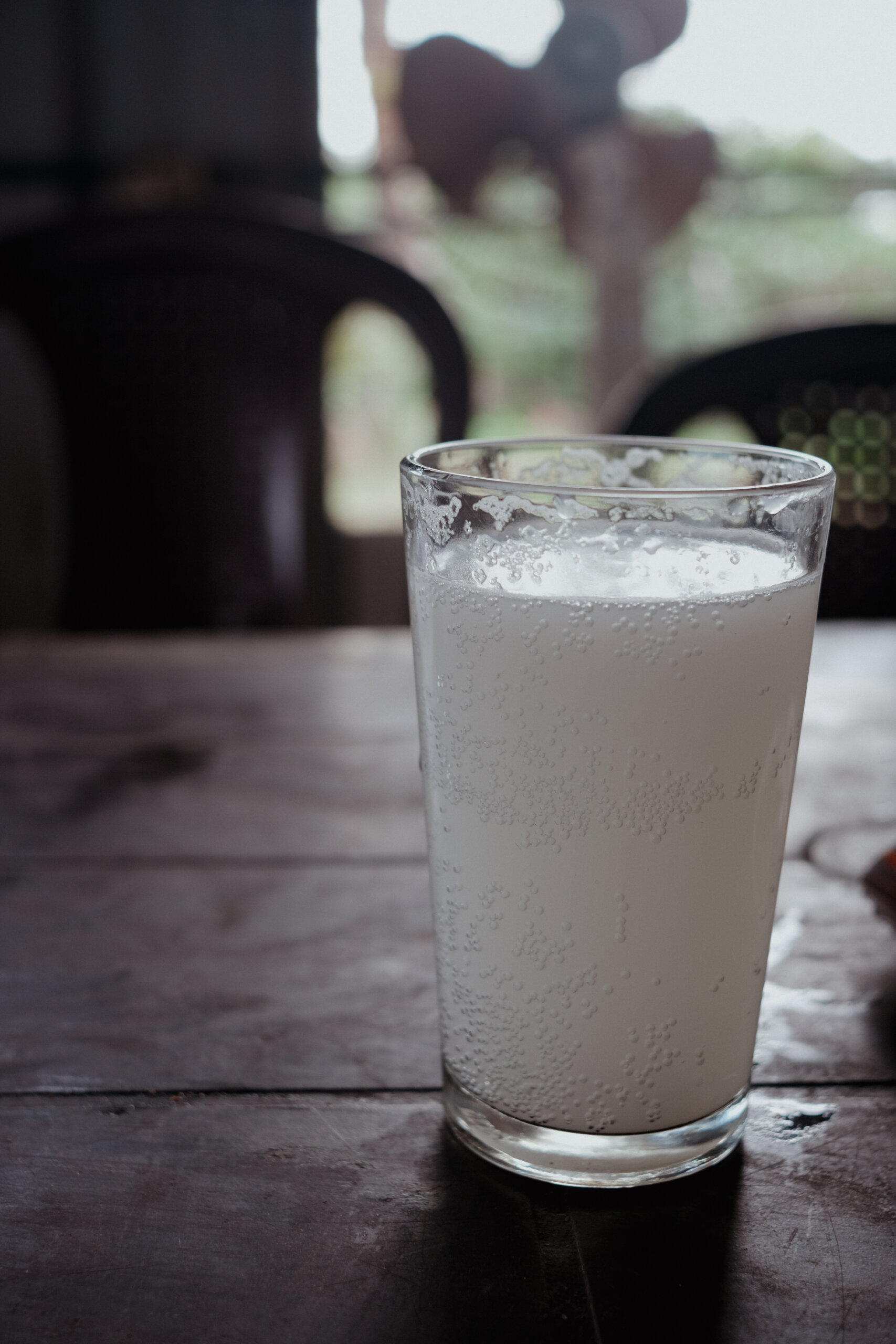
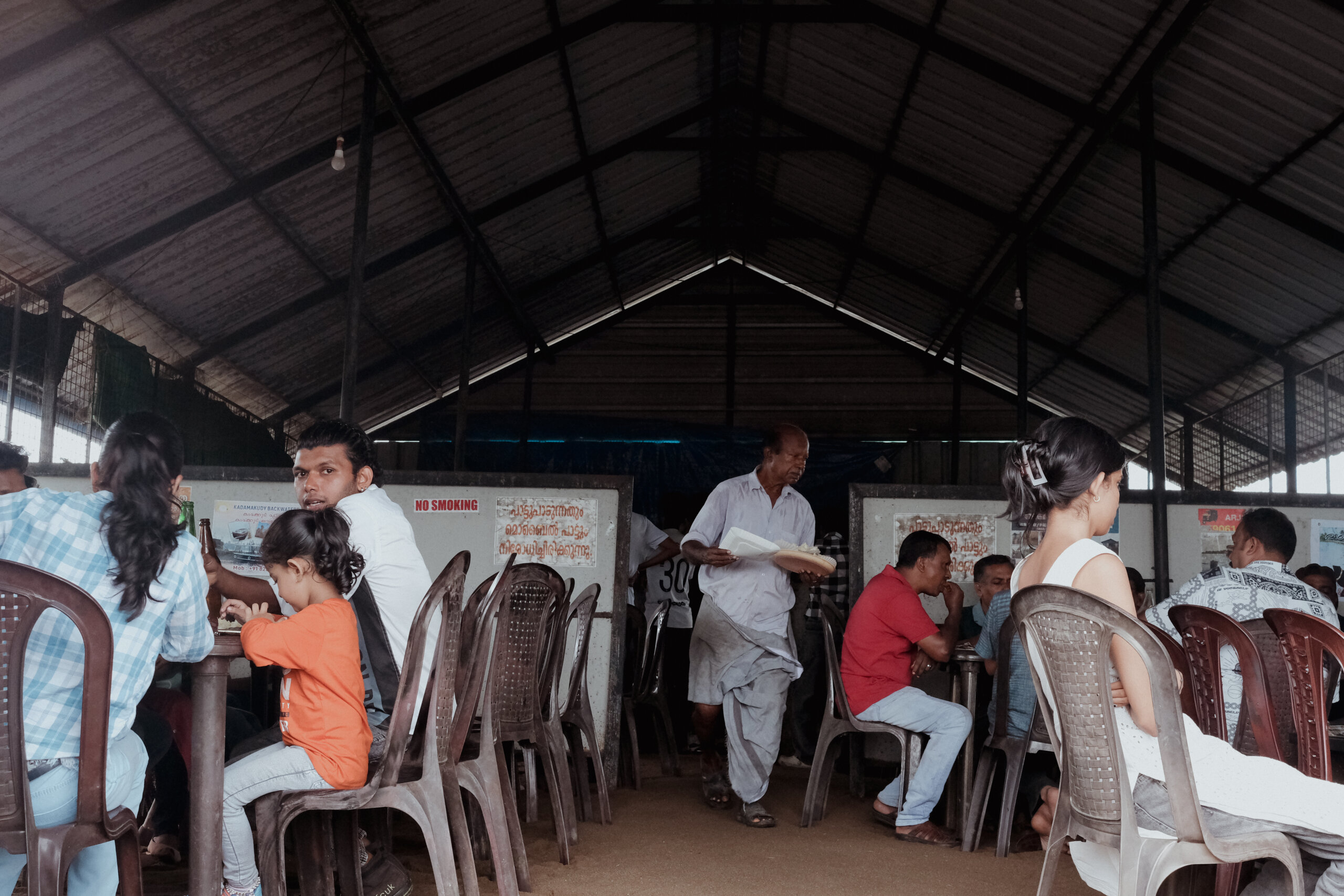
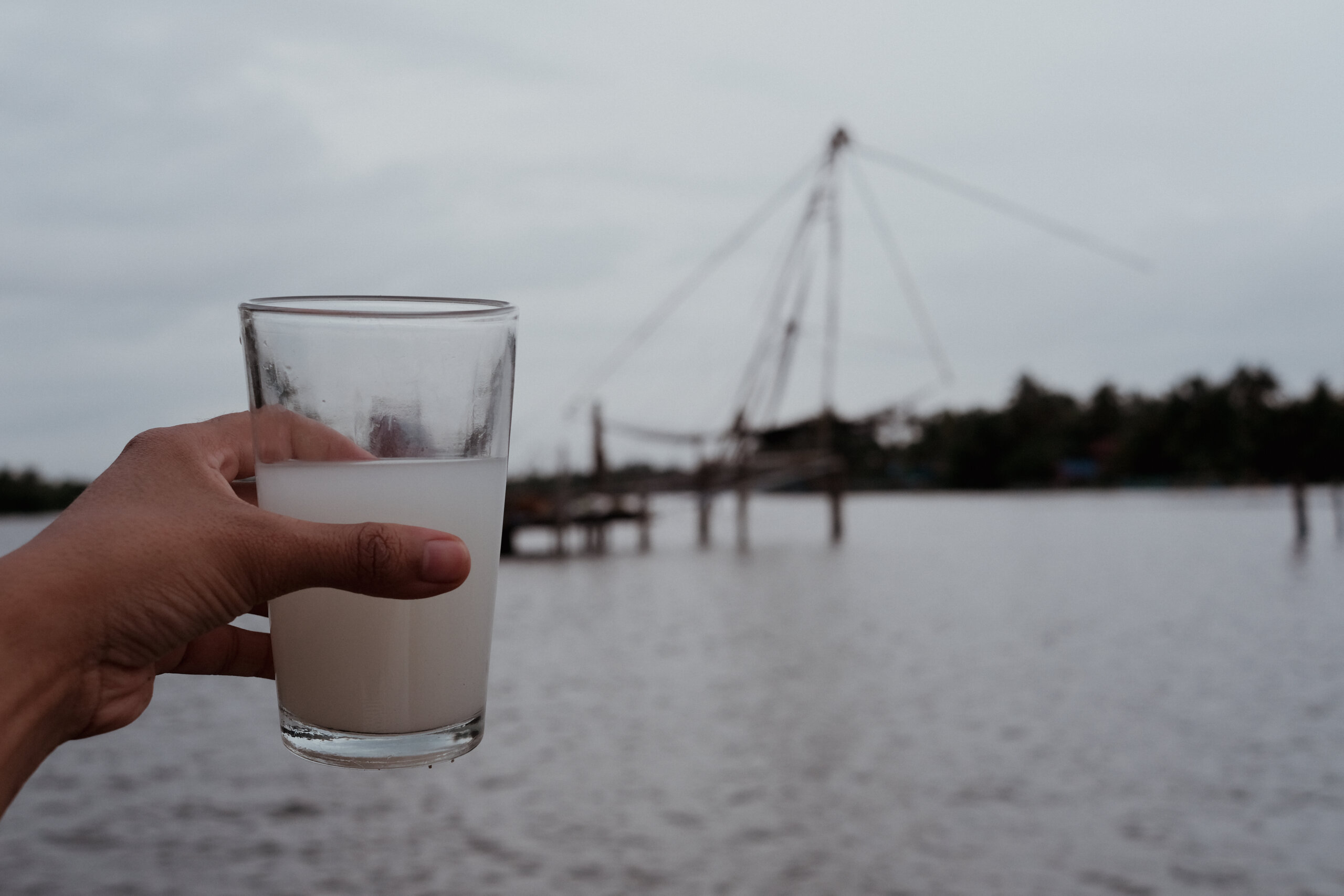
He beckoned me to sit at an empty table. There were no other diners, save for a family of four and me. My drink and fish arrived sooner than I expected. The translucent, white liquid had little bubbles fizzing from the bottom all the way to the top—a glass of fresh toddy.
A group of young men, who looked to be from the city, stepped in, their voices betraying their arrival several metres from the entrance to the shaap. At first, I was nervous from all the warnings. But as they settled down, they shot me a curious look and went about their day. Janakan and his staff, Prasanna and Joji, kept coming to my table to make sure I was comfortable.
I sat quietly for a while and then lifted the toddy-filled glass to my lips. The first thing that I noticed was its fragrance—a tangy, sour-ish smell with notes of saccharine coconut flesh. I took my first sip, and I was sold. It tasted sweet, its alcohol content immediately distinguishable as the cool liquid washed over my tongue, its body light and refreshing. An apt drink in coastal Kerala’s hot, humid weather.
I took a bite of the crispy fish fry. Crunchy, well-done, salty, and fishy, I devoured the rest in a matter of minutes.
In kallu shops, the food and drink complement each other, like wine and cheese. Shaaps hold a distinct place in Kerala’s food landscape, having created a niche for themselves as a sub-cuisine. Spice is the standout in their dishes—the more of the spicy food you eat, the more toddy you would drink to balance the heat. Plus, as toddy continues to ferment, it becomes thicker and more pungent, making spice-laden food a must to accompany the drink.
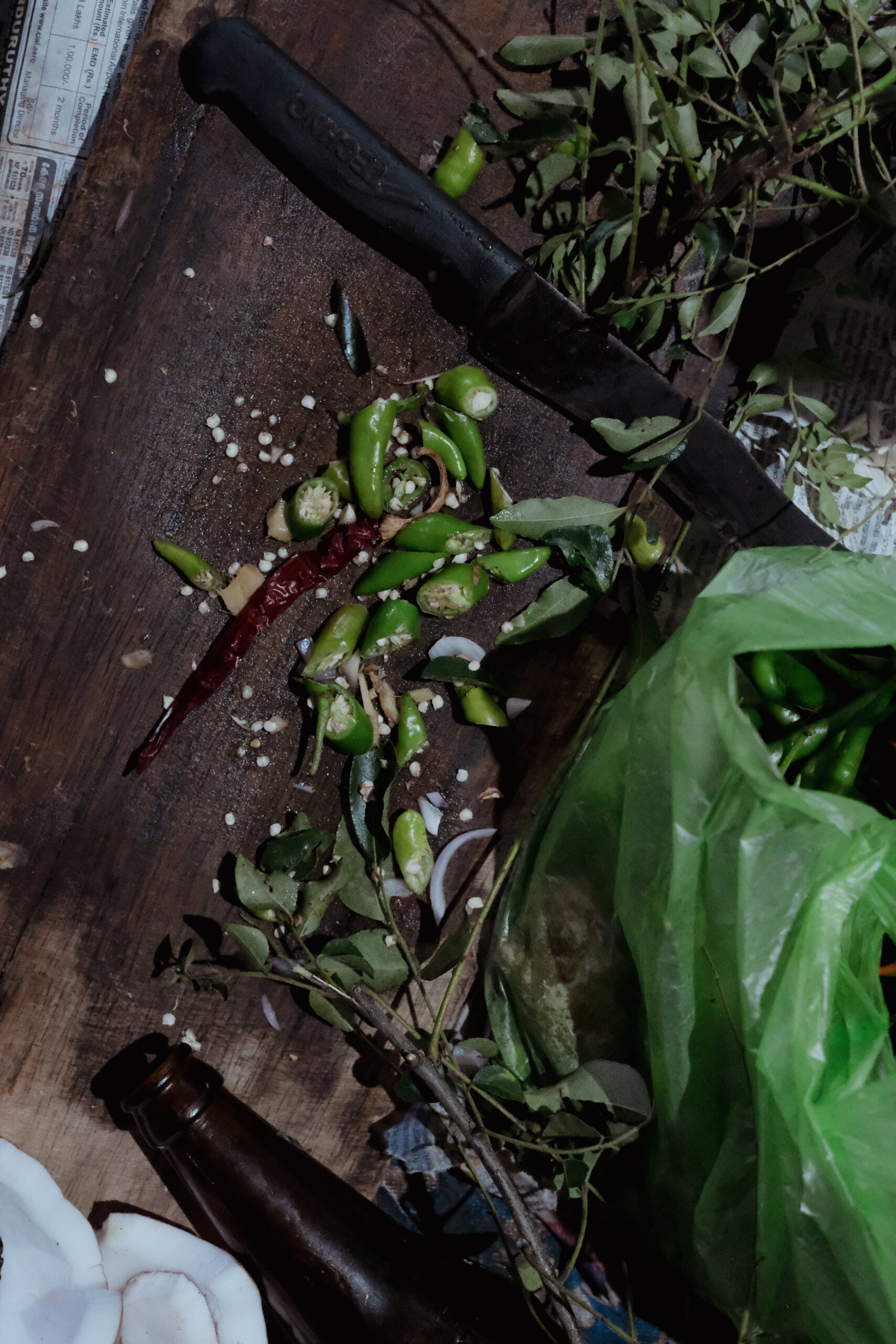
A typical shaap offers a variety of dishes that are not usually prepared at home. From kappa (steamed tapioca) with karimeen pollichathu (pearl spot marinated in spices, wrapped in a plantain leaf, and fried in oil) to meen thala (fish head) curry and duck mappas (slow-cooked duck meat in a spice-laden coconut curry), every dish is made with hyperlocal or local ingredients. Moreover, shaaps don’t have refrigerators, so the day’s cooking isn’t saved for the next day if there are leftovers. Everything must go, including the toddy, which takes on an unpalatable sourness after 24 hours.
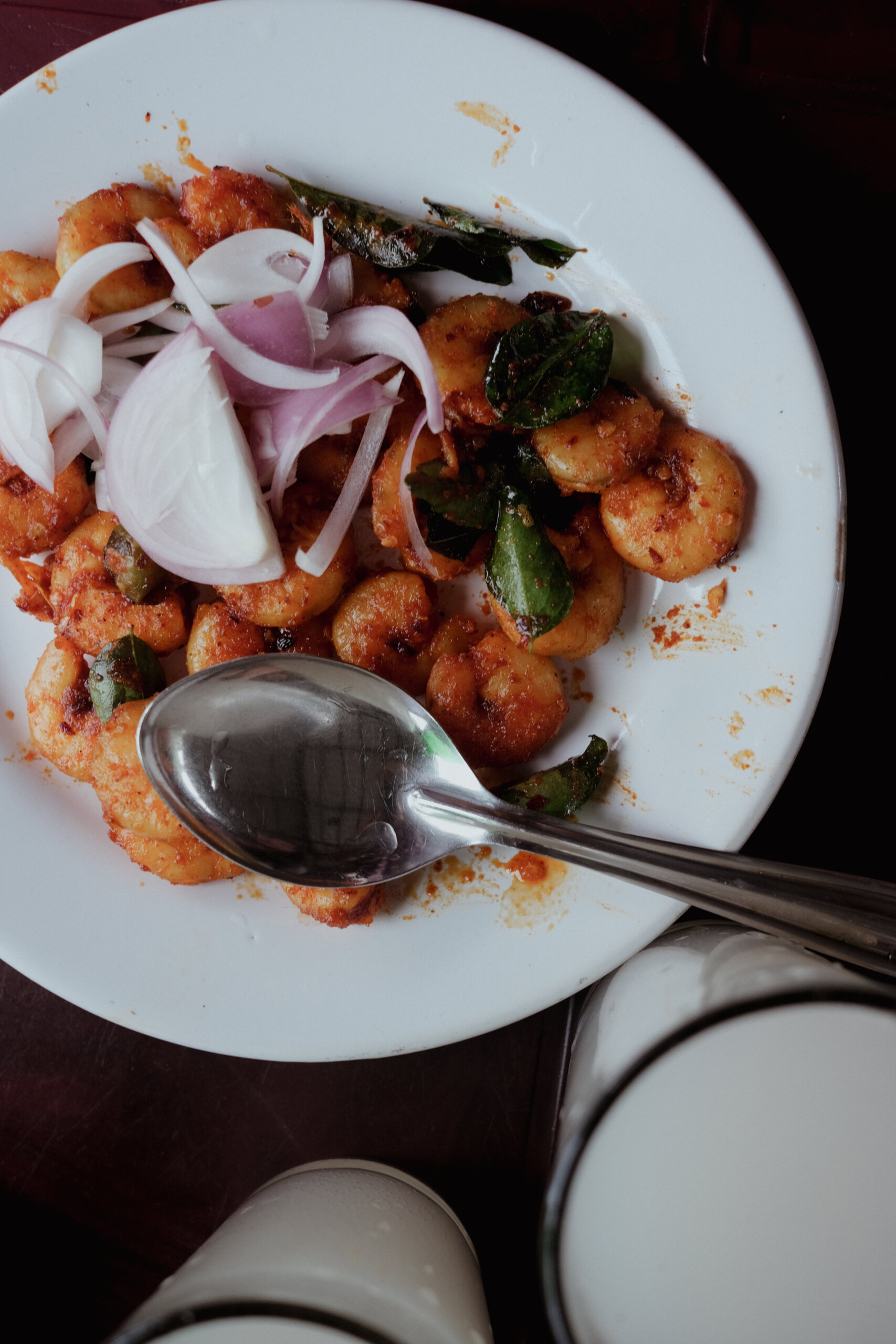
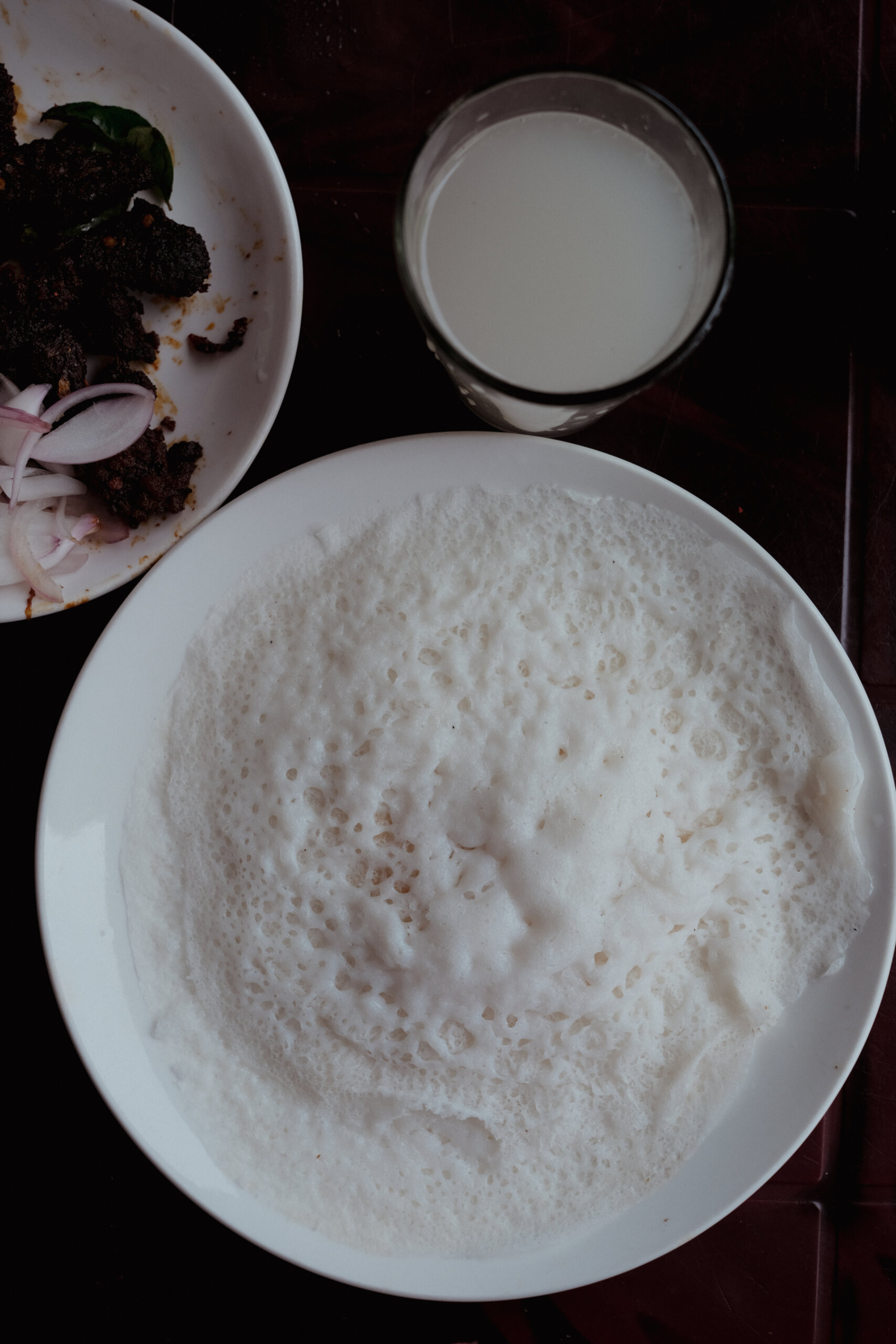
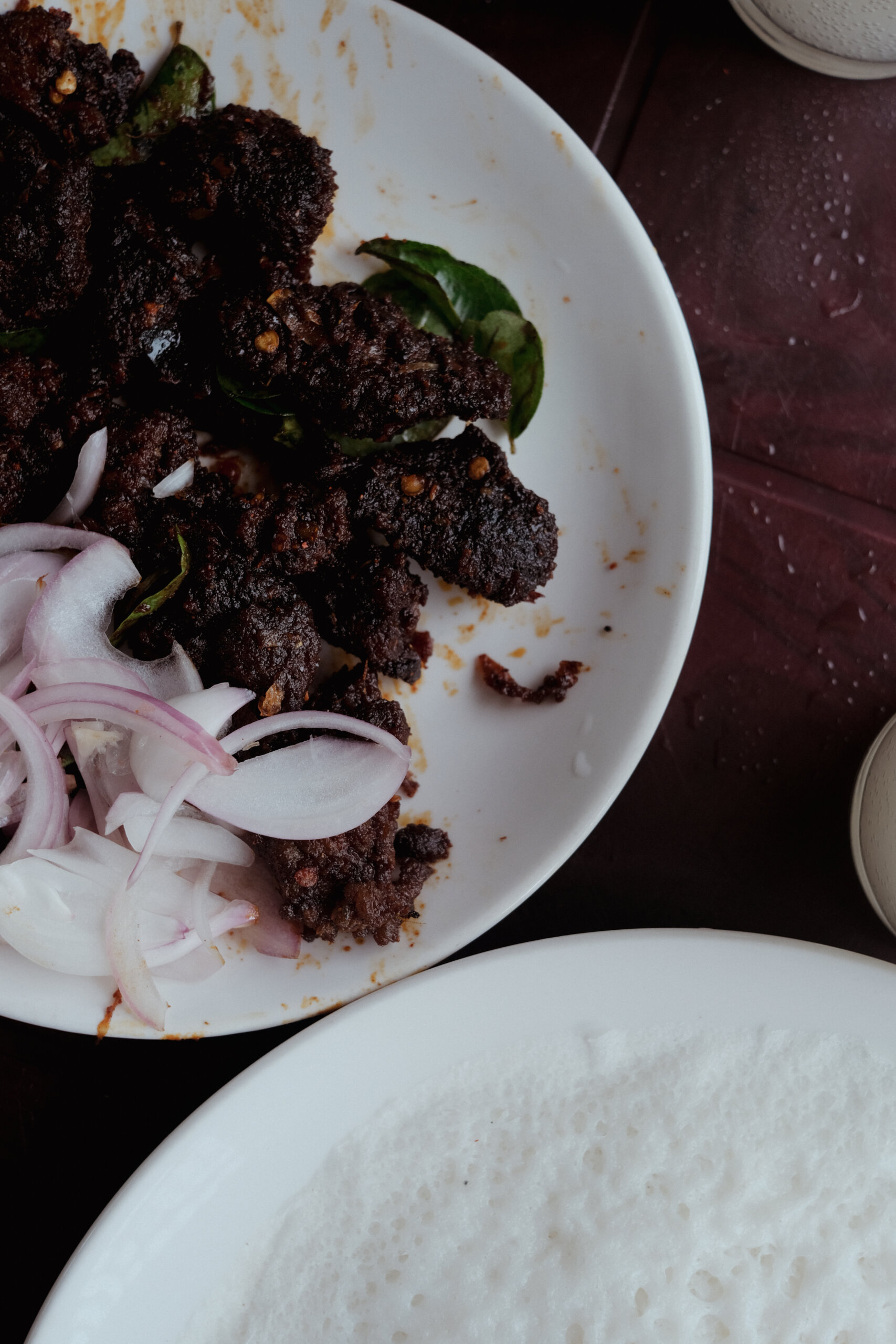
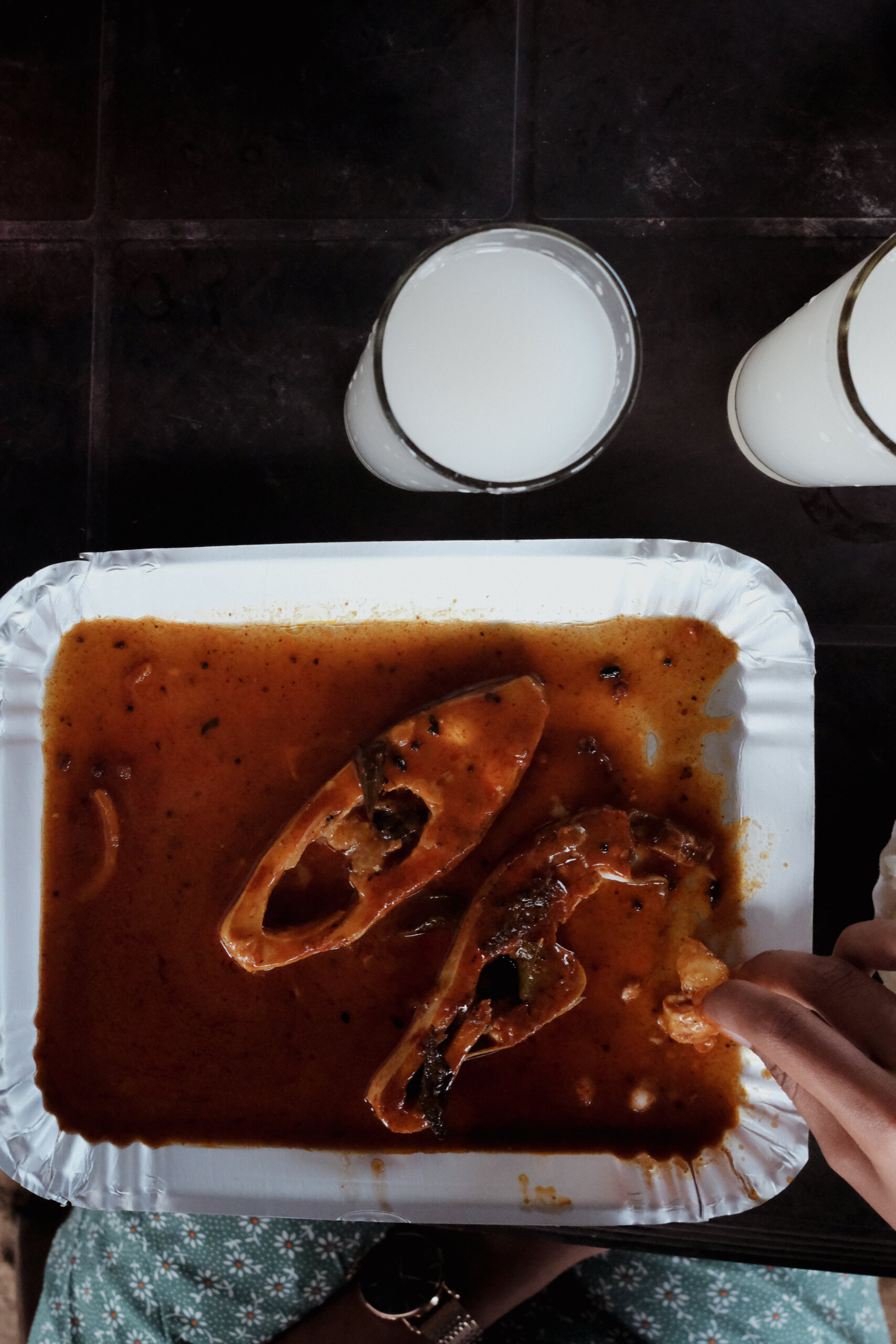
I ordered another glass of toddy. This one tasted stronger—the alcohol content couldn’t be masked anymore. Still, it slid down my throat with ease, finding a comfortable place in my stomach. Janakan would look at me often, hoping I was finding everything to my liking. I told him everything was great and that I’d take another glass.
At the time of my visit, Janakan was 74. A grandfather thrice over, he said that I reminded him of one of his granddaughters, who is pursuing a Commerce degree in a nearby college. His kids, he said, are employed in government jobs.
“I’ve been working here for 51 years,” he told me.
“That’s a long time,” I replied.
“I like feeding people,” he said.
In his fifty-plus years of running and working at the shaap, Janakan has experienced fluctuating politics. From attempted bans on toddy shops due to adulteration cases and an increase of excise tax on domestically-produced liquor by 200%, to loss of business during the COVID-19 period and the end of Kerala’s 16-year toddy dispute due to alcohol content limits being revised, this seemingly innocuous drink has had a tumultuous past.
Today, thanks to the social media frenzy, where everything is content for consumption, toddy shops have an opportunity to dust off their complicated history. Influencers et all rush to shaaps to document “authentic rural experiences” and “must-try foods in Kerala”.
The toddy shops aren’t complaining. Any business is good business. But this comes with a caveat—will toddy shops be able to sustain such cyclical demand for government auctioned kallu and locally sourced food? What happens when content creators find the next cool thing to hop onto? Where will that leave toddy tappers and shaaps?
But Janakan’s five decades of experience in the field put me at ease. There will always be local patrons. Even after the social media buzz has faded, shaaps will continue to run, thanks to its regular clientele of labourers and village folk looking for respite from a long day’s work.
“It’s going to rain,” Janakan said.
“Don’t worry,” I assured him. “I have my koda (umbrella).”
He got me another glass. This one went down a lot faster than the previous ones—a sign that the delightful buzz of kallu has taken hold of me. And as it began to pour, the wind picked up pace, howling like a wolf, bending coconut trees to its whim, while the backwaters outside the toddy shop began to swell and roar; the perfect setting for another glass of toddy.
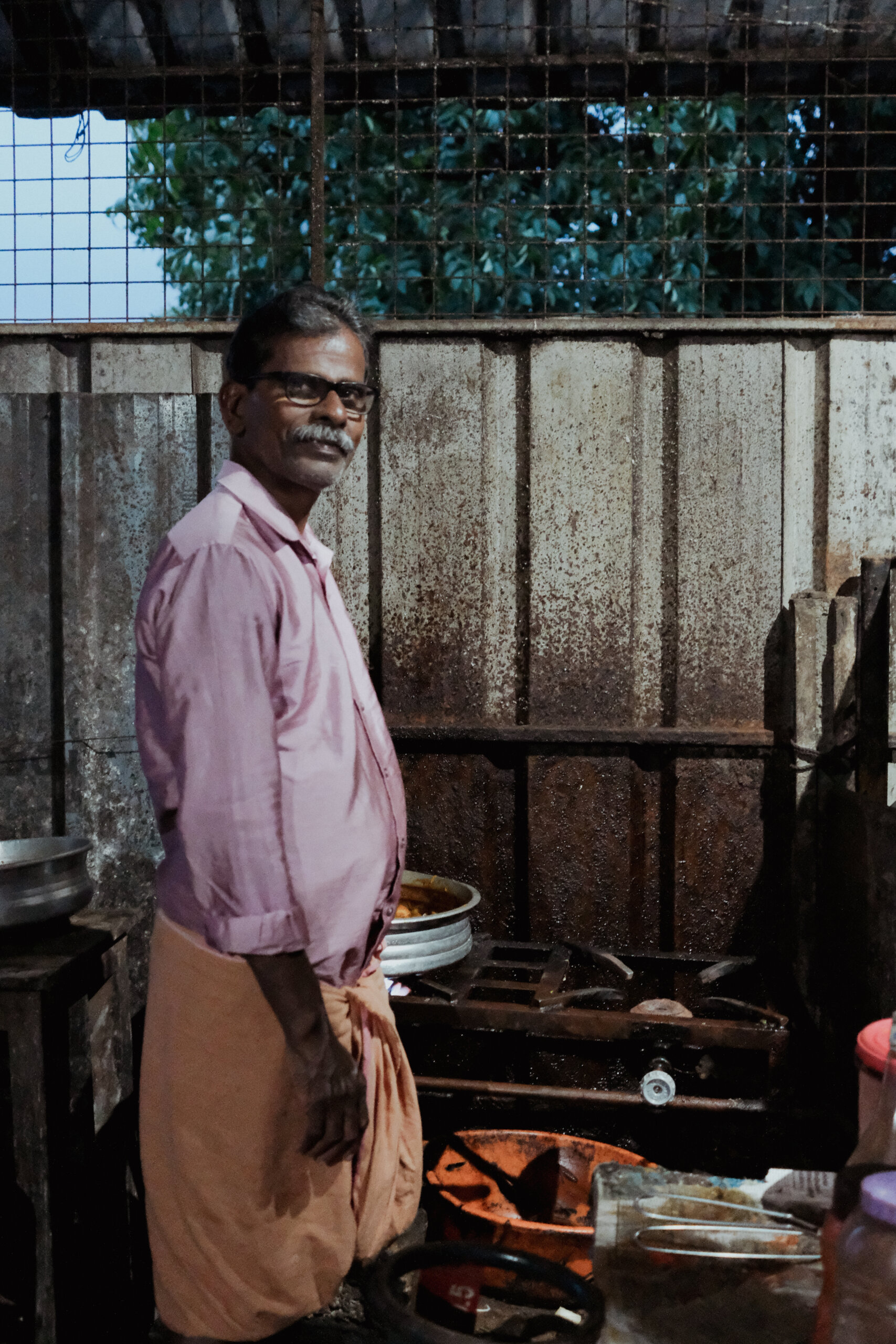
From inside the kitchen, I could hear the clang of metal against metal, the shouts of the waitstaff delivering orders from tables, and the crackle of wood fire turning raw meats and tubers into delicious culinary complements to the glasses and bottles of toddy that kept coming from the back of the shop. More and more patrons kept arriving, despite the heavy rain.
Opposite the kitchen fire, Joji sits at a desk and meticulously records each order and its billed amount. No paper or pen—he does this on the wooden desk, a piece of white chalk his writing instrument. And when one set of bills is cleared, and the accountant is satisfied with the keepings, he wipes the numbers clean off the desk—to make space for the next set of bills.
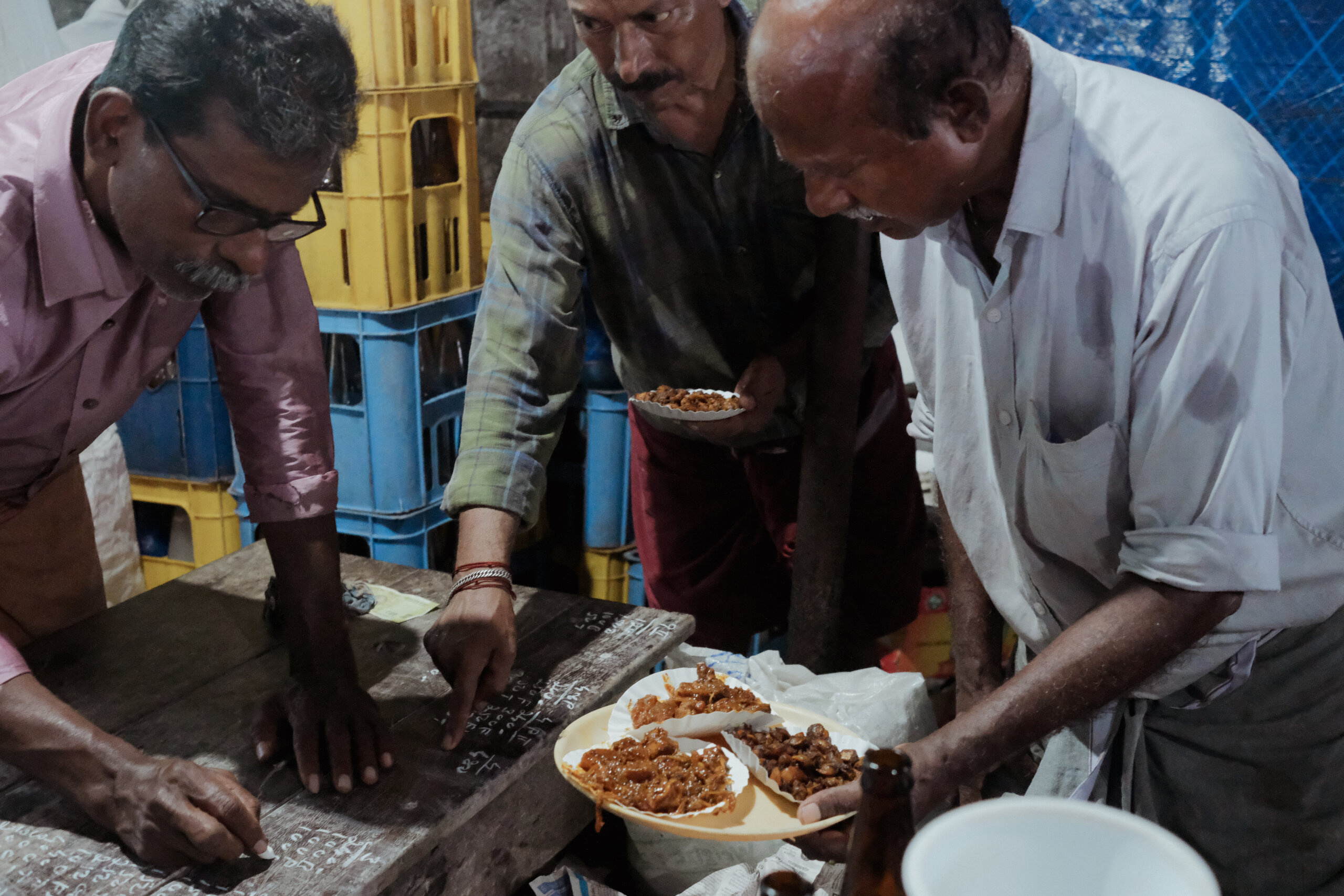
The kitchen works non-stop, firewood smoke mingling with water vapour emanating from the vessel boiling a batch of kappa, reminiscent of incense smoke. On the opposite side, above Joji’s desk of accounts, is a small altar. Gods and saints, from different religions, making space for each other’s divinity, are placed on it. The staff comes from different faiths. Perhaps this is a way to make each one feel included, valued, and respected by holding in regard the imagery that appeals to their worship cultures.
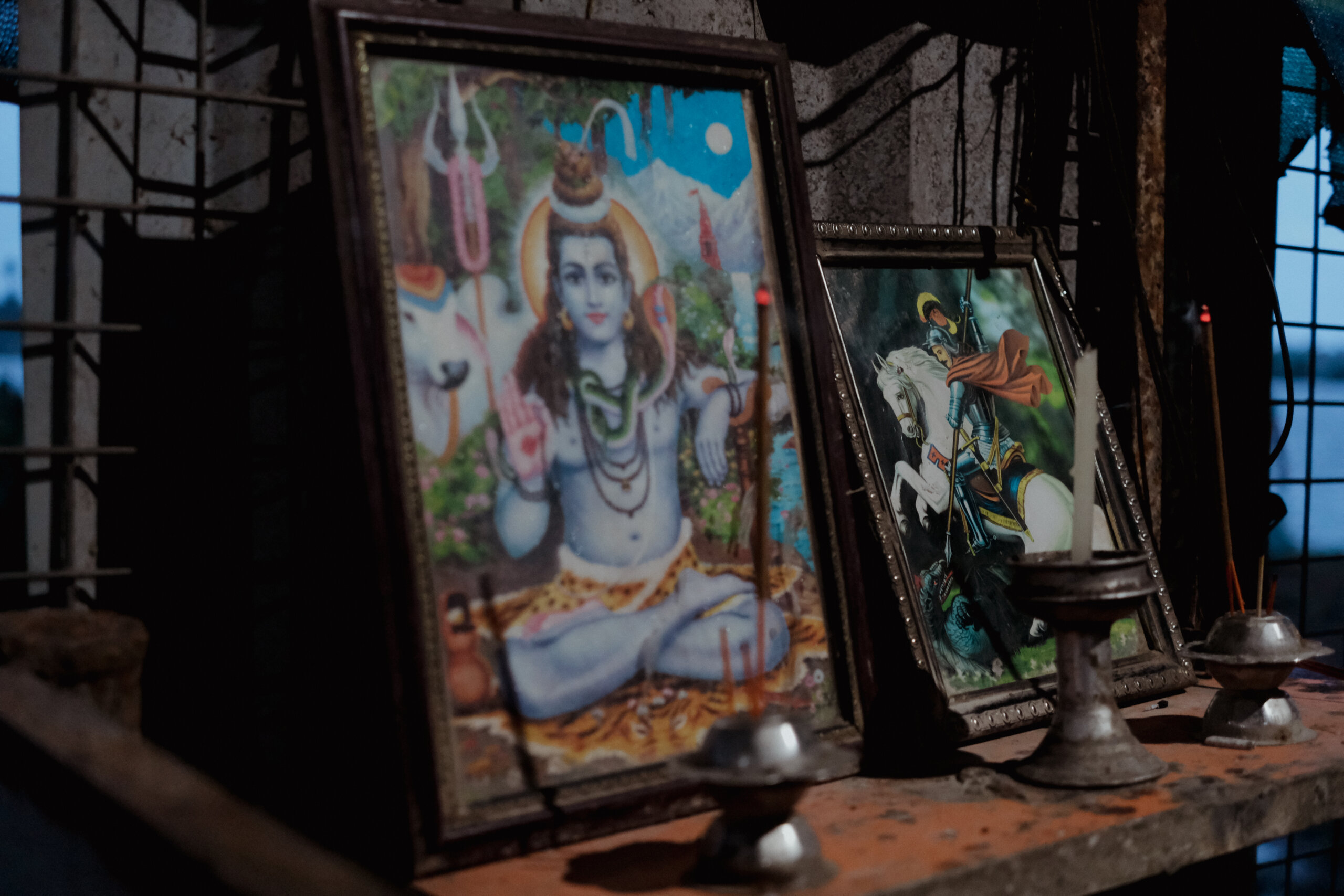
Work is also a form of worship for all whose livelihoods depend on the shaap. From the owners, cooks, and servers to the boatsmen who run their unorganized boating service in the backwaters by the shop, the toddy tappers, fisherfolk, and farmers whose wares grace the bellies of patrons, this interconnected web of labour supplies sustenance to many.
When the rain began to relent, I stepped outside the shaap, my glass of toddy in tow. A boatman asked me if I would like a ride around the backwaters. I politely declined.
“Boats make me sleepy, and I’ve had a lot of kallu,” I told him.
“I used to do dubbing for movies. Malayalam, Hindi, Telugu, Tamil,” he told me. “But work died down. So now I ride the boat.”
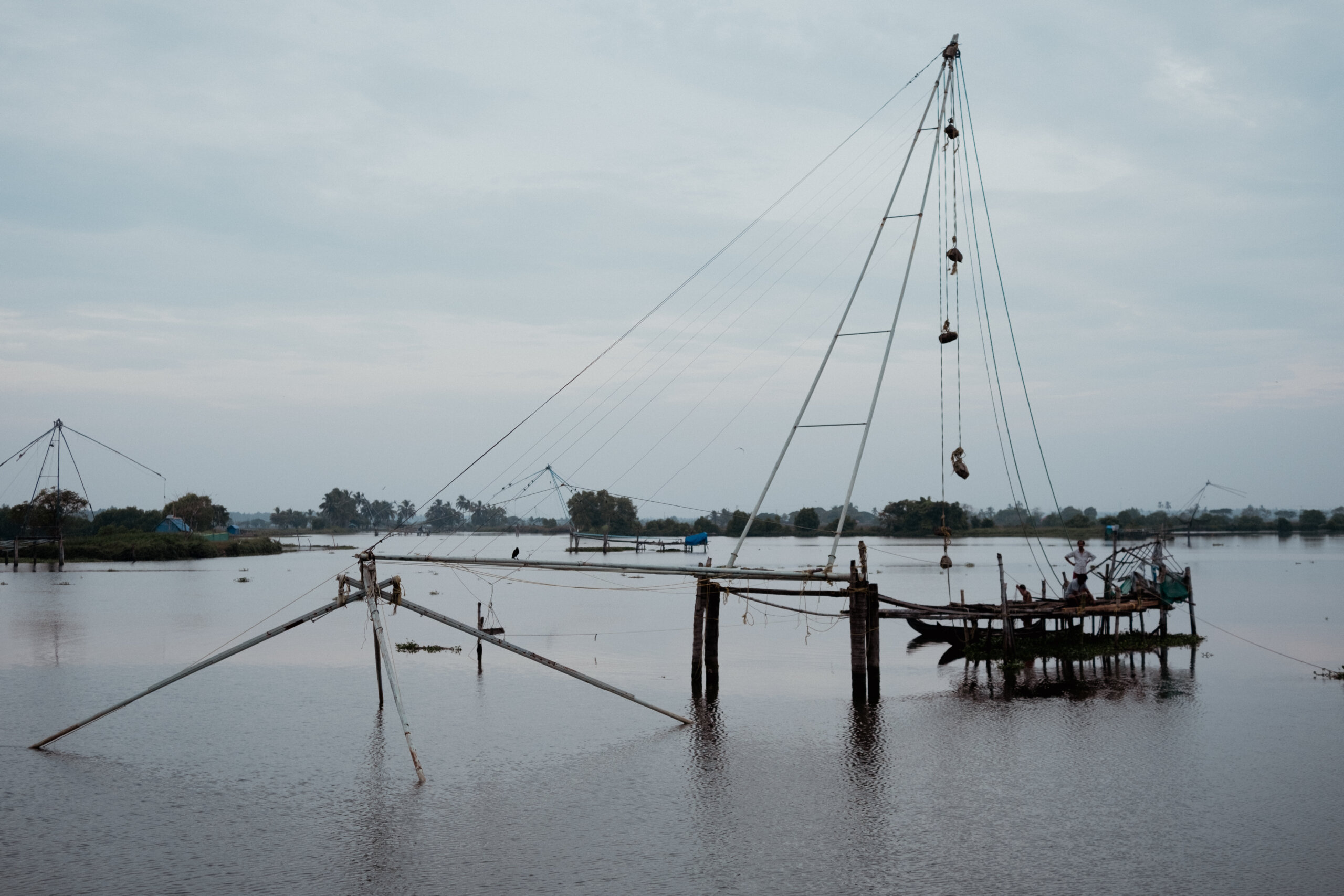
We stood at the threshold of the shaap. The Chinese fishing nets continued to sway in the whipping wind. Another bout of rain was certain to fall.
He told me his name—Stanley.
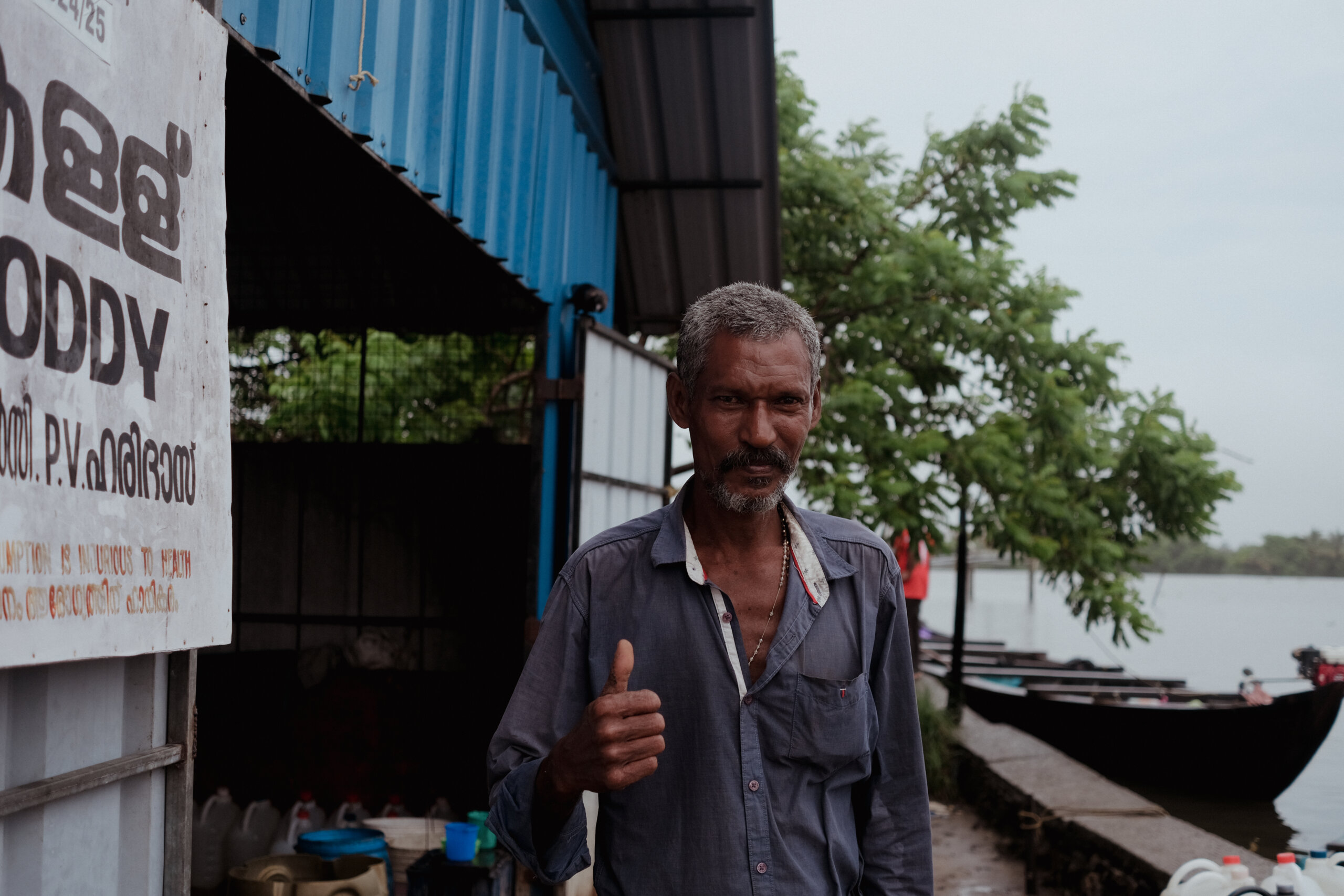
“I like it when it doesn’t rain,” he said. “I get customers for boat rides, and that means I get to take money home. But when it rains, I’m stuck in the shaap. And I spend my money here.”
His dark brown eyes shone with mischief as he said, “I also prefer when people pay me through UPI. If it’s cash, that gets spent easily on…,” he trailed off, his eyes hinting towards the glass of fragrant, milky white liquid in my hand.
I cleared my shaap bill, waved goodbye to Janakan, Joji, and Prasanna, and slipped some money into Stanley’s hand.
“This is an advance for the boat ride, the next time I come here,” I told him.
He looked at me for a few seconds. Then, he smiled and waved goodbye till I disappeared at the curve of the narrow mud path in a waterlogged paddy field.
The next day, I had lunch at my homestay, and followed my heart to the kallu shaap again.
Janakan saw me and smiled.
“Niviya,” he called out, “come, come!”
He placed a full bottle of the lucent liquid in my hand, even before I said anything.
“We’ve been waiting for you,” he said.
I smiled at him and sat outside the shaap with my drink, watching the boats go by on the glassy, tame backwaters. Both Janakan and I knew that we wouldn’t see each other again. But we had this moment, this ordinary present suspension of time to do what pleased us—me, alone with my thoughts; him, serving diners and doing what he loves.
Currently, the Kerala Toddy Board is experimenting with bottled toddy that can last up to a year. Compared to regular toddy, which has an alcohol content of 8.1% to 8.98%, bottled toddy has an alcohol content of 2%. The goal of this experiment is to increase employment opportunities for everyone involved in the toddy business and, in all obviousness, tax revenues for the state.
How this will affect those whose livelihoods are linked to toddy, I can’t say. Shaaps are essential community hubs in rural Kerala, and one hopes that any regulation passed will benefit those who need it most while preserving this delicate microcosm of food culture from being diluted and degraded.