It is 31° C. It feels like 38°.
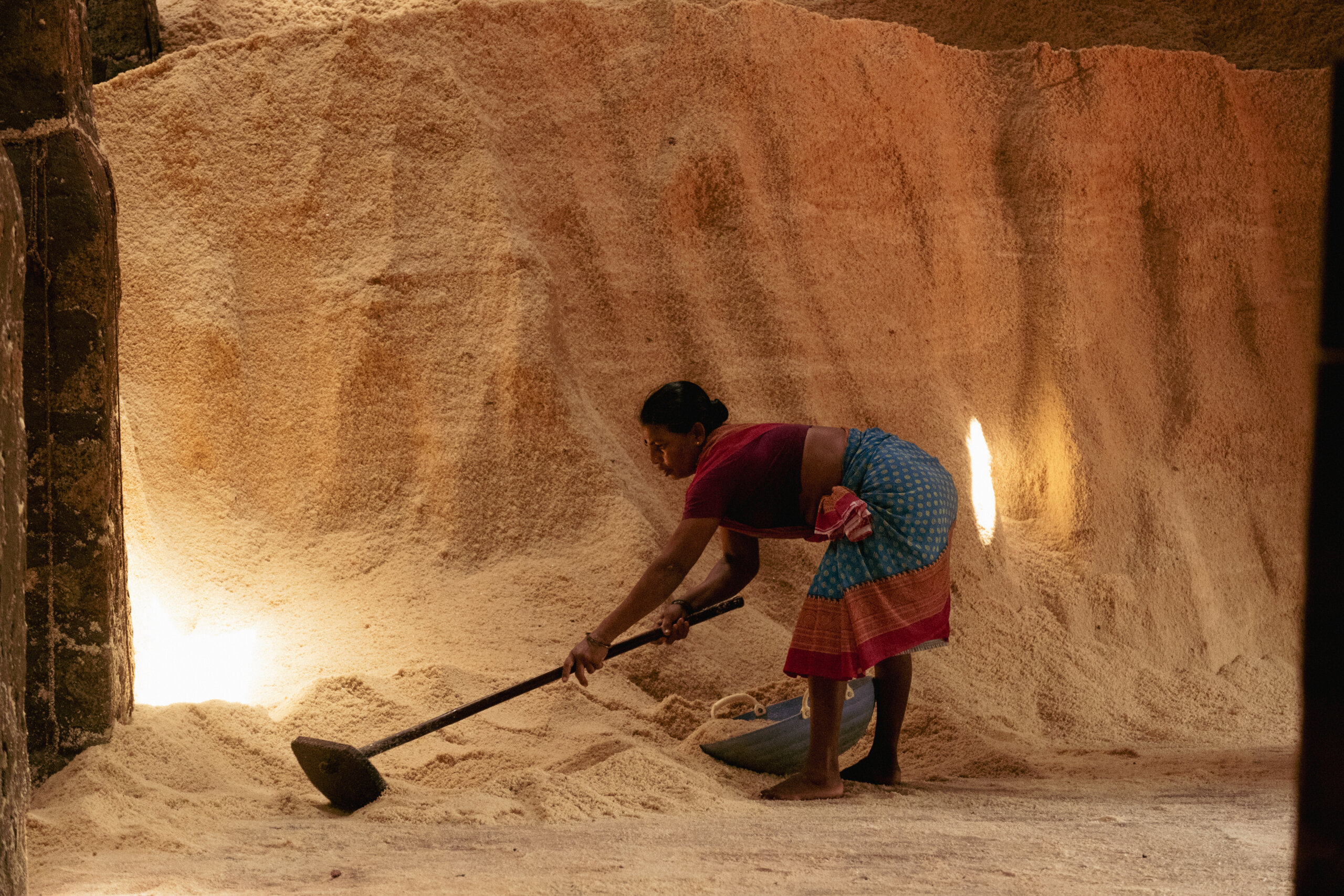
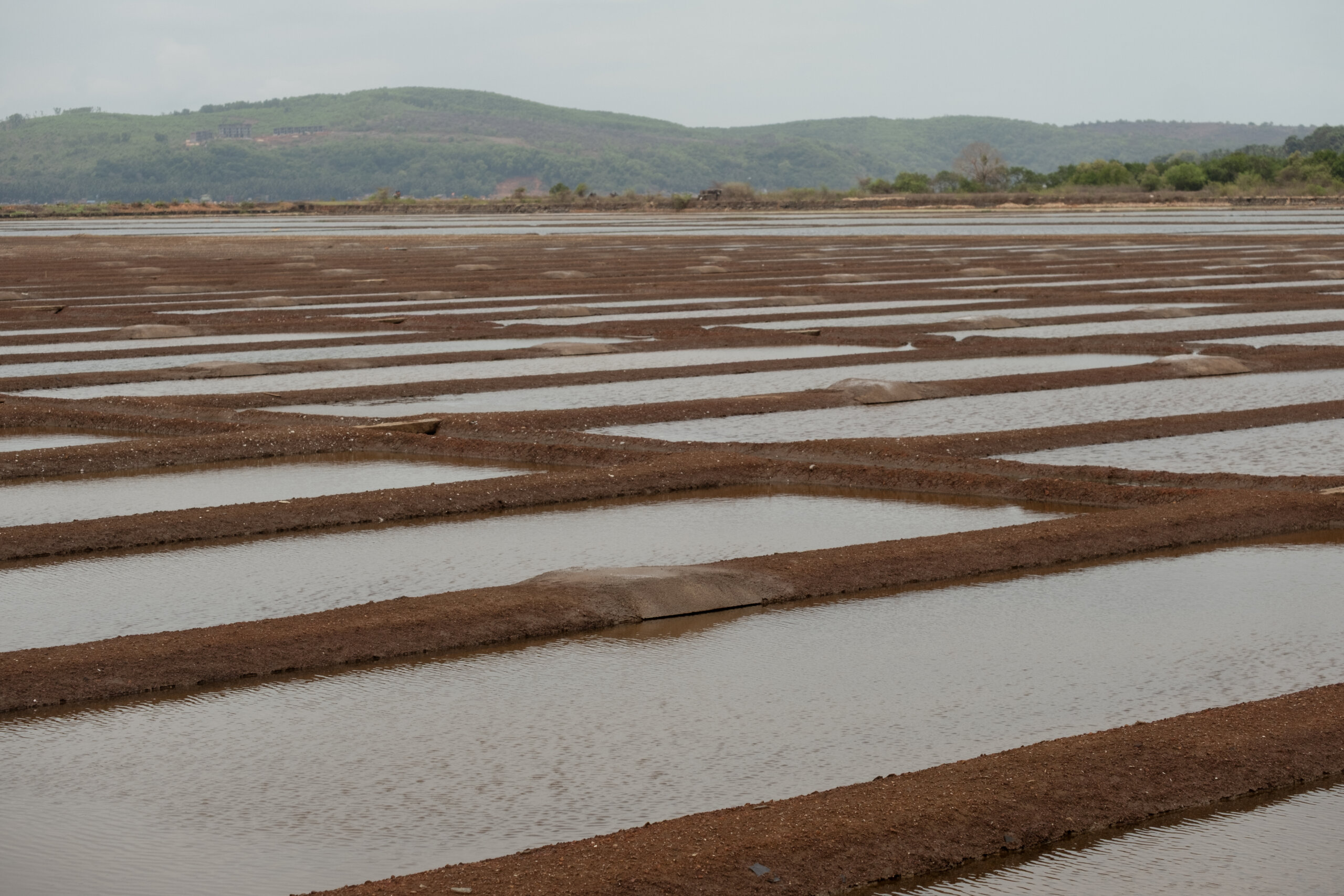
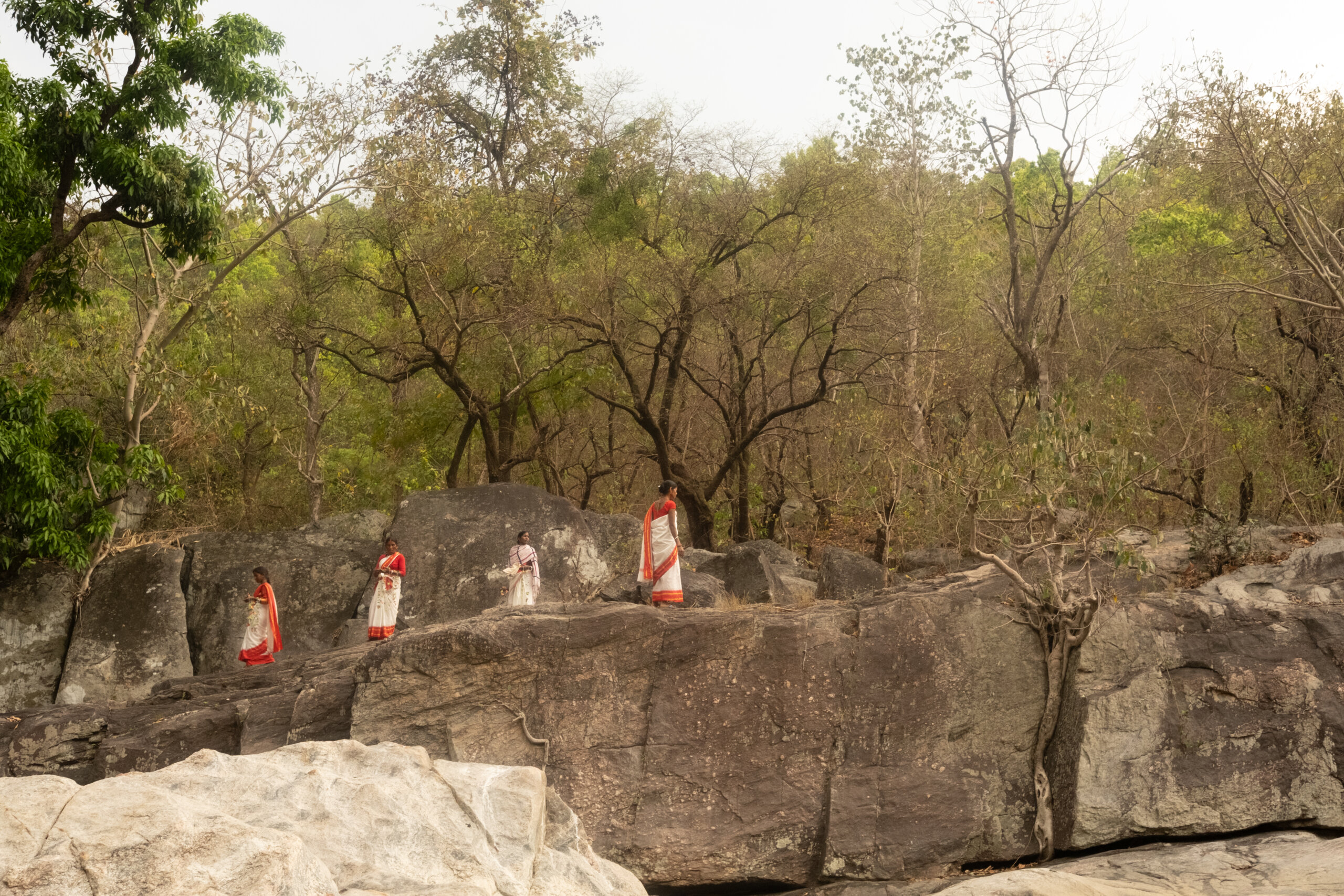
Gokarna in May is akin to the inside of a high-powered oven. The waves of heat hit me in the face as I ride through the cuts in the rocky hills, flanked by dense growths of trees cloaked in numerous shades of green. Soon enough, the foliage gives way to an open expanse. On either side of the road are rectangular pans—appearing like small rice fields—filled nearly to the brim with water, the manmade bunds barely visible—peeking occasionally from the ebbing and lapping of rainwater, reminding passersby that they’re here to stay. In Sanikatta, a fifteen-minute bike ride from Gokarna’s main beach, acres and acres of salt pans stand in defiance of the elements—weather, time, and modernism.
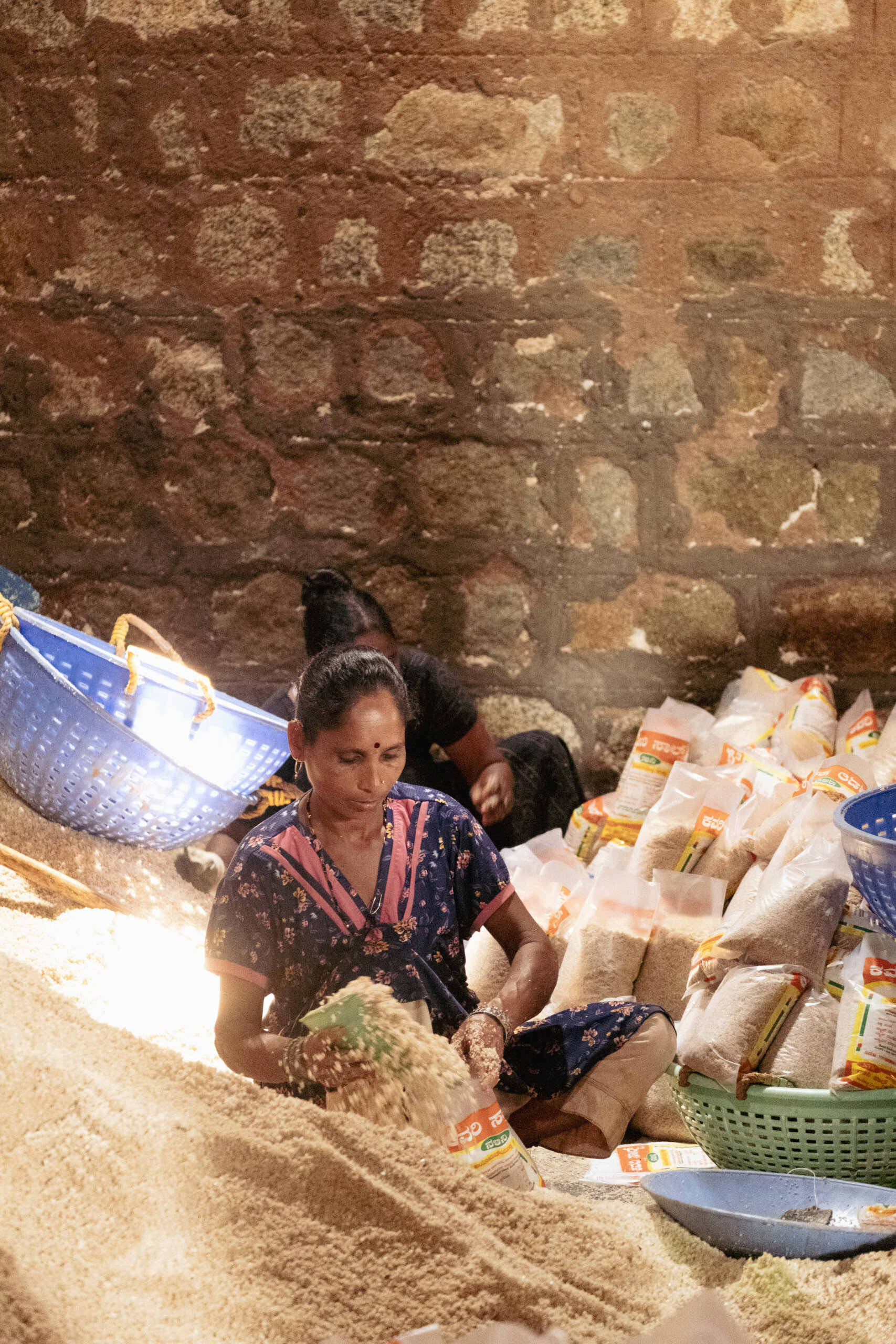
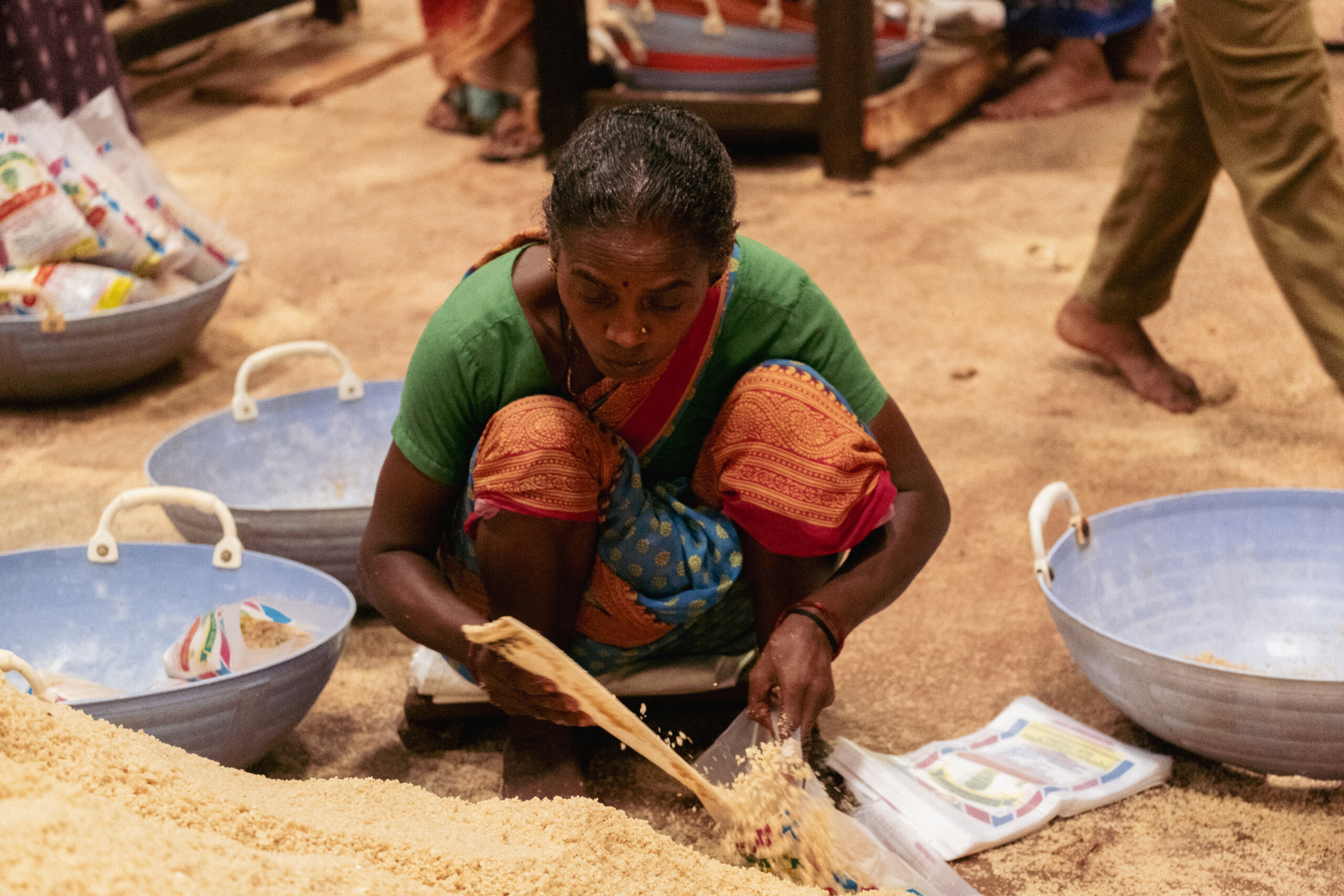
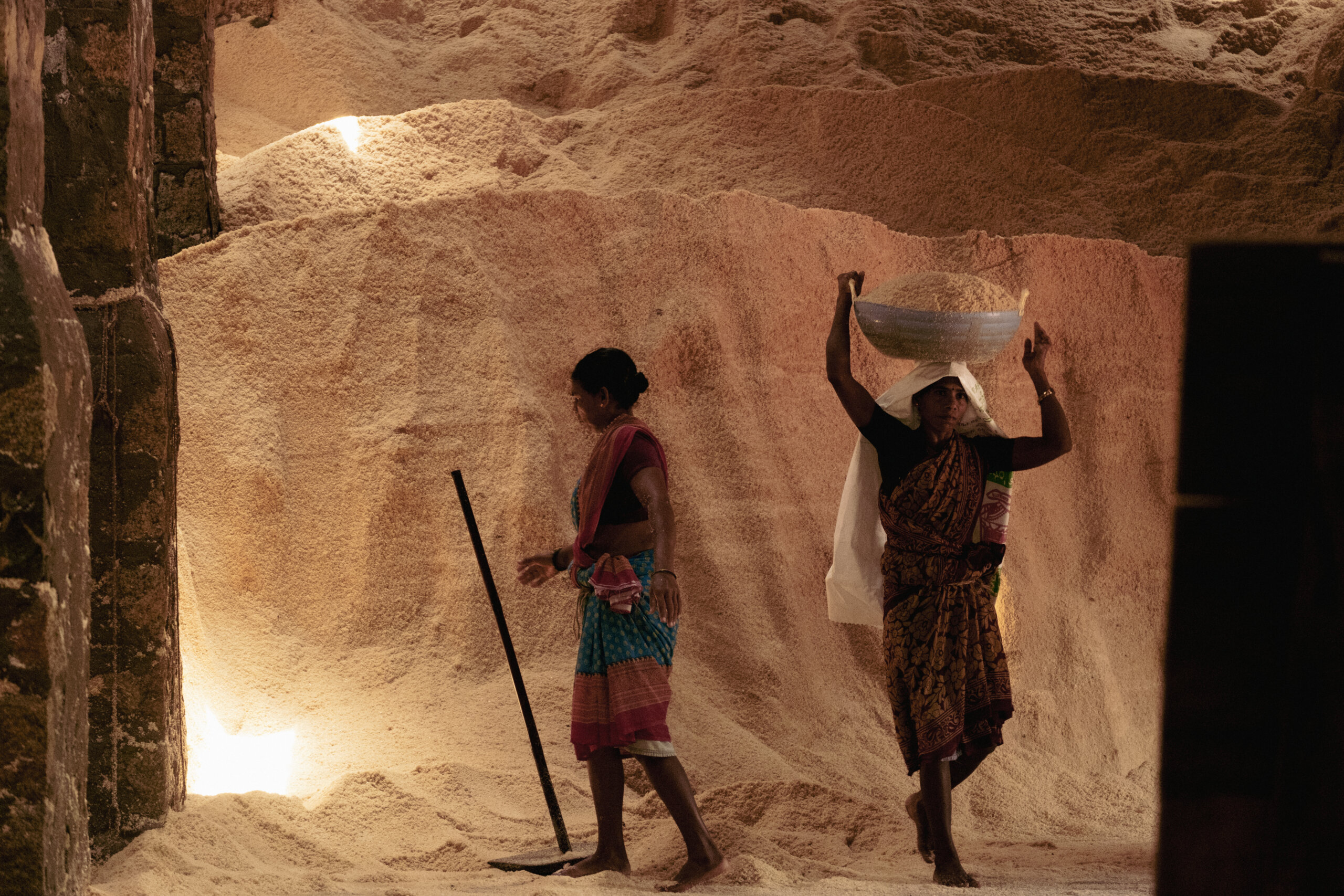
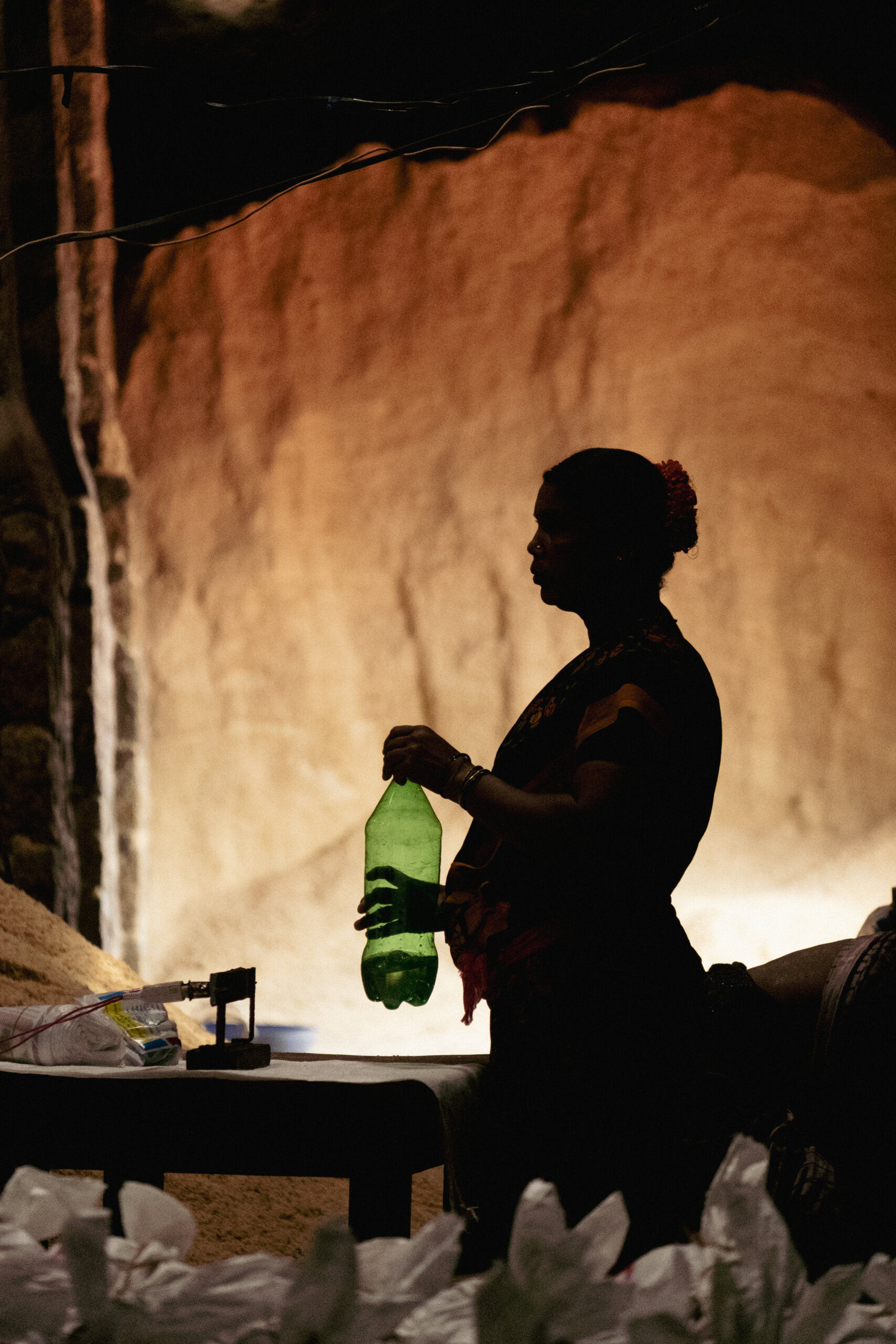
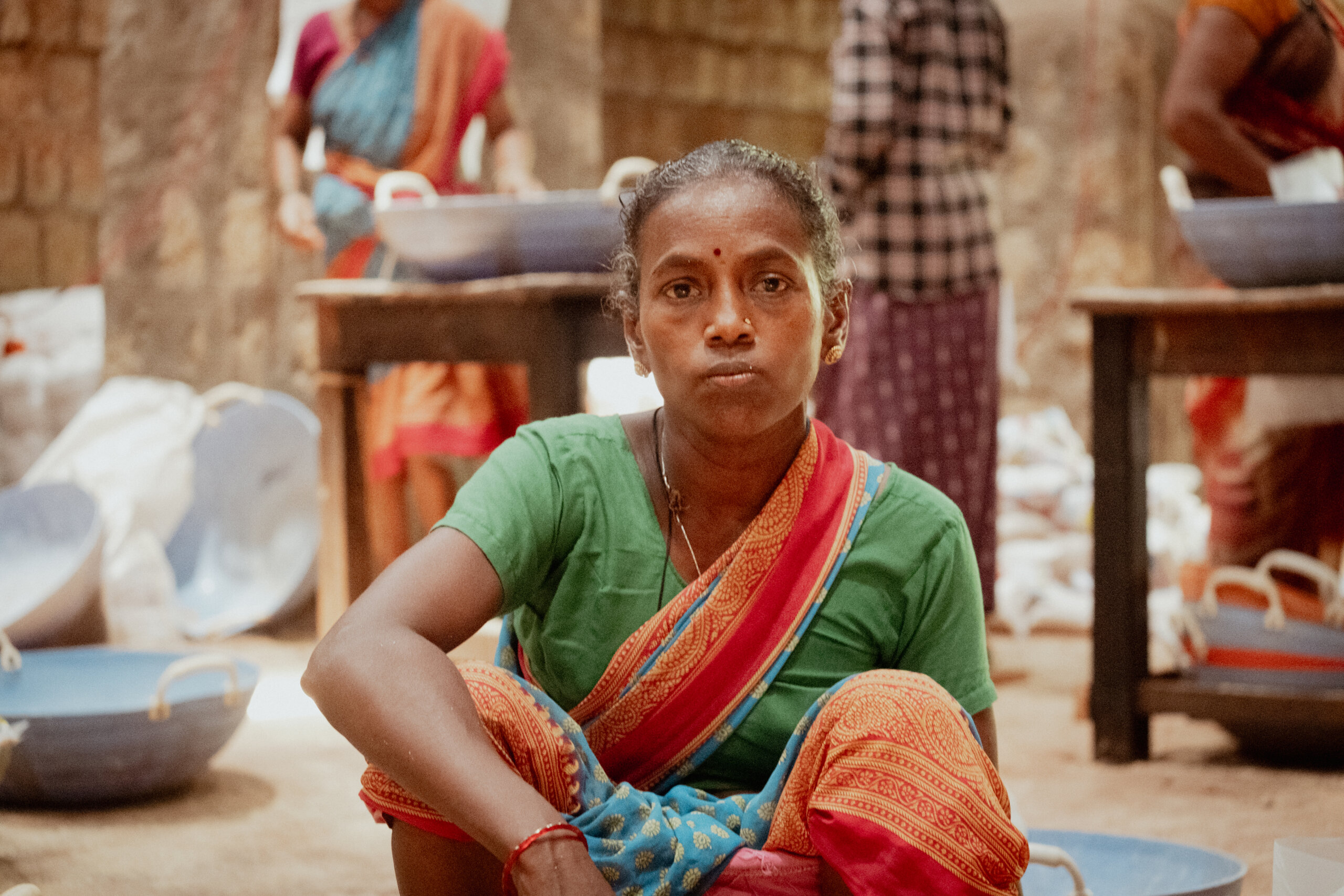
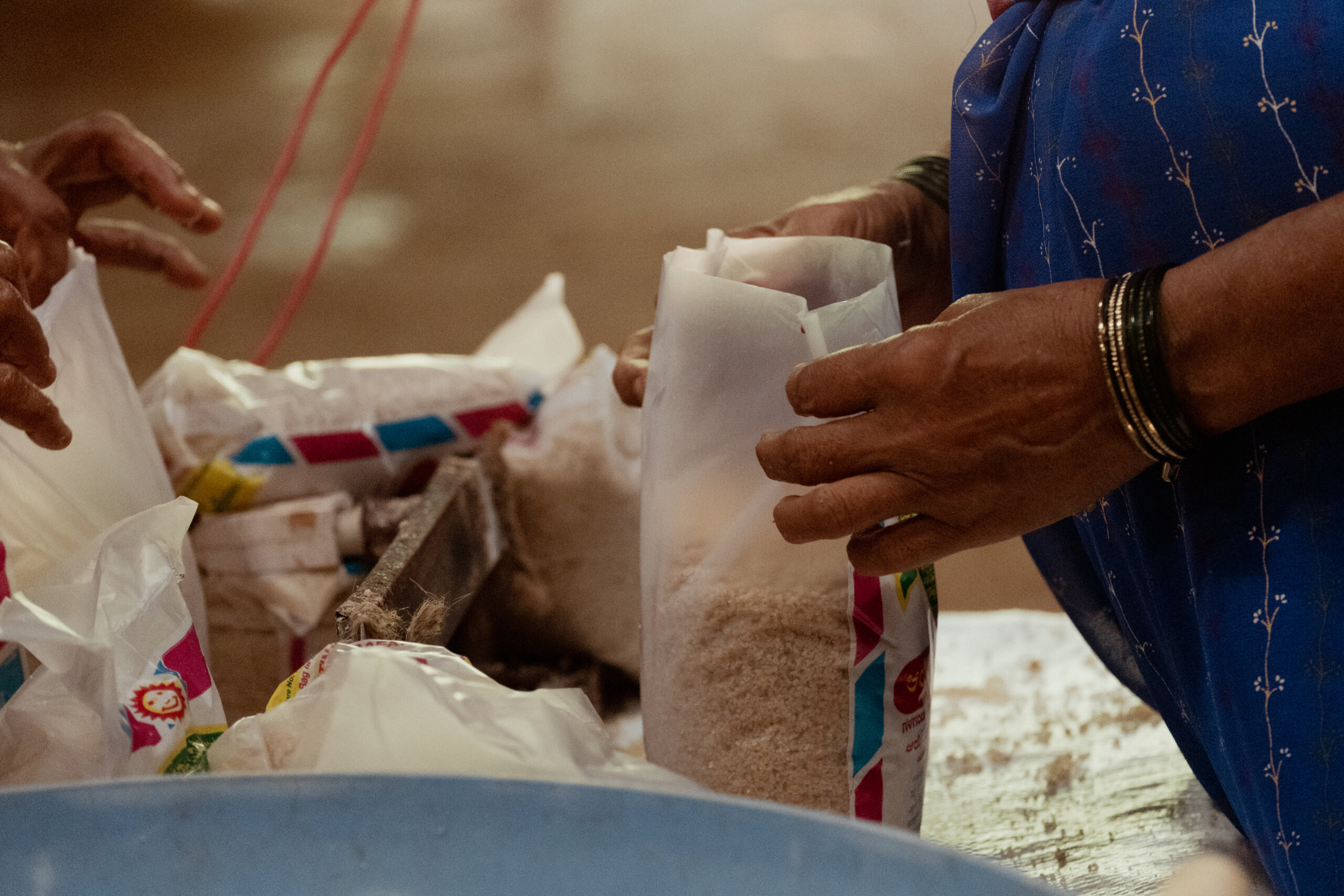
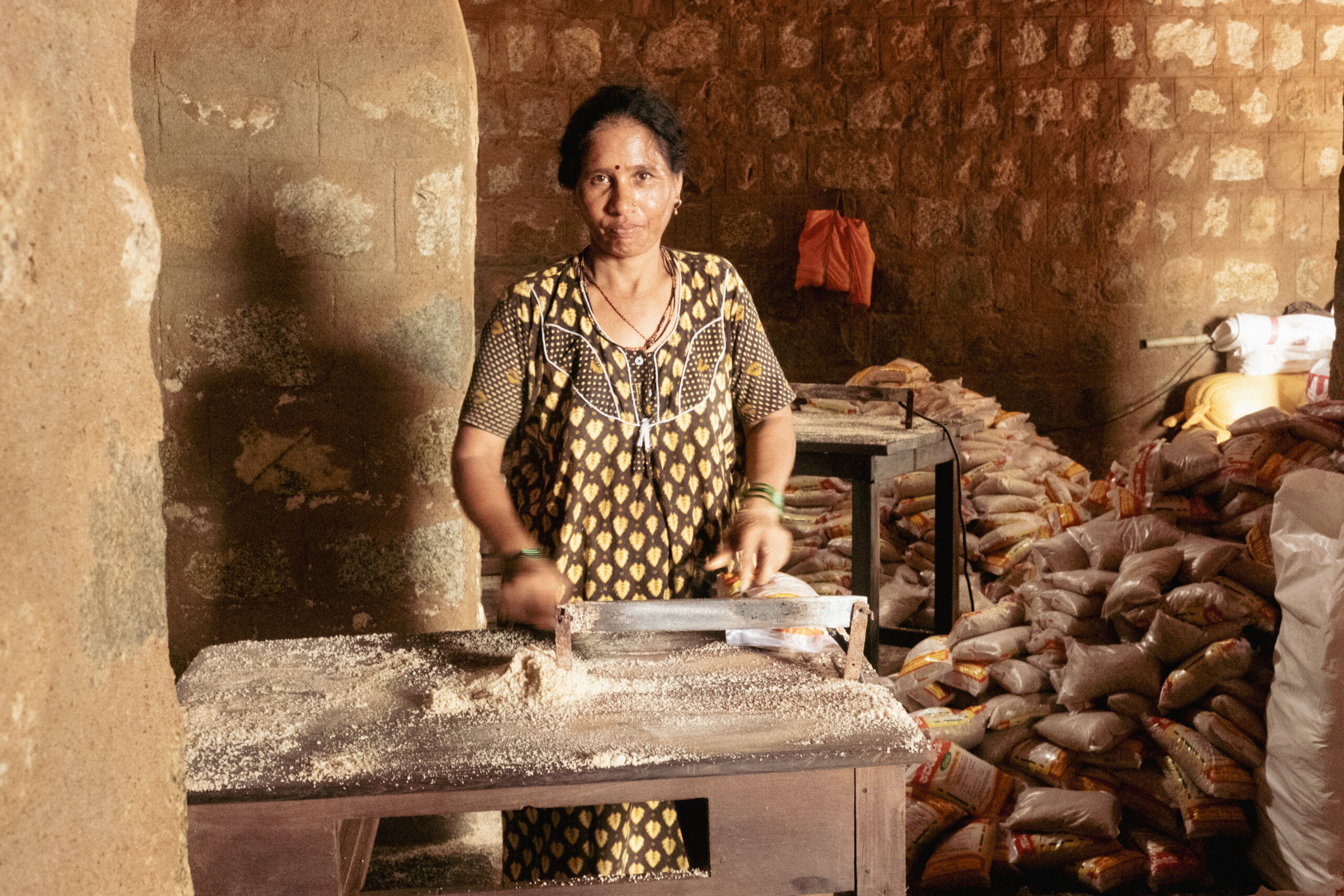
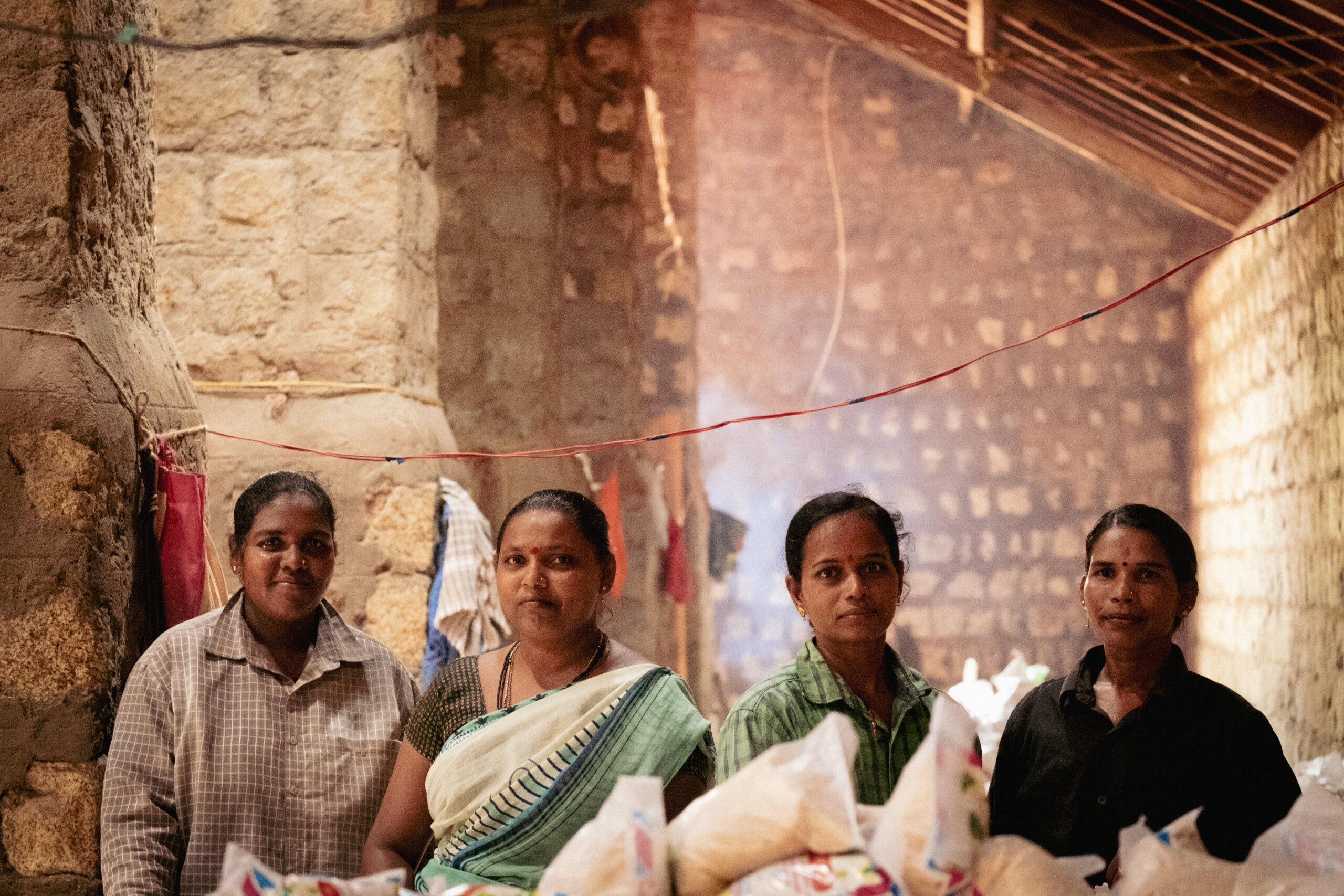
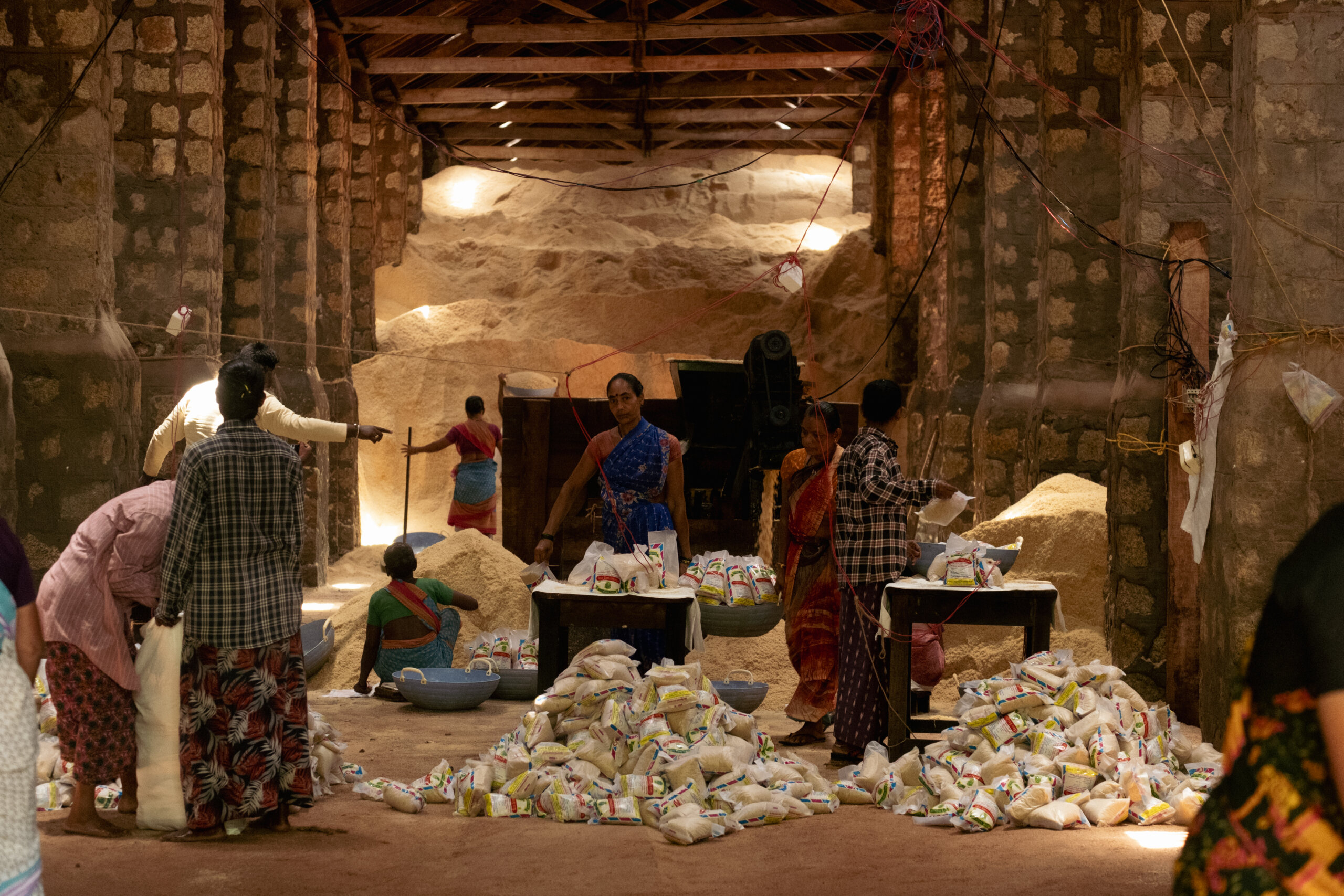
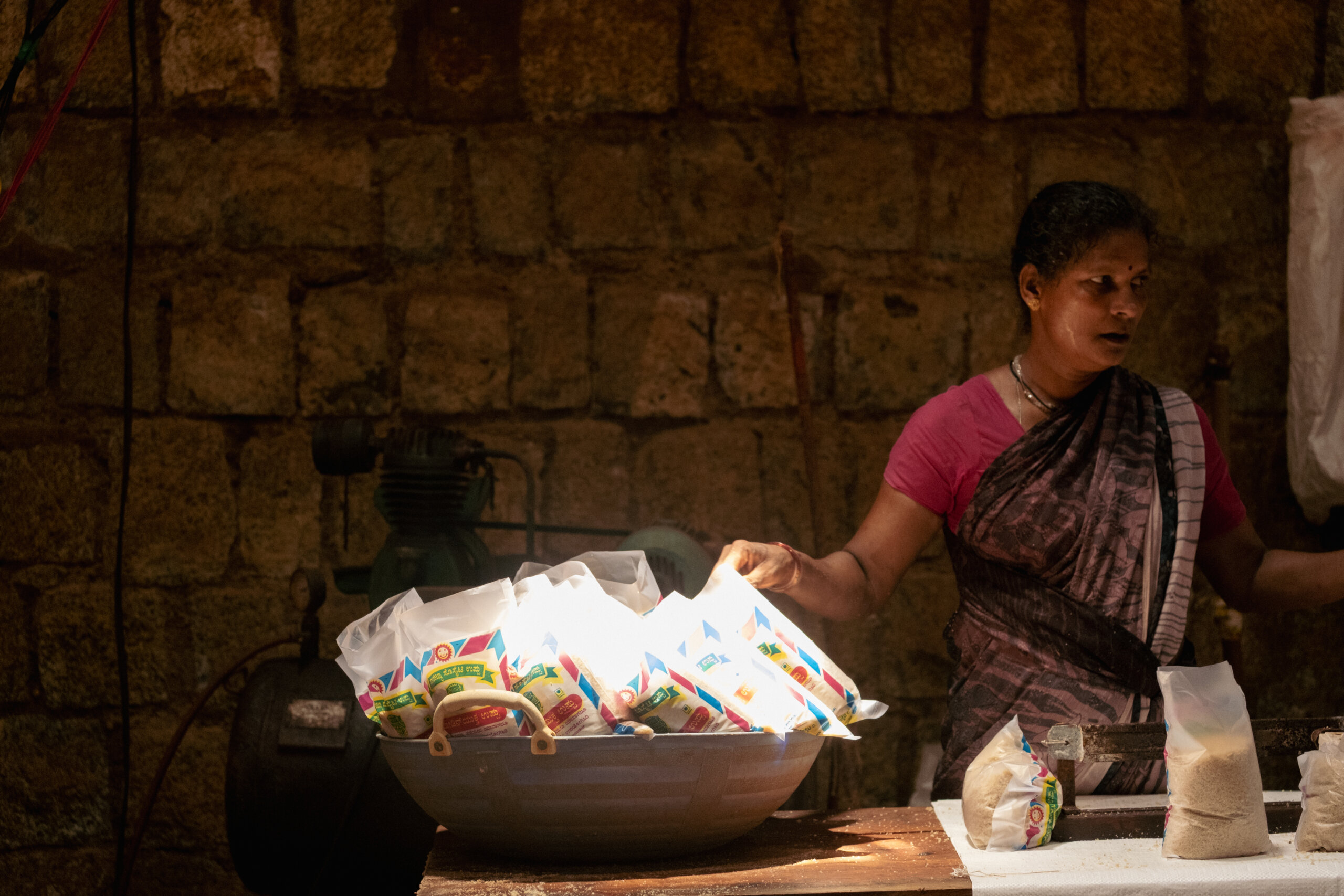
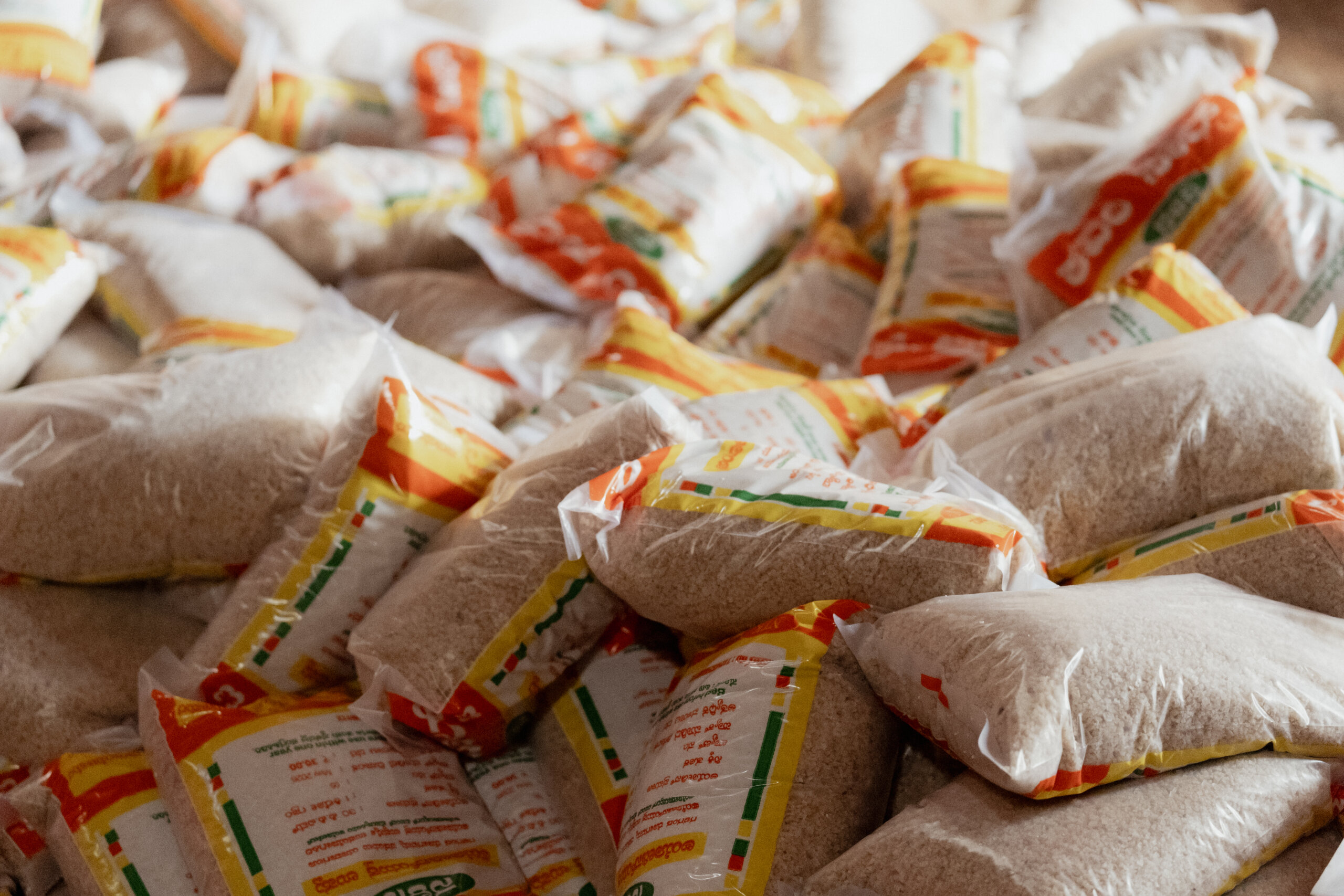
Inside the Nalini Salt Factory, four women sit by large mounds of light tea-coloured crystals. “Thumba sheke idhe, aadhre kelsa maadle beku” (it’s very hot, but we still have to work), Savita tells me in a dialect of Kannada that’s hallmark of Gokarna. Sweat dribbles down her neck all the way to her bony chest, like little rivulets racing towards an unseen sea where they can empty themselves. Savita has been working at the salt factory for fourteen years now, shoveling pans of brown solar salt into one-kilo plastic bags, and dutifully closing their open mouths with one of the two heat-sealing machines on this part of the factory floor. Her peers—Sudha, Kamala, and Menaka—share the workload, alternating between pouring salt into bags and sealing them.
“Neevu late bandhidheera” (you’ve come late), Ramakowri says to me. “Last week, we were still harvesting the salt. But the rains came early, so the harvest has stopped. Now, we package and sell.” Ramakowri manages the salt factory where Savita and her compatriots work. The women begin their day at the factory at 9 AM and work tirelessly till 6 PM. All of them are married, two are widowed. “We work here to support ourselves and our families,” Sudha shares. The community echoes her words—around 200 families are sustained by the fruits of this hard labour.
There are other salt pans and factories in this part of Gokarna. In total, they span around 500 acres, with Ageras—salt workers—continuing a centuries-old tradition of making artisanal brown salt. Unlike popular salt variants like black, Himalayan pink, and even the household table salt, Sanikatta’s salt is soft, both in its appearance and its place in the culinary world. Its brown hue is a gift from nature. Before the Aghanashini river snakes through the sluice gates that regulate the inflow of water to the salt pans, the leaves, stems, and other parts of medicinal plants of the Western Ghats fall into the river’s untouched, boundless body, accompanying it on its journey through backwater channels and into the pans. And along with the red laterite soil of Gokarna, it is these herbs that bless the water with their natural nutrients, leaving behind mineral-rich salt crystals that look more like the earth than the all-too-familiar white iodized salt that graces most kitchens today.
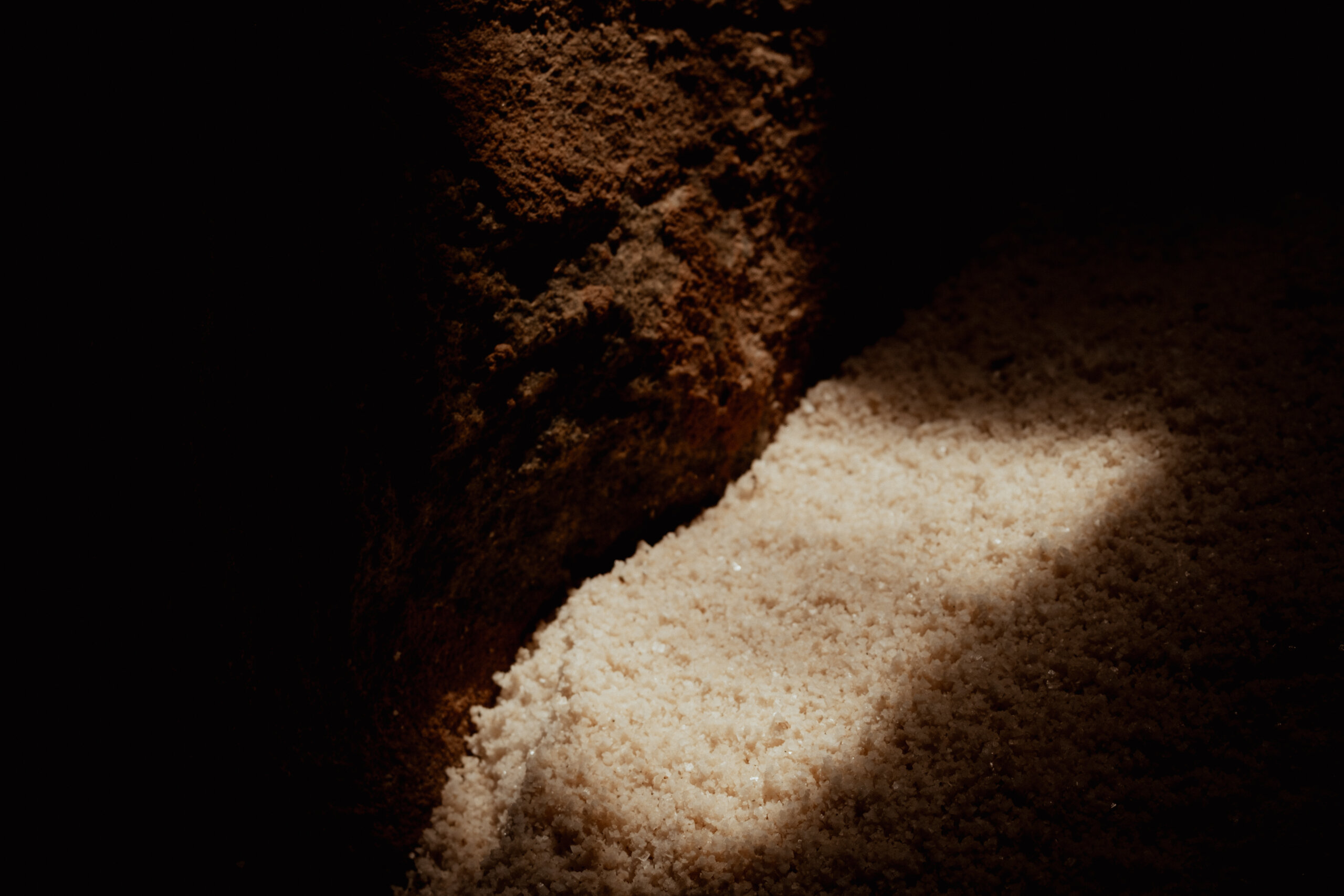
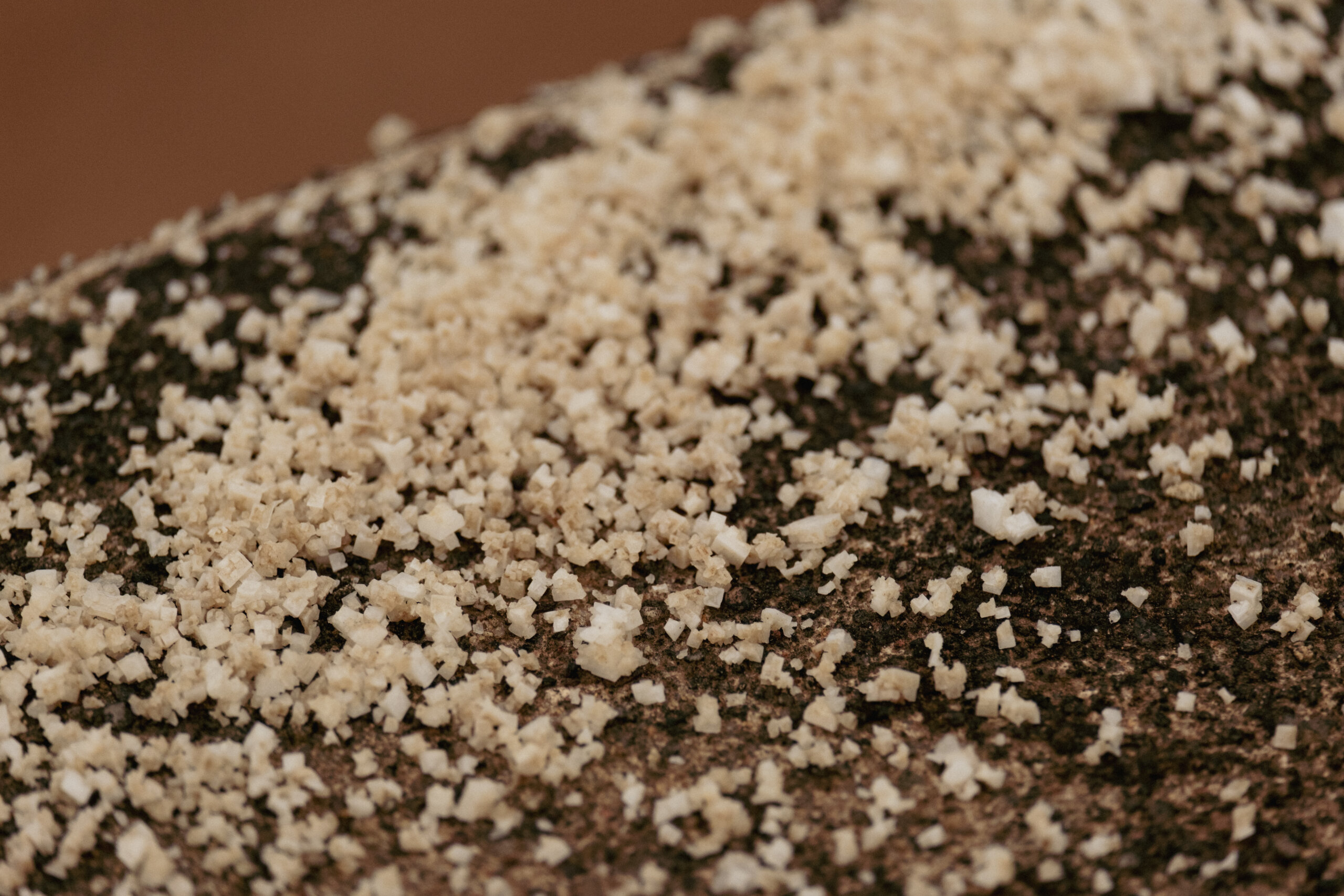
Ramakowri shares that this salt has myriad uses. “We make iodized and non-iodized salt. The iodized salt is used for cooking, fish preservation, curing, and pickling. The non-iodized salt is the first layer of harvest, where the salt quality isn’t great. We use this as fertilizer for trees and saplings, and even for the fish. We also use it as medicine. Animal, plant, or human, every living thing needs salt,” he adds.
Much like in Goa, the salt-making season begins in November or December and ends in May. This is when the sun is at its brightest, the sky clearest, the rains non-existent, and the salt abundant. “Packing and selling happen throughout the year. But the salt making and harvesting are periodical, so the Ageras go to their villages and take up other work when the harvest season is over,” Ramakowri says.
Suggested read: Mitt of the Matter – Stories of Salt from Goa
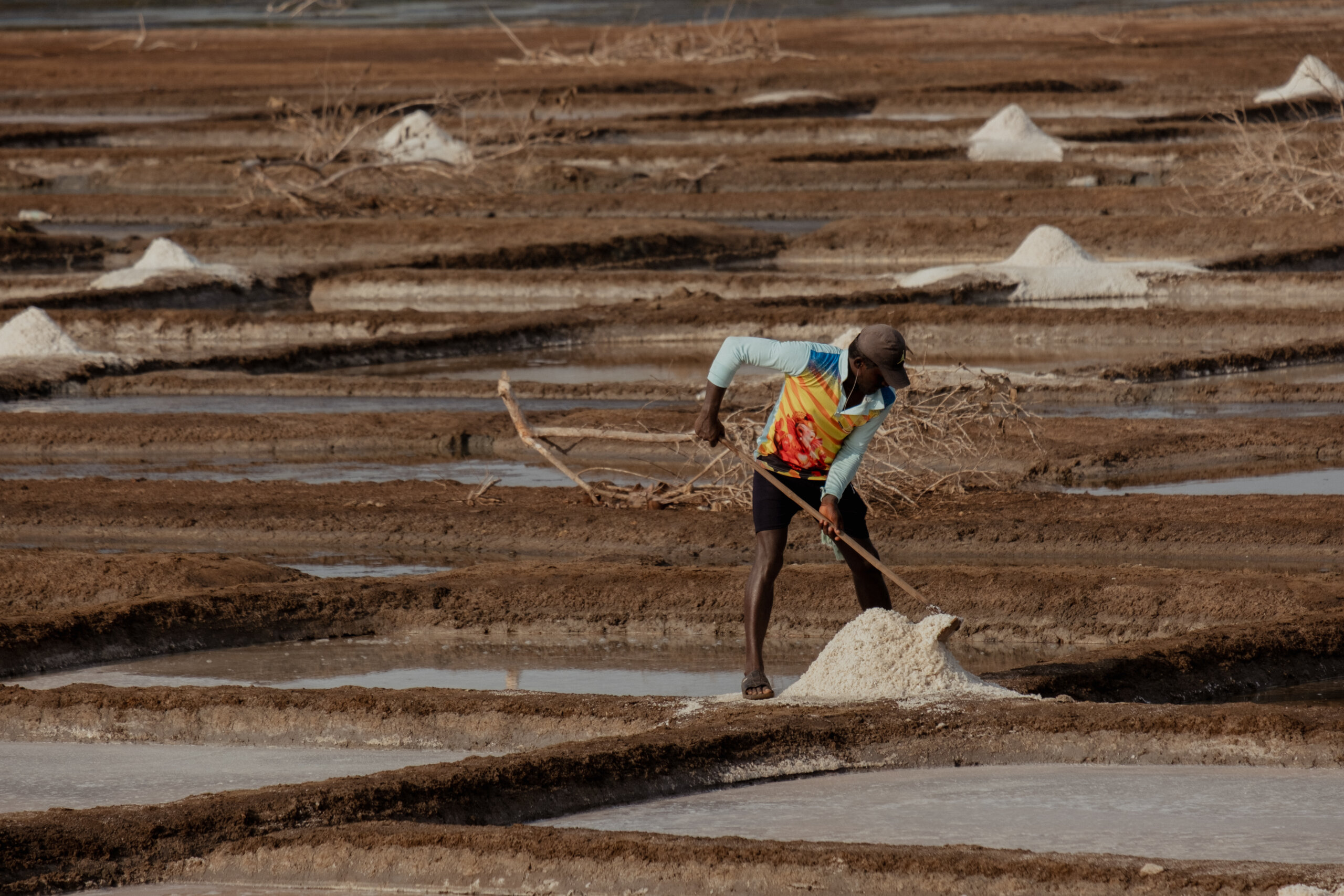
Salt making is difficult work, he tells me. “All our workers are from nearby villages. They know exactly what to do—emptying the pans, beating them down into hard, barren fields, letting the saltwater in, and allowing the brine to reach densities of 2.5 degrees, then 20, and finally 27 degrees, and then harvesting it.” It’s a labour-heavy industry, and the work cannot be fully mechanized.
The Nalini salt factory operates as an independently owned space, beyond the scope of the Nagarbail Salt Owners Cooperative Society, which was set up in 1952, a few minutes away from the Nalini farms. I climb a flight of stairs and step into an office replete with steel almirahs, files, books, and a work desk to meet Anil Nadkarni, who manages the cooperative, better known as Sanikatta Salt Fields.
“Our bylaws are such that only salt pan land owners can be members of the cooperative,“ Anil tells me. Before 1952, a salt sales society existed that worked around middlemen, and where each member took responsibility for their own land. Then, in 1949, the then Government of India established a salt expert committee to better understand the manufacturing and sale of salt across the country. Their findings reported that single-handedly running a salt farm was not as favourable as the amalgamation of responsibilities by all land owners, to further production and sales. They recommended setting up a cooperative or an establishment under government control. The community chose the cooperative route. And it comprises 370 members as of the time of writing this.
“How does the cooperative work?” I asked.
“Each family, sometimes each member of the family, has land either in acres or in guntas. Based on the land holding, units are distributed to each landowner. During the General Body Meeting, we set a commission for the Cooperative based on the quintals of production. This varies each year, depending on the quantity we produce,” Anil told me.
The society’s income that comes from interest earned and other investments goes back into the Cooperative, and pays for the maintenance of the society and the salaries of the people in the office. “The net sales proceeds minus the costs of manufacturing, selling, packing, and distribution are paid out to the salt pan land owners every six months,” Anil adds while checking his ledgers.
As for the demand, it remains primarily local. “Our main market is the Uttara (north) Karnataka district. We sell in Hubli, Dharwad, Haveri, Kumta, Ankola, Karwar, Bhatkal, and other regions. In Sirsi and Siddhapur, the brahman communities use this salt exclusively,” Anil said. Organic shops, naturopathy, and Ayurvedic shops in the region also stock up on the brown salt.
“Our people prefer this salt over industrial free-flowing salt. We prioritize our loyal customers, and then tend to other demands,” he continued. Online demand for Sanikatta salt is growing, but the cooperative sells a limited amount online to maintain stock for their regular patrons.
But just like the brine that feeds the pans, the situation at Sanikatta salt farms is not all sweetwater. Climate change has extended its destructive fingers into the fabric of the holy and serene coastal hamlet, and the salt workers are bearing the cruel brunt of it all.
The production quantity has decreased this year, and is much lower than expected. Unseasonal heavy rains poured down onto Gokarna in the middle of May. And while April to the end of May is the peak production period, this year, the rains forced the salt pans to stop harvesting by May 15. Last year, the harvesting was halted by May 20.
“On the night of 14 May, we received 70mm of rainfall. All the pans were filled with rainwater, and the crytallizers suffered damage. Re-prep for harvest would take 10-15 days post rain. We checked the weather reports and decided to close on May 15. We can make do with light rain. But heavy rains lead to mud mixing with the water, and the quality of the salt deteriorates. Also, these rains make it difficult to build up the density of the brine,” Anil shared. “Even if it’s human-influenced, we’re at the mercy of nature,” is what Ramakowri said.
“And if we don’t close, we will still have to pay the workers till the official season closes, whether they work or not.”
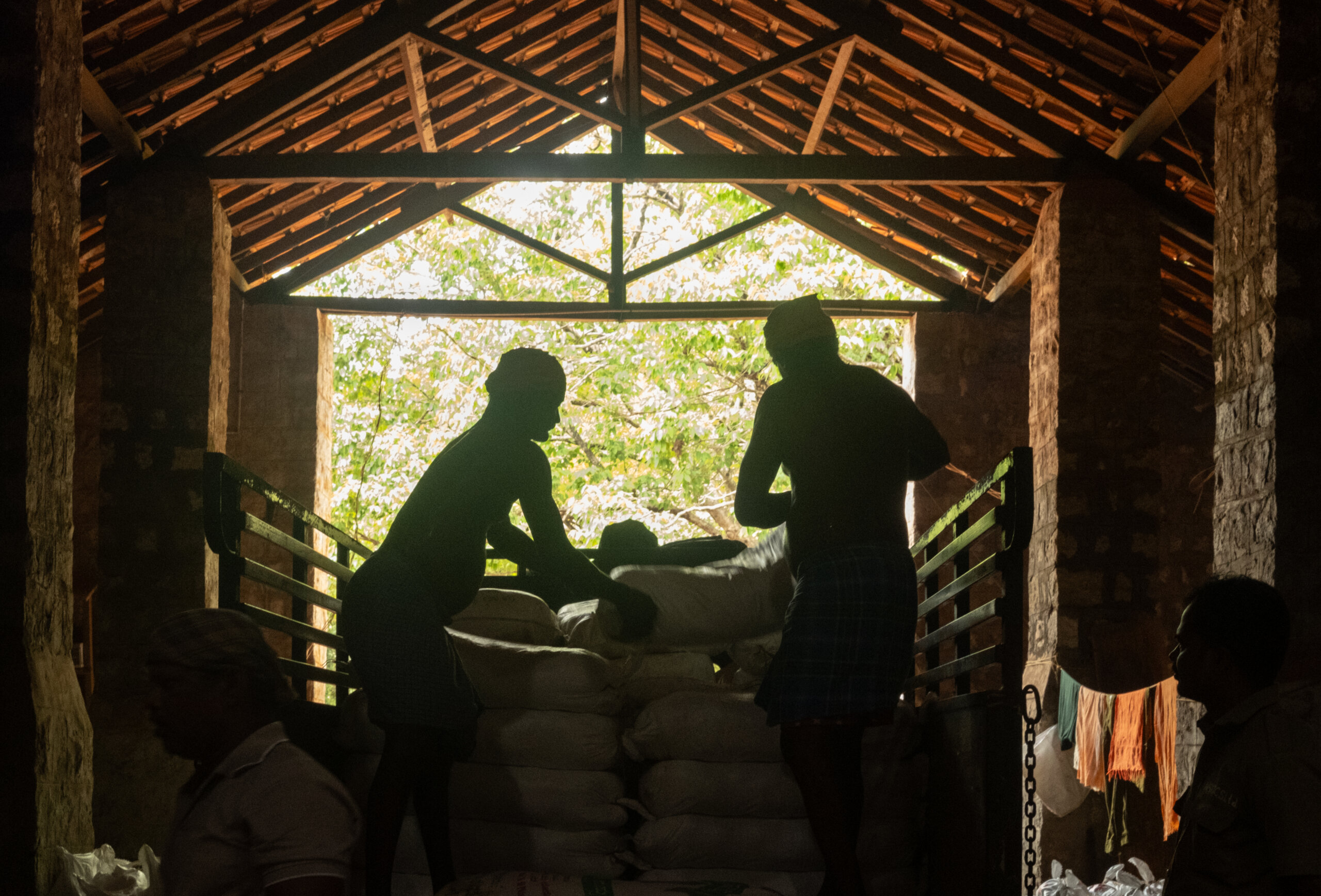
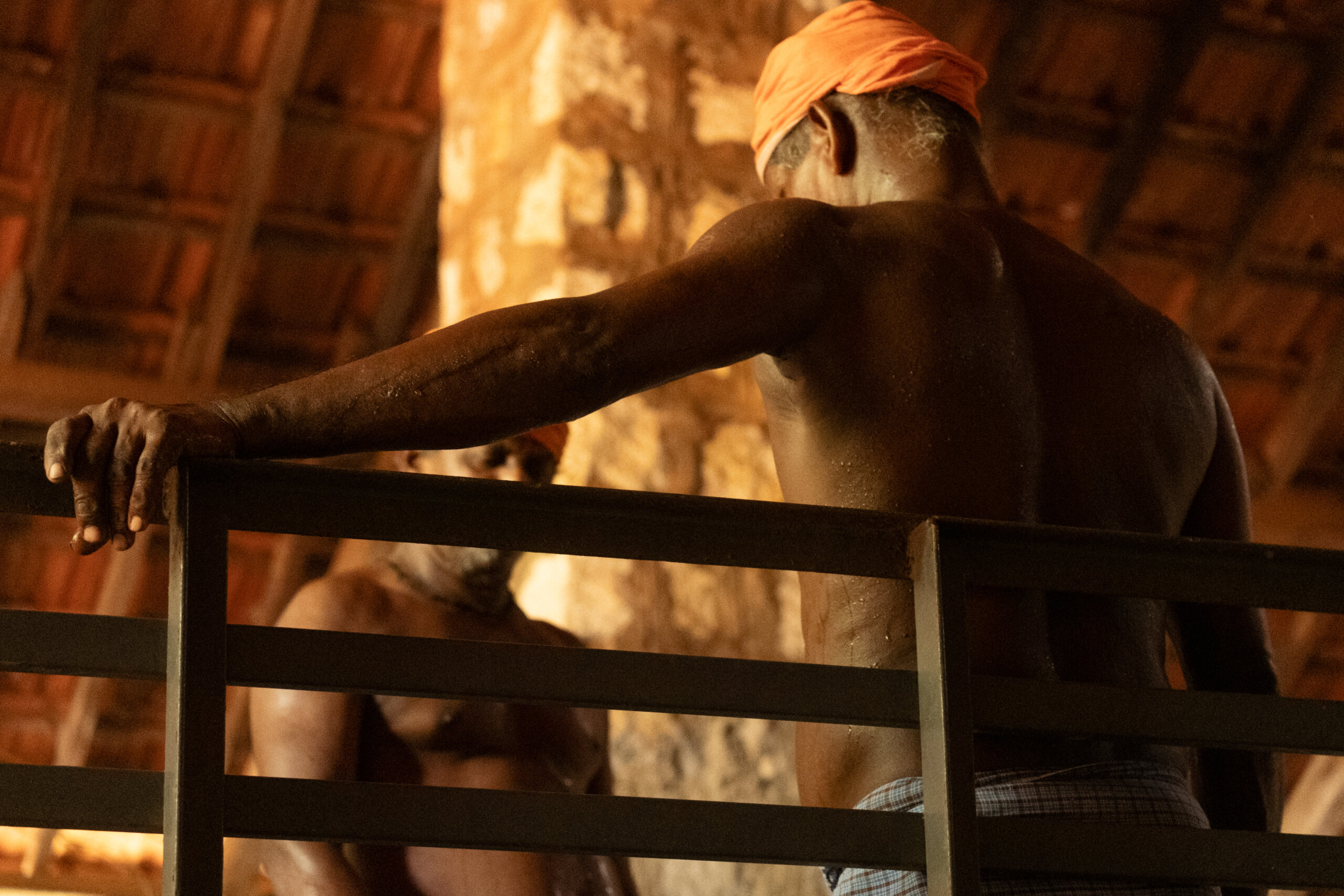
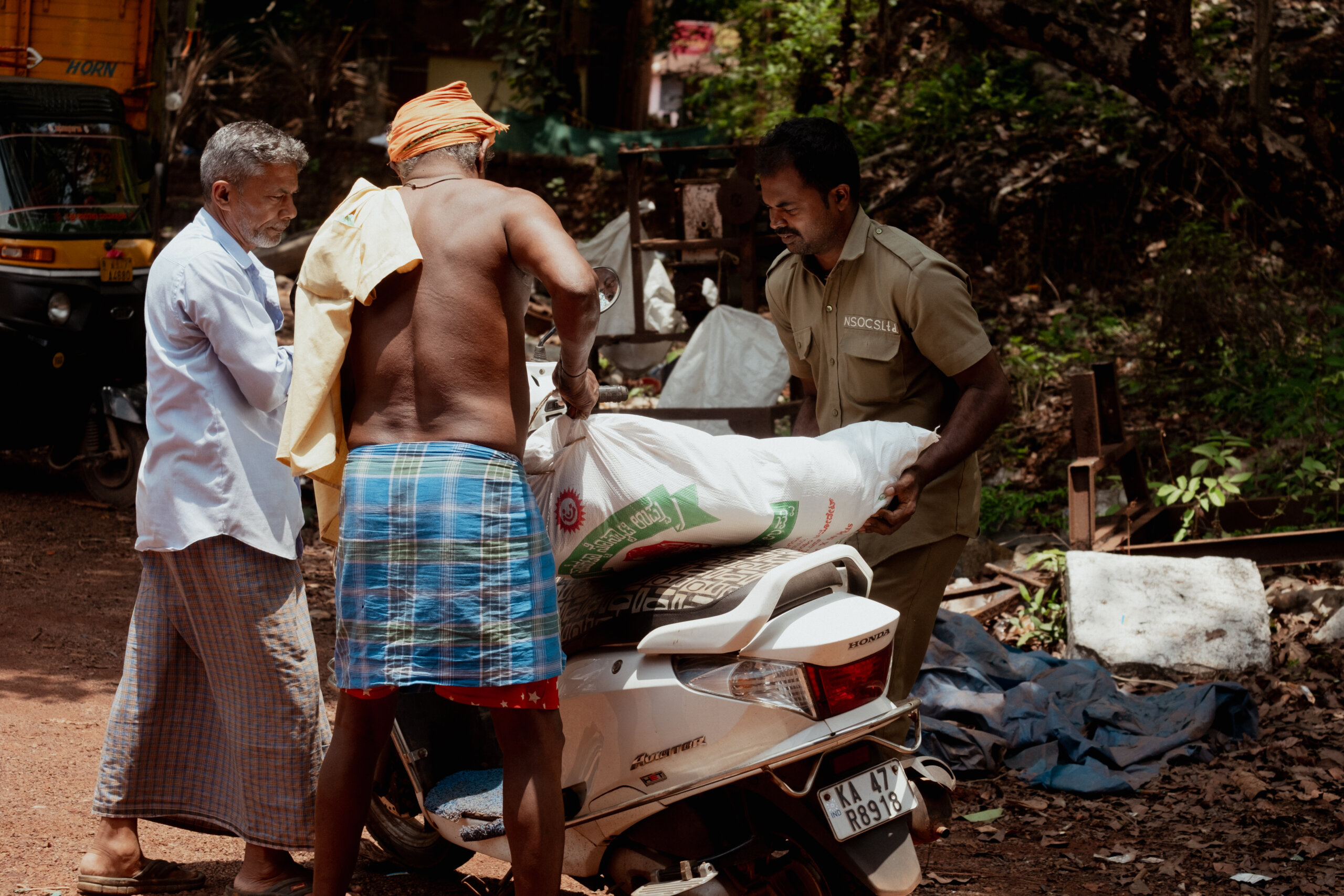
The salt pan workers have different responsibilities. Some work exclusively in the pans, preparing the bunds, allowing and removing water from the pans, and harvesting the salt. Others move the salt from the pans to the godown. Women like Sudha and her colleagues take care of the packing, while others work on loading the trucks with the packaged salt.
“Earlier, the Halakki Vokkaliga community used to do the job of lifting the salt from the pans. But they aren’t coming for work now. So, the Ageras themselves do it, for extra wages,” Anil informed me.
Most of the Sanikatta salt farms’ workers come from Hanehalli and neighbouring villages, all in a 3-4km radius of Sanikatta. Here lives the scheduled caste Agera community, which makes the salt, all the way to harvesting. The salt pans are called uppina agara in Kannada, and it’s from here that the community derives its name, much like the agarias in Gujarat.
The next generation of the Ageras is going to school and college, and bagging government and other jobs. “They don’t want to work in the salt pans anymore. We’re at the start of a labour shortage,” ponders Anil.
Other issues plague the labour force in Sanikatta, besides the youth choosing alternative work. “There is a huge alcohol problem,” Anil shares.
According to him, the Ageras have been consuming alcohol in excess to be able to work in the hot sun. They start work at 5.30 am-6 am, and by 8 am, they are done, because the sun gets too bright, the fields get too hot. They go to other places to work after, including laterite stone mining. Their constant alcohol consumption has affected them so much so that their standard of work has dropped, their physical strength has reduced. “In a season, we lose one or two people to alcohol-related deaths,” Anil adds, the tinge of sadness in his tone moving down the staircase like a slow yet deliberate wave, into the public office of the society.
Another reason for low labour availability, Anil says, is the government’s rural benefit schemes. “The ladies in a household get INR 2,000 monthly from the government, along with free gas, free power, and more. So it’s natural that their incentive to work in the salt pans has dropped.”
Still, there are benefits to working with the factories and the cooperative in Sanikatta. Under the provisions of the Factories Act, 1948, the cooperative’s workers have a provident fund (PF), employees’ deposit-linked insurance that provides for employees who pass away while in service an amount up to INR 6 lakhs. Widows and dependent children under the age of 25 get the deceased worker’s pension. “It’s a secure job,” Anil shares proudly.
On marketing of Gokarna’s brown salt, the Sanikatta cooperative has been enjoying the results that social media has brought them. “We don’t spend anything on advertising. Newspaper reports, magazine articles, and now Instagram reels are showing the world our ancient salt,” he mentioned. Wholesalers send their trucks directly to the factories for pick-ups. The cooperative manages a sales depot in Sirsi, and a sales agent in Ankola who manages the areas till Karwar. Still, not a dime is spent on marketing.
I was more intrigued by the geographic indicator (GI) tag status for the salt that I had read about recently. Anil divulged that a team from Bengaluru’s Ramaiah Institute is working on the GI tag process. The society is still in the early stages of the application. “It’s moving forward, but it may take two more years. There’s been an interest and an investment from NABARD (National Bank for Agriculture and Rural Development), too.”
As for assistance from the government, Anil doesn’t hold out much hope. “We don’t seek help from the government. We have the funds. But Piyush Goyal’s Ministry of Commerce and Industry has a Salt Commissioner’s Organization (SCO). Repairing something like the sluice gate can cost us upwards of 13 lakhs. We’ve applied for grants because the sluice gates are on government lands that we’ve leased. But we don’t expect them to help, either with subsidies or incentives. We manage everything.”
I then ask him what I ask everyone I speak to.
His hope for the future of Sanikatta salt.
He puts on his business hat and tells me that to boost future online demand, the society will need to work on packaging and branding to make the coastal artisanal salt attractive to the digital market. They are working towards this, but all plans depend on production. “This season, we harvested 4,400 metric tonnes. Earlier, we produced 10,000-12,000. Even if we reach 6,000-8,000 MT, out of which 1,000 is of great quality, we can specially pack it and sell it online. The GI tag will help, too,” he shares.
The salt’s unique colour, impressive mineral composition, and its artisanal nature—all help in boosting demand and sales, in conjunction with branding. All it needs is a little storytelling, I think. But what makes it truly stand out is its rich history.
Besides its 300-year-old existence, Sanikatta’s salt and the ageras played a role in the Salt Satyagraha, a civil disobedience march led by Gandhi, his ashramites, and some freedom fighters in 1930, in defiance of the British Salt Act of 1882, which banned Indians from collecting or selling salt. Under the Act, people were forced to stock up on salt purchased only from the British government, which manufactured it and charged a hefty tax, often doubling the price of this dietary essential. In retaliation, local salt godowns were raided. Citizens manufactured salt, and salt packets were auctioned off and distributed to the public—a matter of great pride for those in Gokarna who remember, and for those who know.
But for Sudha, Savita, Menaka, and Kamala, the past means little; they look to a future that’s favourable to them. “We just want to continue working and earning“, they say. When I asked them if there was something they wished would change, they shook their heads. Perhaps they didn’t want to say anything against their source of livelihood. Perhaps they didn’t want to seem ungrateful to their sowkar (owner). Perhaps, they’re telling the truth. For their sake, I root for the latter.
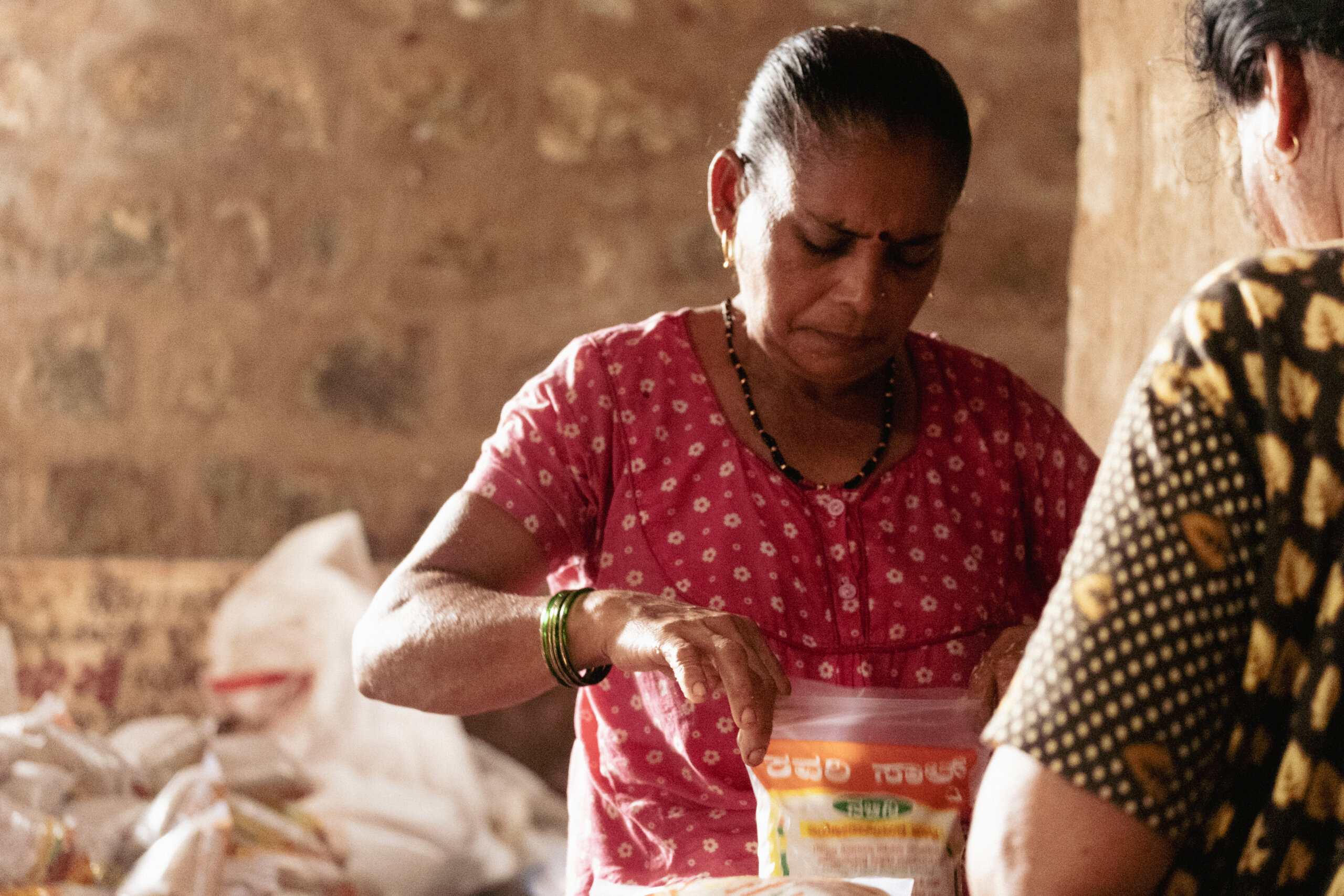
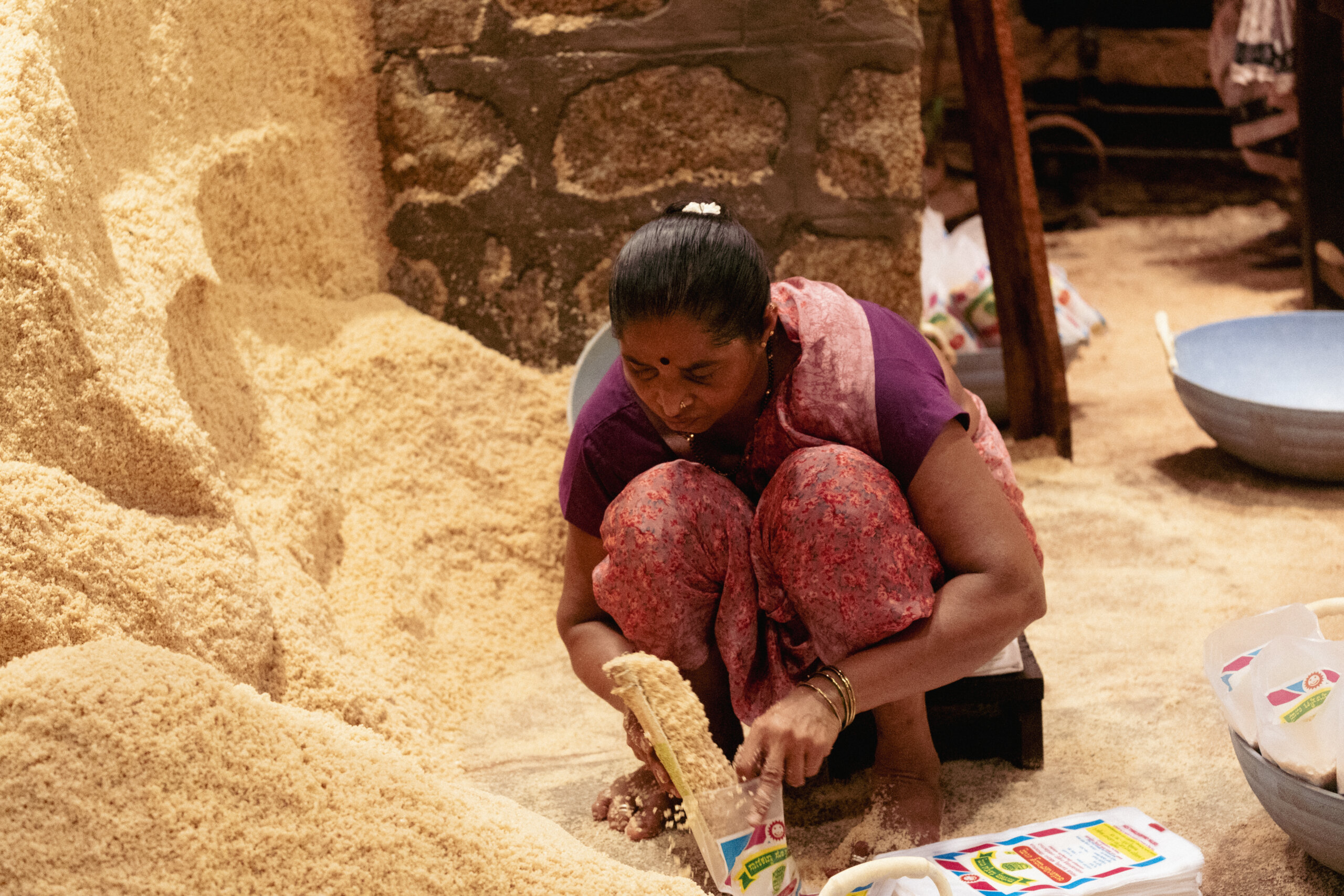
As I exit the Nalini Salt Factory, Savita hands me two bags of brown salt. “Idhu nimmage, Bengaluru thogond hogakke,” (this is for you, to take to Bangalore), she smiles and says. In the Sanikatta salt factory, Mankali, named after the Hindu goddess Kali, places another bag of salt in my tote. Neither accepts payment, and instead tells me to return next year in April. “Aavaga yella nodbahudu. Illi yeshtu chanaag kannthathe, adu nodle beku” (then, you can see everything; how lovely everything looks, you must see that).
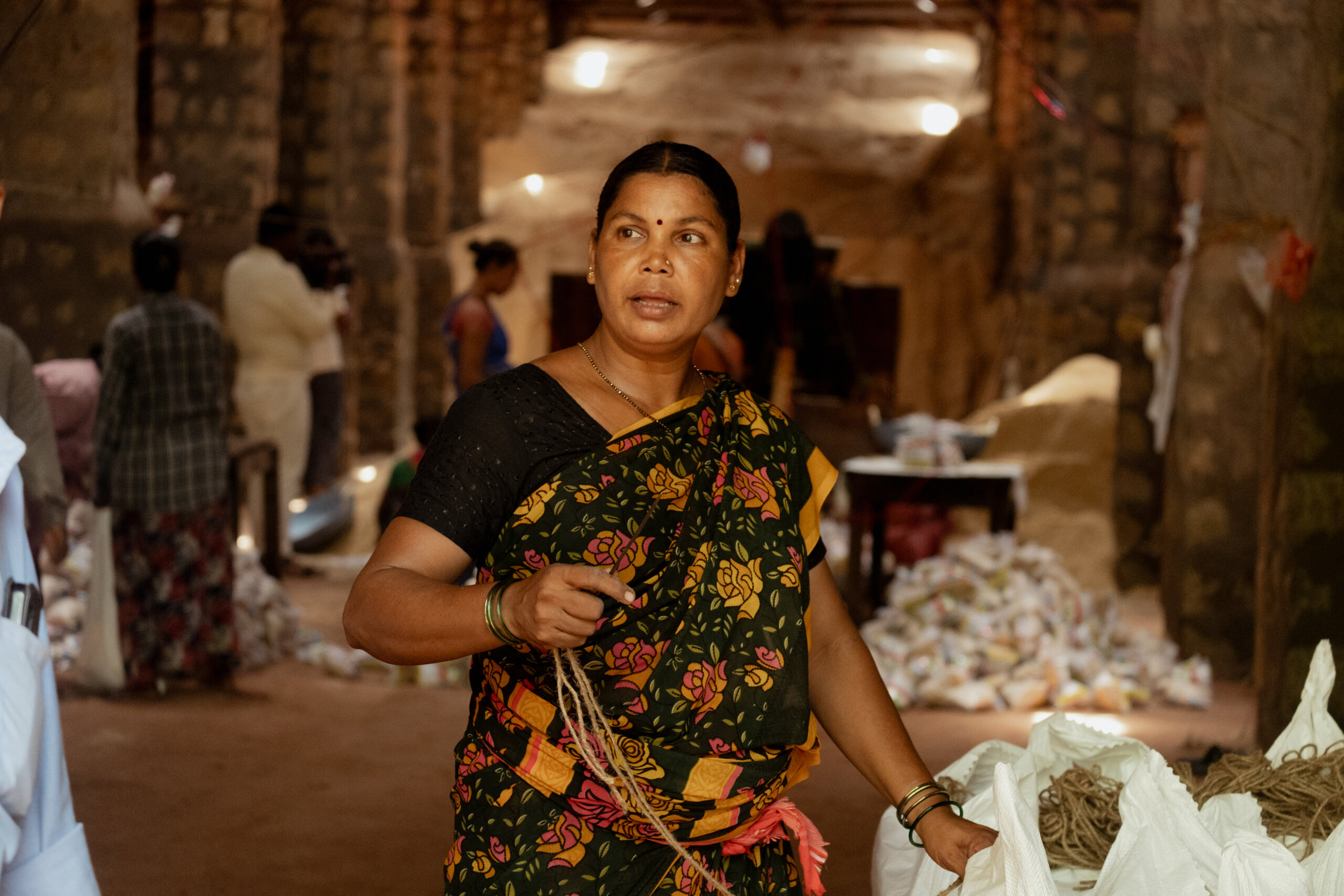
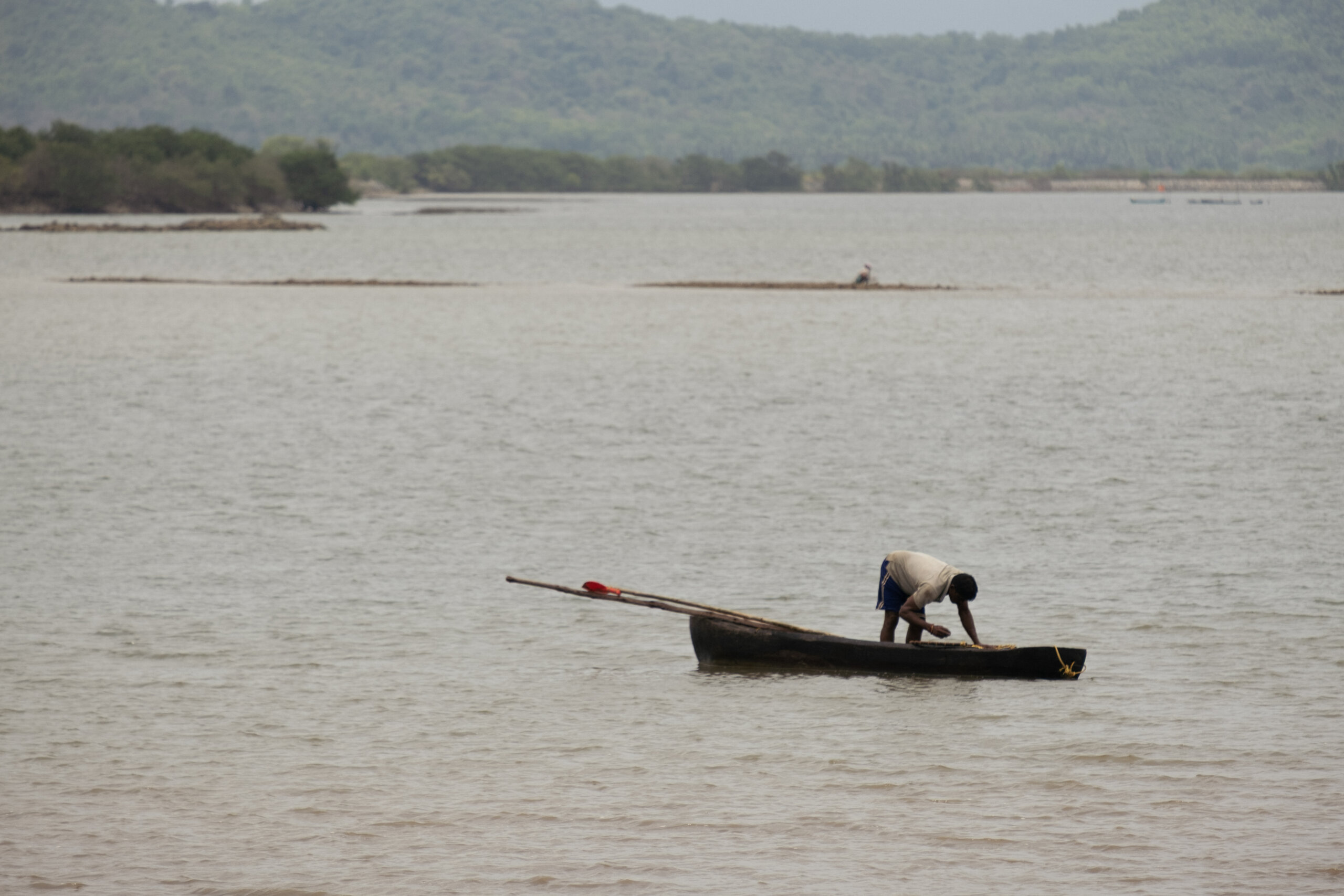
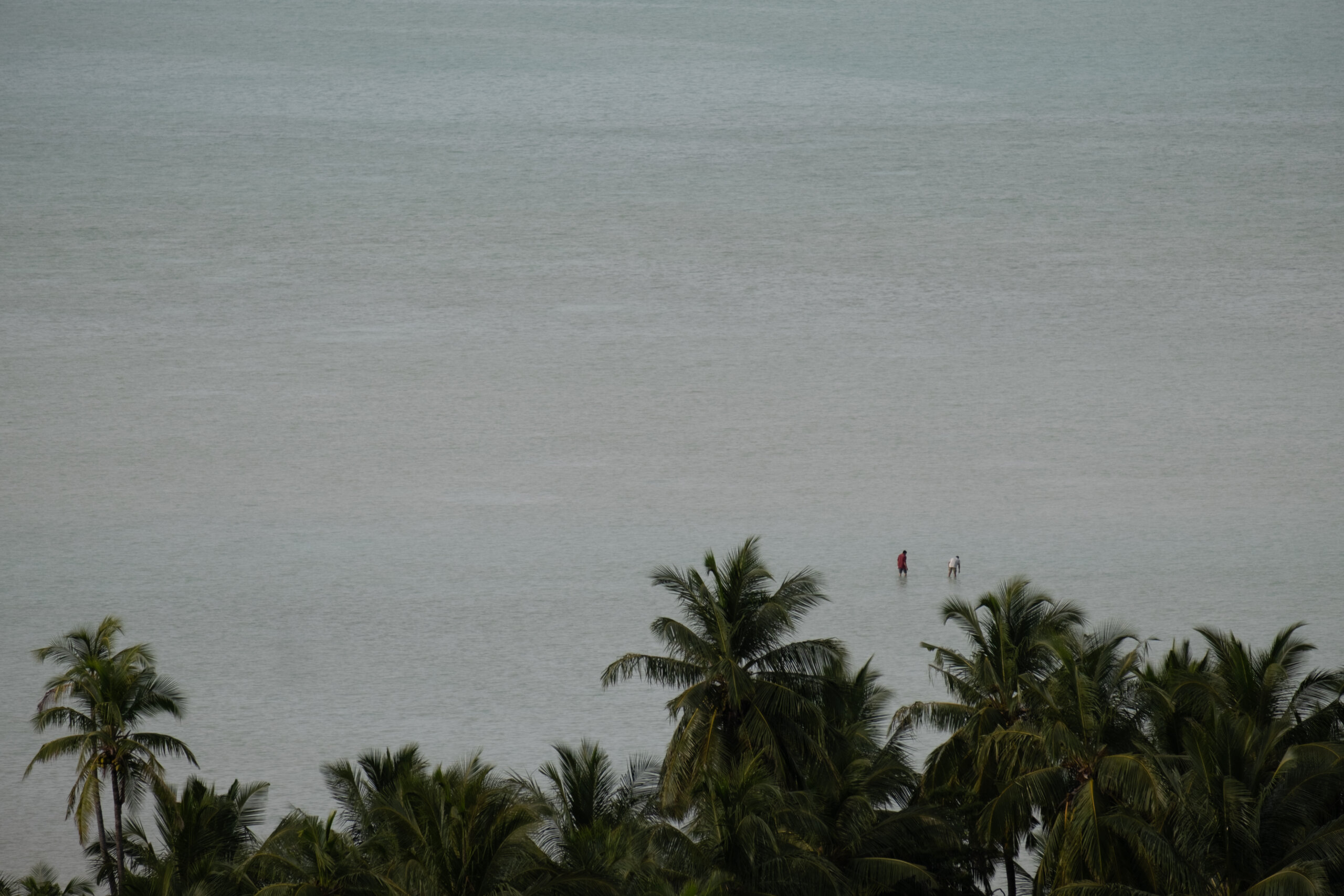
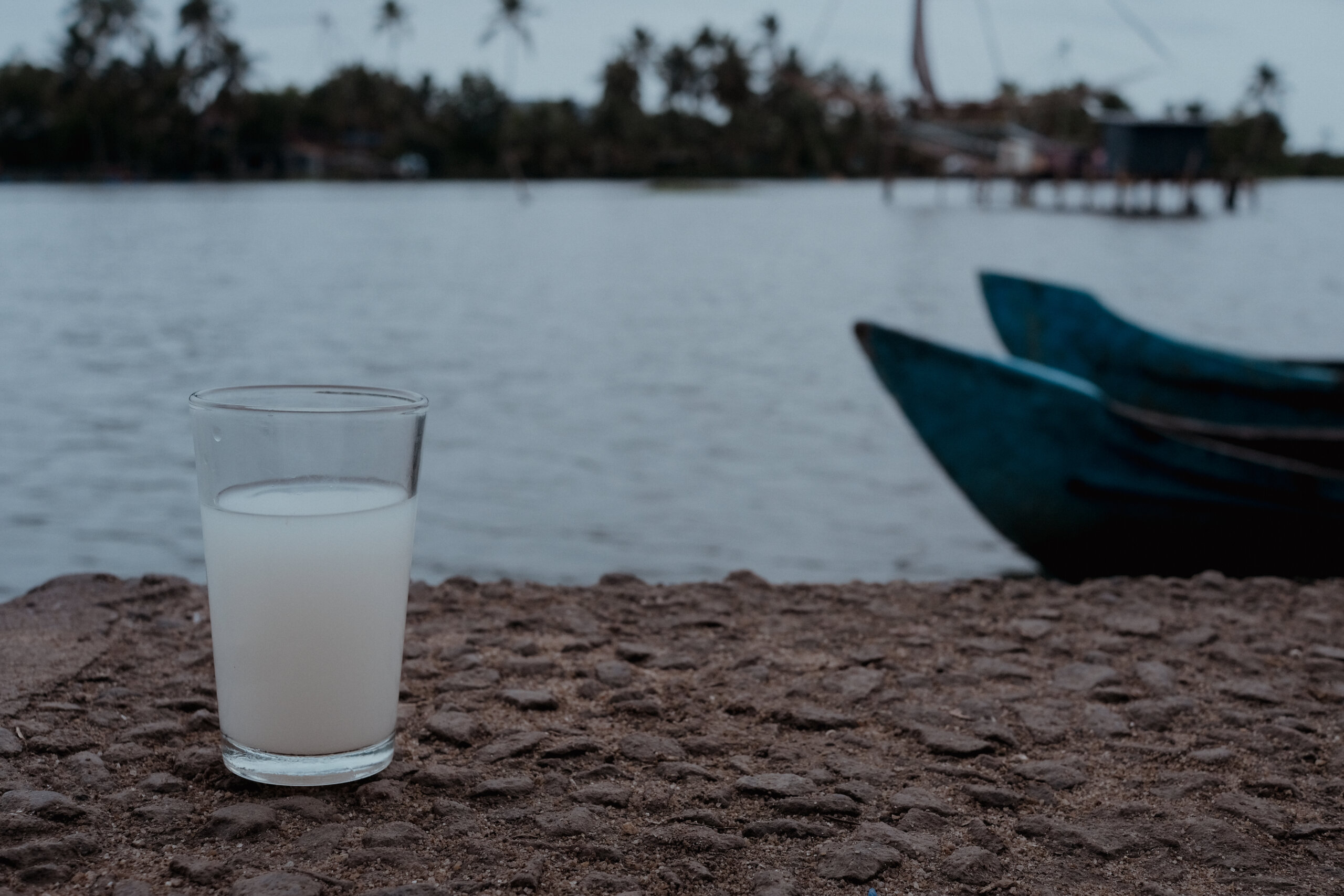
I accept the generous gifts of their labour. I tell them that I will return in April. I go back to my hostel, where I watch the Arabian Sea turn from an expanse of grey to blue to turquoise as the setting sun lends the water a gentle wash of colour. This is the same sea that feeds the Aghanashini river the brine it needs for its people to make salt—translucent crystalline beings born of the very earthy brown divinity from whom we come, and to whom we must return.
2 Responses
Quite an eye opening read! Can’t wait to see the scenic visuals Mankali will show you when you visit in April next year.
Can’t wait either!