“Hamara island khatam ho raha hai.”
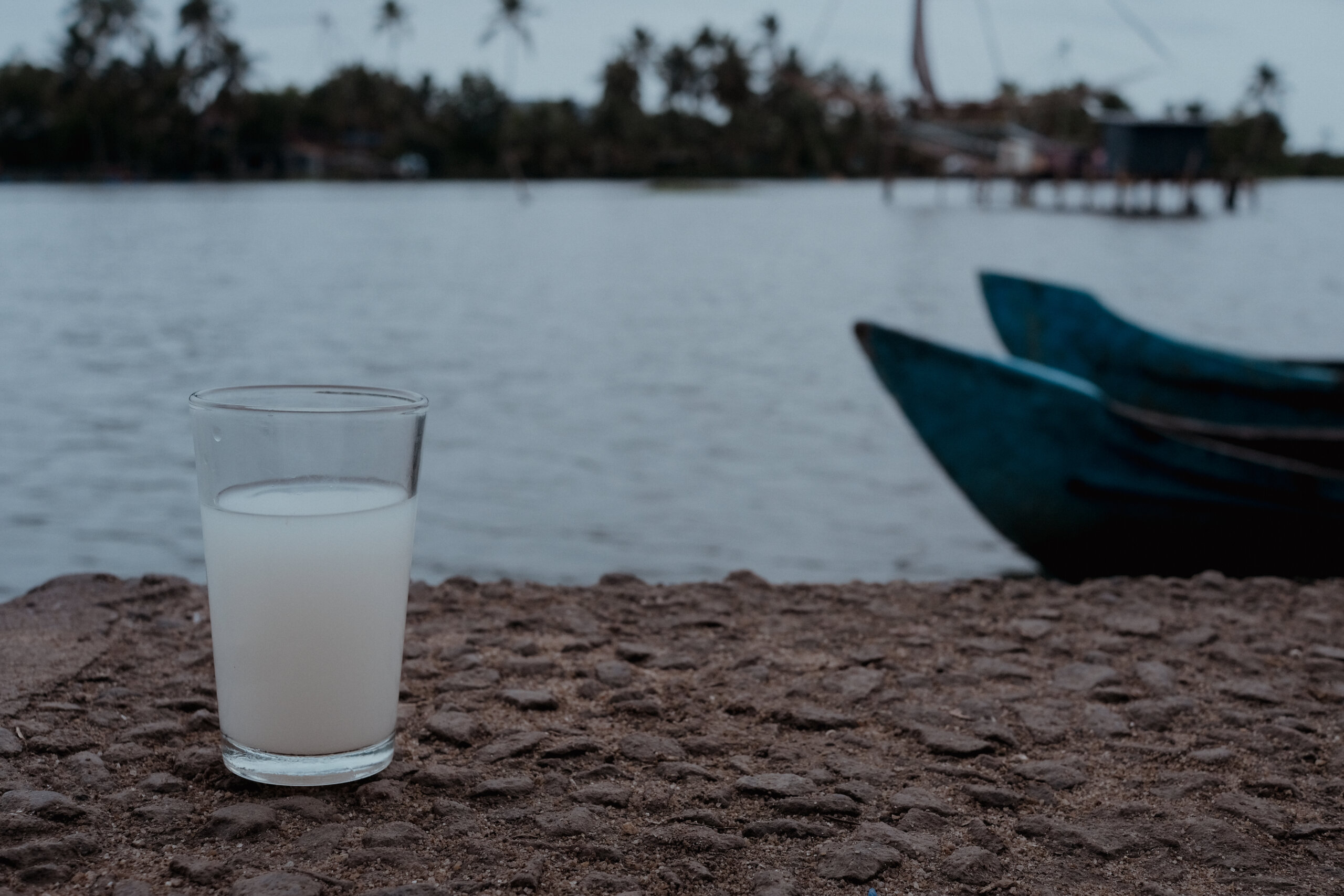
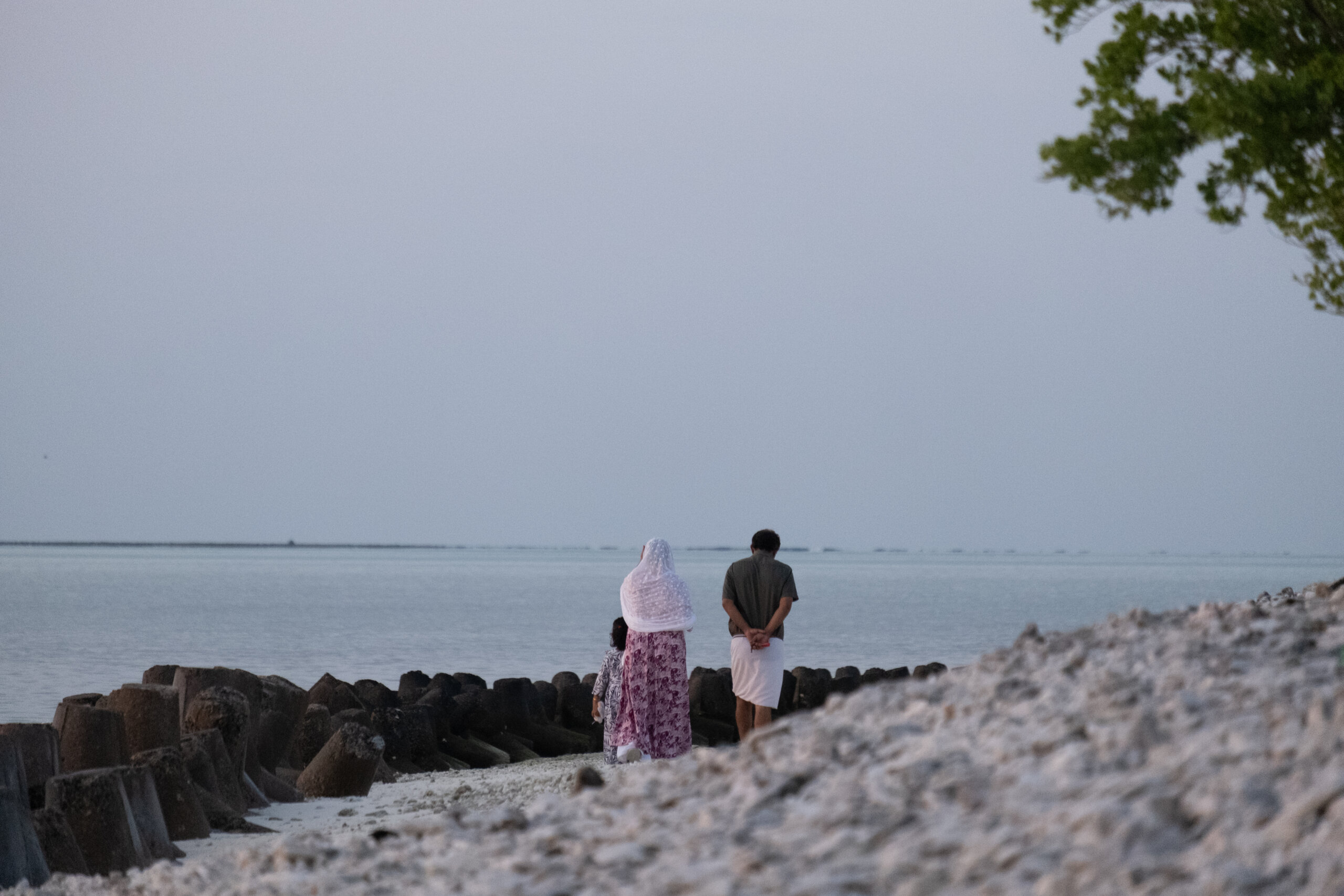
We were walking back from Kodi beach towards our scooters near the Coast Guard. The four of us—Amir, his wife Manija, his friend Altaf, and I—had spent the breezy evening riding along the beach by the villages, swapping island stories for my city ones, and making plans. The most urgent: find a café that serves meera. Or rukuraa—gift of the coconut palm; sweet on the tongue, slightly sour on the nose, translucent in a glass, sliding down the slope of a parched throat like a cool wave. A small reward for a busy day of diving, talking, and wandering.
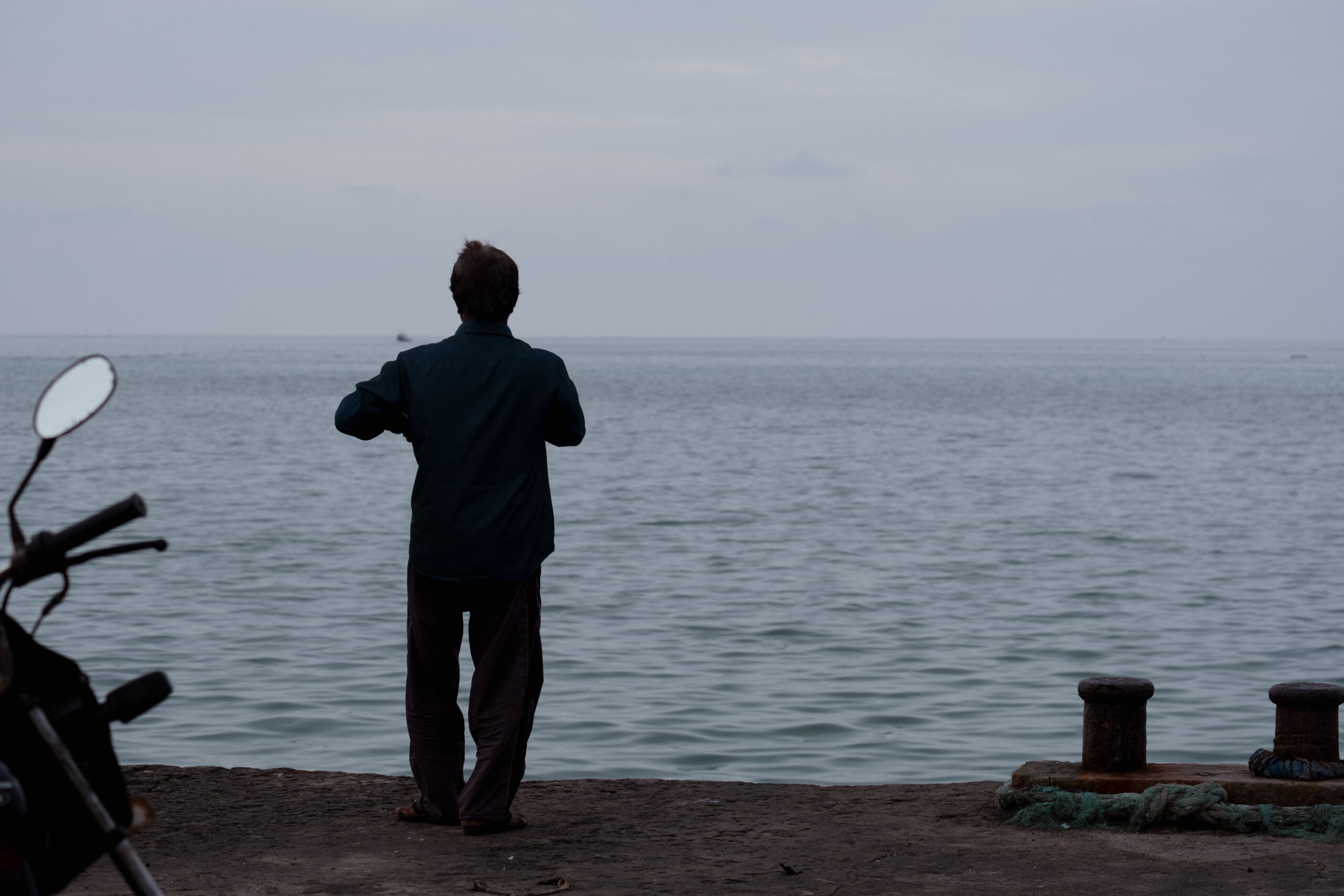
He stared at the sea as he said this, as if he could see the future unspooling right there in the dark, and it didn’t hold much hope—not for him, not for his family, not for the people he’s grown up with. His village folk, his friends, his acquaintances… almost everyone on this tiny crescent-shaped island protected from rough seas and crashing waves by a coral reef. An atoll formed millennia ago, sustained for centuries by people who lived alongside water—their livelihood, their home, their lives—now threatened by people alien to such ways of living.
I would’ve never guessed he was almost forty. Amir introduced himself with the joie de vivre of a man in his late twenties when he picked me up from the jetty.
“Mein aapka guide hoon” (I’m your guide).
You don’t look like your photo, I told him.
He smiled. His smooth, sun-warmed skin and kind, slightly slanted eyes were set in a face that carried an incalculable depth of strength—the kind he probably draws on during those long months at sea—all softened by a gentle voice laced with fraternal warmth.
Warm like golden honey and flecks of pepper swirling in hot water, gliding down my scratchy throat in Bangalore’s sombre December. Warm like the people here. The people of Minicoy.
Sons and daughters of the sea, of the land their ancestors preserved and passed down with care, steering their progeny with wisdom, in a script I’d never seen before, in a language I’d never heard before.
Dhivehi. Its dialect—Mahl.
Closer to the Maldives than to mainland India in more than just nautical miles, Mahl is inseparable from Maliku, the local name for Minicoy.
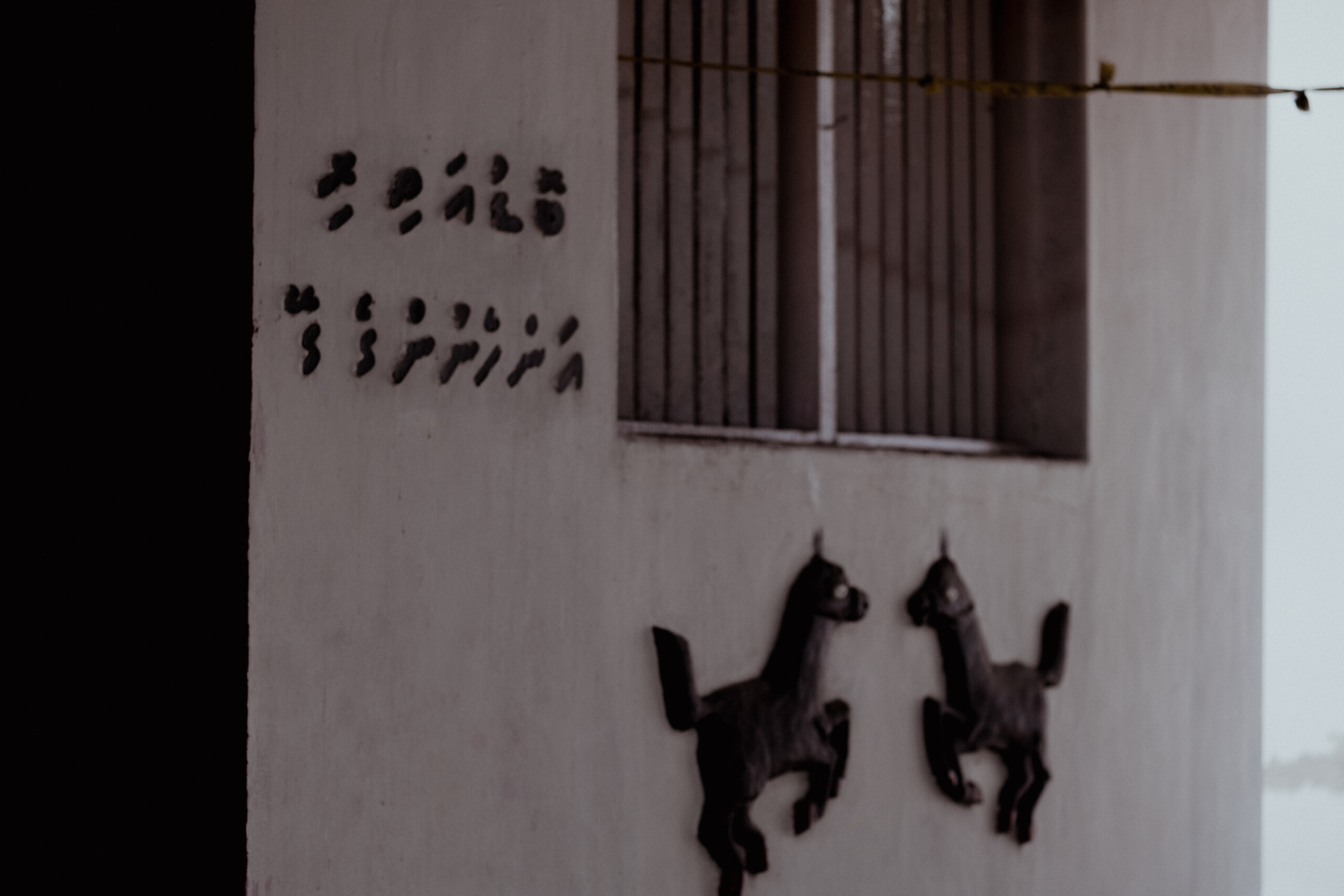
On other inhabited islands of Lakshadweep, people speak Jesiri, Malayalam, and some Hindi. In Kavaratti, Agatti, and Bangaram, I navigated conversations with Hinglish and comical hand gestures. I fully expected to subject myself to a constant game of charades in Minicoy.
“Humko Hindi maalum hai, koi chinta nahin,” (we know Hindi, don’t worry), one islander told me over tea.
“I know English and Hindi. If you know Malayalam, that also works. Most of us know it,” said another when I stopped by his shop for dish soap.
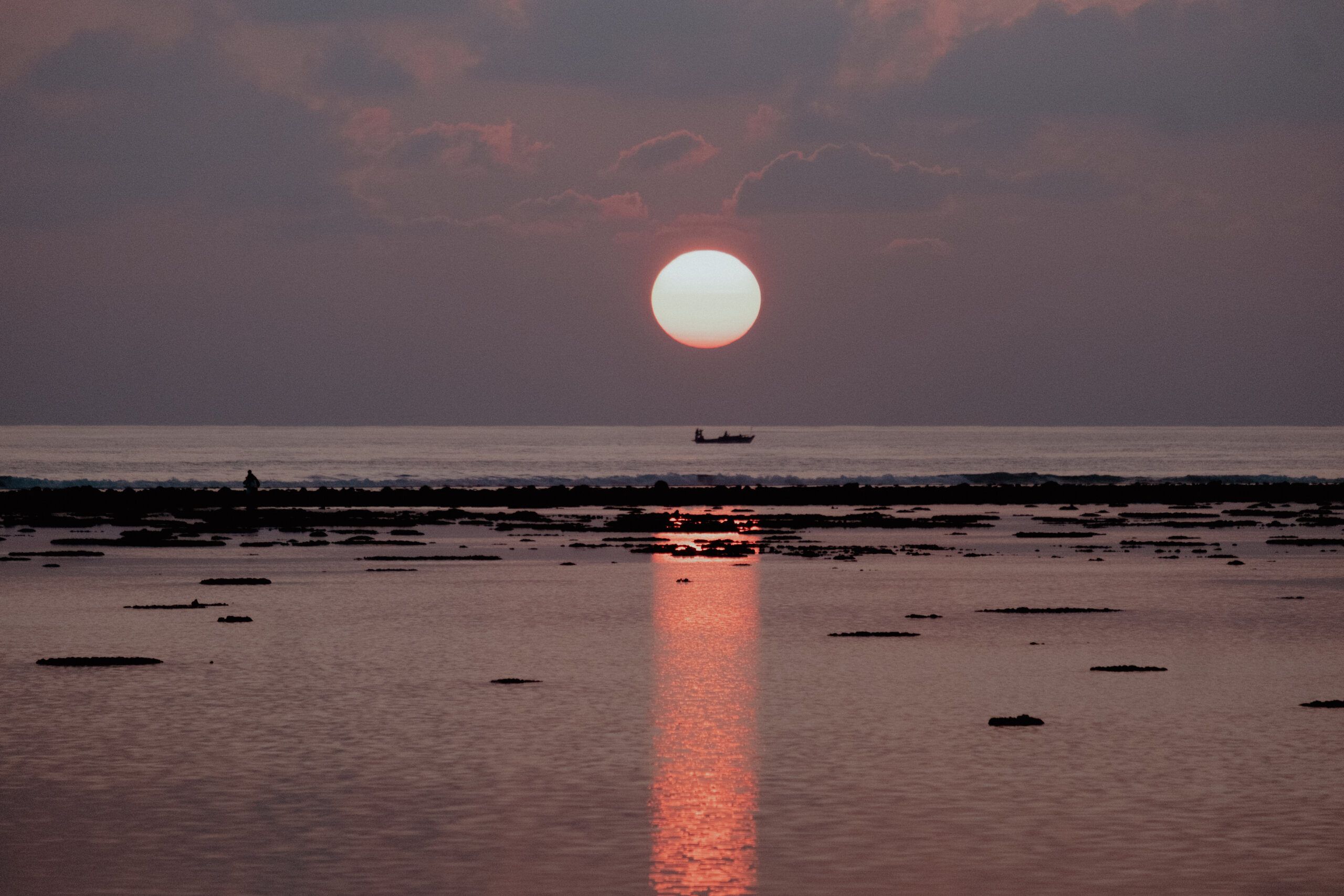
Bodes well for me and other non-islanders, I thought, on my way back from Thundi beach, the wash of colours left over from a soy-egg-yolk sunset visible in my rearview mirror. Still, I would’ve loved to learn some Mahl words to add to my repertoire of a few sentences in Malayalam, a handful of Spanish, laughable French, and forgivable Konkani. The language of my ancestors, also people of the sea, children of the coast.
Konkani helps me be my wallflower best at family functions and unavoidable community gatherings, and masks missives and gossip with cousins during other times—an unassuming but inextricable part of who I am, who I will be. I alone know what it means for me to be able to speak my mother’s tongue, to feel tethered to the people of Mangalore and Chikmagalur, even though I’ve built a life far from the sleepy valleys and balmy coasts of my childhood homes. An easy belonging. An identity as natural as the white foamy froth of sea waves and the invisible currents that move beneath.
Learning some Mahl would’ve been another little treasure I hoard as a culture goblin; for the islanders, it’s a fight for their sense of identity and belonging.
“Yeh Mahl ko kyun nikaal rahe hain school se?” (Why are they removing Mahl from schools?)
Amir, Altaf, and I had stopped at a café for some tea and snacks. Amir asked me if I liked the food he’s been dropping off to my room—three meals a day—and I answered honestly:
“Bohut tasty hai, but ek shikaayath hai—itna zyaada math bhejiye, mein ek hi hoon, aap toh do logon ka khaana bhej rahein hain!” (It’s delicious, but I have an issue—please send less. I’m one person, you’re sending enough food for two!)
“Arre mere behenein sunte nahin, boltein hain ki zyaada hua toh teek hai, kam nahin hona chahiye“. (My sisters don’t listen; they say it’s better to send more food than less.)
A futile argument, I thought to myself as the hot teas made their way to our table, and I popped the question about Mahl to him.
He said there were protests after the news came out, and the Kerala High Court has issued a stay order—uske baad kuch zyaada suna nahin (after that, we haven’t heard much).
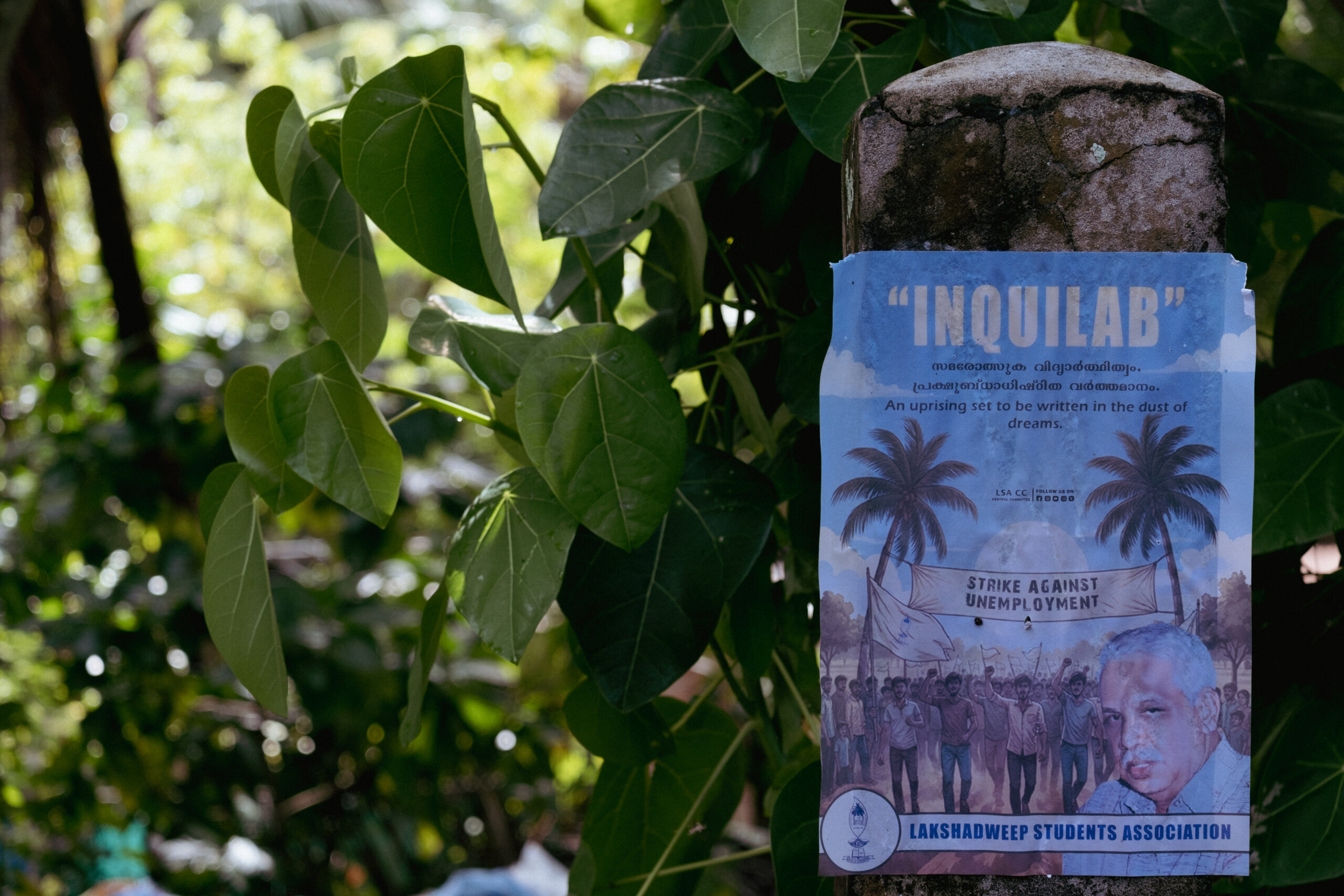
Cultural erasure in a micro-linguistic community. These words raced through my mind—a gaudy, garish news ticker. In May 2025, the Lakshadweep administration under Praful Khoda Patel ordered that Malayalam and English would remain the first and second languages in schools, while Hindi would replace Mahl and Arabic as the third. Printing presses producing Mahl textbooks on the island have been shut down. Add to this, unemployment is at its peak.
The administration calls it a reform, and it’s not the lone one. Dairy farms in Lakshadweep were closed, and the cattle were auctioned off. Now, dairy products come from Gujarat’s Amul. Only a handful of cows remain in Minicoy—and since the islanders don’t consume much milk anyway, they make do.
“Yeh sab religion ka issue banaa rahe hain, mere khayal se,” Amir said. (They’re turning this into a religious issue, in my opinion). And he’s not the only one to say this. In a place where 95% of the population is Muslim, a proposal to lift alcohol restrictions was discussed in the name of tourism. Alcohol was already available for tourists in Bangaram, an uninhabited island.
And the bans: Under the Lakshadweep Animals Preservation Regulation, which bans cattle slaughter and trade, beef is prohibited. Meat has been removed from school meals—an absurd move in a place where tuna is the dietary staple.
Our teas were beginning to cool. A tropical island isn’t immune to the evening sea breeze. Afterwards, I rode back to my room, called mum, and spoke to her—of the weather, of cats, of Christmas plans—in our tongue.
Aap idhar kyun aaye ho? (Why have you come here?)
Fourth time today, I counted in my head. That’s two less than yesterday. Not bad, maybe they’re getting used to my presence.
My father was posted in Lakshadweep in the 90s, when he worked for the bank. I first came here as a parasite attached to my mother’s womb. Her, my dad, my aunts, my uncles, my cousin who was a year old then, and pre-human me on my mum’s babymoon. We spent our days basking under the palm trees on sun-kissed sands and swimming in turquoise lagoons, eating tuna in excess and guzzling coconut water to quench our thirst, walking along the sandy shores at night with diamonds glittering above our heads… or at least we did, in my imagination.
A yearning to be by water, in water, among people who know water. Perhaps it’s a Cancerian quality, to be drawn to the ocean and the moon, to watch stars pattern the night sky in constellations that we attach meaning and maps to. I’m a mountain person, they tell me when I try to explain why I’m not. It’s the sea that beckons the water in my veins, pulling and tugging at my neutrally buoyant heart, sometimes gently, other times with a force—an invisible hand pushing me into its visible, wet, boundless body, telling me that it’s time to come home.
That’s why I’ve come here. To your home.
How do I tell them this?
I chose the easy way out.
“Bas, ghoomne. Aur diving. Scuba certification kar rahi hoon” (Oh, just to explore. And to dive. I’m here for my scuba certification).
Akele aaye ho? (here alone?)
Third time today.
Haanji. (yes)
Dar nahin lagta? (Don’t you get scared?)
Kyun darna? Kisse darna? (why? and of whom?)
The man smiled when I said this, handing me a cup of masala chai he brought out from the coast guard vessel’s gallery. At least he didn’t ask if I was married—I’ve lost count of how many times I’ve fielded that question.
“Akele kyun?” (Why alone?), the owner of Hotel Tara had asked me the previous evening when I stopped by for crispy chicken and a glass of rose milk. I get to do what I want, I told him. “I watched the sunset for an hour. I wanted to stop for snacks here, so I did. If I were with someone, I’d have to do what they want.”
“I wish I had your guts; I can’t go anywhere without my husband,” a lady from Delhi told me when we took the boat out towards a snorkelling point in Bangaram some years ago.
Can’t? Don’t want to? Or aren’t allowed to? I wanted to ask her, but swallowed the questions like they were made of seawater. They burnt my throat. I shouldn’t make assumptions, I told myself.
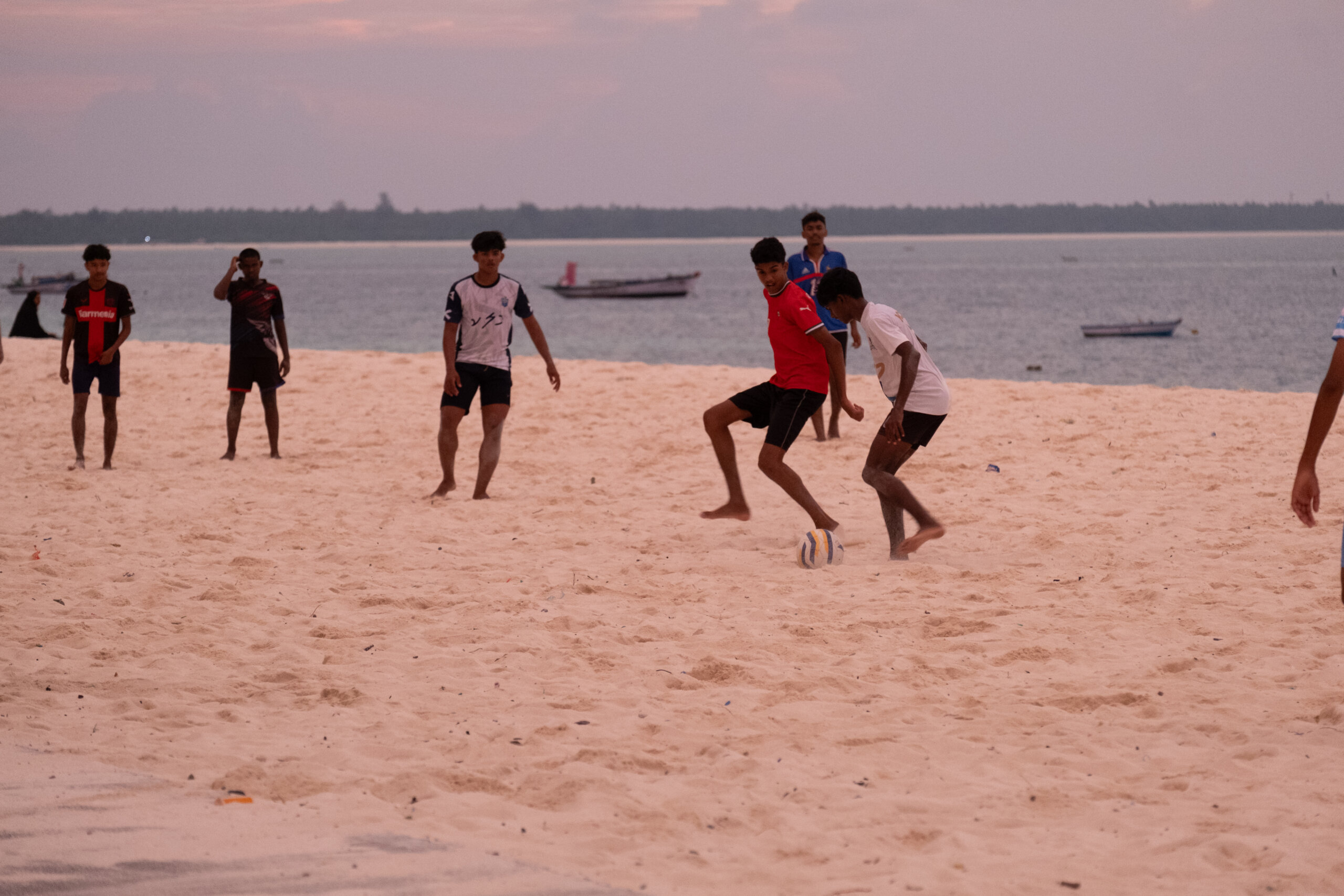
I’ve never felt safer as a solo traveller than I do in Lakshadweep. In Minicoy. Around thirteen thousand people live on this island; nearly everyone knows everyone. And when the sun slowly dips below the horizon, the island comes alive, just as slowly, just as peacefully. As the heat starts to wane, the community comes together—to sip coffees and teas in fairy-bulb-lit shacks, to chat the evening away by their third space, the beach—often past 1 A.M., to ride their bikes in groups, to play in the sand, to fish by the jetties, to practice and rehearse for Saghafee, age and gender no bar. There’s hardly any room for crime in such close quarters.
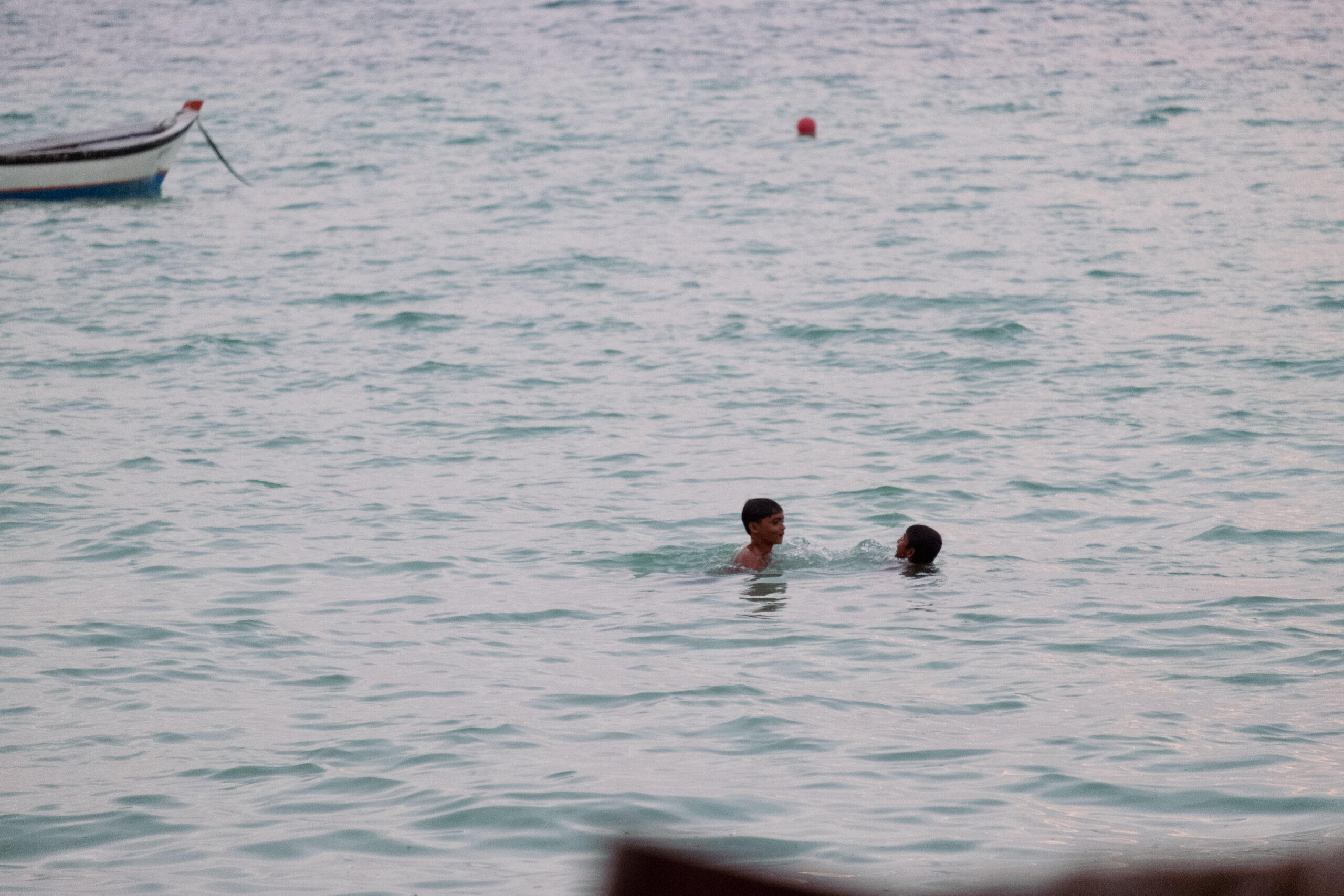
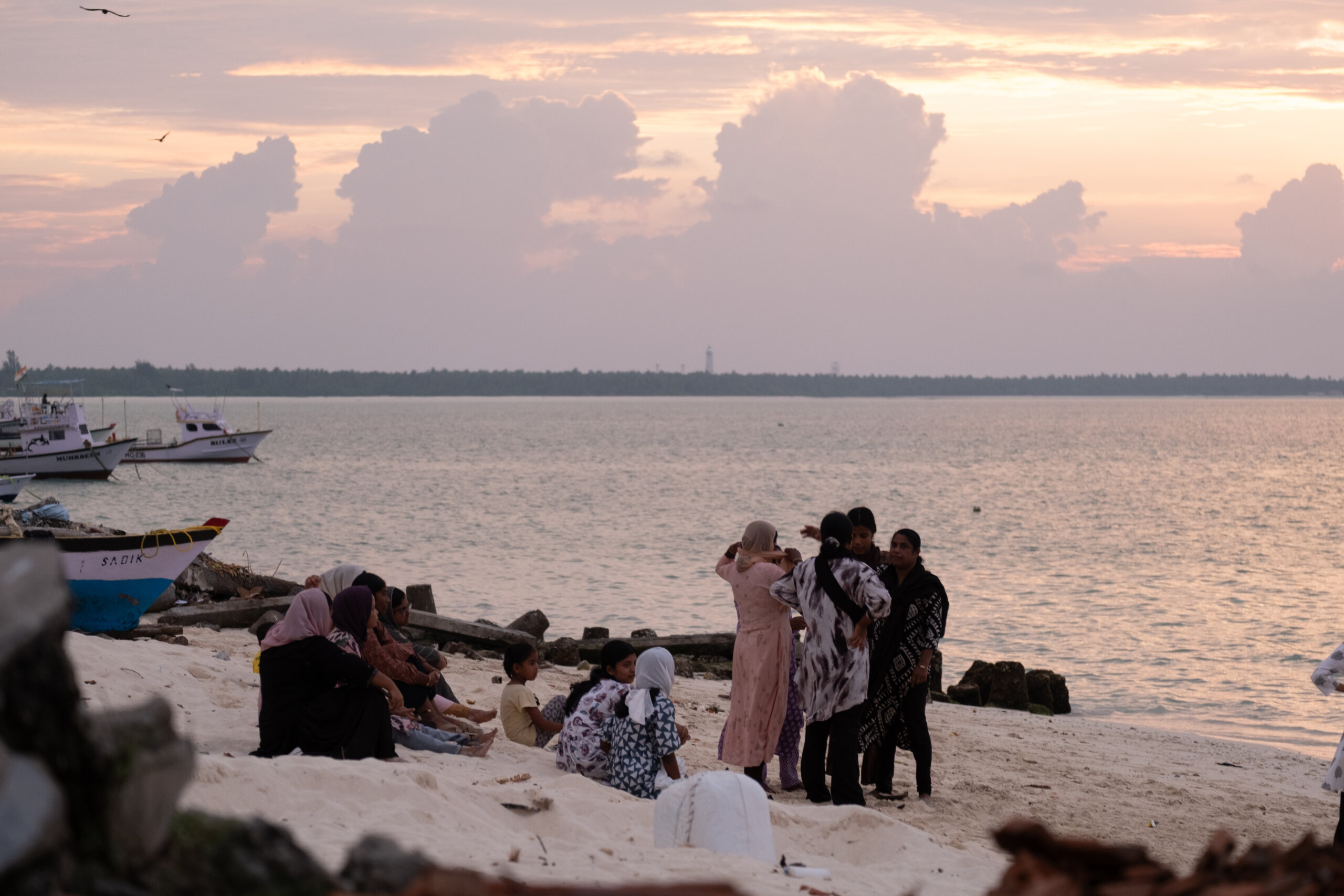
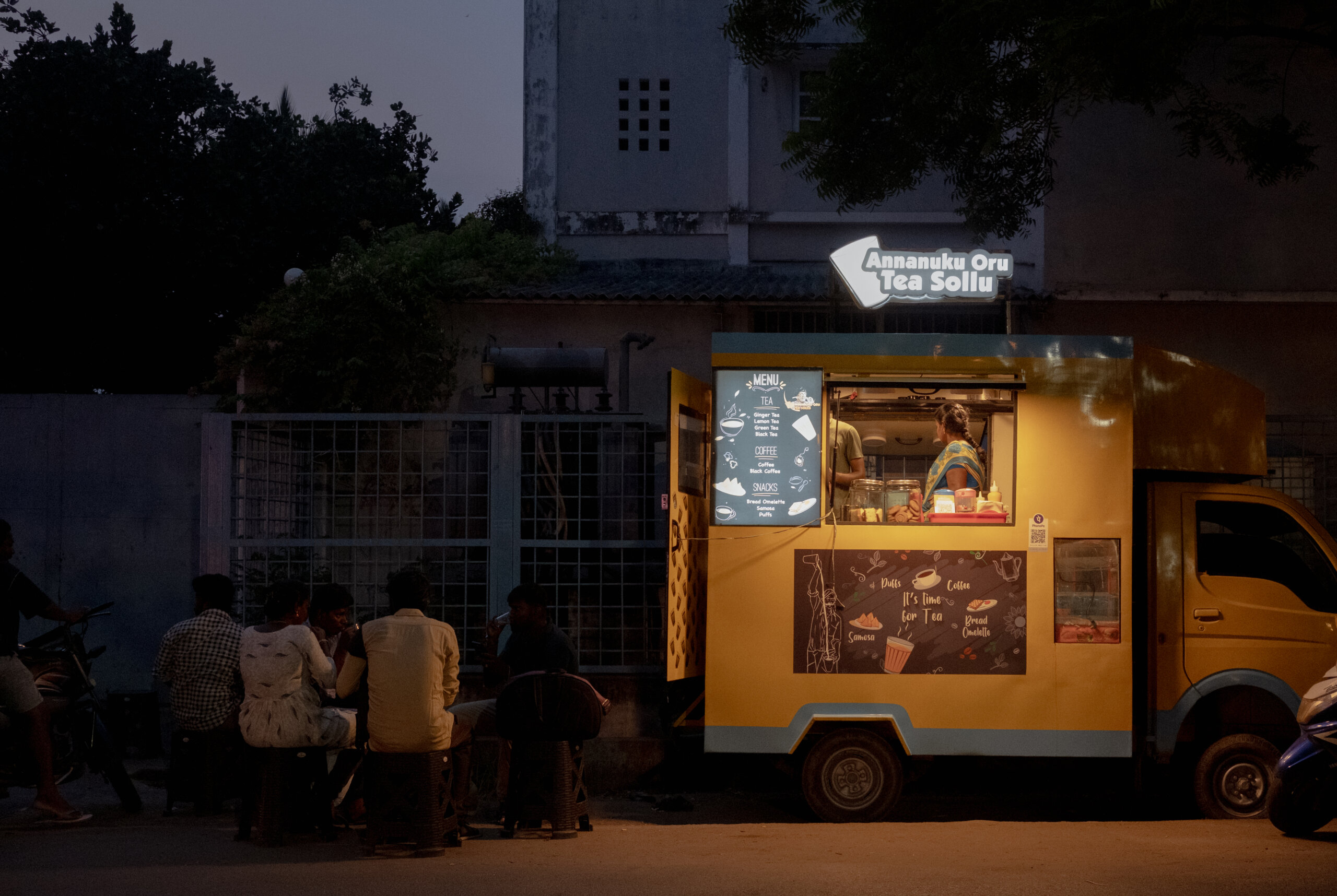
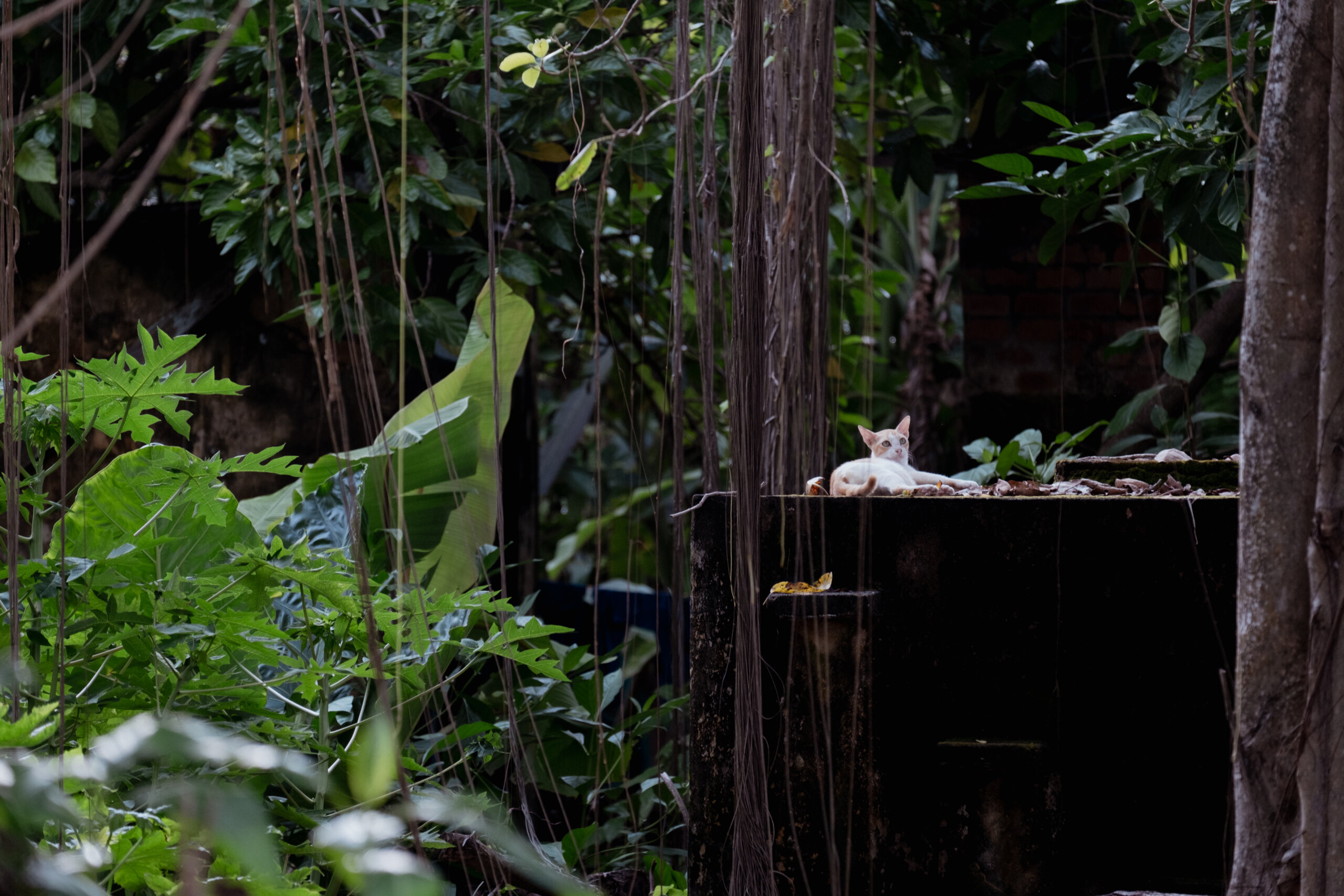
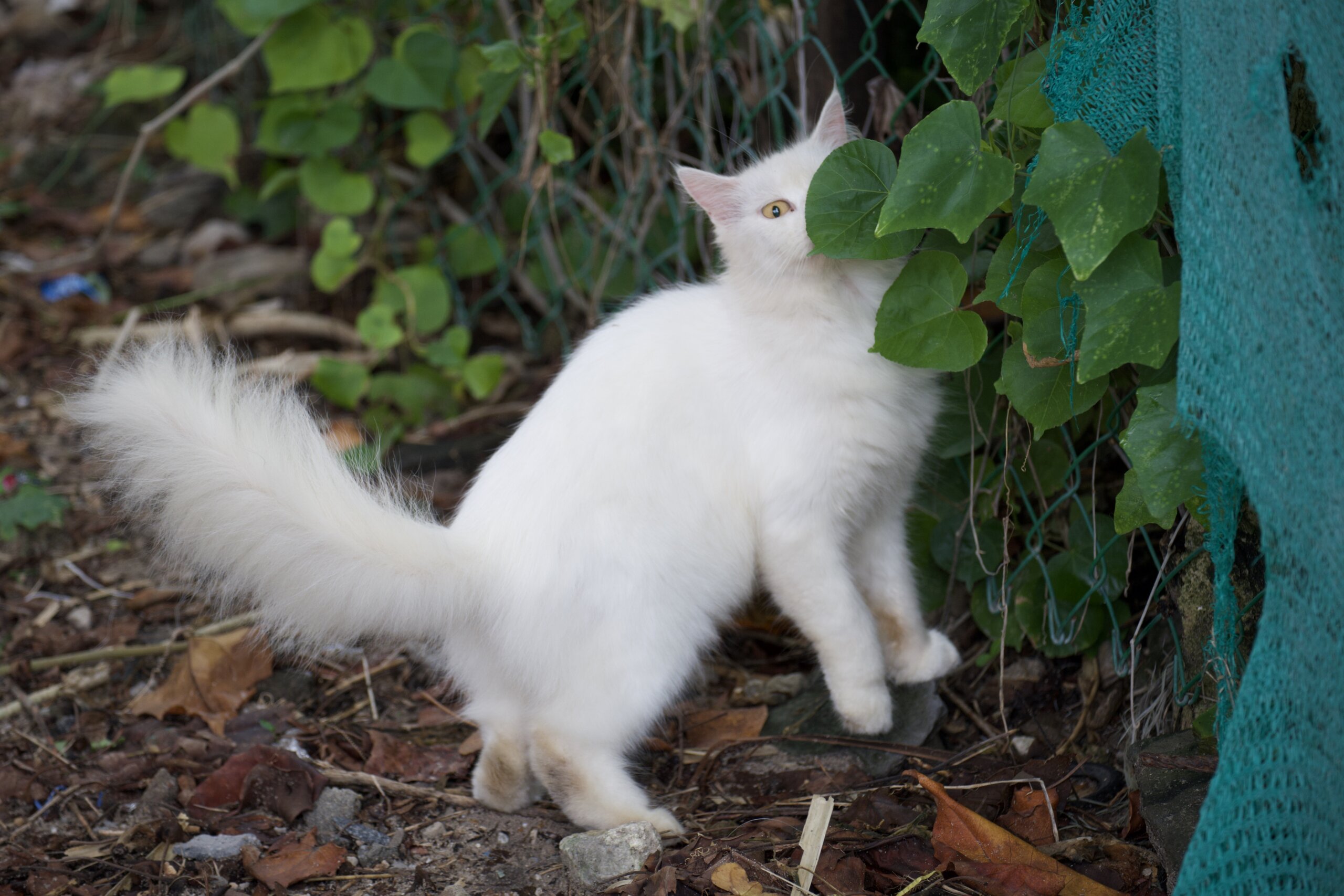
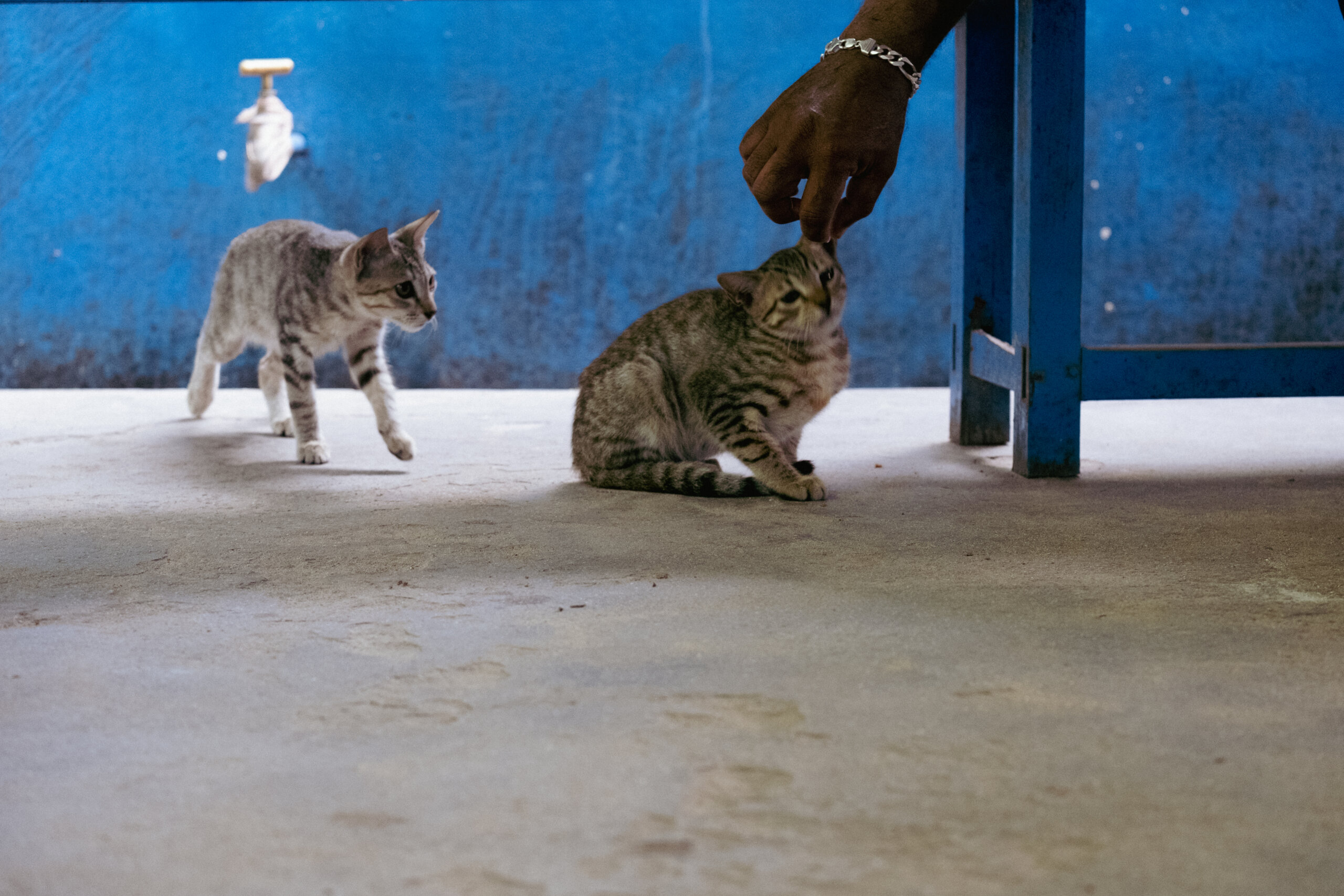
My post-dive ritual: go to the chai shop that’s opposite my room, order a hot tea, sometimes sans milk, take pictures of kittens playing around, and wait for conversations to find me.
My mind was buzzing with serotonin. After a disappointing start to my course, I managed to get a hold of my fears—and my breathing through the bulky regulator that leaves gashes on my gums and a ferrous aftertaste in my mouth—and checked off a bunch of skills in the confined water dives. That’s when he spoke to me.
“Idhar ke log alag hain. Acche hain. Khyaal rakthe hain sabka. Especially ladies log. Unka raj hai idhar” (Here, the people are nice. They care about everyone. Especially the women. It’s their rule here).
He works for the police. I’m not from Minicoy, but I’m from Lakshadweep, he said. Why are you here? To travel. For how long? Two weeks. Akele ho? Haan. Married ho? No.
By now, I’d begun to revel in the mundane conversational foreplay—the easy, nameless exchanges for these short encounters. Who’s going to remember names anyway? Live in the moment, bask in each other’s company, and let the conversation flow; we’re all just ships passing by. That’s what I told Deepak, a navy soldier I met on the ship en route to Minicoy—my companion for morning walks by the jetty and evening smokes.
“Idhar bohut safe hai, isliye hume bhi bohut zyaada kaam nahin hai” (It’s very safe here, that’s why we don’t have a lot of work), the cop told me, chai glass in hand. Larger crimes like POSCO come to us. Other matters—smaller, petty, household issues—the villages handle them.
National Crime Record Bureau’s data is clear as the baby-blue skies of the islands—Lakshadweep has the country’s lowest crime rate. Still, the Anti-Social Activities Regulation Bill proposed by the administrator gives him the power to detain a suspect for up to a year, with no public disclosure or court-issued warrant required. His argument? There’s a spike in drug-related crimes.
Walking through the village house in Fallessery; 1701, I read the house’s inauguration year out loud. Amir asked a tourist guide to tell me about the village.
“Idhar koi violence nahin hain. Bohut peace. Any issue, hum hamare village leaders ke saath milkar compromise karte hain” (Here, there’s no violence. It’s very peaceful. If there’s an issue, our village leaders sort it out), she told me. The cops only patrol, she added with an impish grin.
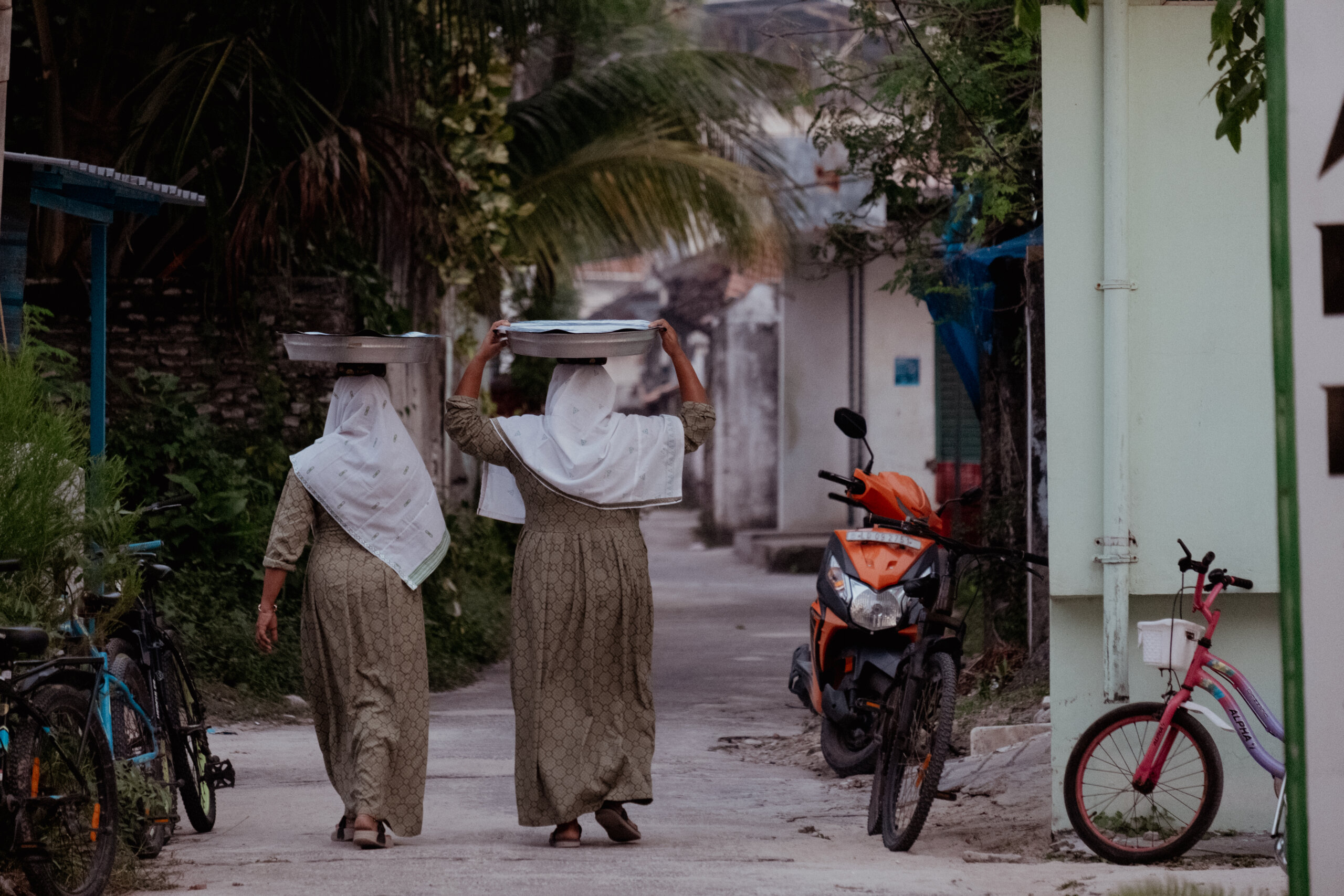
“Aur ladies? We have no problems. Bohut zyaada safe hai, aapne dekha hoga. Aur shaadi ke baad bhi hum hamare apne ghar mein rehte hain, husbands hamare saath aathe hain. No dowry also. Mard log humko sab dete hain” (It’s very safe for women, you would’ve noticed. And after marriage, we stay in our place; our husbands move in with us. The groom arranges everything), and her smile grew more radiant as she spoke.
“Married ho?” she asked.
Nahin, I replied. “Par mein apni mummy ko bolkar idhar hi rah loongi aur nikah kar loongi” (No, but I’ll tell my mum that I want to marry here). Her tinkling laugh made many heads turn. Then, she told me all about the village system.
“But what made you choose Minicoy for your diving course?“
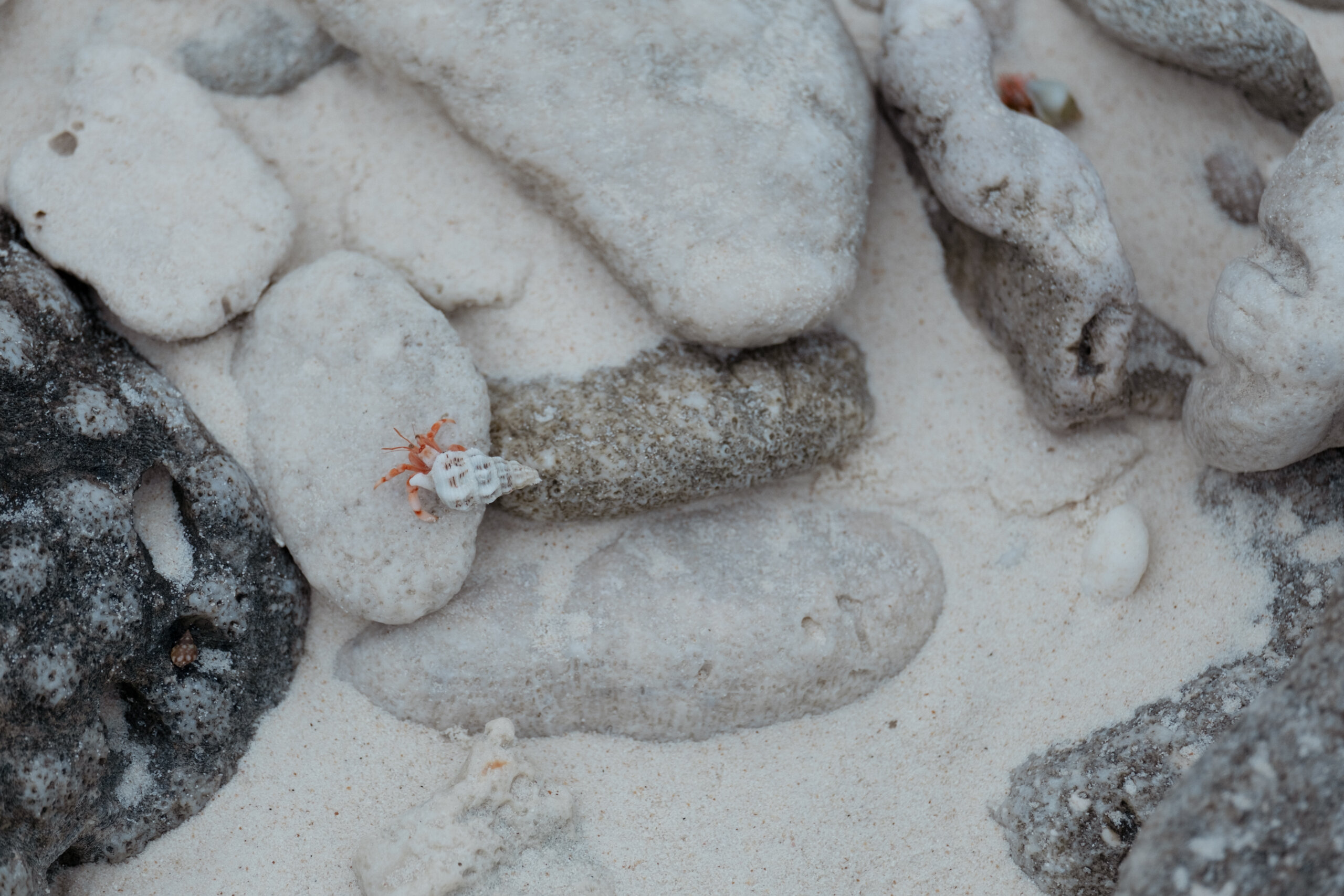
My diving buddy V—forty years old, baby-faced, witty V—asked me as we made for land after one of our first confined-water dives in the lagoon. I looked around. Turquoise everywhere—glass-like, gleaming. A turtle drifted past our boat. A little while later, a stingray glided alongside, lazy but deliberate. On the land side, palm trees framed ivory shores of sand, coral remnants, and shells—homes to tiny, red hermit crabs. Just enough sun to warm our post-dive shivers, but not enough to burn us to a crisp. Although by then, I was already several shades darker in all the places my swimsuit didn’t cover. A clear sky above, with cotton-candy clouds scattered carelessly.
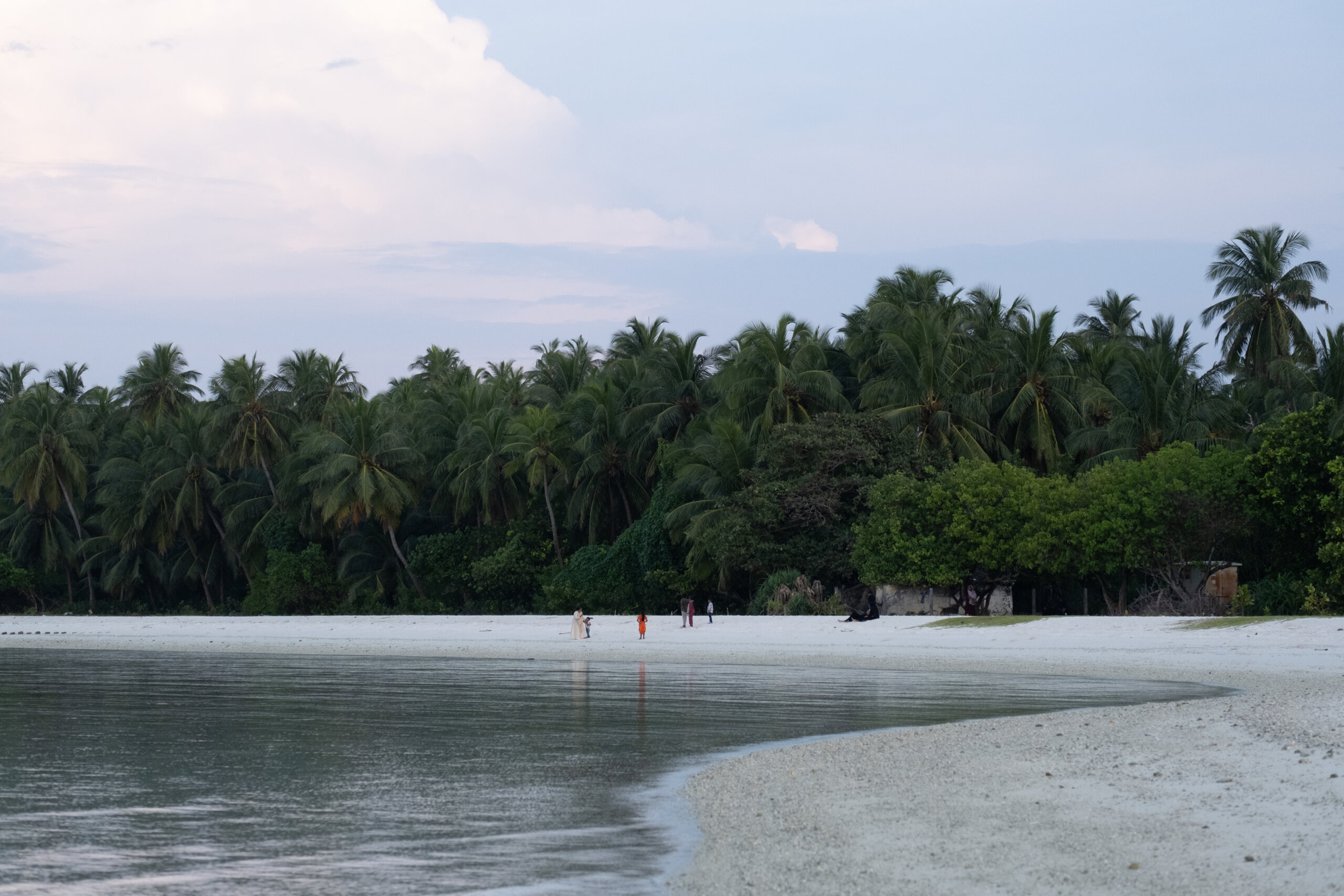
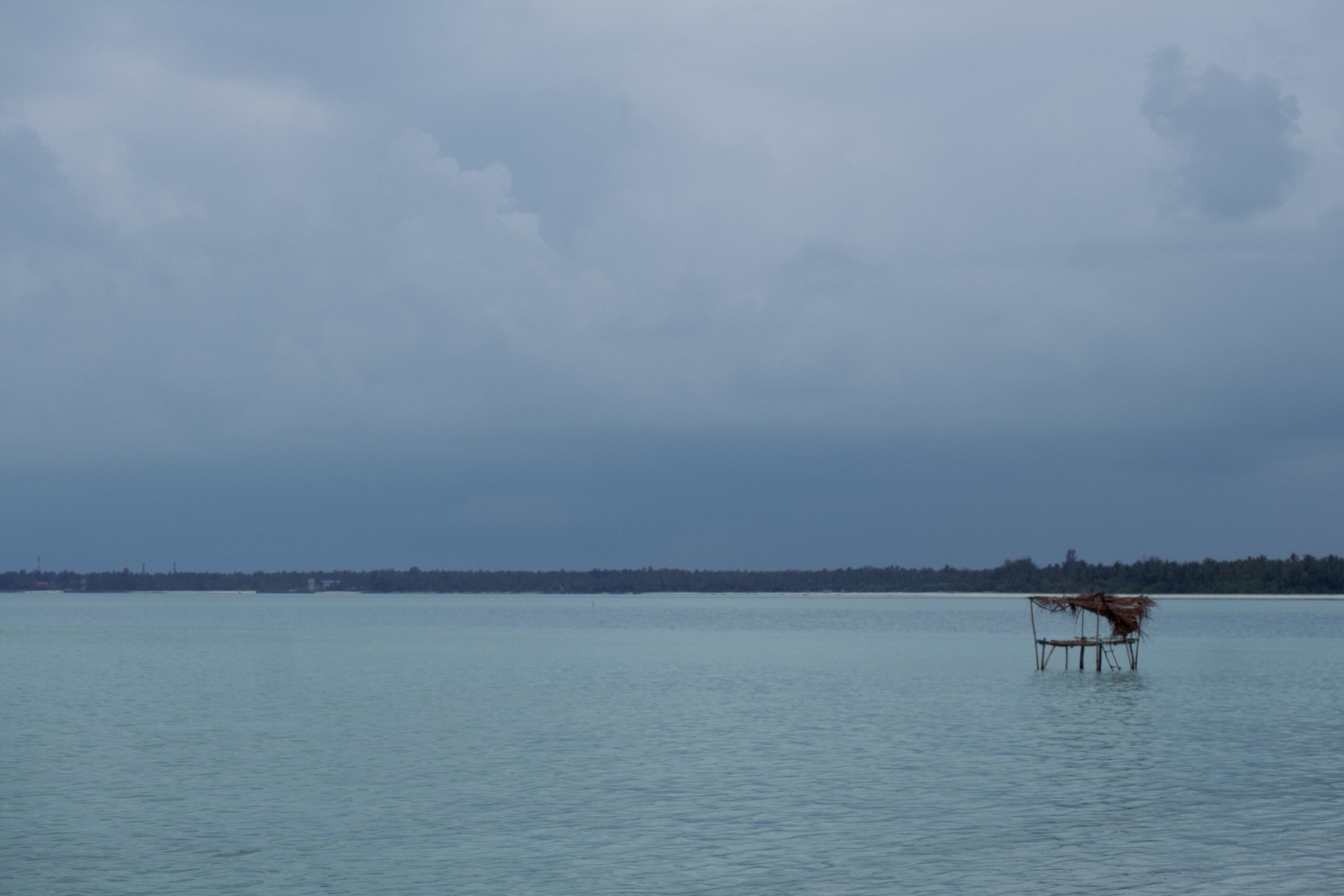
I gestured to what I knew he could see, too—isn’t this reason enough?
“I guess,” he said. But I could tell he knew there was more beneath the shallowness of my easy reply.
“When I was in Bangaram, a dive shop staff member told me he used to work at the resort in Minicoy. But when the government cut staff, he had to move. He said that if I ever got the chance to dive in Minicoy, I shouldn’t miss it.”
V’s been here for over a year now, for work. “I’m leaving soon, so I decided to get the better of my procrastination and finally get certified,” he said.
“People keep asking me about Minicoy because they want to vacation here. And I always tell them the same thing—if you want a holiday, go to the Maldives. Don’t think twice. Minicoy, the way it’s meant to be experienced, is for wanderers and hermits.”
I thought of the little hermit crabs on the shore, making new homes out of bigger shells every time they grow. Patiently searching for the right fit, taking time to explore.
I remembered how, when Altaf asked me about life in Bangalore, my words came out thick with loathing. I was surprised by the density of hatred in my voice—a sticky, oil-spill of desperation to get away seemed to coat my vocal cords. I detest the city—or what we’ve done to it. I know the destruction we’re capable of: impatient, greedy, wanting more than we need, taking more than what’s ours. Bangalore, where I lived for over two decades, stopped being my home a long time ago.
I nodded in agreement with what V said.
“But after a year here, I’ve learned that there is such a thing as too much peace,” he told me as we kitted up one day—sending me into a déjà vu of what one of the radio department staff from Trivandrum had said on the Minicoy-bound vessel from Kochi.
That non-islanders are assigned here to work for a year or two. That they have the option to stay on after. Most don’t.
Why? I asked.
“Kyunki idhar kuch nahin hai” (Because there’s nothing here).
In me, the hermit with the constant urge to run away, and the hermit crab, both knew, right then, that she had found her new shell, her home for now.
And with home comes certain territorial behaviours.
Triggerfish—my biggest underwater fear, right after the panic of not being able to equalize in the deep blue. The bite mark on the outside of my foot has faded with time, but one look at it, and I’m right back in that dive off the shores of Kavaratti, where blood from the attack wound spread through the water like dark green clouds—red barely visible at depth, my screams hardly audible. Fierce guardians of their ocean nests, attackers of feet—their weapon of choice: coral-crushing yellow teeth—but never without provocation.
On my way to the villages. Outside my room near the western jetty, I saw two girls who I assumed were tourists—modestly dressed, but different from the others. No head coverings, some makeup on.
An undercurrent of jealousy bubbled in my stomach.
Or maybe it was protectiveness? I’m not sure. All I knew was that I didn’t want to share the island with anyone from the outside. I wanted to tell them to leave right then, to keep whatever they’d seen here to themselves. Don’t come here—not if there’s even the slightest chance you might harm this place.
My place. Mine and the islanders’.
The intensity of the feeling took me by surprise. A desire to lunge at them. A primal urge to attack ankles with the weapons at my disposal.
Balistoides viridescens. Titan triggerfish.
White melting into turquoise, turquoise fading into cyan. The lagoon takes my breath away, each time. And I’ve seen it every day for two weeks.
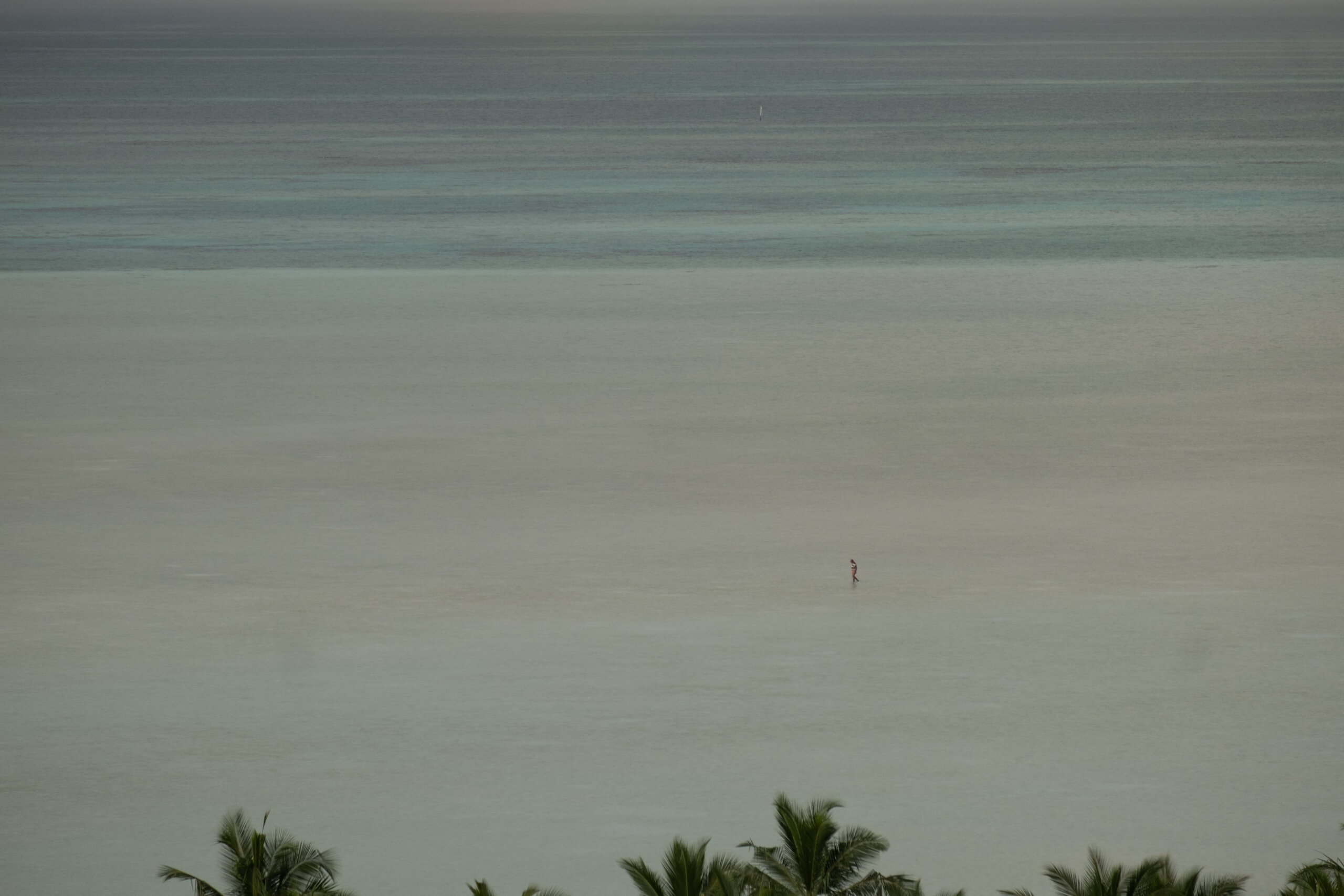
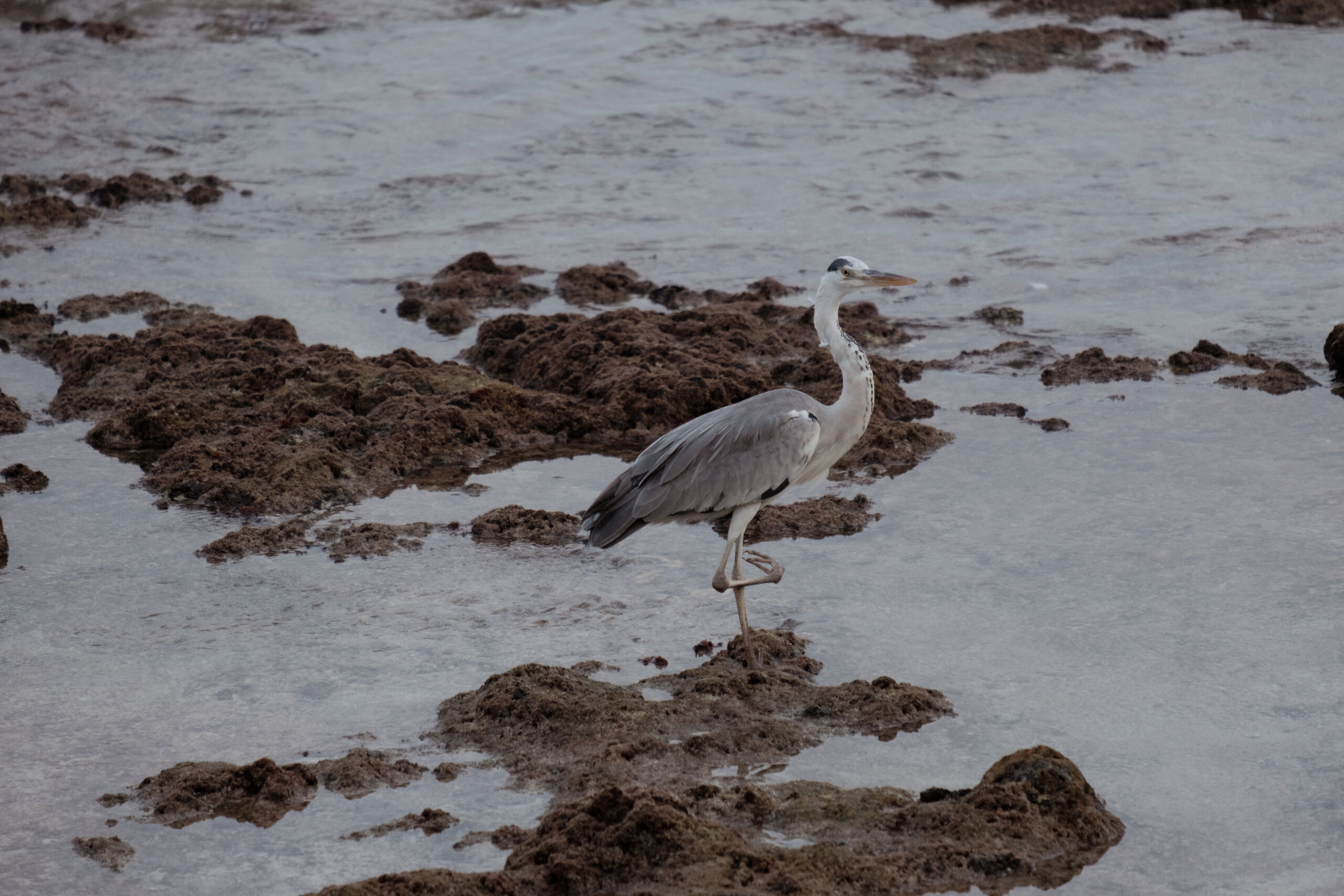
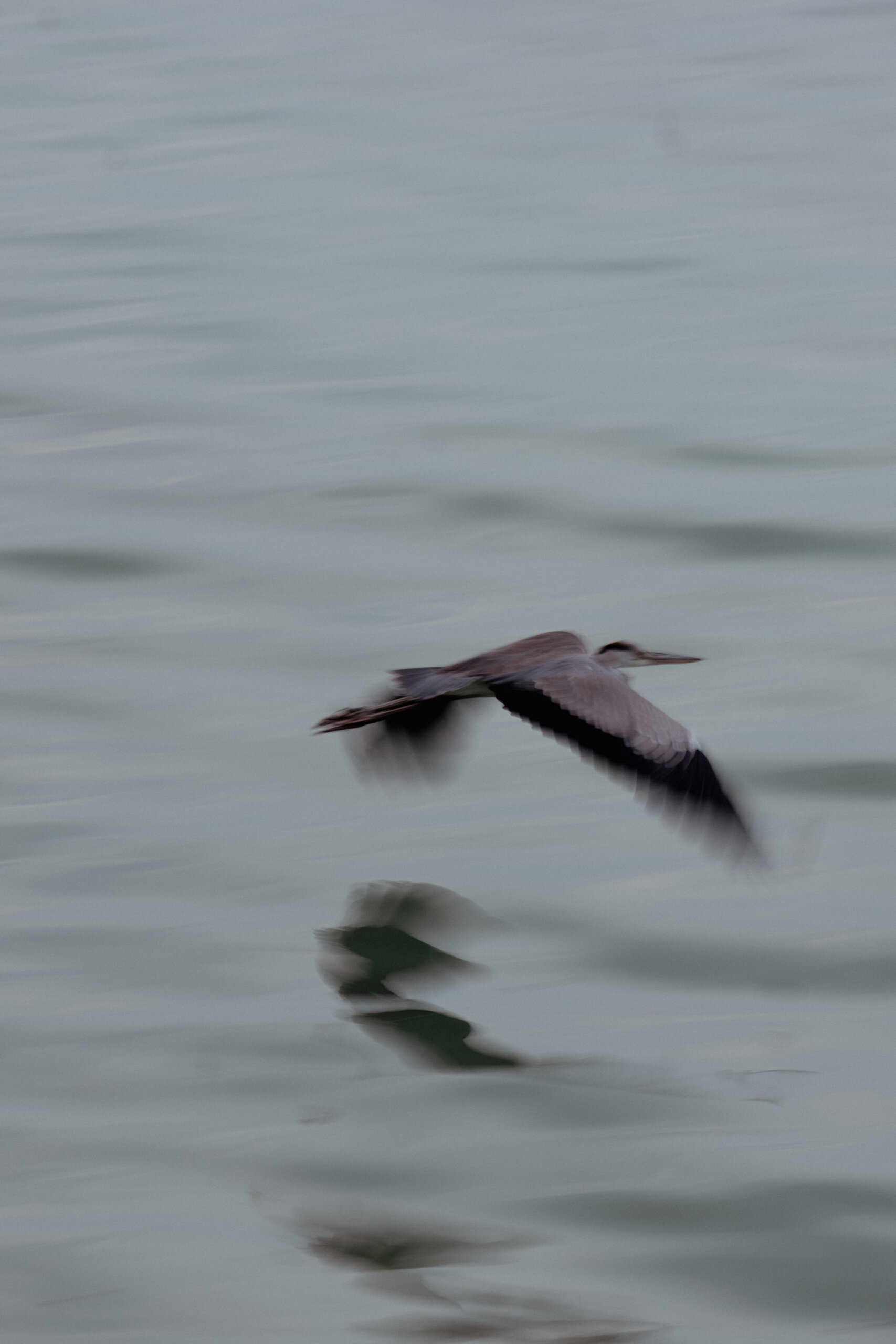
When I’m by the water, I listen—to the waves crashing on the shore, the water lapping against itself, herons and egrets overhead, my loud thoughts taking a backseat. When I’m in the water, I speak. Exchanging salt and stories—the sea’s millions of years’ worth to my thirty-five. An unfair barter; but this is spiritual osmosis, and in her vast indifference, I doubt she’s keeping score.
And like the sea, the people of Minicoy are storytellers, seeking an audience. Bursting with volumes about who they are, why they are—their homes and their children, their ways and their villages, how they differ from others, what they wish for this place. To be seen as a space of beauty. For its people to be regarded as equal, human, and strong. For the land to remain theirs, not something to be seized—empty building blocks—by those who don’t bother listening to their stories.
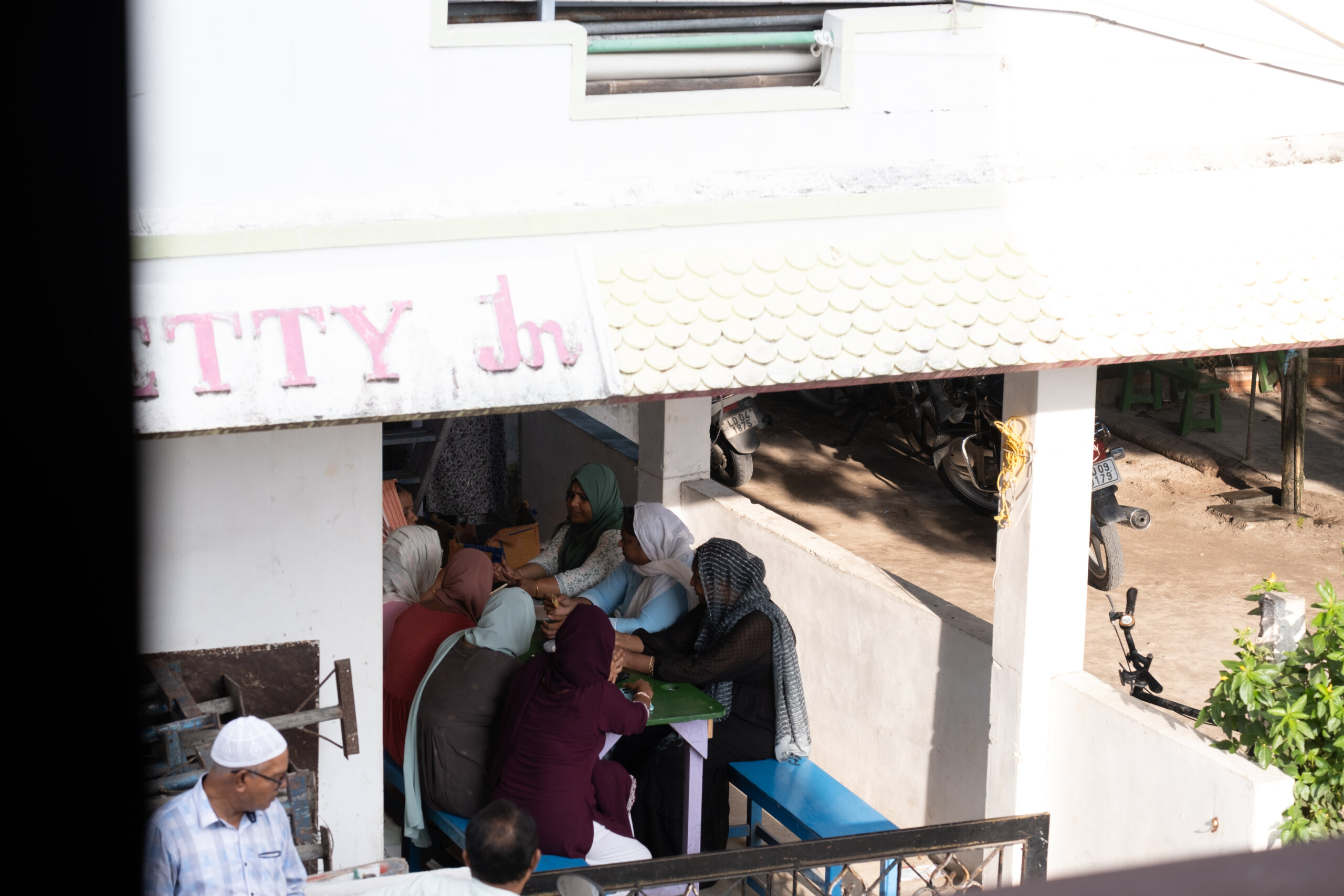
Ask for stories, and you shall receive; seek them, and you shall find. Stay, and you shall know.
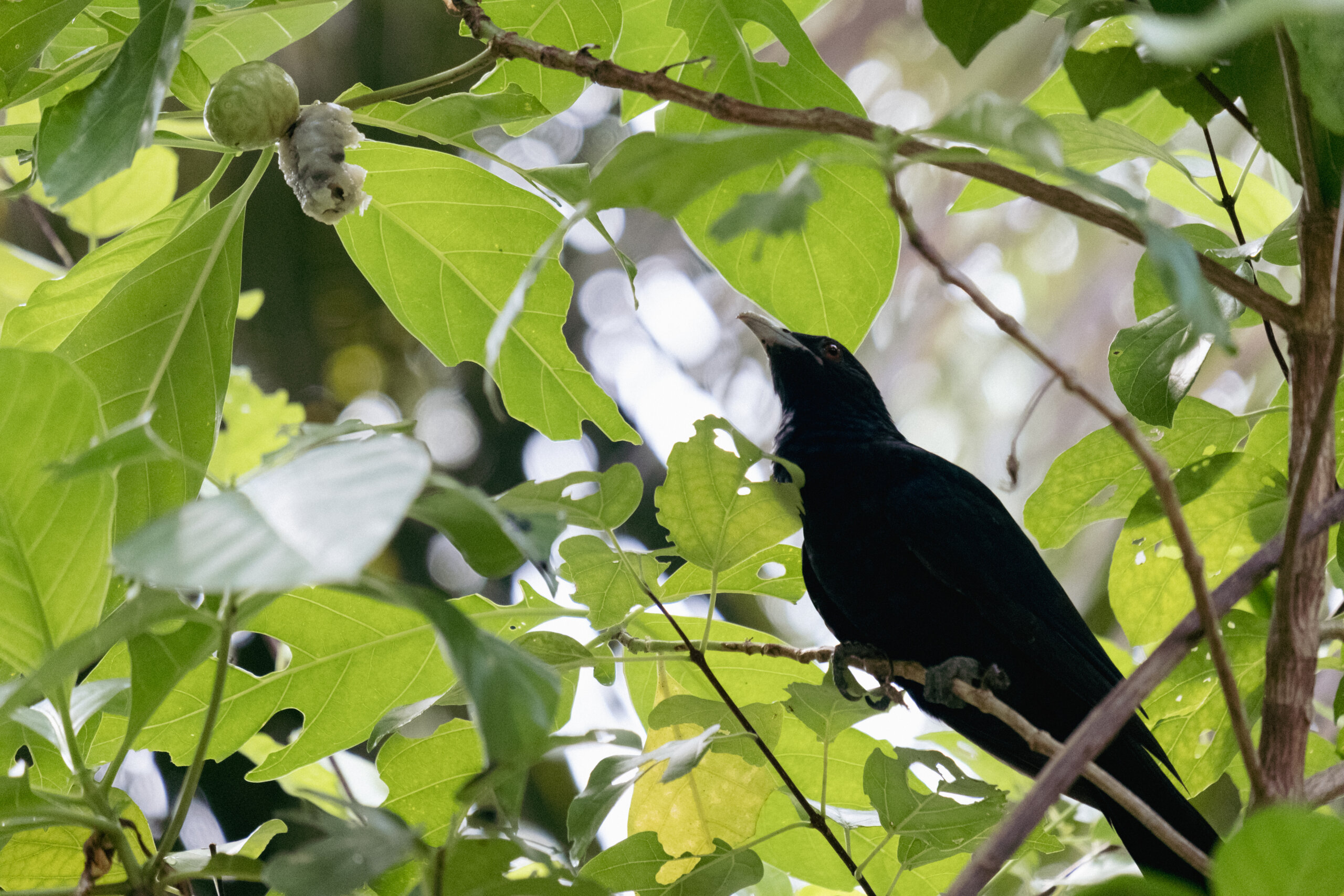
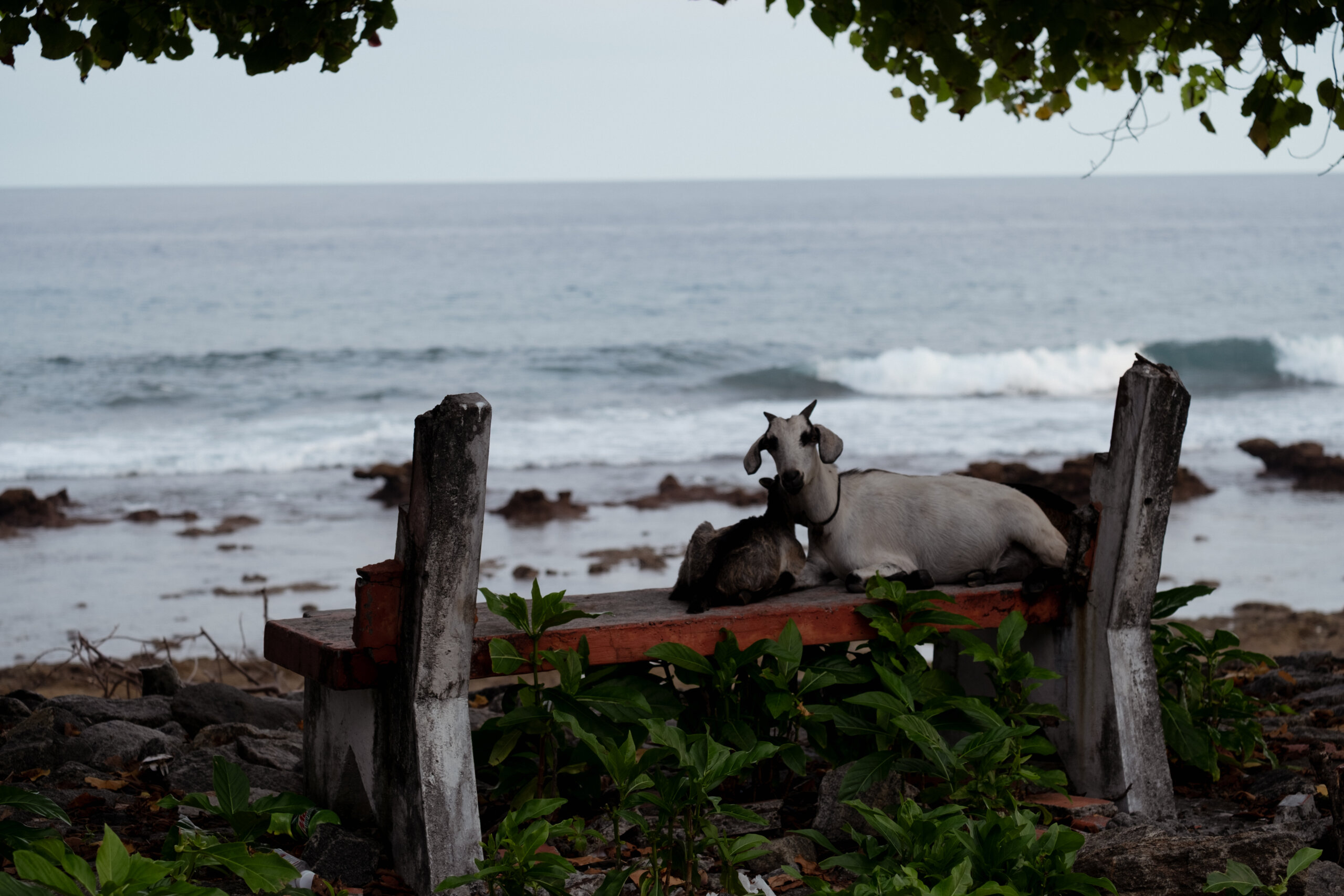
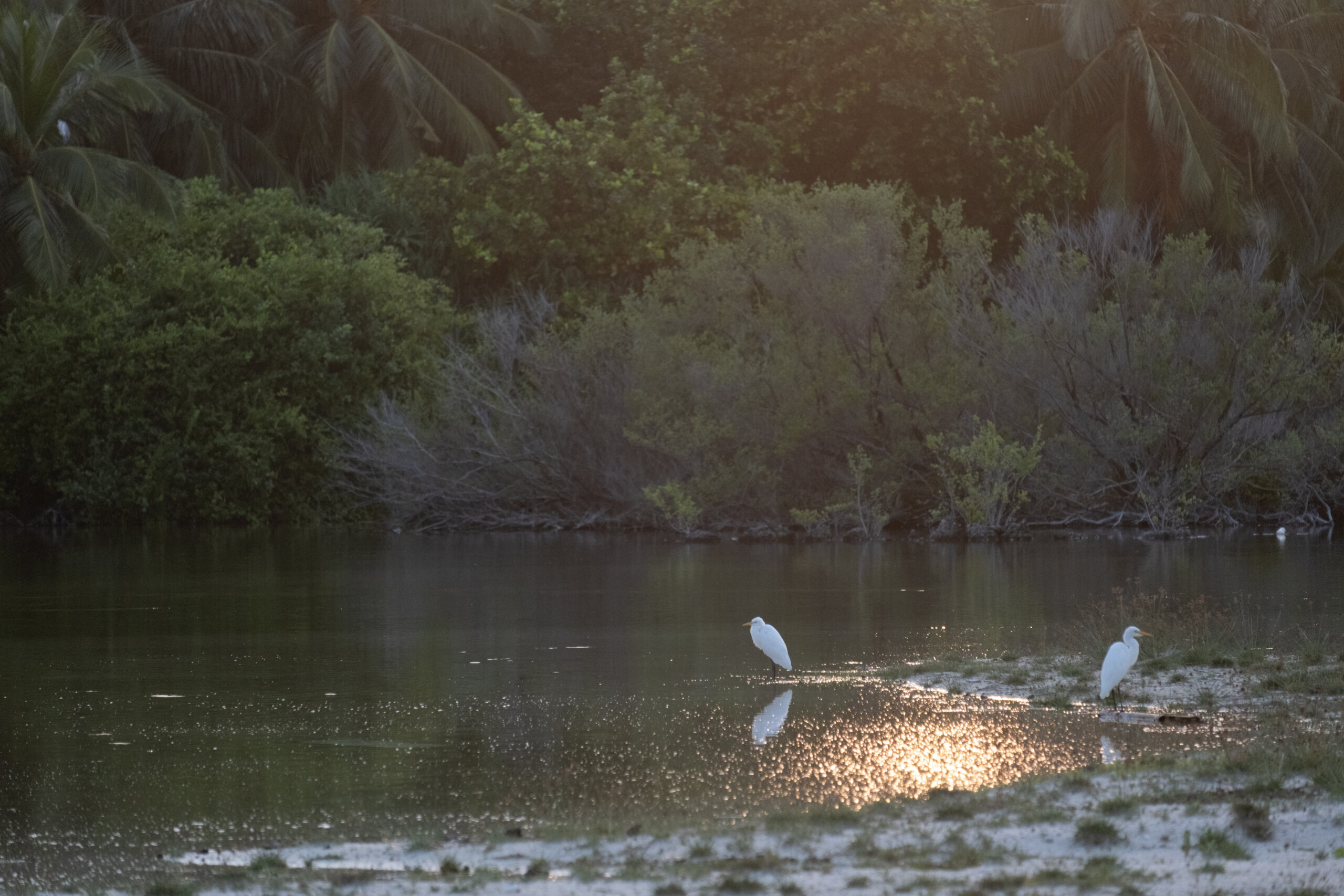
I stayed. And I now know that the red crabs cross the road at night, so I ride the scooter with caution. That there are no packs of dogs here, but herds of goats, and they sleep right on the roads, eyes closed, heads bobbing; speed-checkers, masters of the lanes they saunter through. That there are plovers and shrikes, crows, chickens and koels, egrets and terns, herons and water hens in the salt marshes—the only one in Lakshadweep—but hardly any pigeons. That there are mangroves here, also the only ones in the archipelago: along with the coral reef, they are sentinels against tsunamis, allies and defenders of the island.
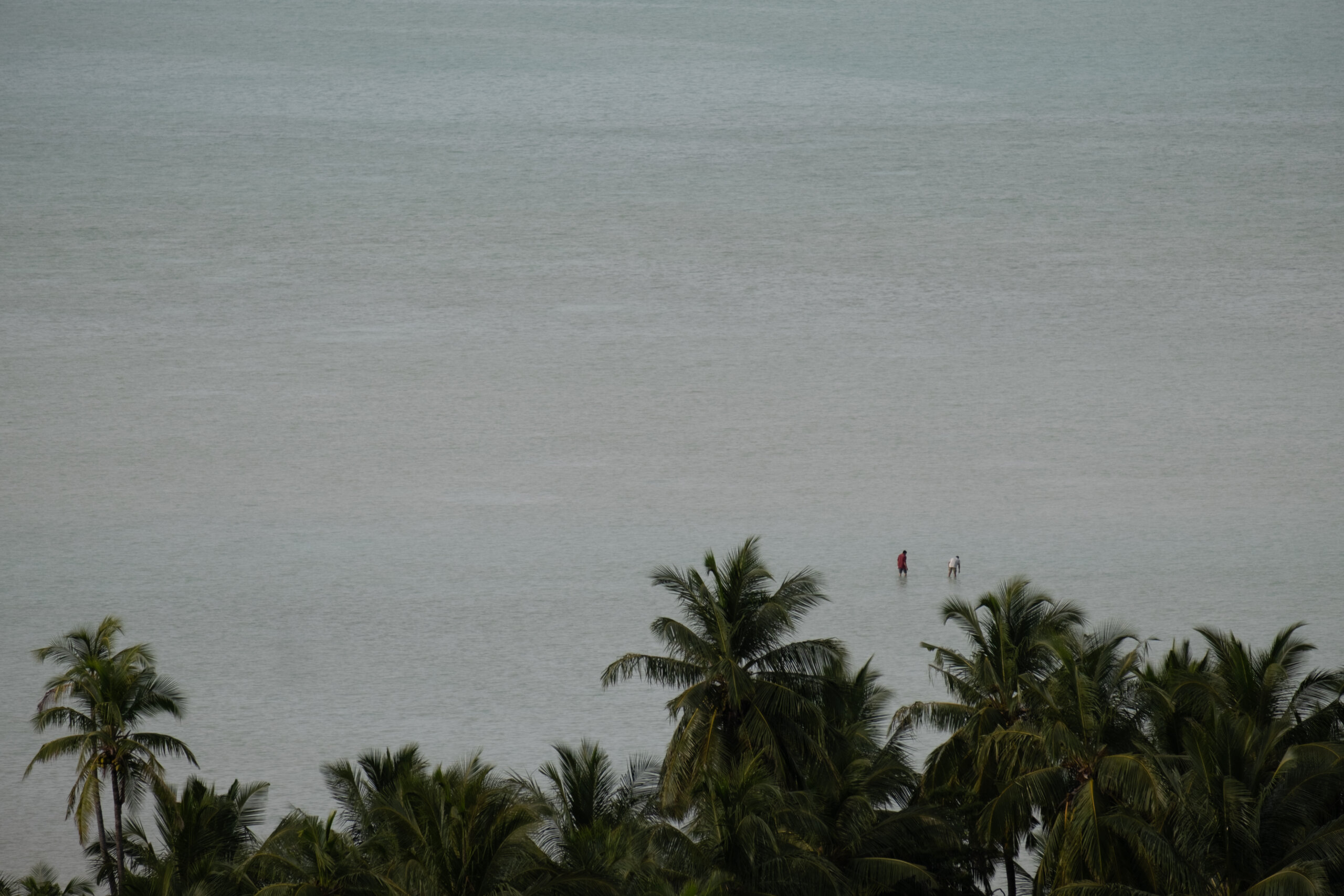
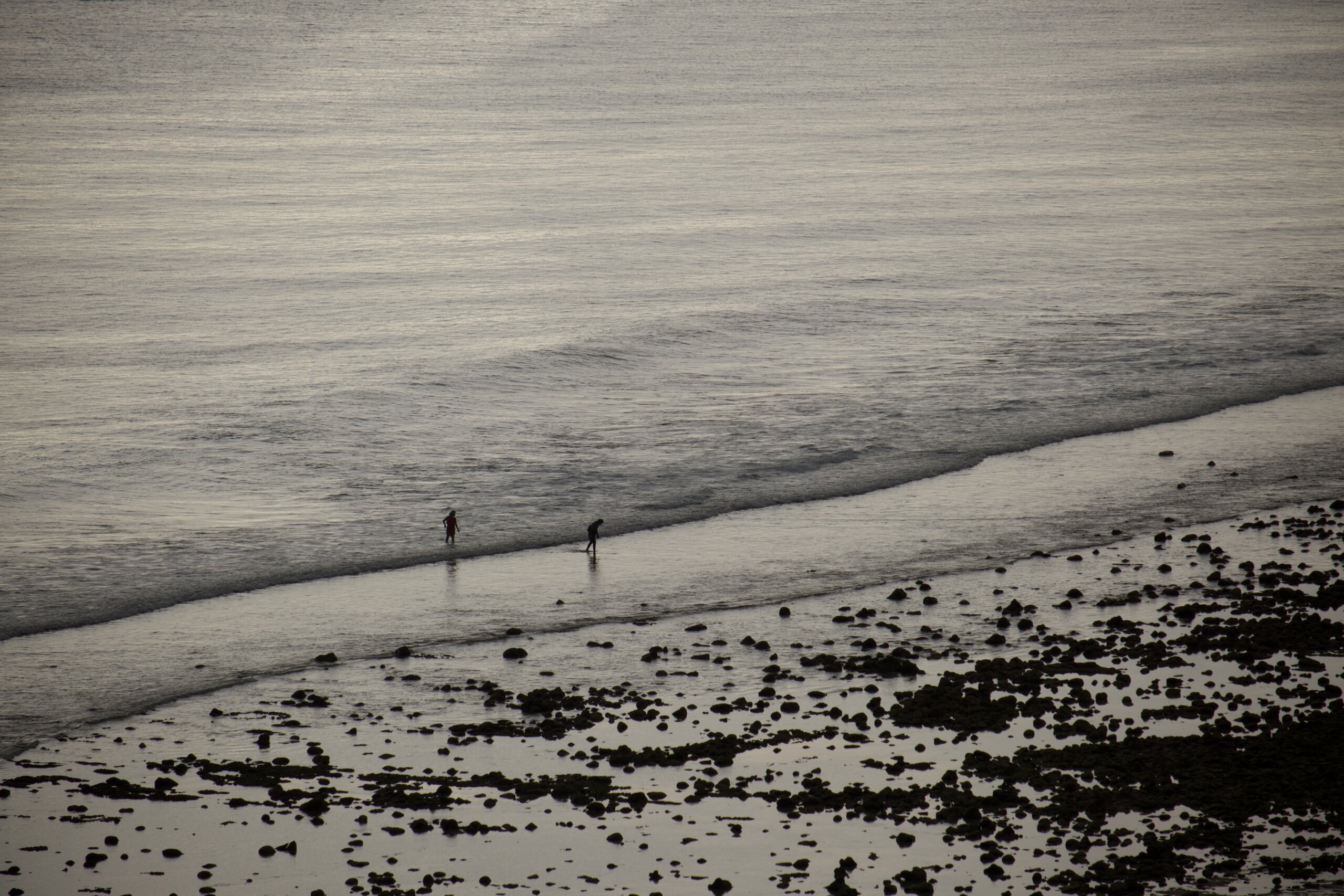
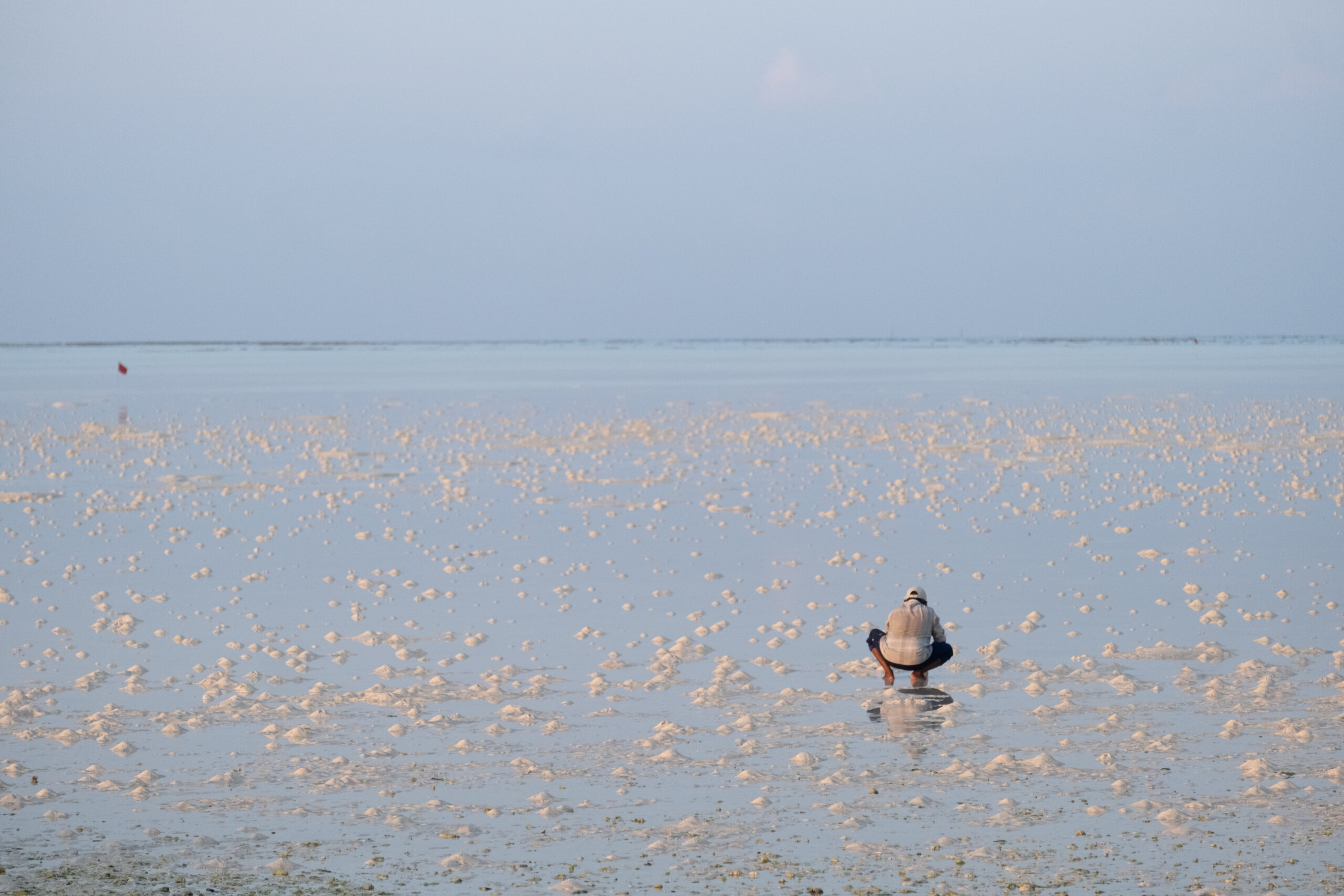
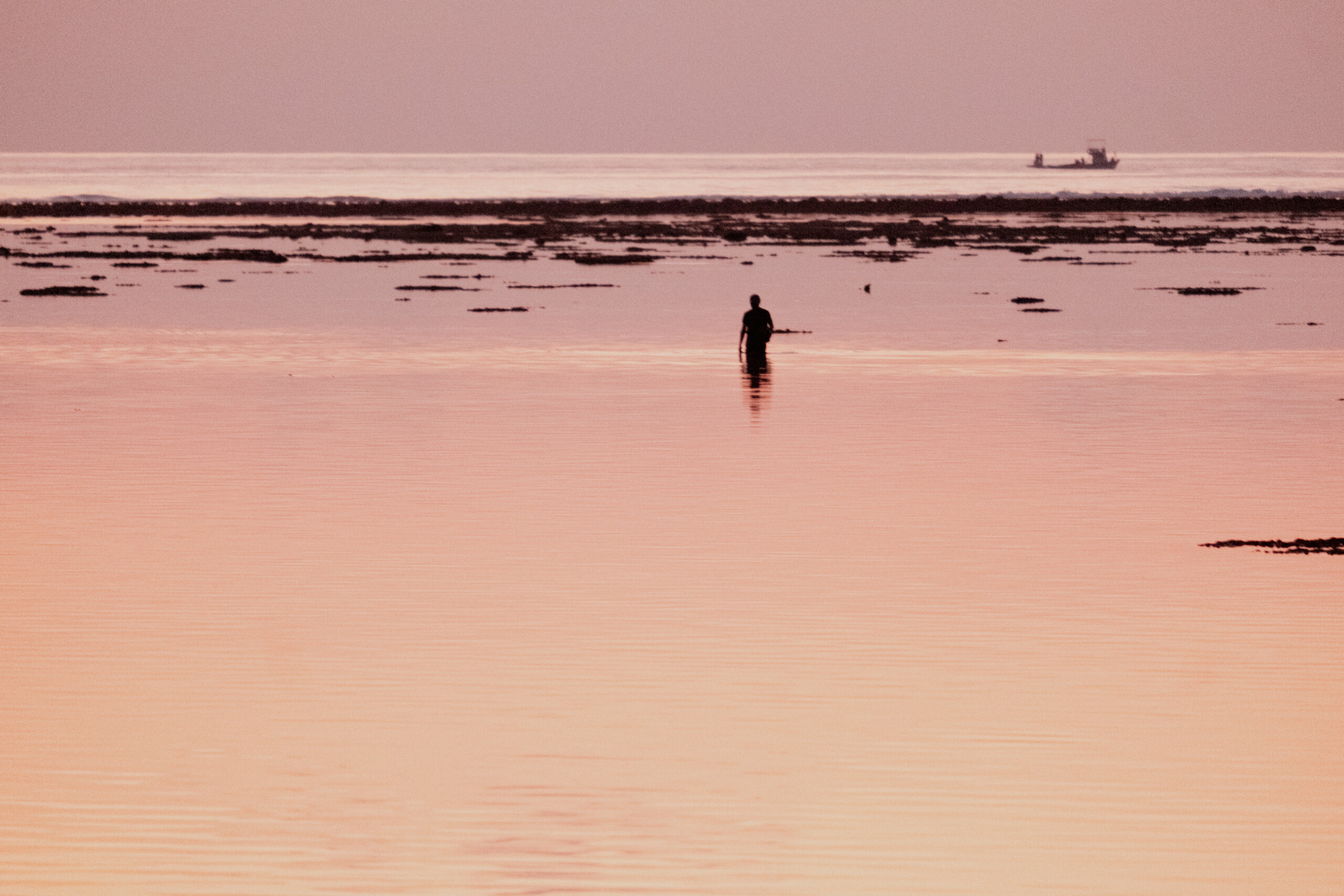
That when the tide is low, fishermen and families both rush into the lagoon—wading through ankle-deep water and tiny sand hills, walking far out into the sea—to look for bait, shells, and fish. That the junction in Boduathiri village that has ‘Yellow Army’ painted on a mustard yellow wall in bold, black lettering has free Wi-Fi for anyone who may need it. That the people here trust me enough to let their children, their mothers, their aunts hop onto my scooter as we ride around in the light and in the night, like old friends. And that the islanders treat us like precious cargo—not because we carry the power to take their stories to faraway lands, places where people ought to know the beauty along with the bogged-down truths, but simply because that’s who they are.
“I saw the Ghazipur of Minicoy yesterday.”
“It’s so dystopian, right?” V replied. He was more perked up than I was, because he finished more of the course than I did. “Throw in a crane, and it’ll look like a scene from Wall-E. Wait, let me show you something.”
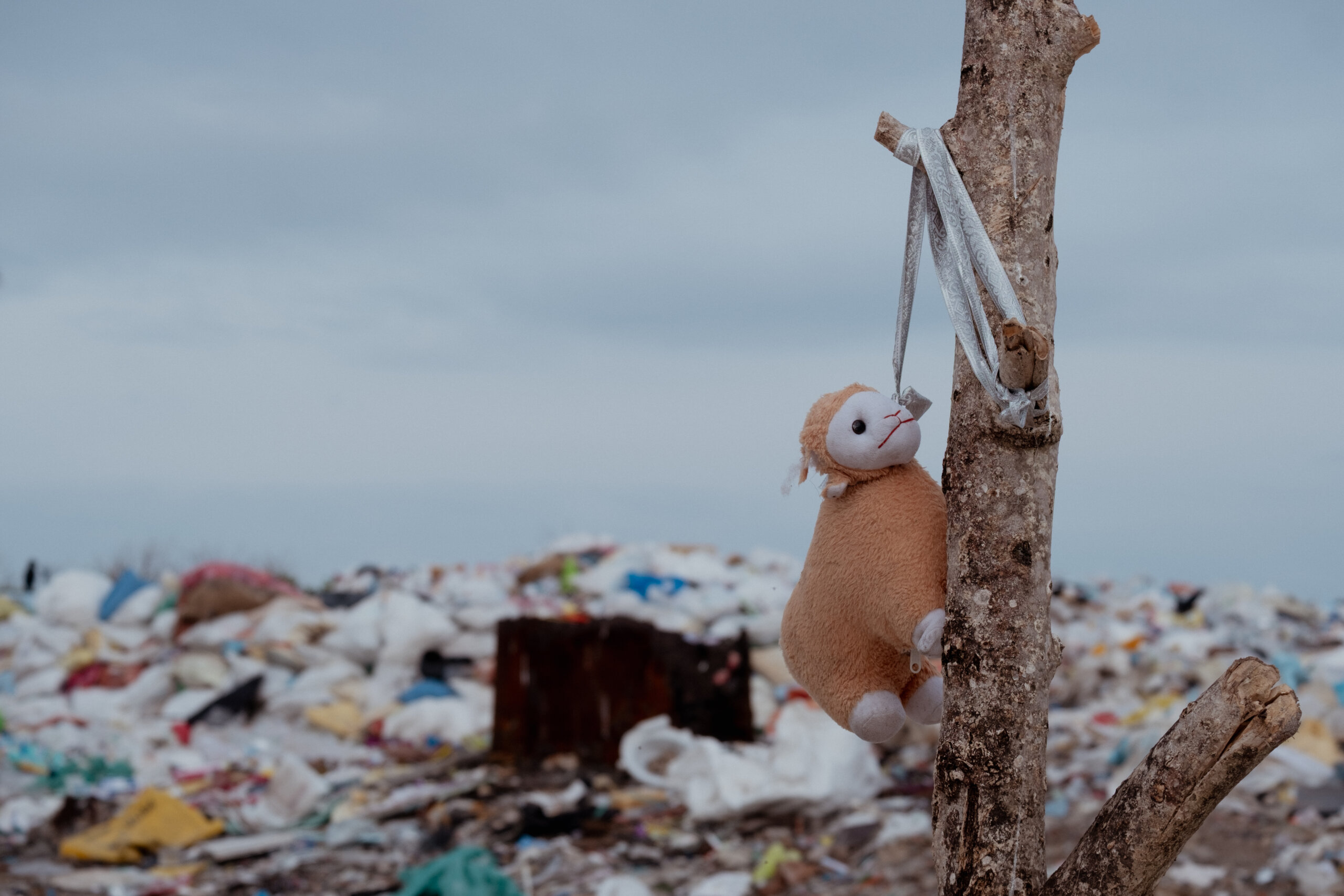
He fished out his phone from his pocket. A photo of a cross-eyed sheep—grey, frayed, lifeless; a toy suspended on a pole, white nylon stuffing spilling out of what was once its neck. Like how emperor Jahangir displayed severed heads outside the fort gates—a warning.
I saw an impaled horse, I told him.
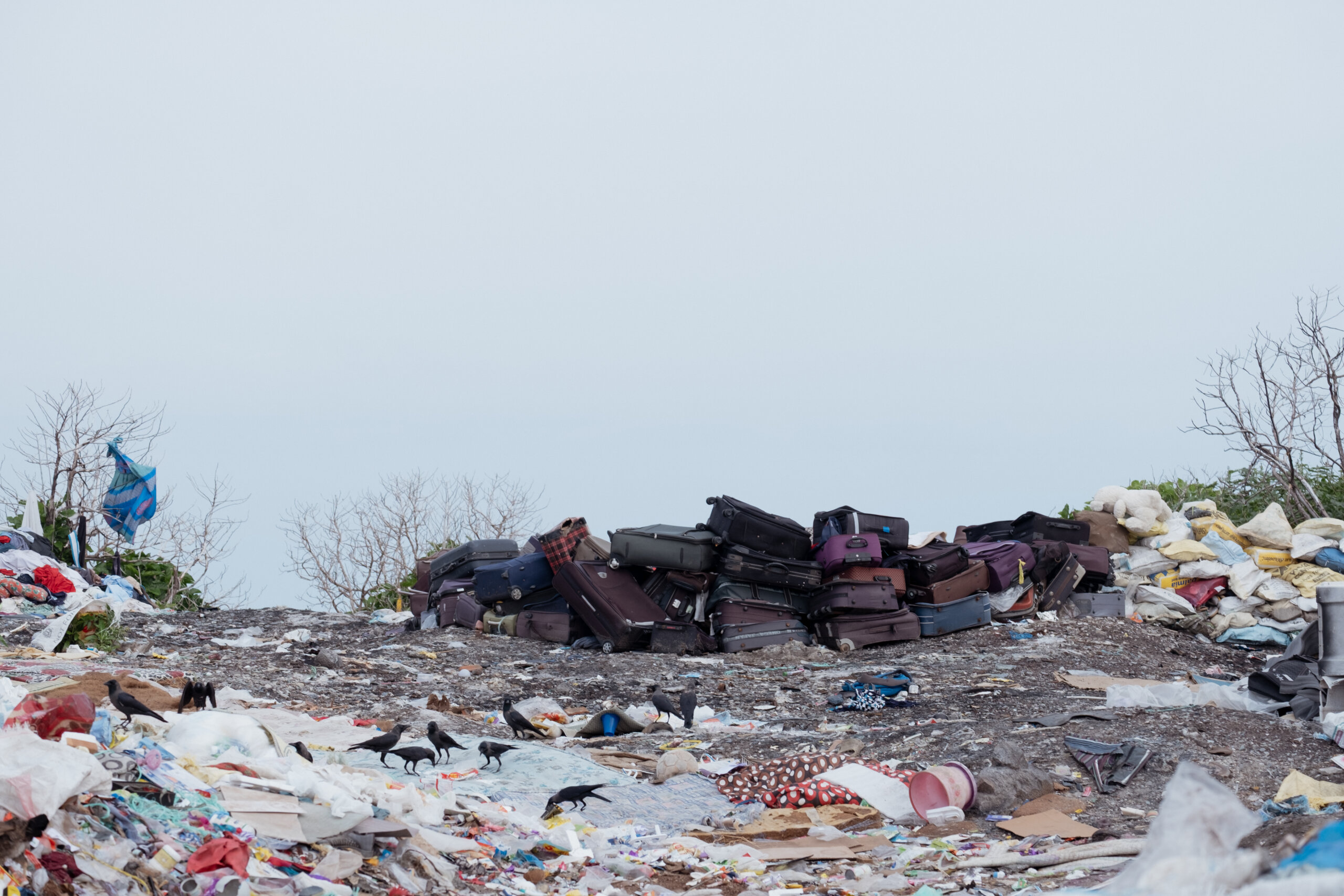
“Pehle jab panchayat tha, woh segregation karne ke liye sab kuch karte the. Ab panchayat nikaal diya. Yeh sab island ka hi waste hai. Woh kya kar rah hai, humko kuch nahin patha, woh Patel” (Earlier, when the panchayat was there, they would do the segregation. Now, we don’t know what he’s (the administrator) doing). Manija and I were doing what most people here do—wandering around at dusk—and she said this to me when we rode past the 1500 sq mts of garbage by Kodi beach. Faded suitcases, broken refrigerators, rat-eaten mattresses, old fishing nets, and discarded toys sit atop layers and layers of plastic waste.
“Hum isko Minicoy ka Dubai bolte hain,” Manija added, “kyunki kabhi kabhi logon ko iss jagah mein sona ya paisa bhi milta hai” (We call this place the Dubai of Minicoy, because sometimes, we find gold and money here), she laughed.
Until 2021, the local panchayath was responsible for collecting household waste, segregating it, and sending it for processing on the barge to Kochi and Kozhikode, urban spaces that would recycle and process the waste. But it’s been years since the last barge made its way to Minicoy’s shores. The waste has been piling up since.
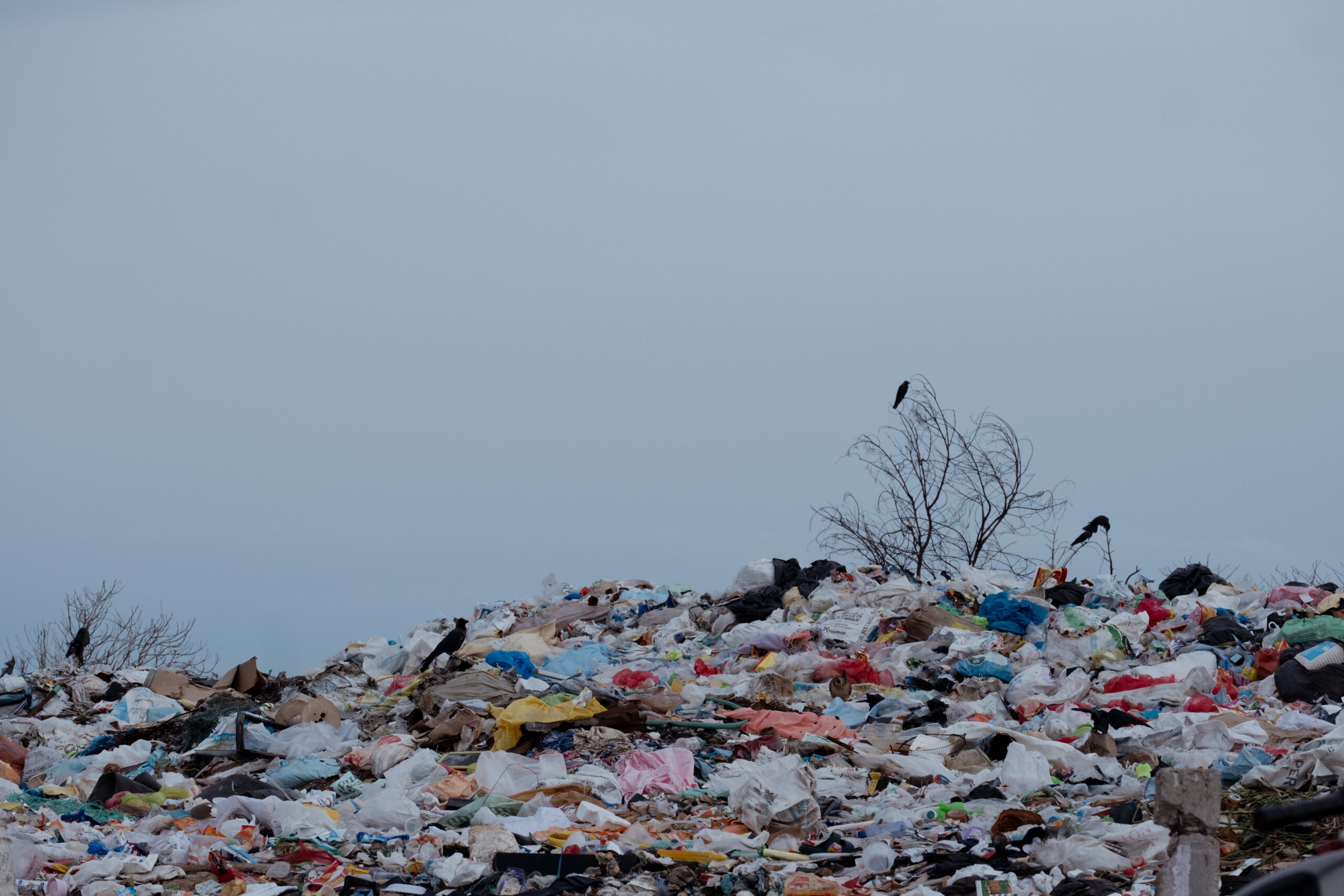
Since the administration dismantled local governing bodies, waste and woes have been growing. The government’s focus is not on the well-being of the island and its inhabitants, but on boosting tourism—treating this and other sensitive islands in the Lakshadweep archipelago like cash cows.
If they don’t do anything about the waste, it’ll reach critical mass. I told the coast guard to do something. Pollution falls under their purview, V said.
In September 2025, this dump yard caught fire. The islanders woke up to acrid fumes and noxious gases—the mountain of waste that grew to enormous proportions in their own backyard was choking them. Toxins from the fire leached into the lagoon, poisoning the delicate coral reefs.
The resulting microplastics are threatening coral and marine life, and the livelihoods of all those who rely on the good health of the ocean. Food systems are getting disrupted, and the safety of drinking water from the desalination plant is becoming more and more questionable.
And the dump? It burned for two days straight.
I looked through the viewfinder of my camera, willing my hands to stop shivering. I need to get a decent shot.
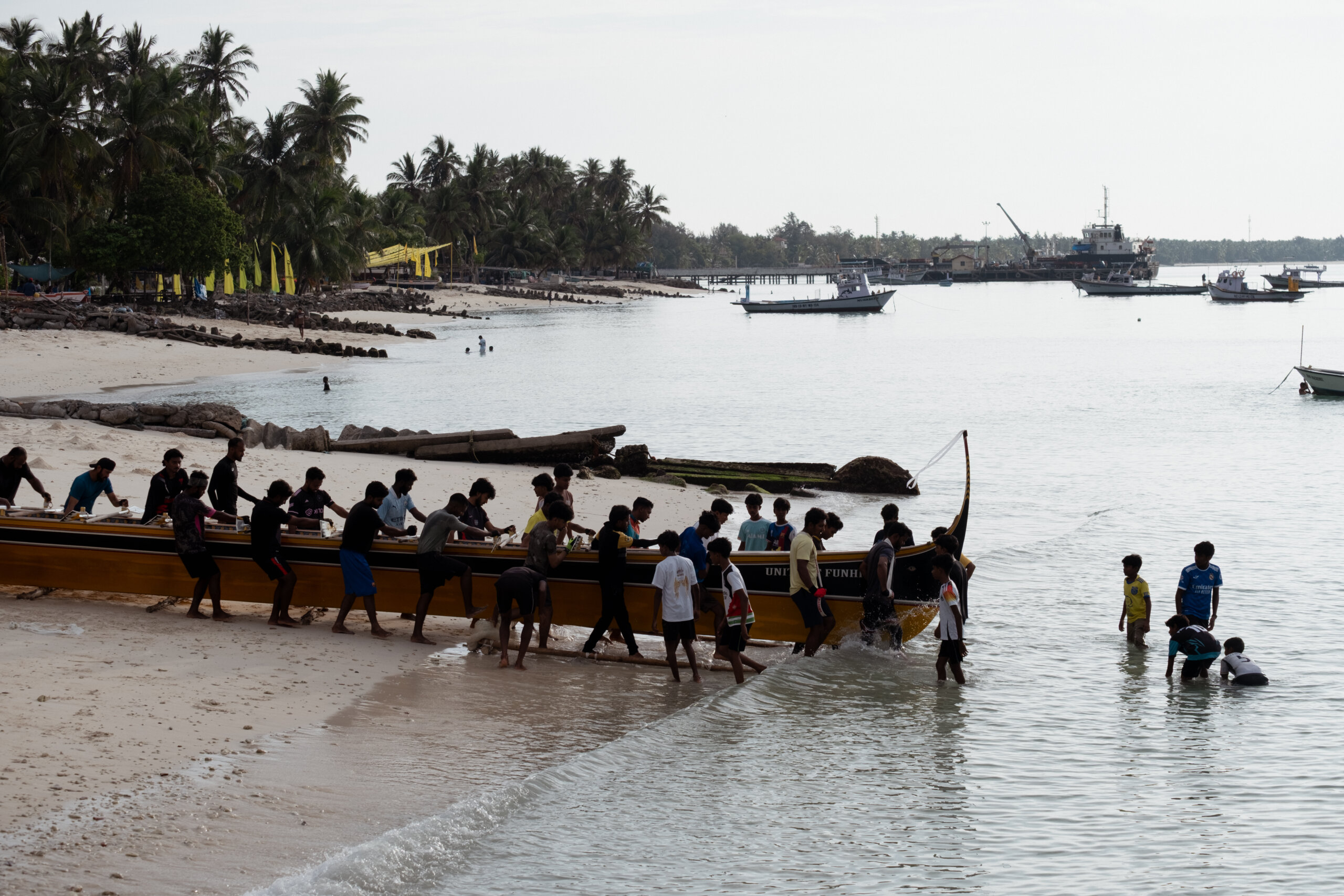
Subject: the jahadhoni—yellow with black accents—and its 43 rowers cutting across the clear blue water.
“Aapko December end mein aana tha” (You should’ve come at the end of December), someone piped from behind me. I turned around. Probably in his mid 60s, with a full head of salt and pepper, he looked at me and smiled. Behind him, children were kicking up sand, screaming gleefully. Further up ahead, teen boys were playing football, and the girls were huddled over something I couldn’t see.
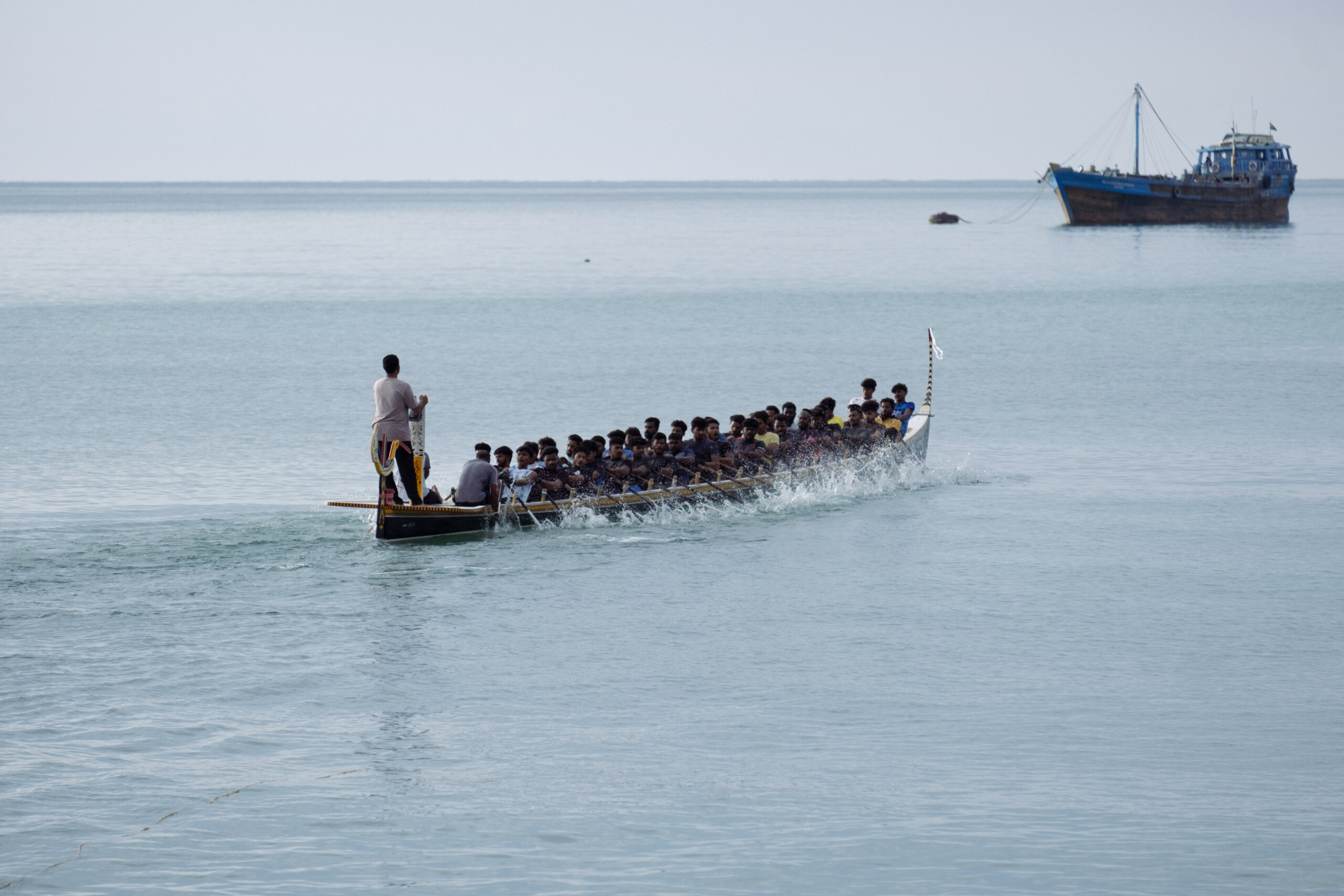
“Saghafee ka practice ho raha hai” (They’re practising for Saghafee), he said when I didn’t respond.
“Haan, pataa hai, Amir bhaiya ne bola” (Yes, I know. Amir had told me).
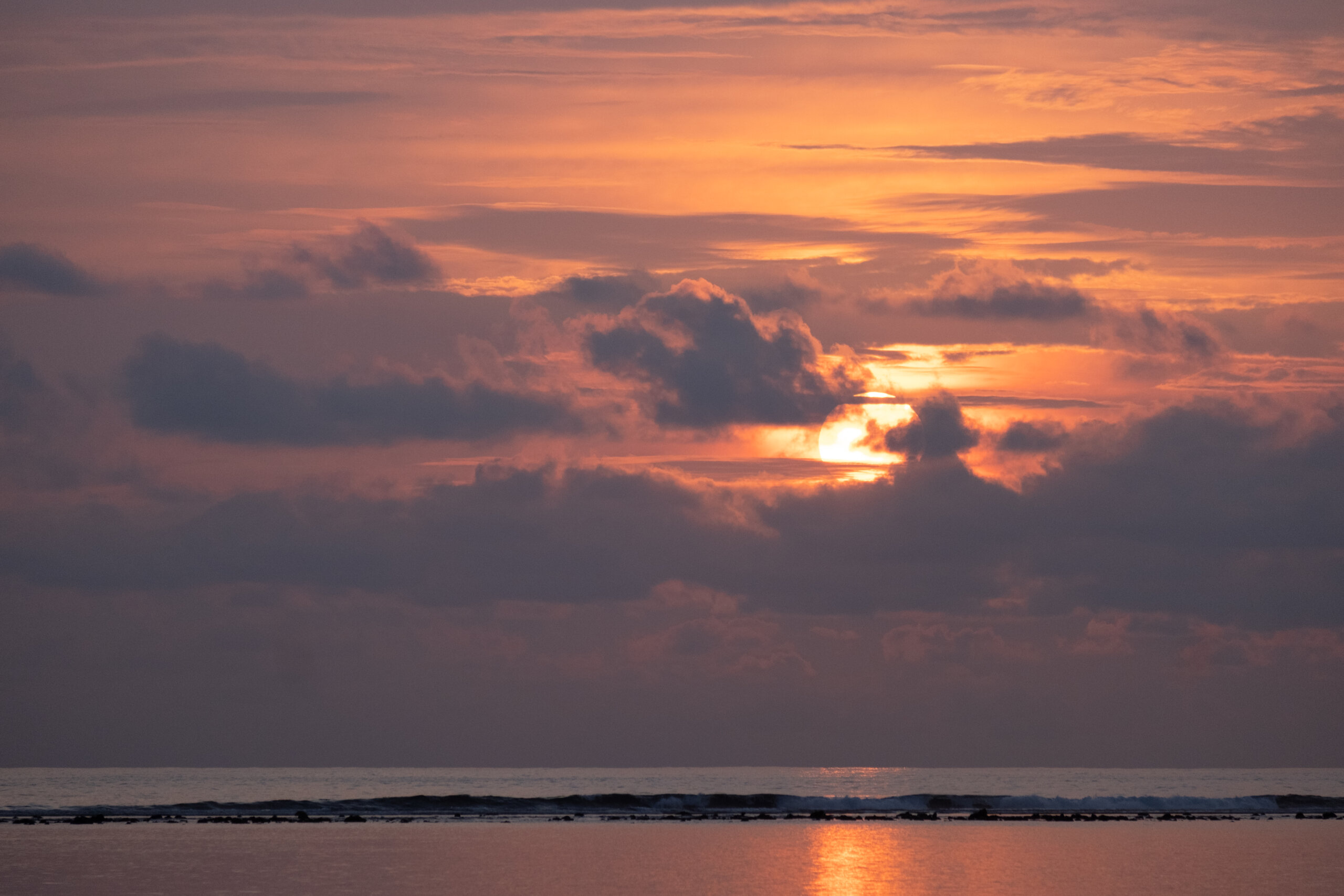
The long boat sailed further and further into the sea, kicking up small waves of white as the paddles dipped in and out of the water. The sun will set in half an hour. The water is already liquid gold.
“Saghafee ka matlab?” (What does Saghafee mean?), I asked Manija as she scooped up some bhaaji with a helping of pav and put it in her mouth.
Earlier that evening, we took our bikes—Amir, Manija, their daughter, and little Hamza on one scooter; I and a little girl clutching my waist, on another. We turned into a small lane on the Lighthouse road, and they showed me—an endless expanse of mangroves. The old leaves had dried out and fallen.
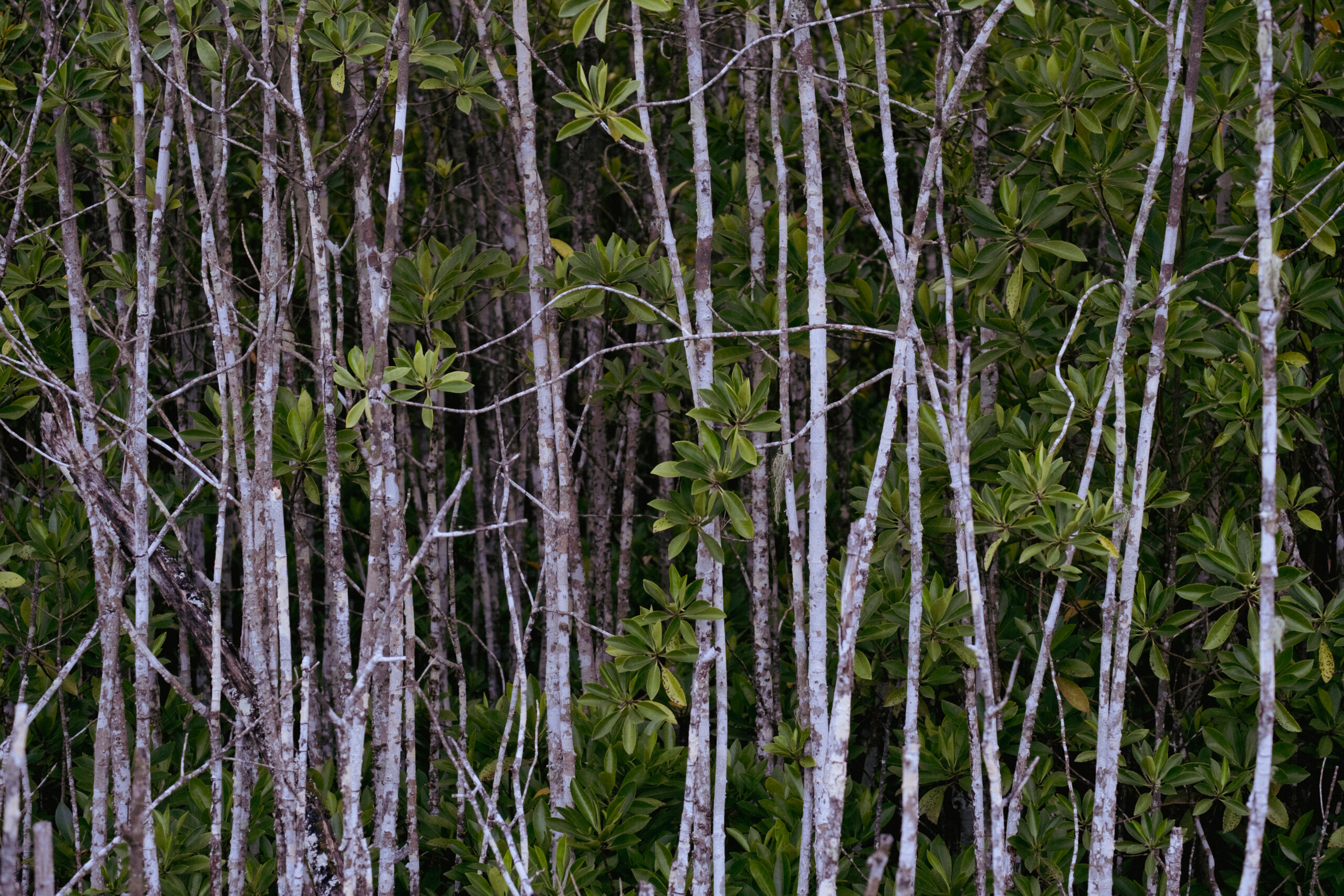
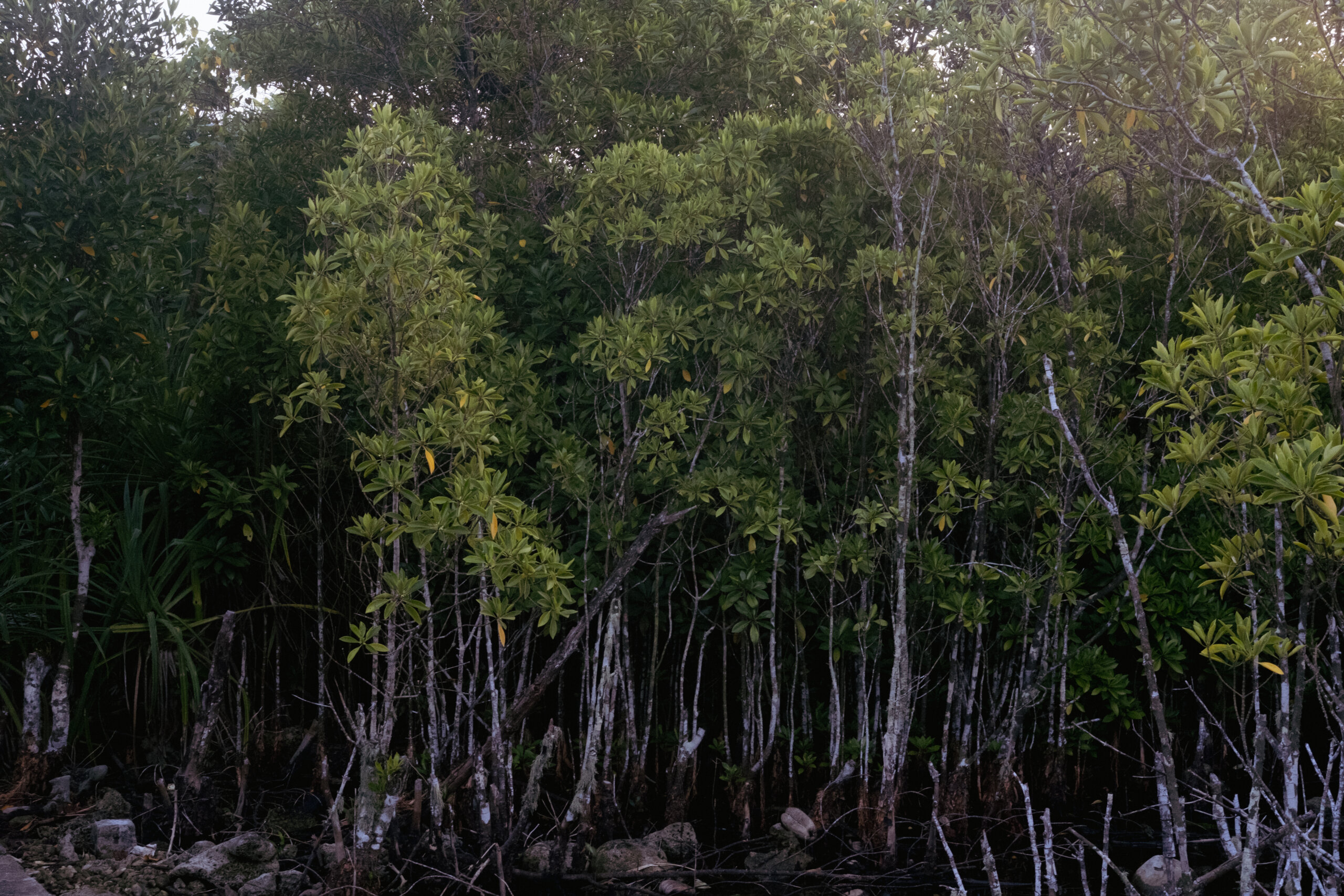
It’s beautiful, I told them. Grey, thin, vulnerable—naked bodies pointing to the sky.
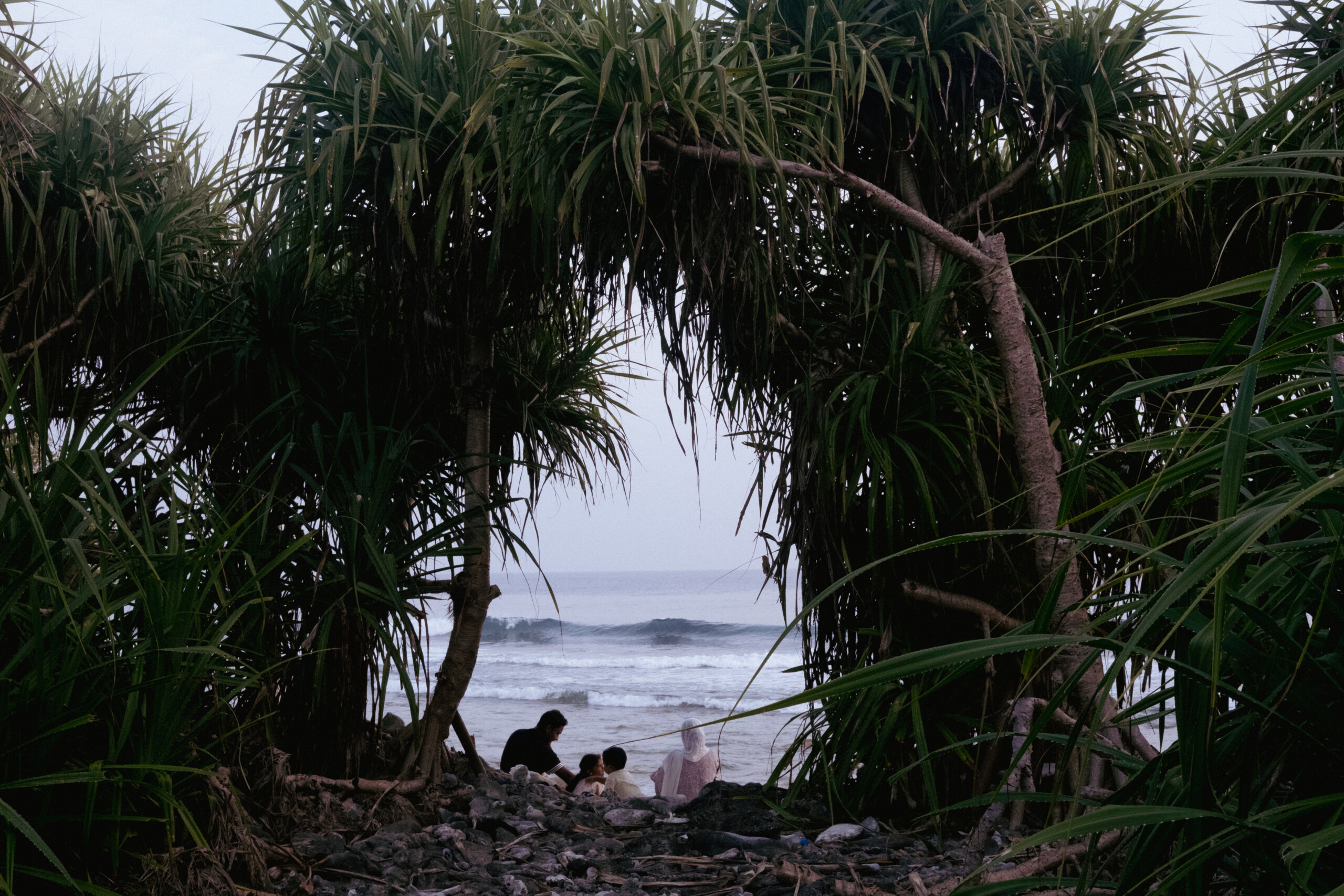
We walked through the canopy and watched the sun set over the sea, coral skeletons below our feet. I took some photos of the family. The setting was too perfect to pass up.
“Matlab celebration, lekin yeh roz ka word nahin hai” (It means celebration, but it’s not an everyday word), she said. “Shudd hindi mein thode words hain nah, waise yeh waala” (In pure Hindi, there are some words, right? Just like that), Amir added.
Every year, the government would sponsor and arrange the Annual Minicoy Fest—a large-scale, grand celebration that ran for days—where every villager from the island would participate in a series of events. Boat races, sports, games, dances, and singing. Tourists and visitors from neighbouring islands would come in heaps and droves to watch. They flew in well-known household names for performances. Rife with colours, music, stages, speakers, décor, palpable joy, it was Minicoy’s crowning glory.
“Lekin admin ne sab band kiya, toh ab hum hi sab karte hain. Aur naam bhi change kiya. Humne Saghafee rakh diya” (But the administrator has shut down sponsorship, so we do everything ourselves now. We changed the name of the event to Saghafee), Manija added.
The last time the government sponsored the fest, the budget totalled INR 75 lakhs. Last year’s number stood at INR 9 lakhs, all pooled in by the villagers. The government had pulled out support by then.
A few days later, I pull up outside Manija’s house. We are to head to Kodi beach together, to watch the Saghafee opening ceremony.
“Tableau hai aaj, tumko bhi aana hai” (There’s a tableau, you have to come), Manija had told me earlier, her eyes large and soft—a look I couldn’t say no to.
Soon enough, I find myself being fitted with one of Manija’s libas. Her mother and aunt help me put on the frock. They tie a cap to keep my hair away, and then drape my head with a scarf. All the while, my head reels with thoughts of cultural appropriation. But they were sincere, this group of women who opened a door into their lives and invited me in.
“Ab Minicoy se ladka toh mil hi jayega” (Now you will definitely find a boy from Minicoy), Manija says as she looks at me, pleased with her handiwork.
We step out of the house, onto the narrow street. The tableau passes by—open tempos ferrying children and women dressed in various cultural themes, waving to us as they slowly move to the beach.
We soon leave for Kodi ourselves. Manija’s aunt and her daughter ride with me, while Manija’s mother is her pillion. I am painfully aware of the women looking at me as I ride past them, and doing a double-take to figure out who I am. Once they realize, they beam at me like the rising sun. I feel like I belong.
Our bikes are parked by the side of the beach, and we make our way to where the crowd has gathered. We find a place to sit on the sandy ground, the sea behind us lending a charming backdrop for the beginning of the island’s month-long festival. I know that Amir is away at the jahadhoni practice.
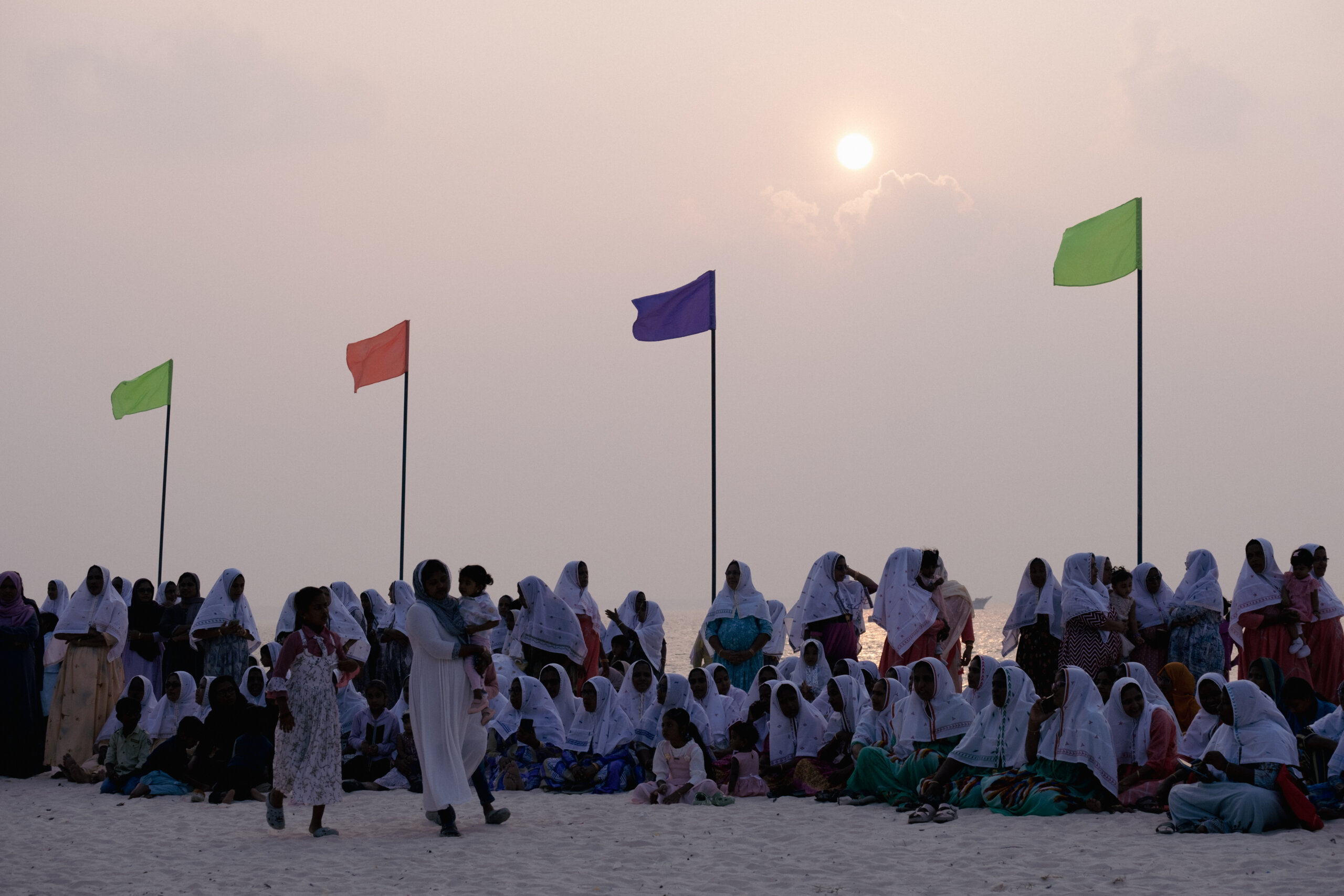
As I exchange pleasantries with the people I now know well, Manija introduces me to her friends—her vily. Her ride-or-die group of similarly-aged women; every woman in Maliku is grouped with a vily when she turns 18. They learn together, grow together, share stories, sorrows, and joys—each other’s connection to life, love, and society in a place that’s hundreds of miles removed from the rest of the country. No woman can live as an island.
Manija’s vily is ecstatic to see her, and I am excited to meet them. They ask her why she isn’t wearing the same Libas pattern as the rest of the vily. Then, they look at me.
“Tumne isko humse steal kar liya” (you have stolen her from us), they say to me teasingly.
Manija’s soft, warm hand takes my sweaty one as we watch the tempos pass by; the sherbet makes rounds. No longer in my beach vacation outfits, I don’t stand out. People don’t look twice at me; I finally blend in.
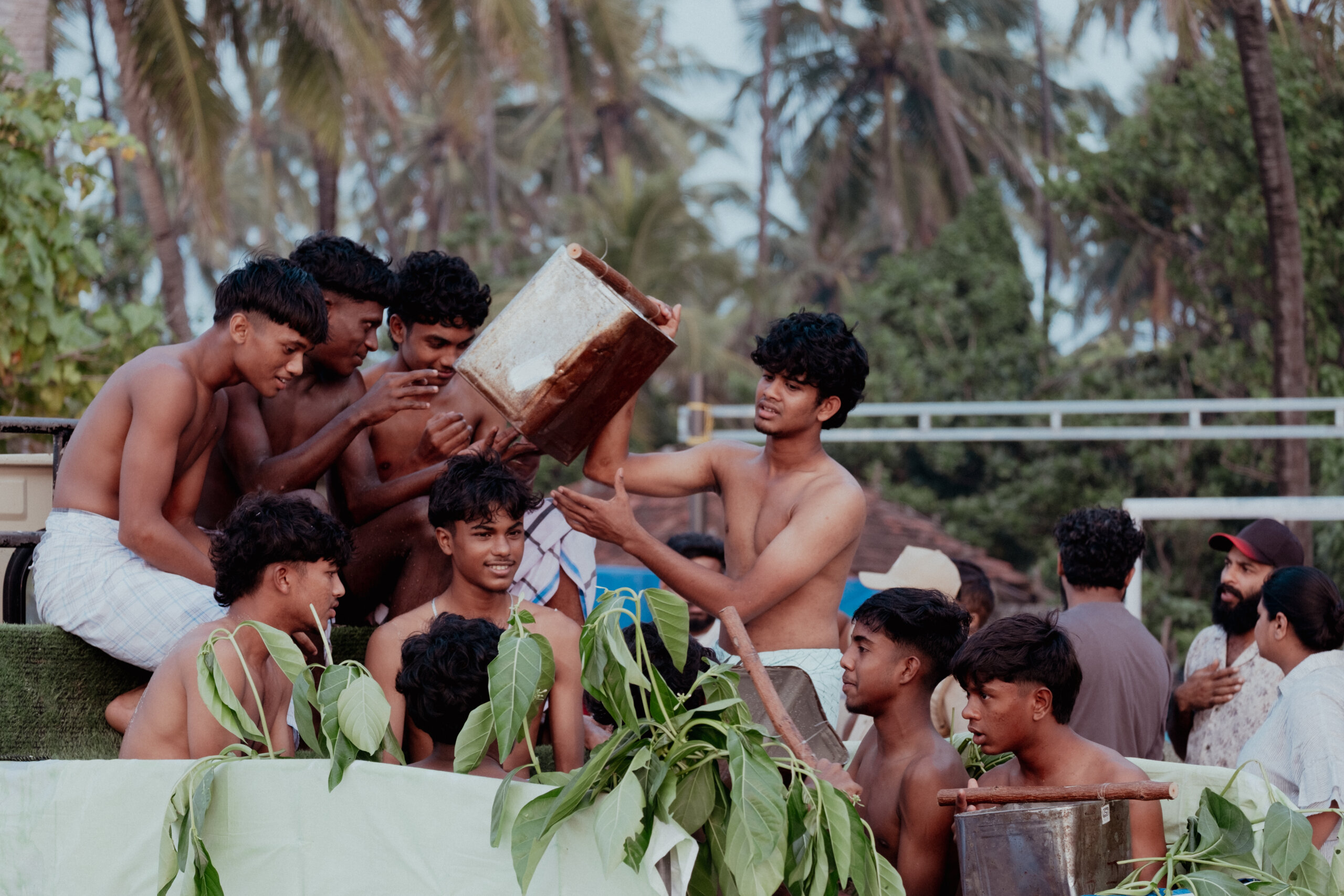
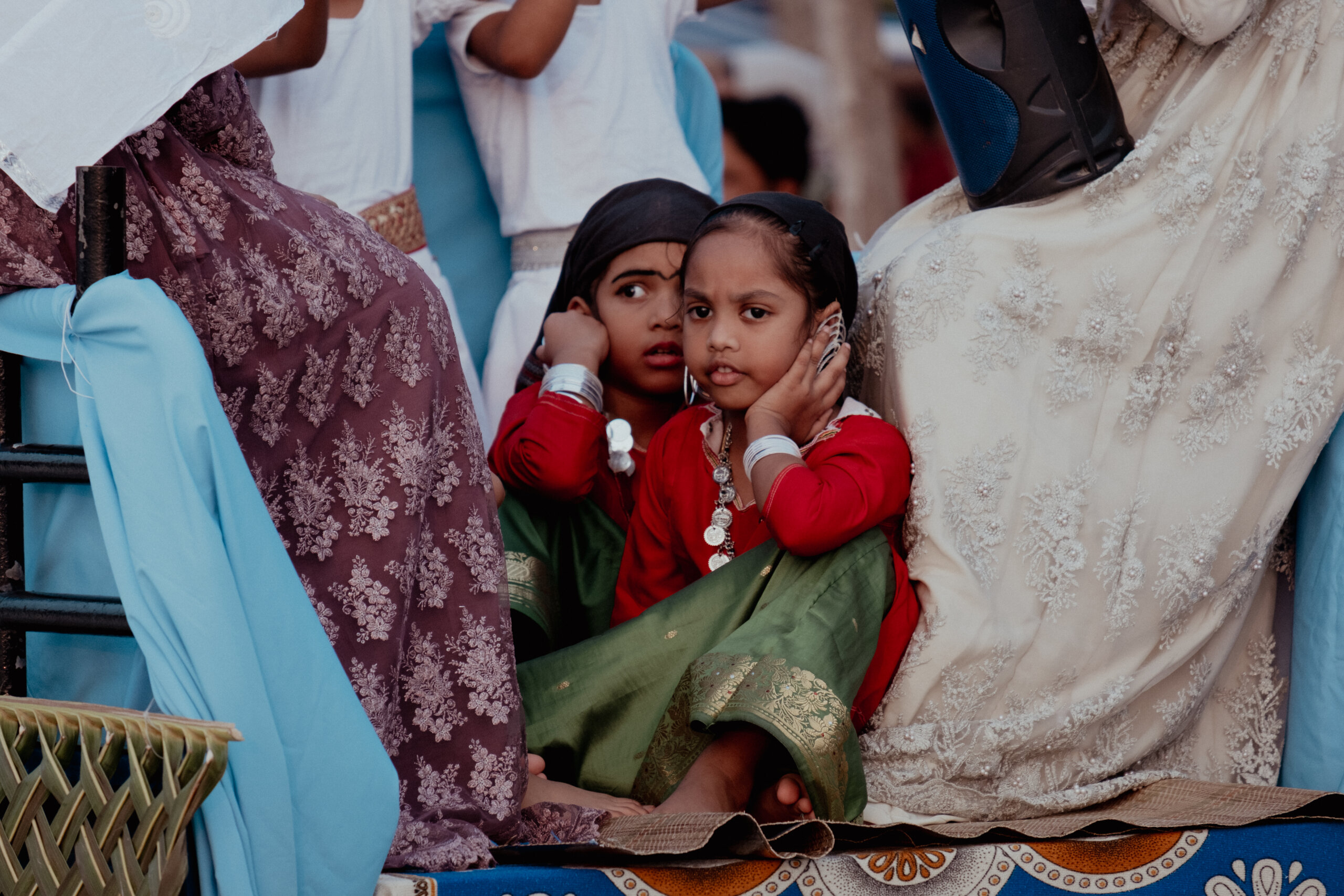
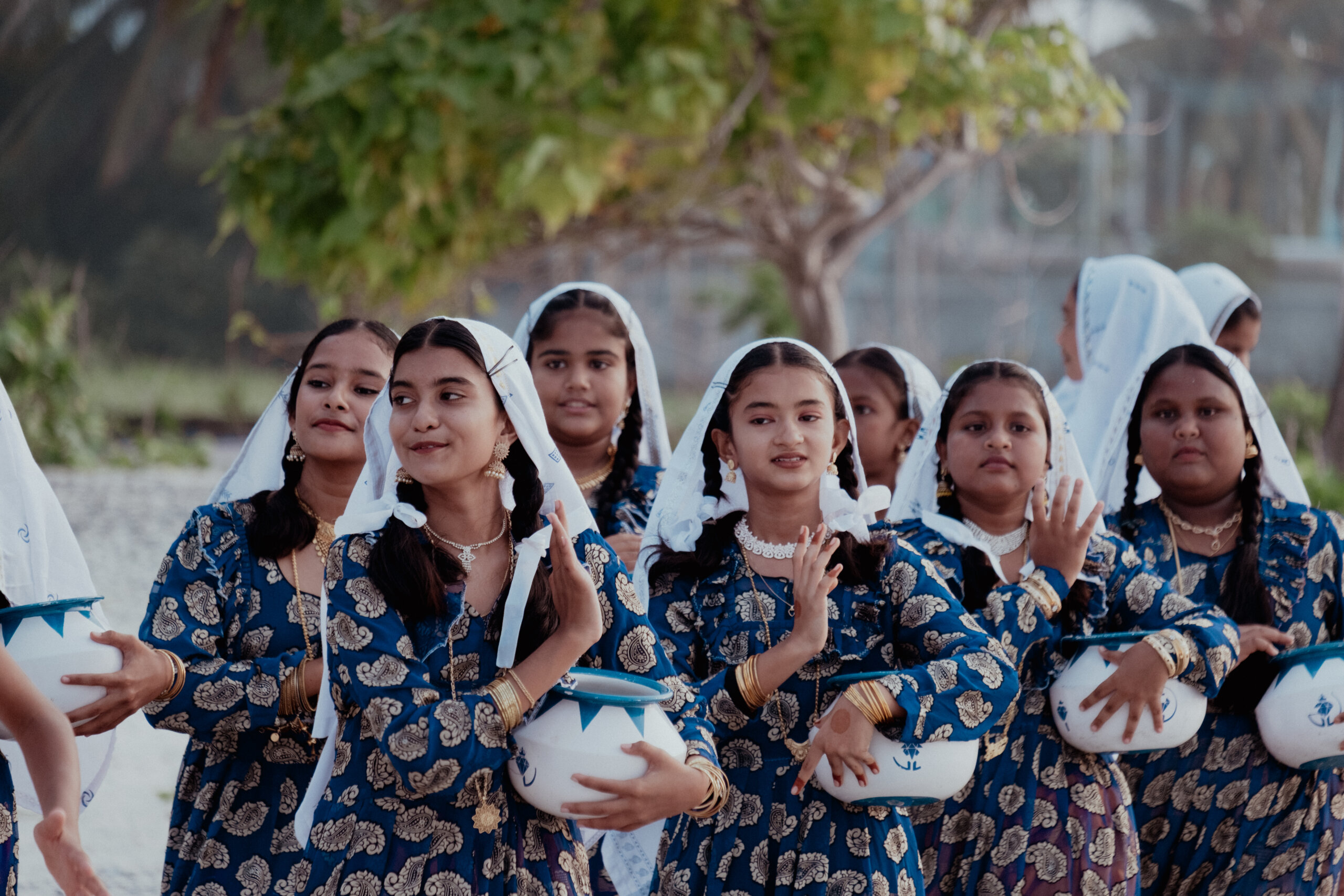
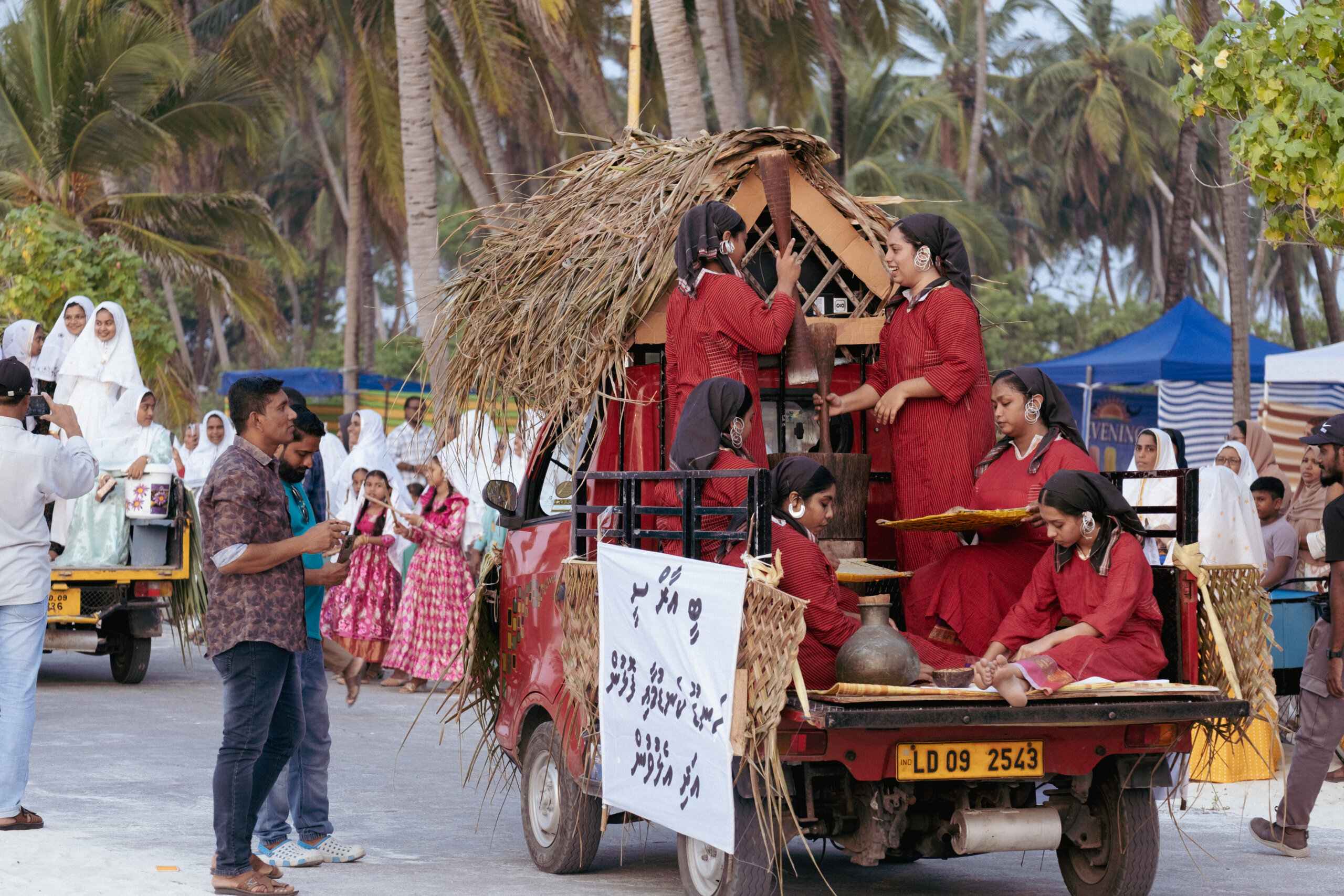
After the day’s program concludes, we head to a café for tea and snacks, and then make our way to Amir’s house. His mother teaches me a few words in Mahl.
Baiyo means come.
Dhani means I’m leaving or I’m going.
Itthau means sit.
With every word I learn, I feel more at home. A home surrounded by warmth and radiance. A home that gives more than it takes. A home that’s safe, no matter the hour of the day. A home that takes a loss—of funding for their beloved Minicoy fest—and turns it into a celebration. Saghafee.
I make a promise to myself and the people: to return by the end of next December. Inshallah, agle saal (God willing, next year), I say to them.
Another day, another dive. I’m getting more comfortable with being surrounded by depth and pressure; I am among my primitive ancestors, gilled and finned. Belonging is a strange feeling—my awareness is heightened when I’m under the quiet cyan surface, my easy buoyancy a privilege that V had to earn with immense practice.
After the dive, I met up with Amir and Altaf.
“Jaldi Boduathiri aa jao, fishing ho raha hai” (Come quickly to Boduathiri, fishing’s going on), Amir had called earlier and said.
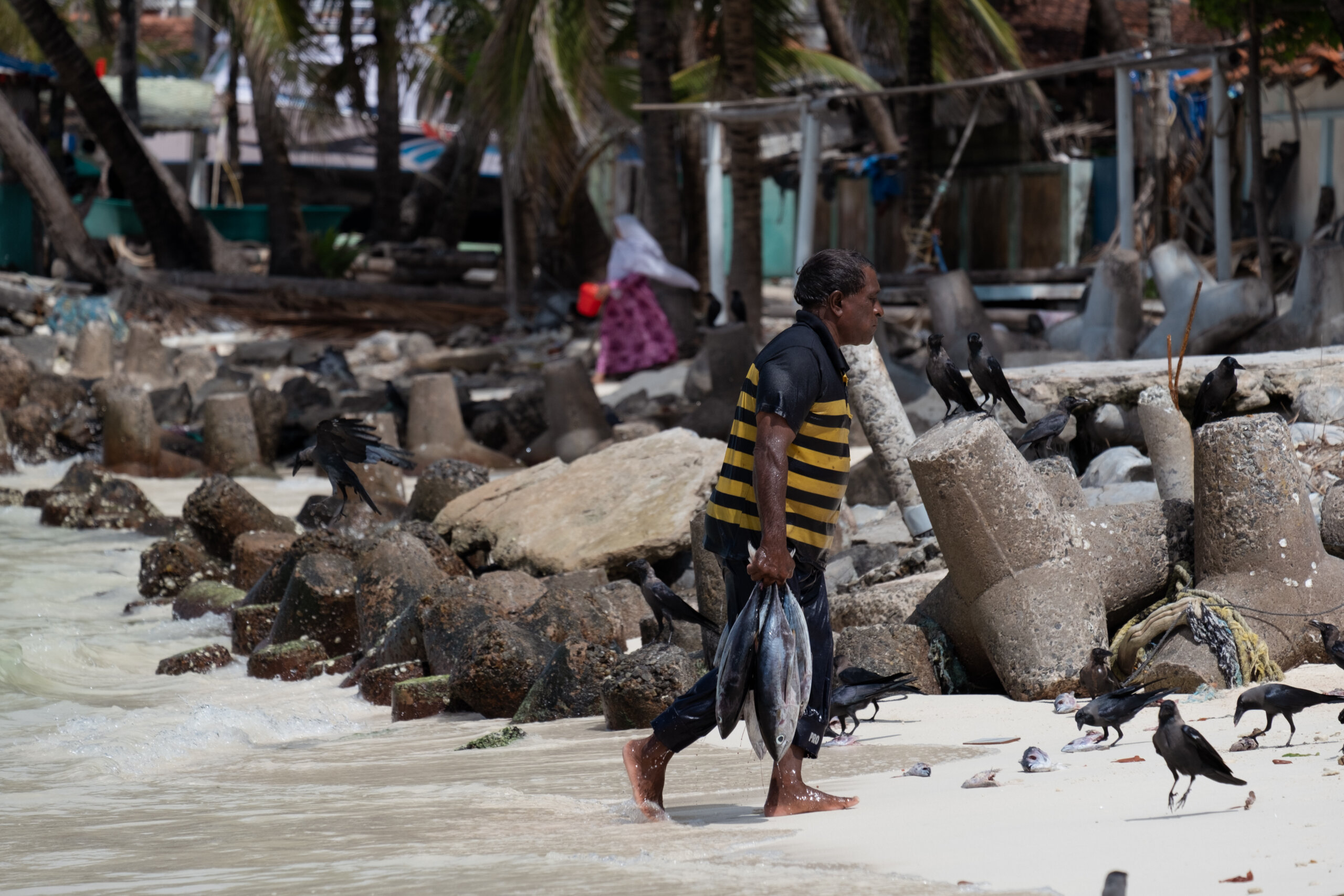
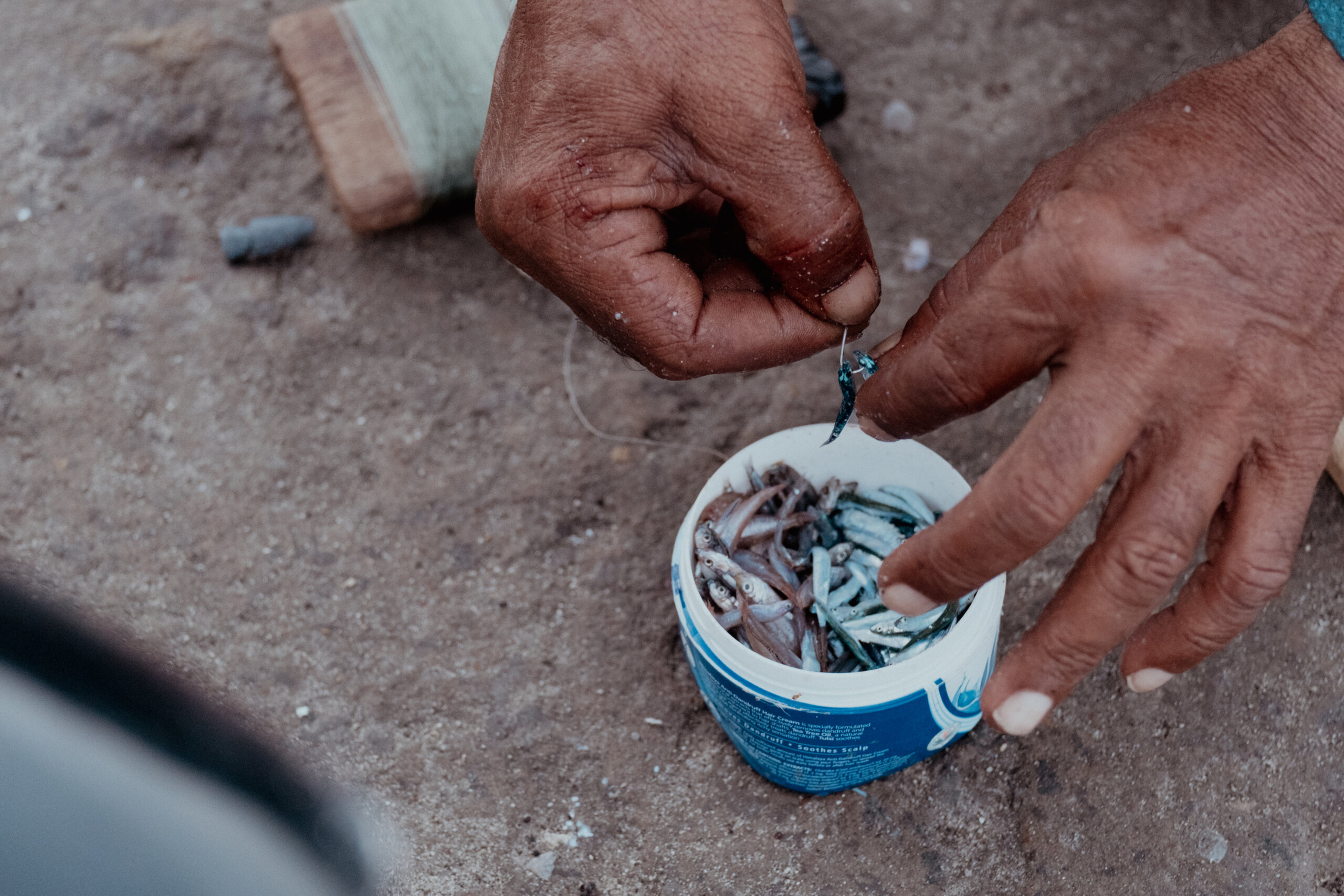
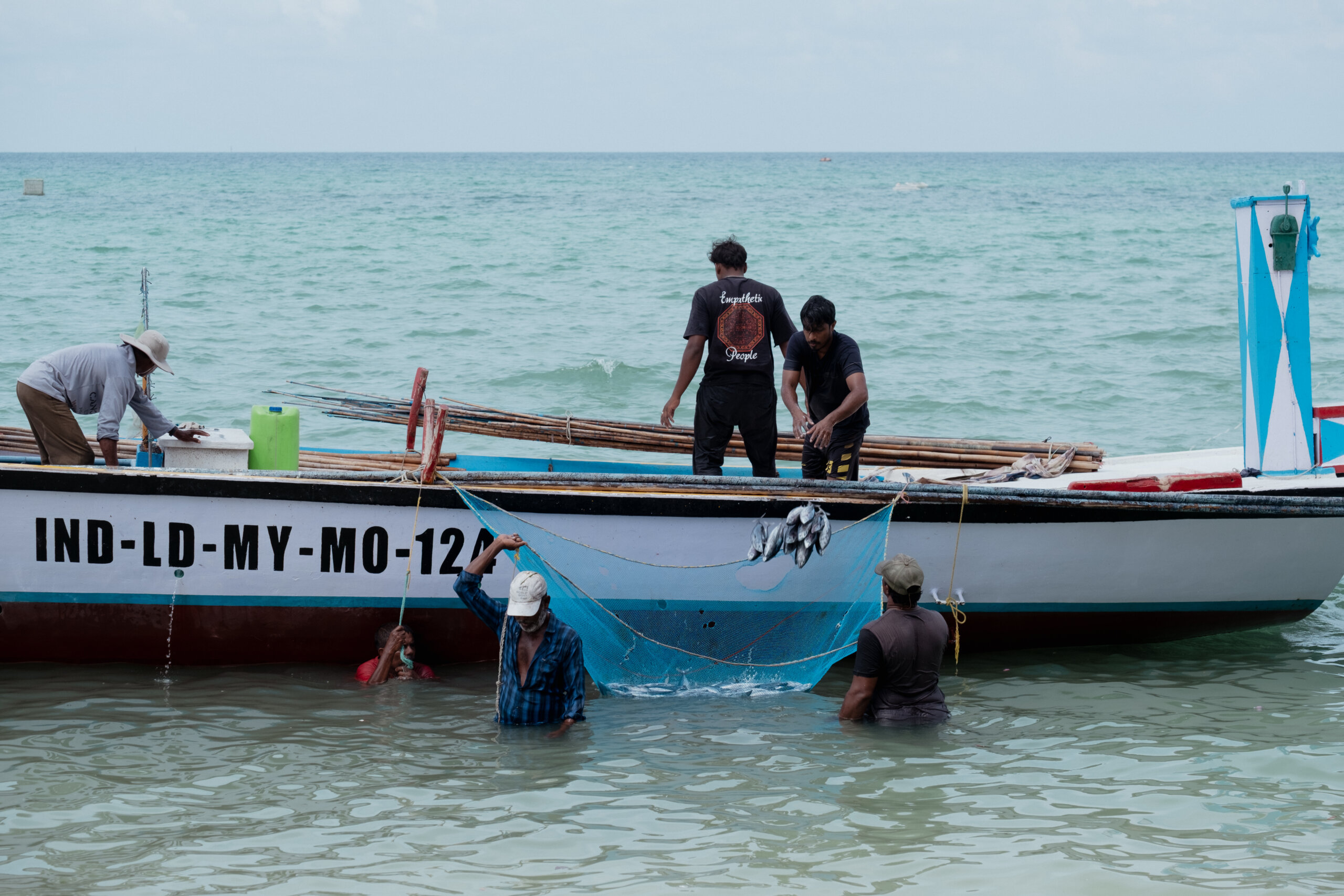
By the time I reached, the task of fishing had been completed. The men take their boats to the far seas early in the morning, darkness enveloping them. They scatter tiny bait fish into the waters, and schools of tuna swim towards the chum—a rush of grey and silver. The fishermen use a pole to catch the fish; one fish at a time on the hook, and flicked overboard. A sustainable fishing practice that has been used for millennia by the residents of the Maldives and Maliku.
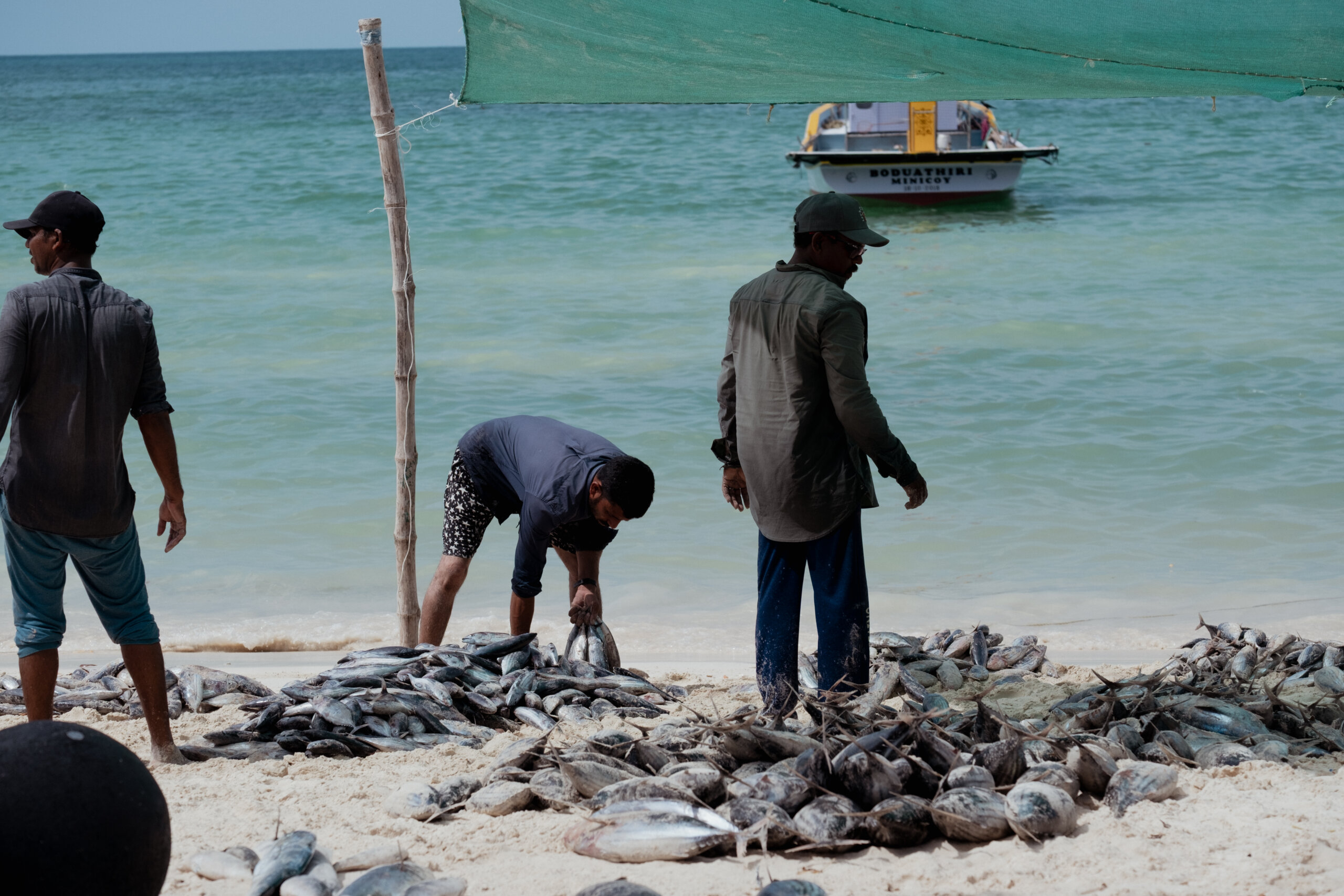
The boat was anchored at the beach. The men moved the fish from the deck to the sandy dock. All around me were mounds of tuna—hills of grey-black bodies and shiny scales. The fish were being sorted by size.
“Aadha pakadne waalon ko jaata hai. Aadha hum process karke bejthe hain” (Half of the catch goes to the fishermen, the remaining is processed for sale), Amir told me. I asked him how many fish they catch on average. Today, we caught 3,000 fish, he said. Some days there’s less, some days, none at all.
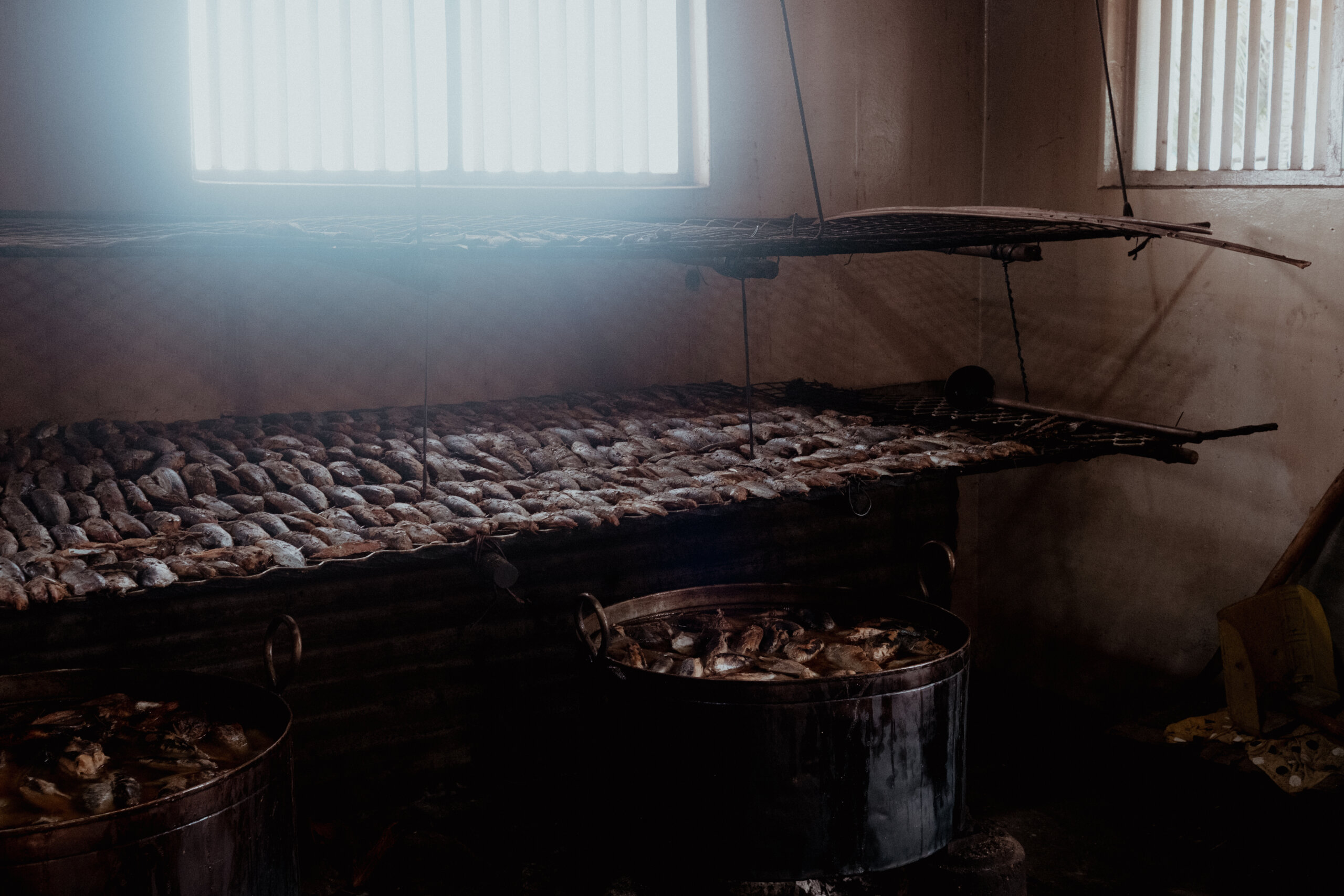
Tuna is a staple on this island. In its various forms, almost every part of the fish is consumed. Once the fish is caught and sorted, the cleaning and processing tasks are taken up by the women. Tuna fillets are smoked and dried over a period of 10-15 days, packaged and sold to local stores and some Indian cities. Earlier, export was a key source of revenue. But lately, the volumes have been dwindling.
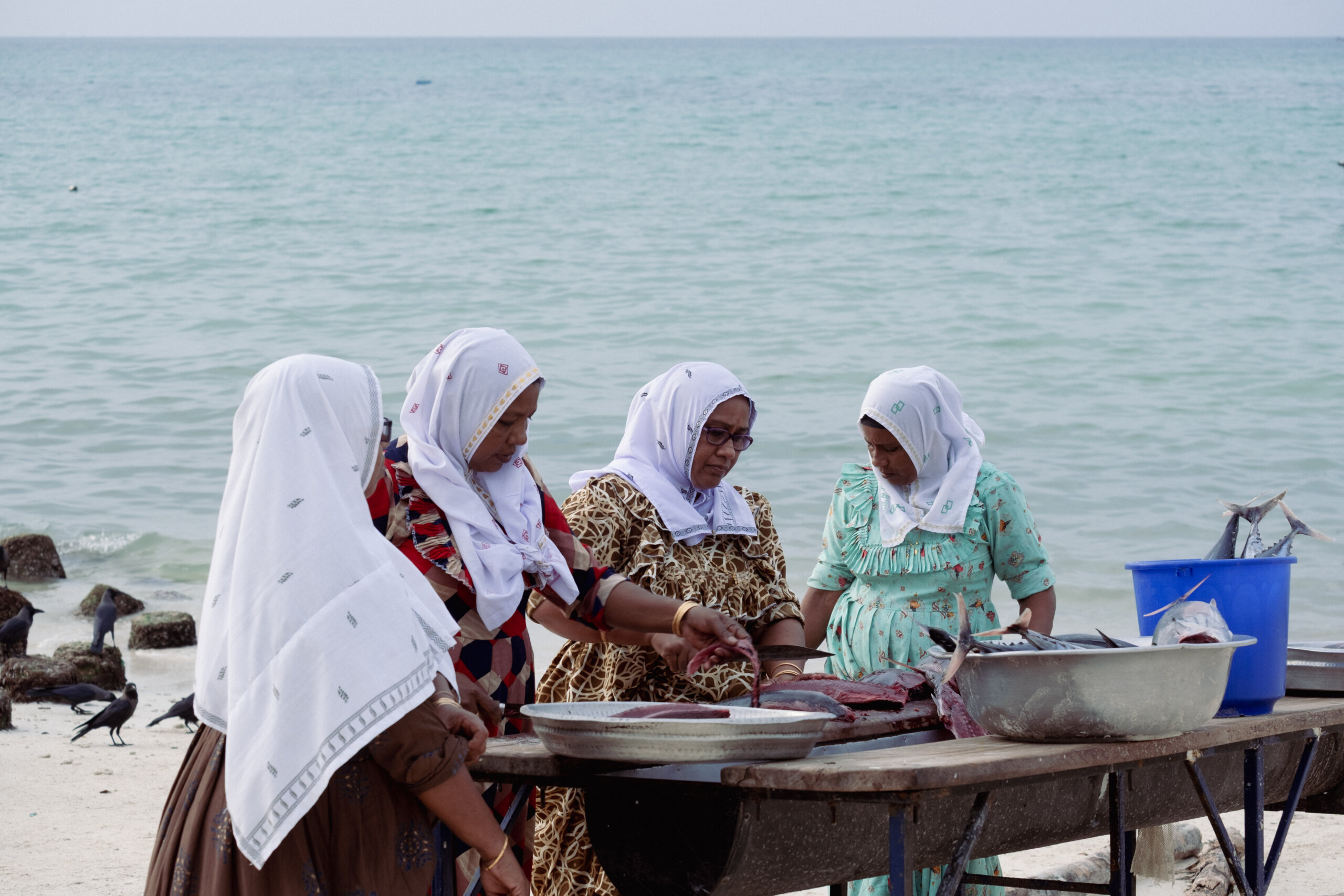
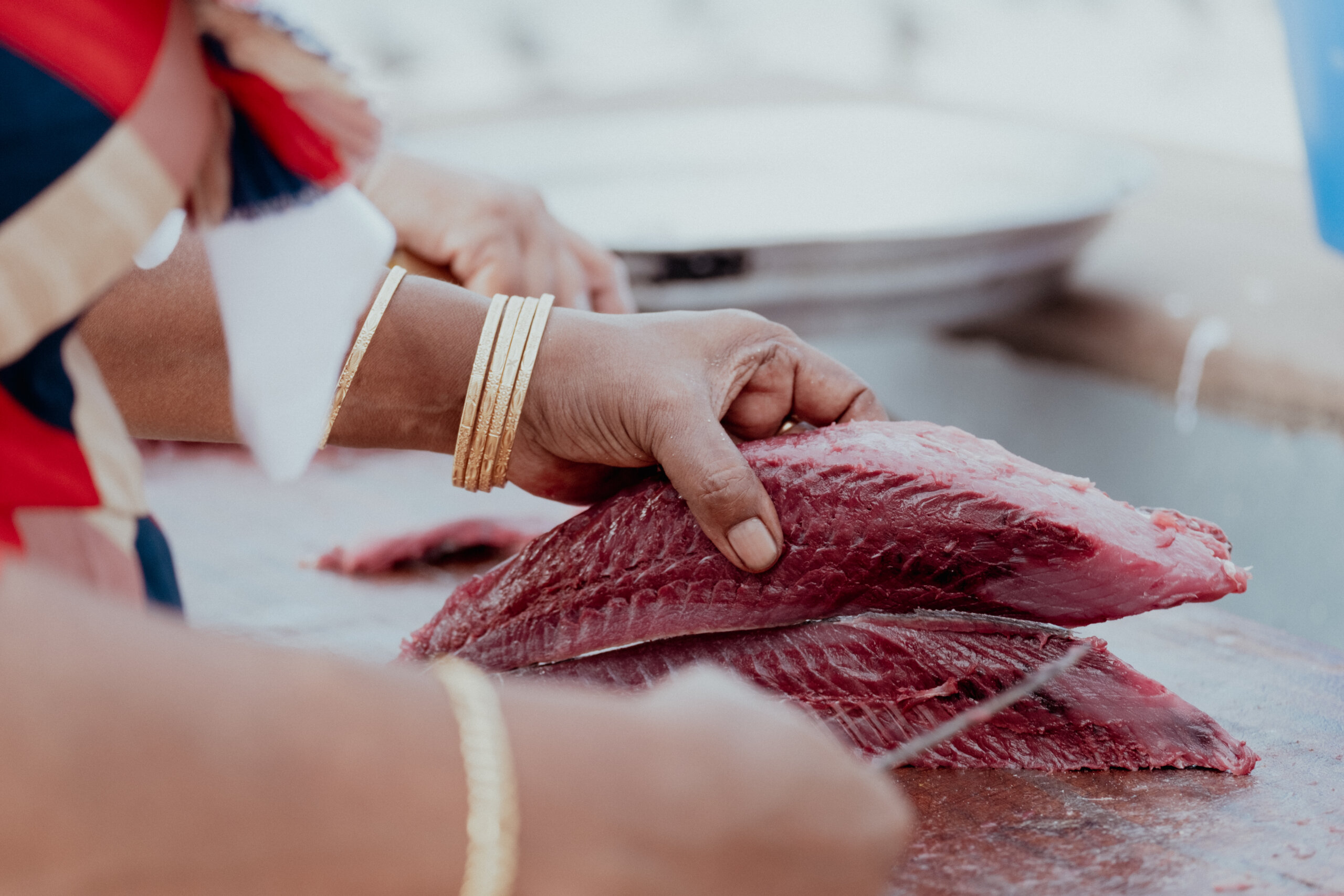
“Ek kilo ka INR 250 humko milta hai. Leking shop waale INR 600 kamathe hain” (we earn INR 250 per kilo of the fillet, but shopkeepers make INR 600), Amir’s sister mentioned over tea one day.
Is that enough, I asked her.
No, she said. But it is what it is.
“To unlock the untapped potential of the marine sector, our government will establish a supportive framework for effectively harvesting fisheries from the Indian Exclusive Economic Zone and the High Seas. There will be a special focus on the Andaman and Nicobar Islands and the Lakshadweep Islands,” said Finance Minister Nirmala Seetharam during her February 2025 budget speech. In other islands, indigenous seaweed species like Gracilaria edulis and Acanthophora spicifera are being experimentally farmed.
While this seems like positive news, how much of the revenue and benefit will go to the islanders remains to be seen. There is concern brewing that the push for fisheries will mean the introduction of unsustainable fishing methods like trawlers and large-scale net fishing.
The villagers know the sea better than any government-appointed committee. They know when the rains will bless them, they know when the fish will breed in astronomical numbers. They know when to catch them, and when they ought to be left alone. But indigenous knowledge is hardly taken into consideration when the government’s singular goal, apart from driving tourism, is boosting efficiency. People are worried. Their livelihoods are at stake.
Fishing is a community activity. If they are not employed in education, the merchant navy, or trade, they partake in fishing. All of Minicoy’s eleven villages have distinct areas of the sea carved out for them. This way, everyone benefits from the gifts that nature bestows when she’s not unleashing her wrath in the form of May-to-September rains and storms.
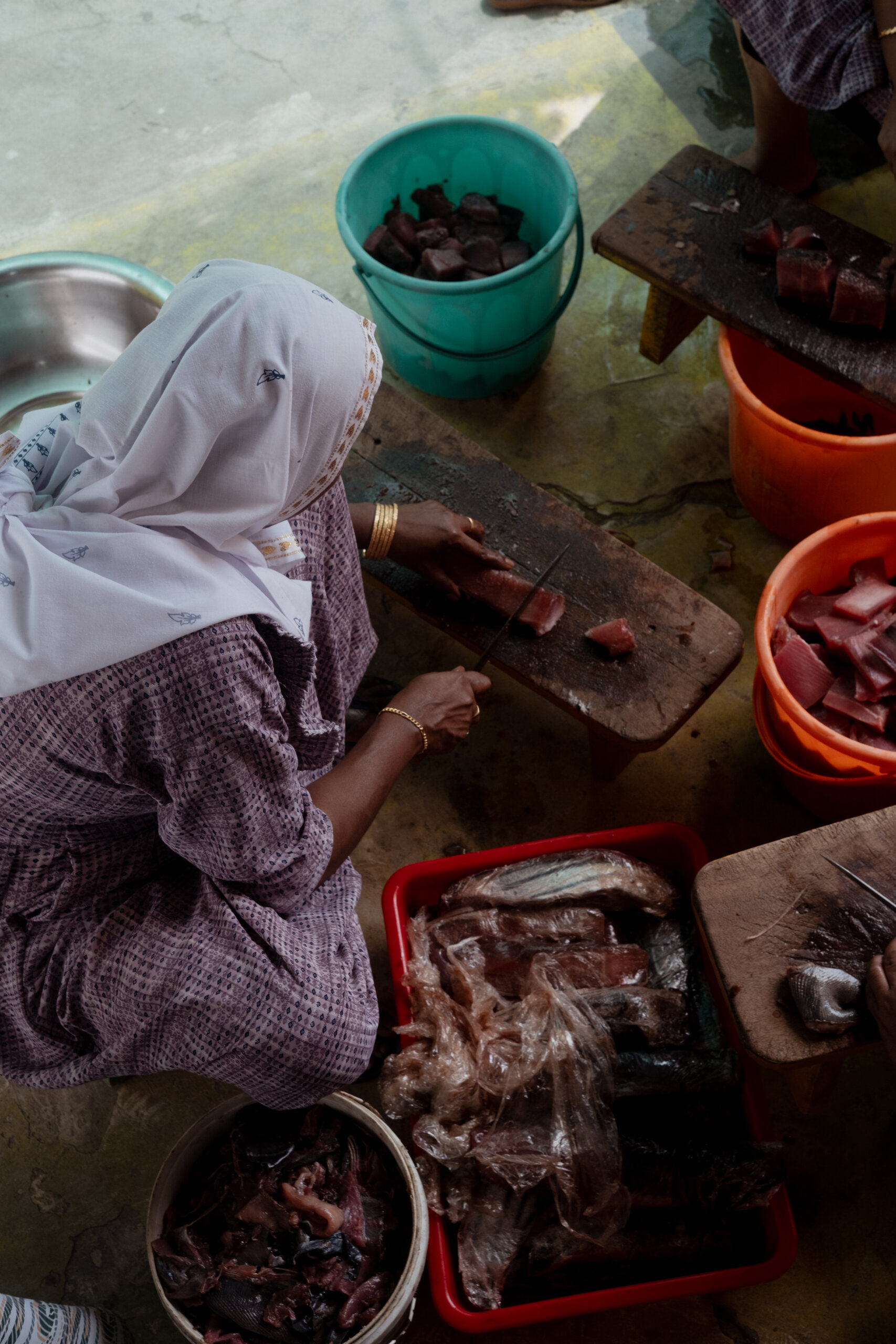
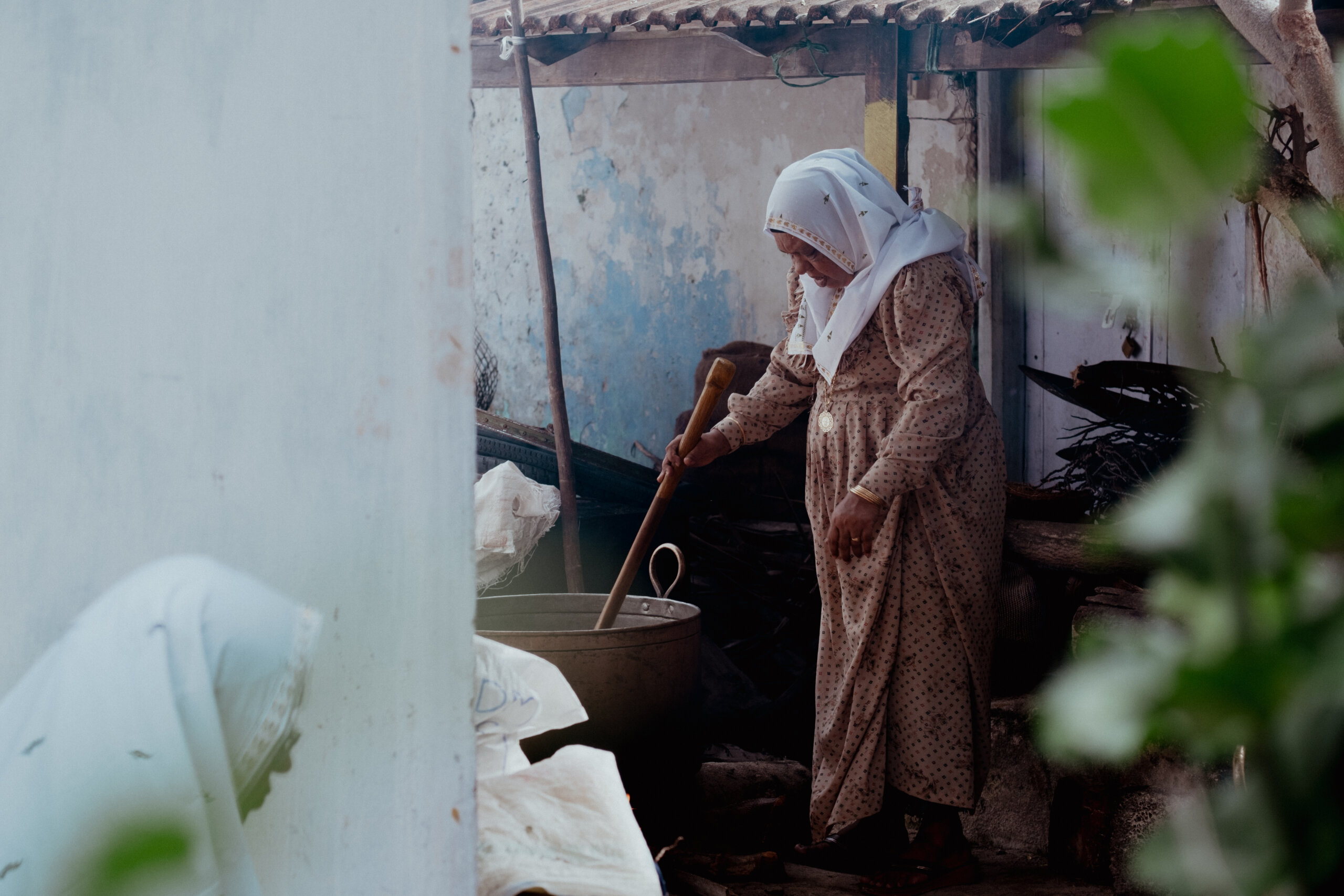
And it’s the women who hold the community together. With most of the men being at sea for nearly ten months in a year, the women run the island. And nowhere is this more evident than in the fact that the SBI branch in Minicoy works seven days a week. The rest of India is serviced by the bank six days a week, with every second Saturday being a day off. The seamen send money back home, and the women are tasked with depositing it in the bank. Beyond the amount needed for monthly groceries and housekeeping activities, much of the money is saved, making Minicoy a truly viable location for the bank. The island is truly rich. In marine life, in beauty, in people’s kindness. In savings.
A matrilineal society rules the island. Women participate actively in village activities and governance. Land and inheritance pass to them, not the men.
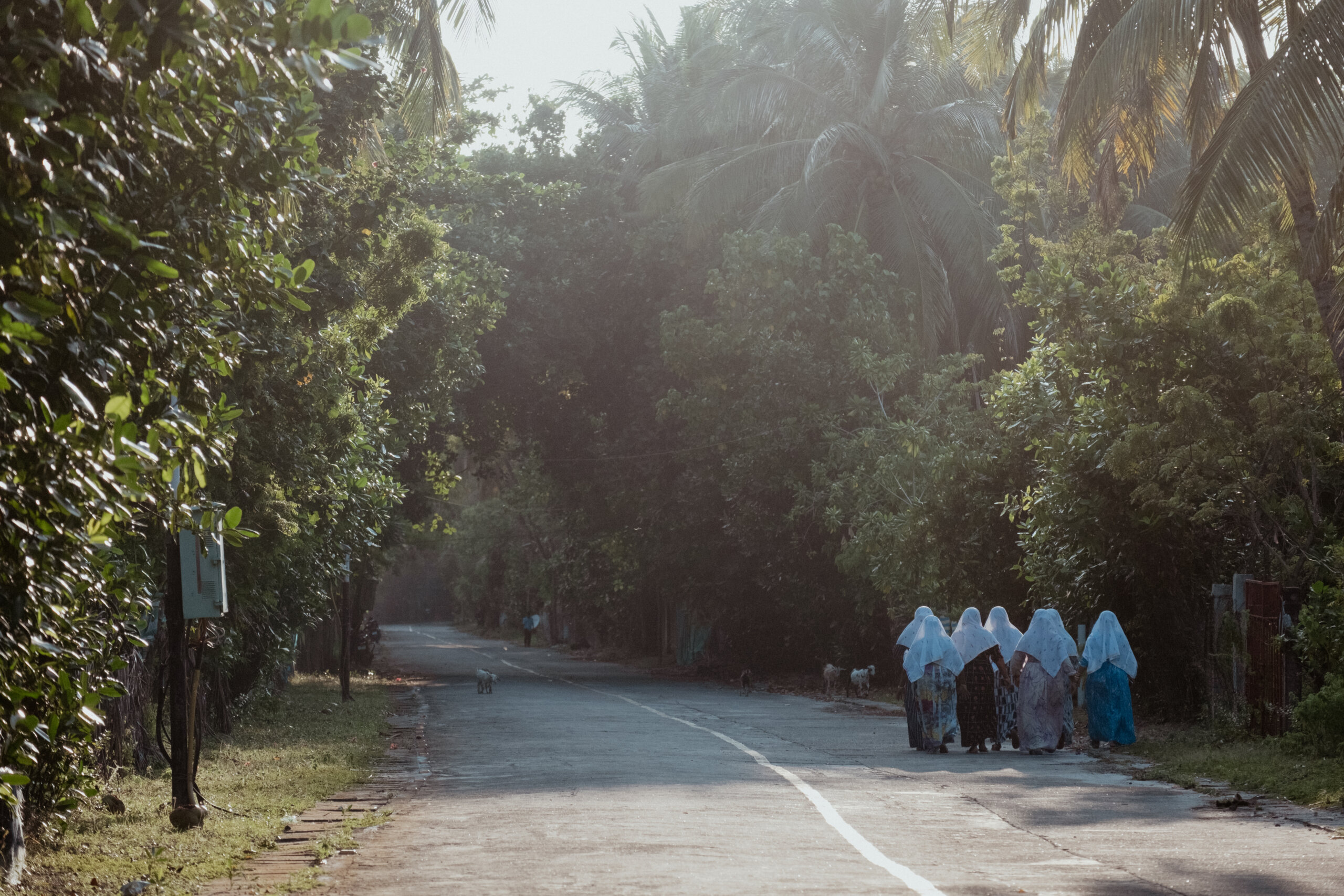
“Agar ghar mein ladki paida huyi to uss ghar ko damad milega. Agar ladka paida hua to uss ghar ko bidayi milegi” (if a girl is born to a household, they’ll get a son-in-law. If a boy is born, the house will have to give him away in marriage), is how Ishan bhai puts it eloquently. Also in the employ of a merchant ship, Ishan bhai’s sisters run the chai shop I would frequent after my dives. A hub for the workers during the day, and a congregation point for women in the evenings.
It’s no surprise that the women are a tight-knit lot. For its size and the general familiarity between villagers, Minicoy is a secluded island; cast away in the sea, miles and miles away from the rest of India. In isolation, bonds are forged, friendships are born. Us against the world. There is soul-searing interdependence at play across Maliku, balanced by the fiercely independent nature of its people. Ying and Yang. Sun and moon. Sea and sky. Tuna and baitfish.
Despite the cold that my tired body was unable to fend off any longer, my first dive of the day went well. I was able to equalize and clear my mask. The fact that my dive instructor, Majeed, was right next to me made all the difference—a reassuring presence in a place where anything could go wrong, a place where it’s better to have gills and fins than lungs and feet.
When all goes well, everything under the surface of the sea is simply breathtaking. We spotted a moray eel, its head sticking out of its coral nest, its mouth opening and closing. Schools of fish passed by; some big, some small, some plain, others in colours that we’ve only read about.
My second dive hurt. I couldn’t equalize as well; my mask kept flooding, and I couldn’t clear it well because the oxygen tank kept bumping into the back of my head. This time, I dived with Majeed’s brother, Hameed, who’s more of a you-do-you buddy—whereas I need an I-won’t-leave-you-alone buddy. Still, we saw large yellowfin tuna and a turtle. Not bad for a painful dive.
The next day, I would have one of the most beautiful dives of my lifetime. More peeking moray eels, gliding turtles, stationary starfish, brightly coloured schools, vibrant corals, swaying anemone. And that’s when it happened.
A school of rainbow runner surrounded me, their holographic bodies sending me into a trance—blue-green sheen on silver, colours changing as the sunlight hits them. Round and round they swirled, and I floated and twirled in the middle, awestruck. I didn’t fear them, nor they me. One with nature, at last. As much as I blended in with the beings on the shore, I did with the beings underwater.
The fish were a sign. That evening, I saw a rainbow.
Walking by the lagoon, I always lose track of time. A brushstroke sky with airy blues, mellow yellows, a gentle orange, and just a smudge of red—the sun is getting ready to put on a dramatic display today as it bids adieu.
This time, I came armed with a bag. After the ride by the mound of garbage in Kodi beach, I told myself that I would do whatever little I could to help. So, I got to work. Picking up empty bottles, discarded snack packets, crushed soda cans. I put them all in the bag and walked to the dustbin to empty it.
The moon was waxing, and I hoped to get a full moon during my time on the island. Tonight, it was a fingernail—curved, sharp, bright.
On my way back from the sunset point, I saw Hameed at the dive shop. I stopped to say hi and to ask him about the dive they had with V earlier today.
Turtles, manta rays, and schools of red snapper, he ticked off a mental list as he told me.
I asked him if there was a bin close by where I could dispose of the additional trash I had picked up, and he pointed me to one—an old panchayat waste collection bin.
The problem is awareness, he told me. With waste management and protecting marine life. We should do something about the plastic. Something sustainable. We should talk to the DC (District Collector) again about the single-use plastic ban. School kids and other groups do clean-ups once in a while, but those are just band-aids on a bigger wound. We do coral planting ourselves, and have partnered with an NGO, he continued. But the fisherfolk go into the lagoon to find baitfish and end up damaging the baby corals. We’ve tried to educate them, but it hasn’t worked so far, Hameed added.
The dive shop has also worked to restore the mangroves—a precious guardian of the island—without seeking publicity. We want to preserve our ecology and grow it; publicity doesn’t matter to us, he said. A plantation drive took place to mark World Environment Day. Around 200 Bruguiera, 150 Avicennia, 100 Kandelia, and 50 Rhizophora saplings were planted, with help from local community leaders, officials from the Department of Forest, and ASHA workers.
“Par government se koi support nahin, long-term ke liye” (but there’s no support from the government for long-term initiatives), Hameed told me, a tinge of sorrow in his voice.
We used to spot sharks frequently, but not anymore. The last time we saw one was when we were installing a device for a researcher, 35 metres deep in the sea, to record whale calls. When we went to take it out this year to replace the battery, we saw a shark. That was the last time, Hameed stared out at the lagoon as he said this.
My mind goes back to how warming seas are wreaking havoc on coral health and marine ecology. The Central Marine Fisheries Research Institute (CMFRI) reported that a significant number of hard coral species have undergone irreversible bleaching due to marine heat waves affecting the Lakshadweep Sea since October 2023.
One evening, I was walking up and down Kodi beach with Zeba—my friend from Boduathri village—her four-year-old daughter, and her husband. We sat in front of the sea, our feet sinking in the soft sand. We spoke of diving. Of the ocean. Of life. Of how everything is connected. Of how, if we dive ethically, we can know the sea better, and take care of it better. We spoke of tuna, the lifeline of this island, and how its existence depends on the health of the seas and the coral reef. The island is protected and guarded by the reef. If one thing goes awry, the entire chain will fall apart. You and I, this island, will cease to exist as we know it.
On my second day on the island, Amir and Altaf took me to the Funhilol avah (village). A light, salmon pink building stood before me, with people sitting on its porch, chatting about the fish catch, about the day’s plans, about their families.
In Minicoy, each of the eleven villages has a village house—a place of congregation, of community, of calm, and when the time calls for it, of well-intentioned chaos. And each village house has a distinct colour scheme. Pink for Funhilol, green for Rammedu, yellow for Boduathiri.
I stepped into the Funhilol house. On either side of the courtyard are rooms—one side for the women, the other for the men. These spaces are communal halls, kitchens, and places for rest and respite.
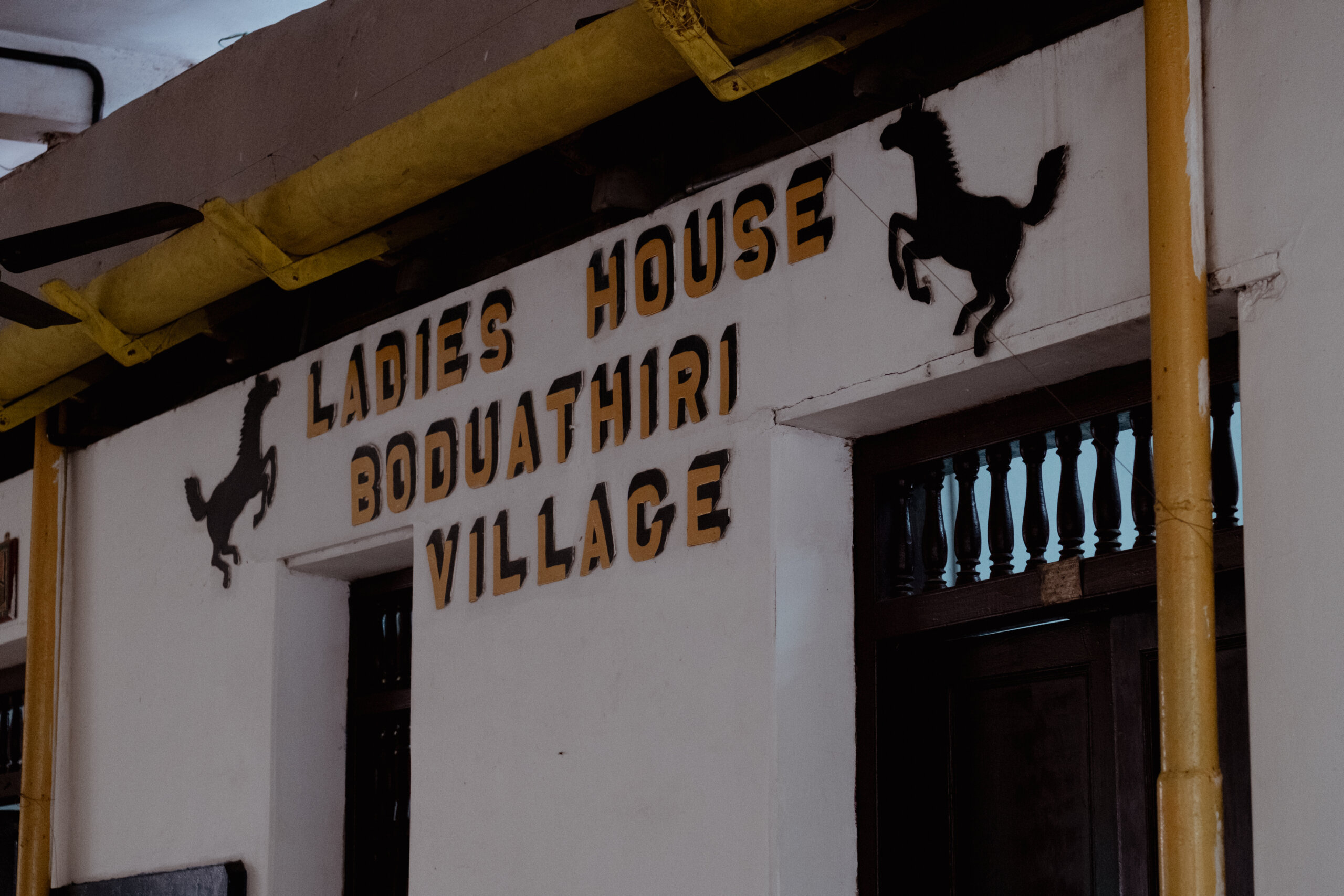
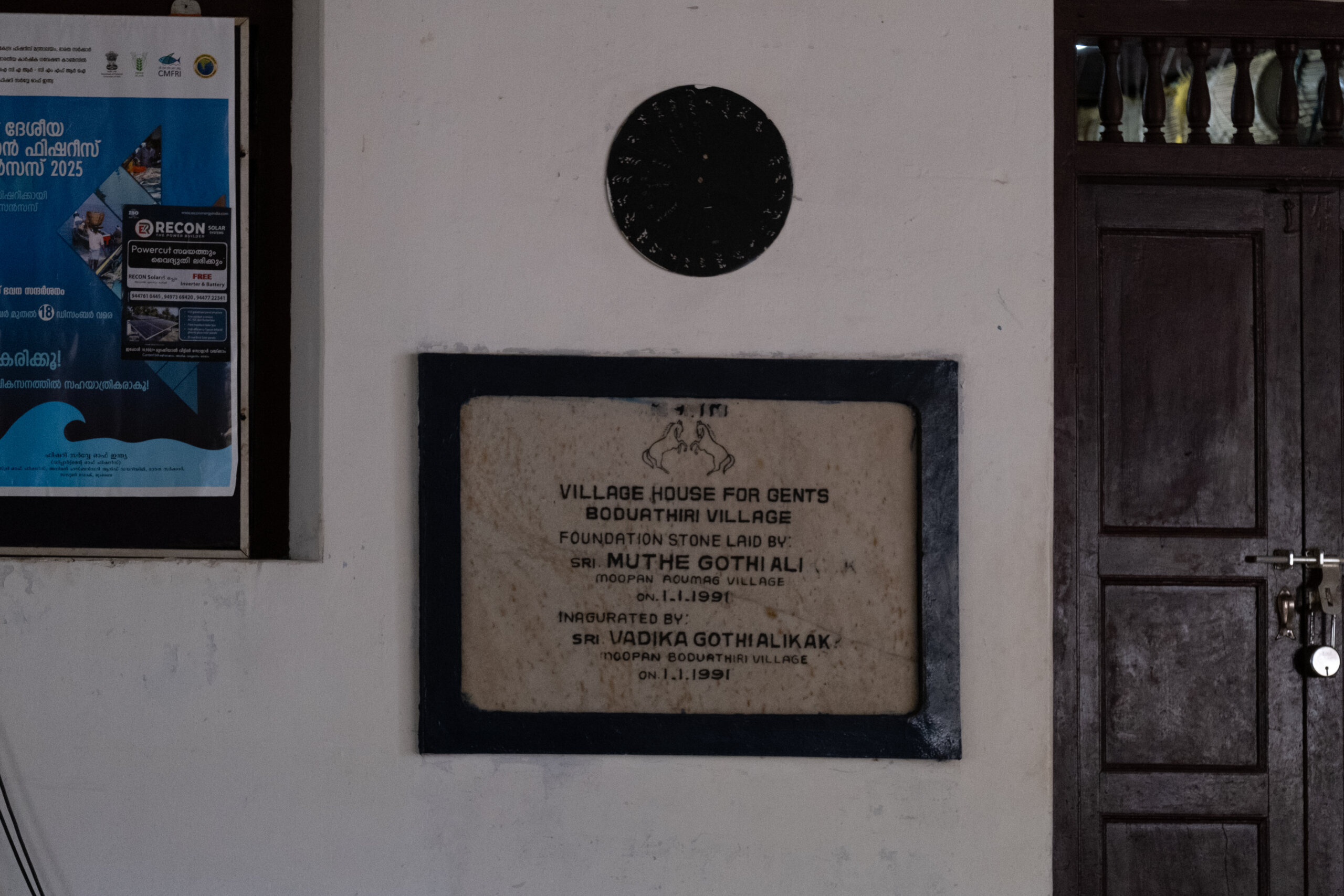
“Village logon ke saare functions idhar hi hothe hain” (all functions take place in the village house), Altaf said to me. From family celebrations and village functions to marriages.
“Kya aapka nikah Boduathiri village house mein hua?” (Did your weddings take place in your village house?) I asked Amir and Altaf.
Both smiled and nodded yes
“Jo sab village logon koh chahiye, idhar unko milega, free mein” (whatever the villagers need, they’ll find it in their village house for free), Altaf added.
Every village has a male leader called a Moopen, and a female leader called Moopathi. The men build boats, fish, and take care of decor for functions, while the women run the kitchen.
A few days later, the boys took me to Rammedu village for a get-together. Manija joined us; I’m always happy to spend time with her. My two-member vily.
The women were engaged in food prep, while the men handled the setting and other arrangements.
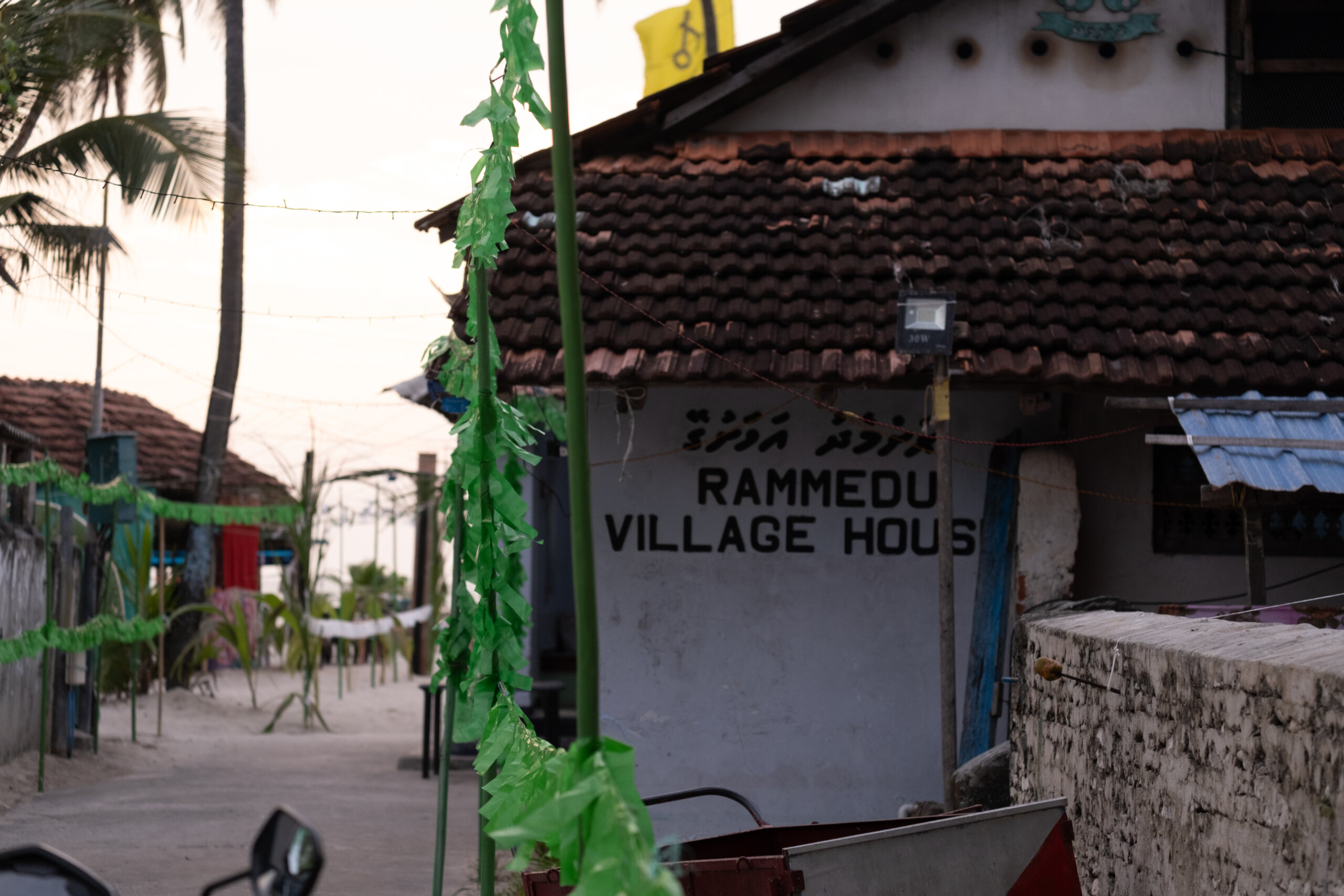
“Yes sab free mein hai?” (Is all of this free?) I asked them.
Yes, they replied in unison.
Green flags waved in the early evening breeze, like mossy waves in the sky.
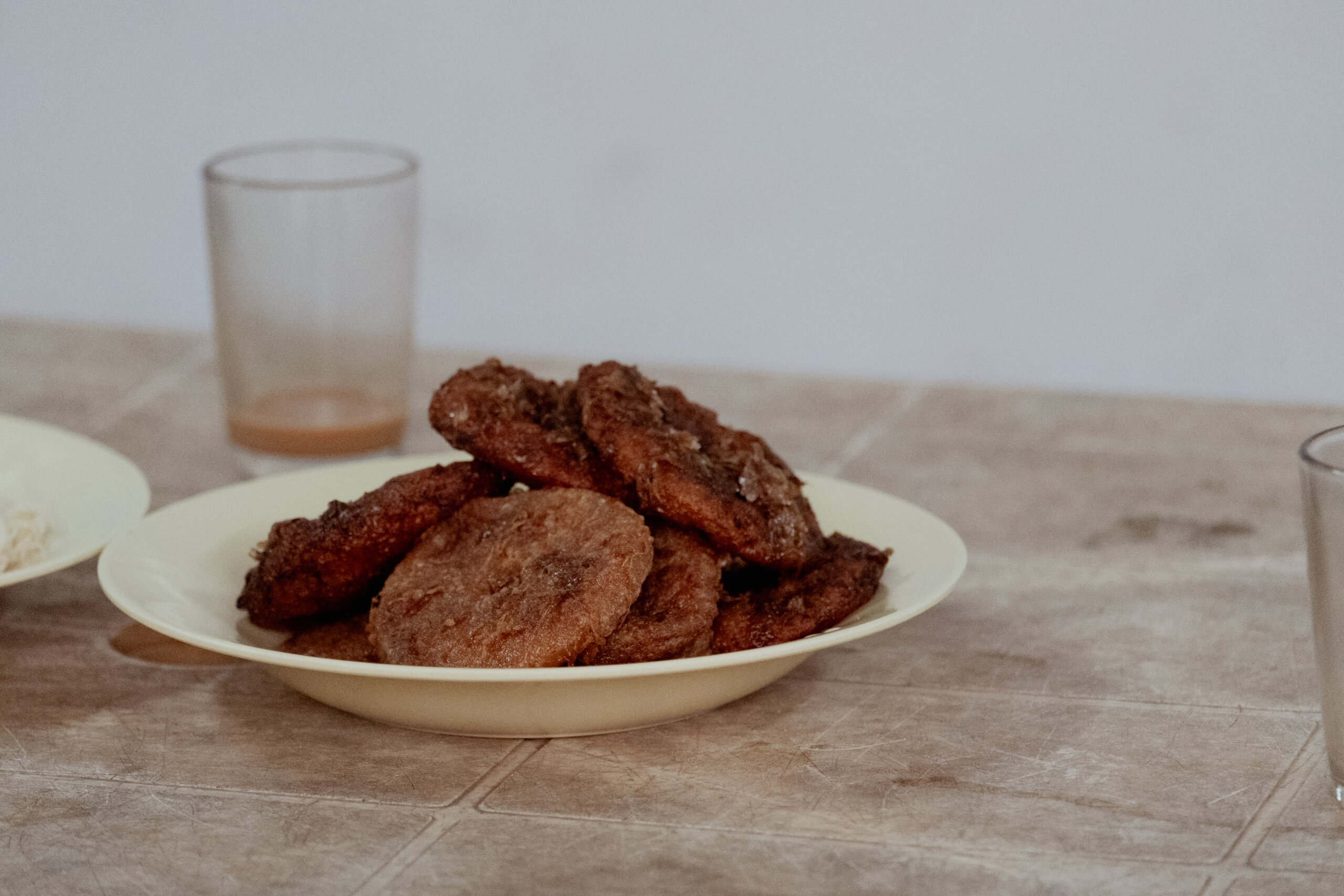
The village women invited us in for tea and snacks—sweets with rose and sugar, crispy rolls with tuna and onion, and piping hot tea. They switched between Mahl and Hindi, making sure that I understood what they were saying. Mundane chats that are markers of comfort, ease, and camaraderie—homely conversations.
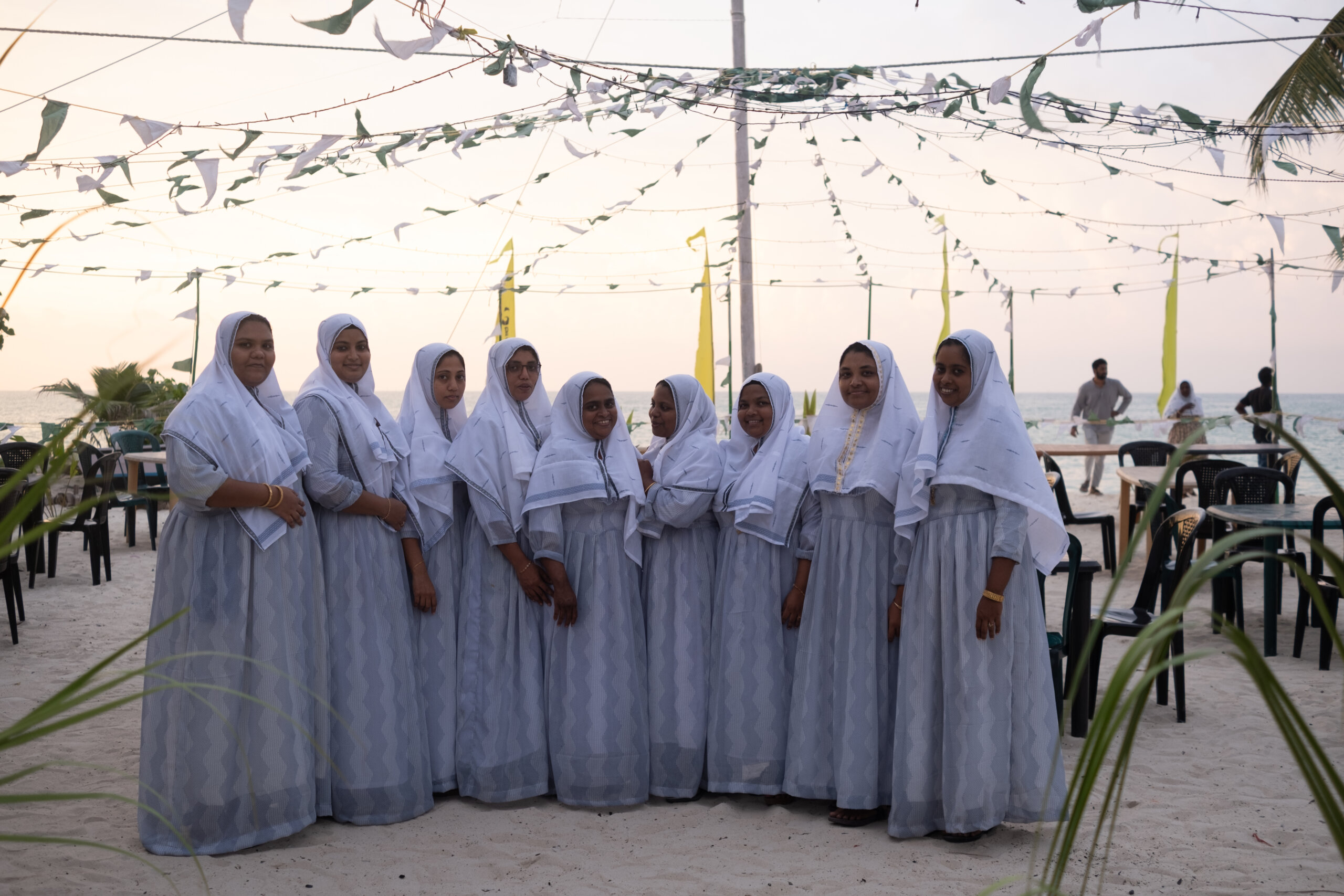
A few days later, the people of Boduathiri village would celebrate. They would prep for their function from dawn—fishing, cooking, building a scary house with whatever props they had handy, putting up lights, setting the tables, sending out invitations.
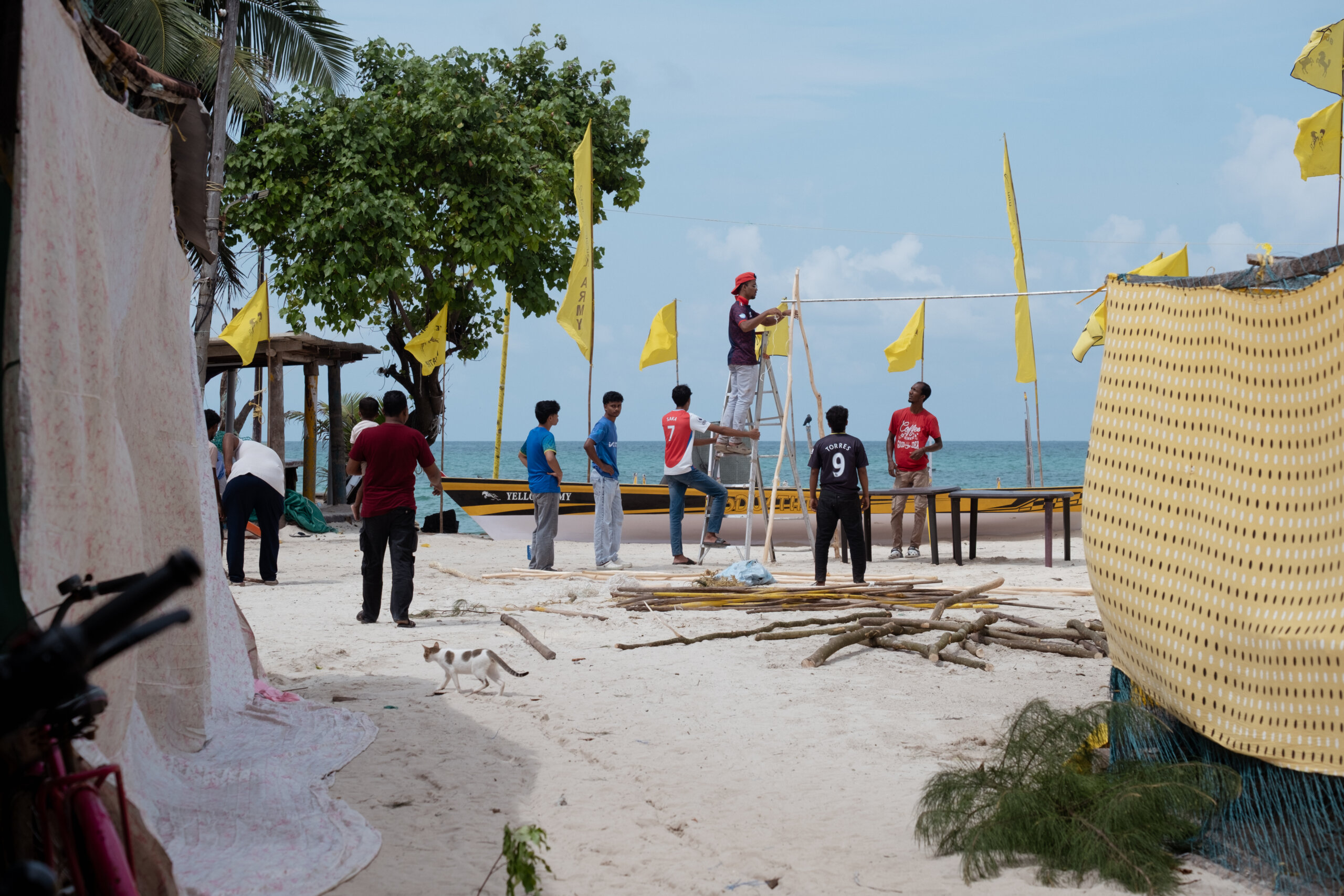
The menfolk organized the event as a symbol of gratitude to the women who normally handle all the prep and cooking for occasions such as weddings, Ramzan, Eid, and more.
“Aaj humko princess treatment mil raha hai” (today, we get princess treatment), a pretty girl from a younger vily chimed. For some reason, though, I found myself missing the older vily—mothers, grandmothers—who made me feel like I belonged.
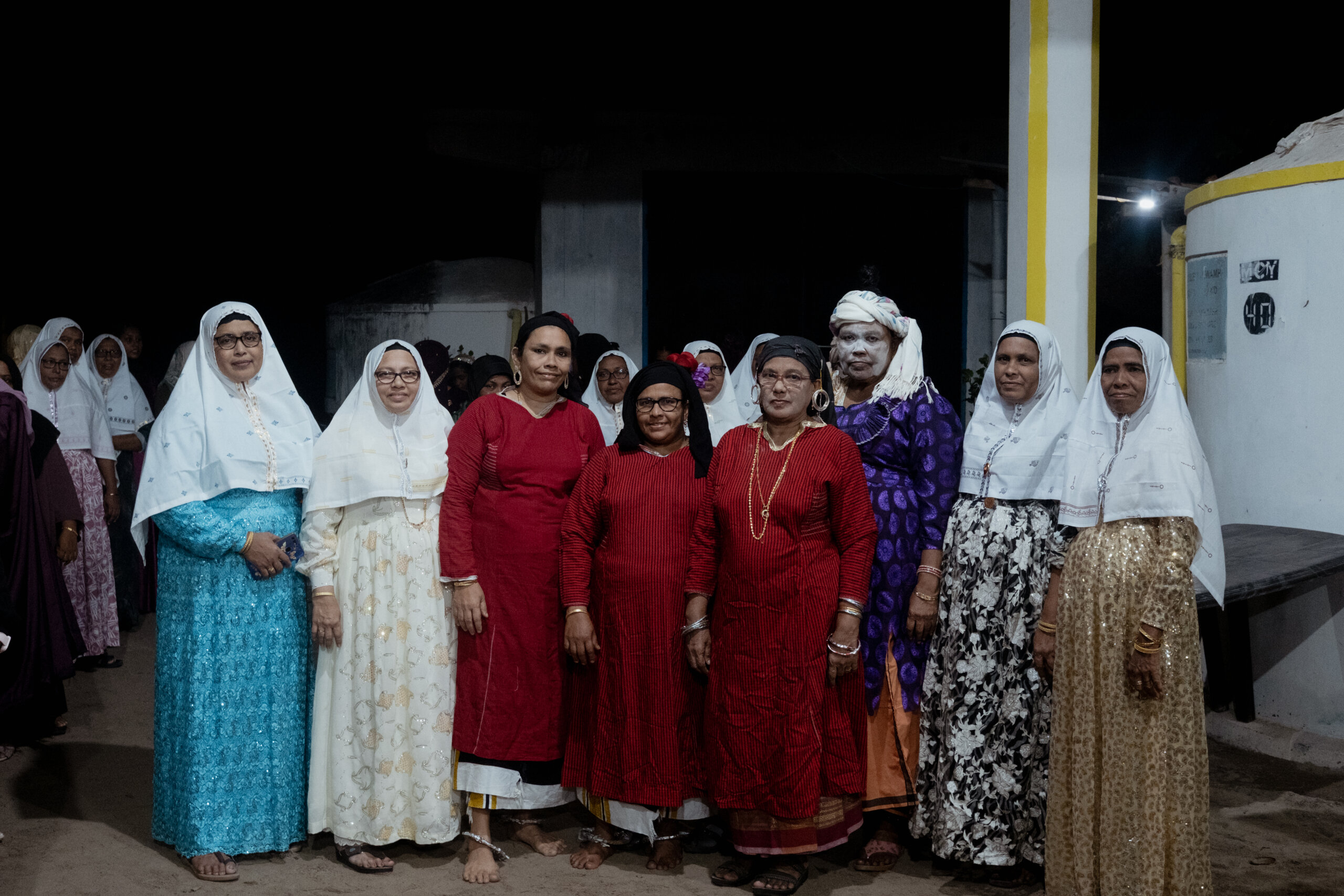
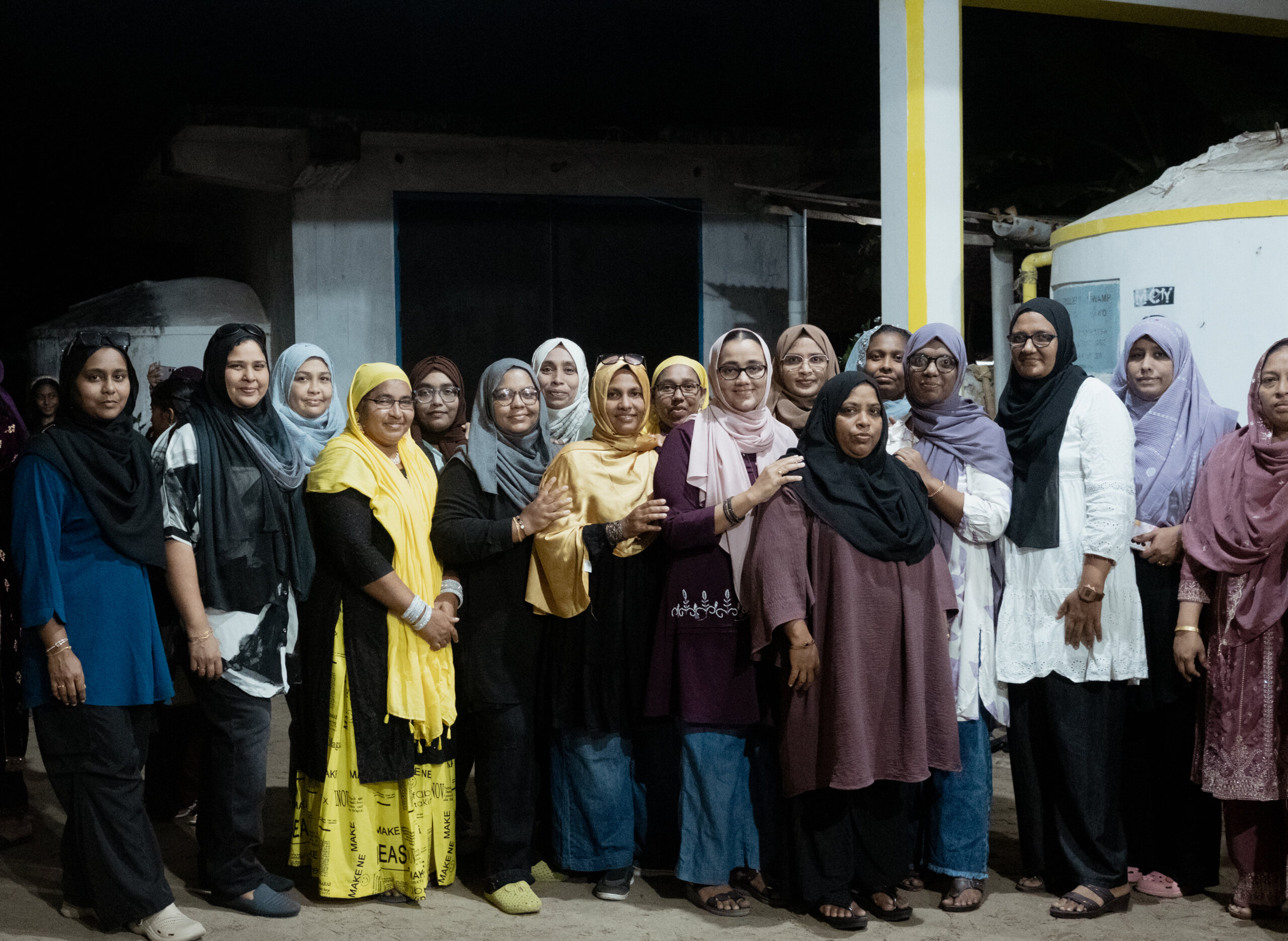
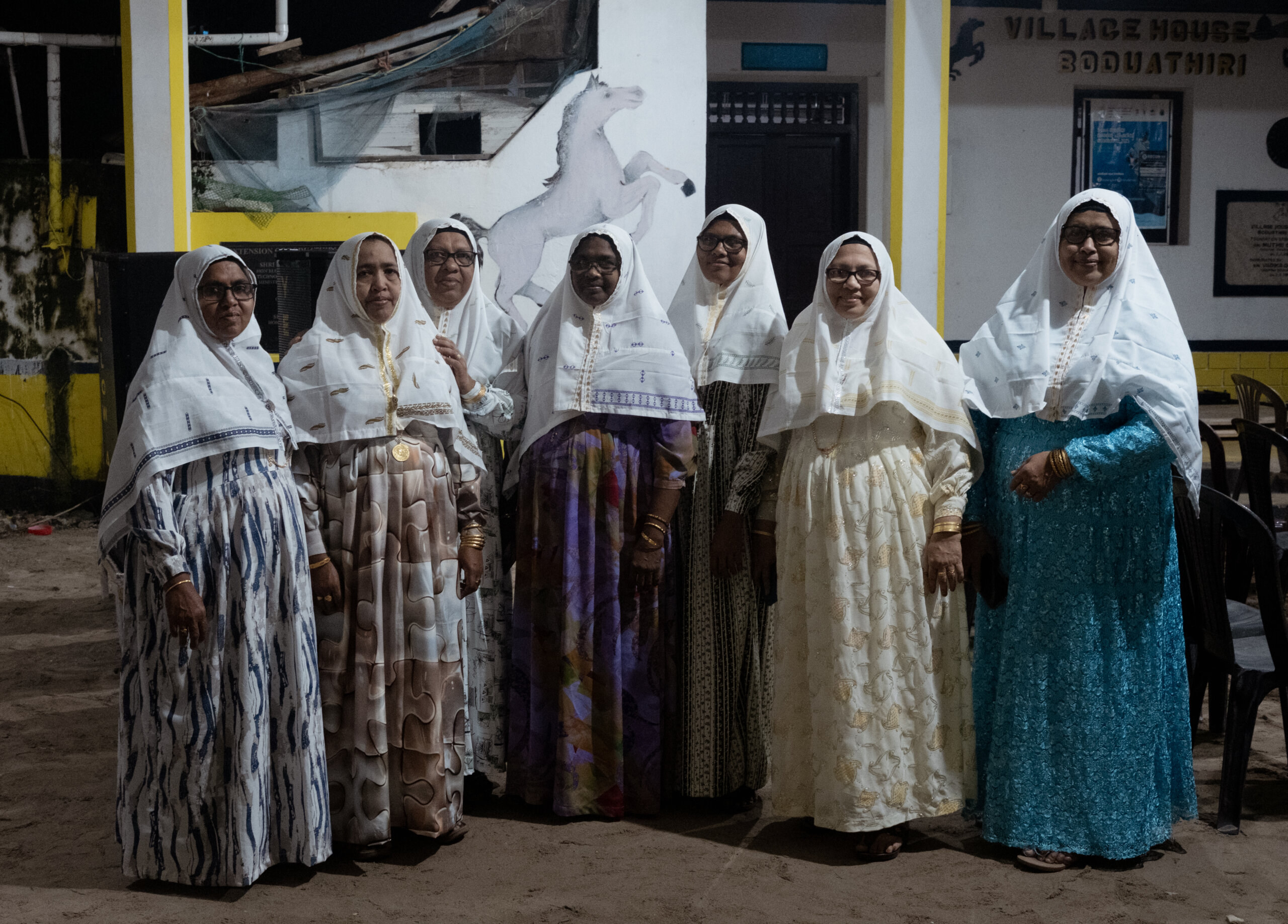
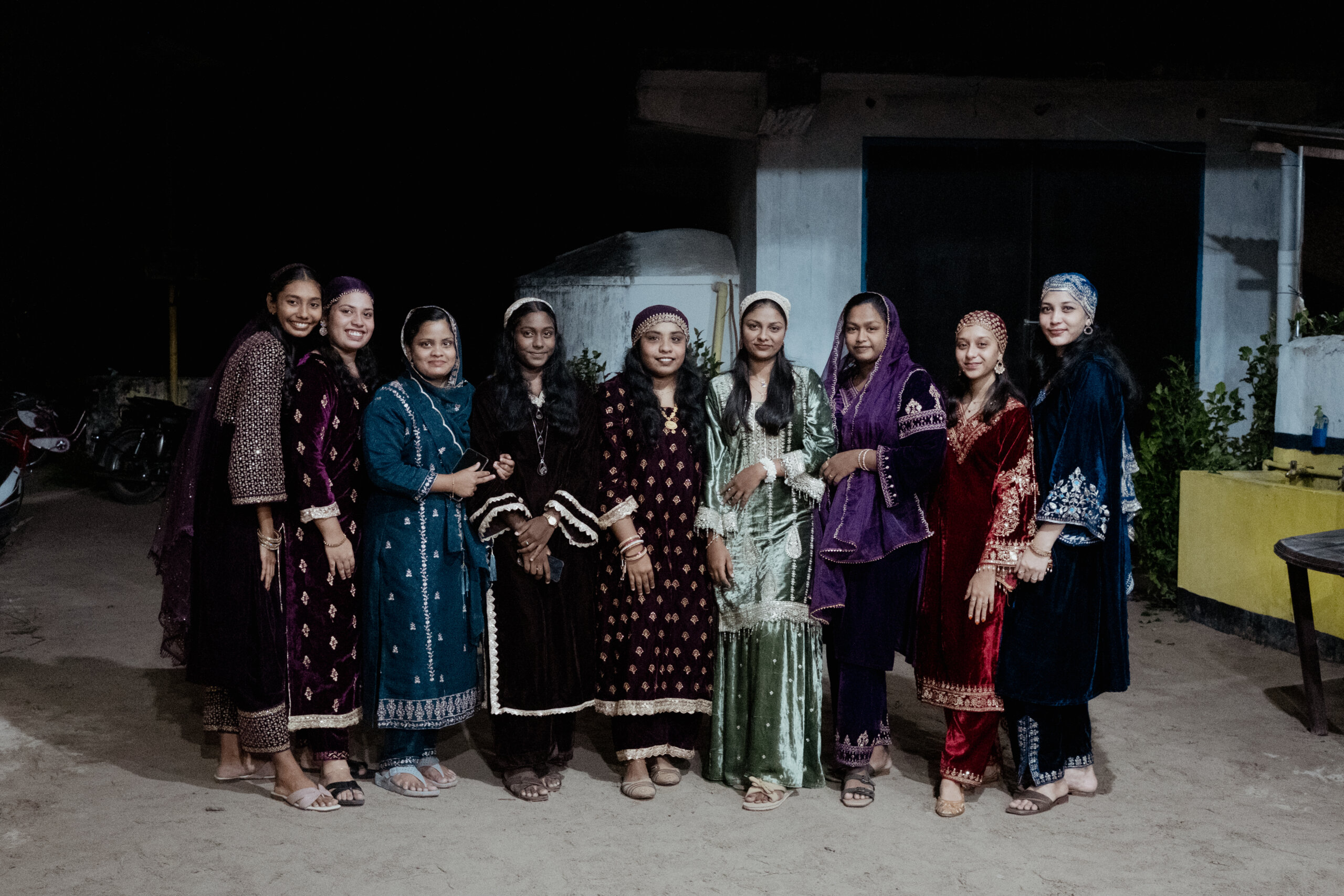
No sooner did I feel a sinking realization of my foreignness than Mohammed, who handled my itinerary, sent me a photo of a group of women and me at the function. Caption: Niviya is now a member of the Boduathiri village.
Little things. My heart soars.
“The navy base here was commissioned only about a year ago. I mean, it has been here for a few years, but only recently was it commissioned.”
V and I were chatting about the island as we waited for Hameed and Majeed to start the diving training.
“The navy’s presence doesn’t make the locals too happy. The administration is messing up”, he added before he told me that he’ll show me some places around the island.
We rode the boat towards the far end of the lagoon, the sea breeze cooling our sunburnt skin. The gleaming waters looked tempting enough to jump into, changing colour as the depth increased. I see some fast-swimming fish just under the emerald surface—triggerfish cutting through crystal.
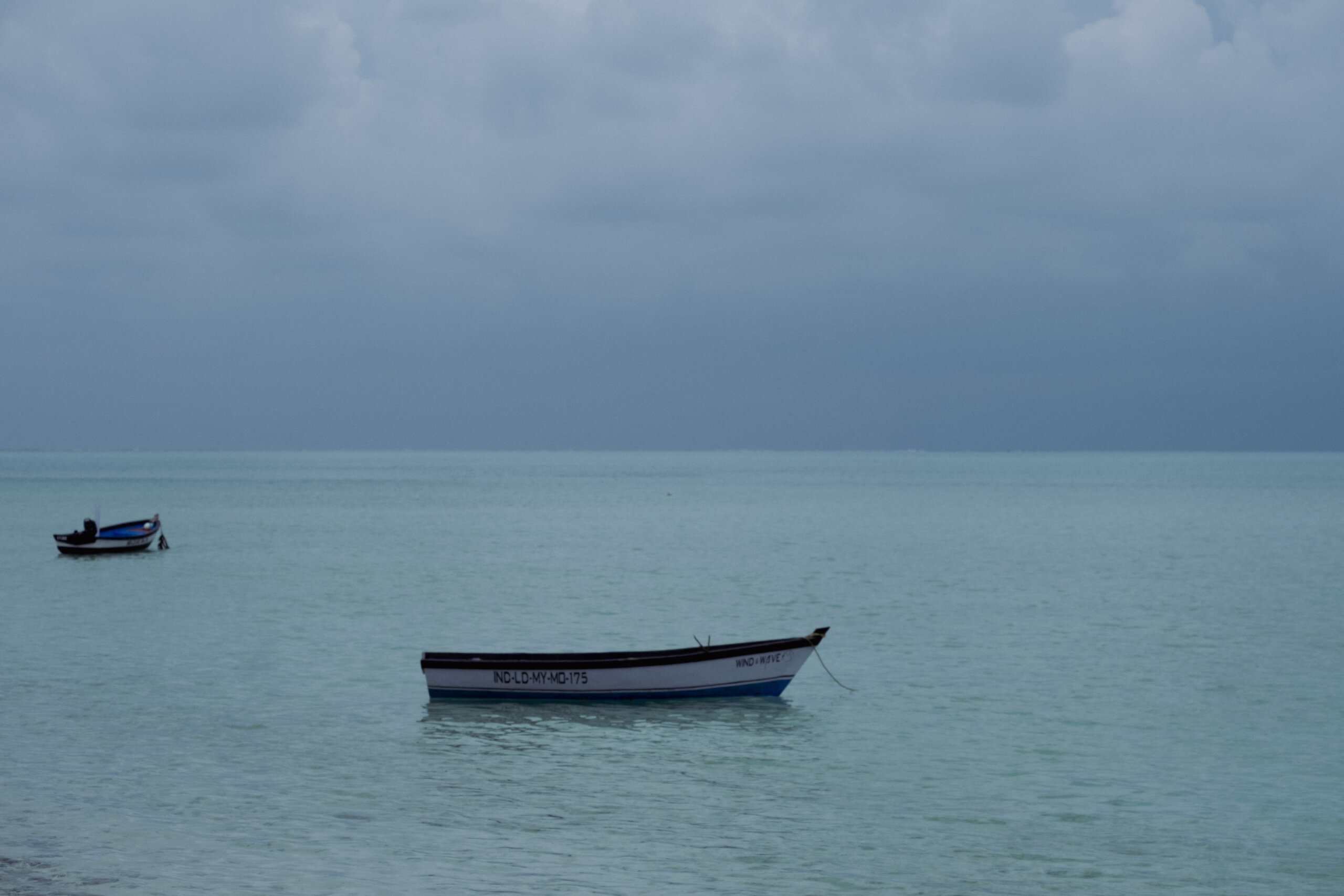
That evening, V and I visited the British-era lighthouse. 1885, the year read.
“They’re planning to build a dual airport here, for the navy and for tourism. They’ll destroy this lighthouse,” he informed me. My heart sank a little on hearing this. The lighthouse is a museum. It’s also functional, using age-old technology to show people at sea the way back home. A beacon, a calling from their land.
“Thundi beach and Kodi beach ke raste pe zameen hai, airstrip ke liye. Lekin yeh logon ki zameen hai, aur woh bejna nahin chahte hain” (There’s land near the beach roads, for the airstrip, but it’s owned by locals, and they don’t want to sell), Altaf told me when we were waiting for Amir at the Boduathiri village junction one day.
“Bitra ka kuch pada tha maine. Kya ho raha exactly udhar?” (I read something about Bitra. What’s going on exactly?), I asked him.
The Indian Navy plans to establish a naval base at Bitra, Lakshadweep’s smallest island. The reason: there’s a Chinese military base in the Maldives. This is India’s strategic move towards defense.
But Bitra—a gem floating in the water—is an inhabited island. Around 300 people live on it. They own land, they live off it. Their ancestors and their progeny have grown up on the island. Bitra is synonymous with its inhabitants’ identity.
The Draft 2021 Lakshadweep Development Authority Regulation (LDR) gives the administrator power to remove or relocate locals from their property, for reasons from town planning and tourism to development.
“Logon ko nikal kar Chetlat ya Kiltan bhejenge, shayad. Idhar bhi Coast Guard aur Navy hai, kyunki hum border pe hain” (They’ll probably relocate the people to Cheltat or Kiltan. Here, too, there’s the navy and coast guard, because we’re at the border), Altaf told me as he dialled Amir’s number. We were going to head to the lagoon side. They were going to teach me how to ride a bike. The day was bright. Kids were out playing. The sky was cloudless, the birds from the marshes were out to take a dip and fish in the cool waters.
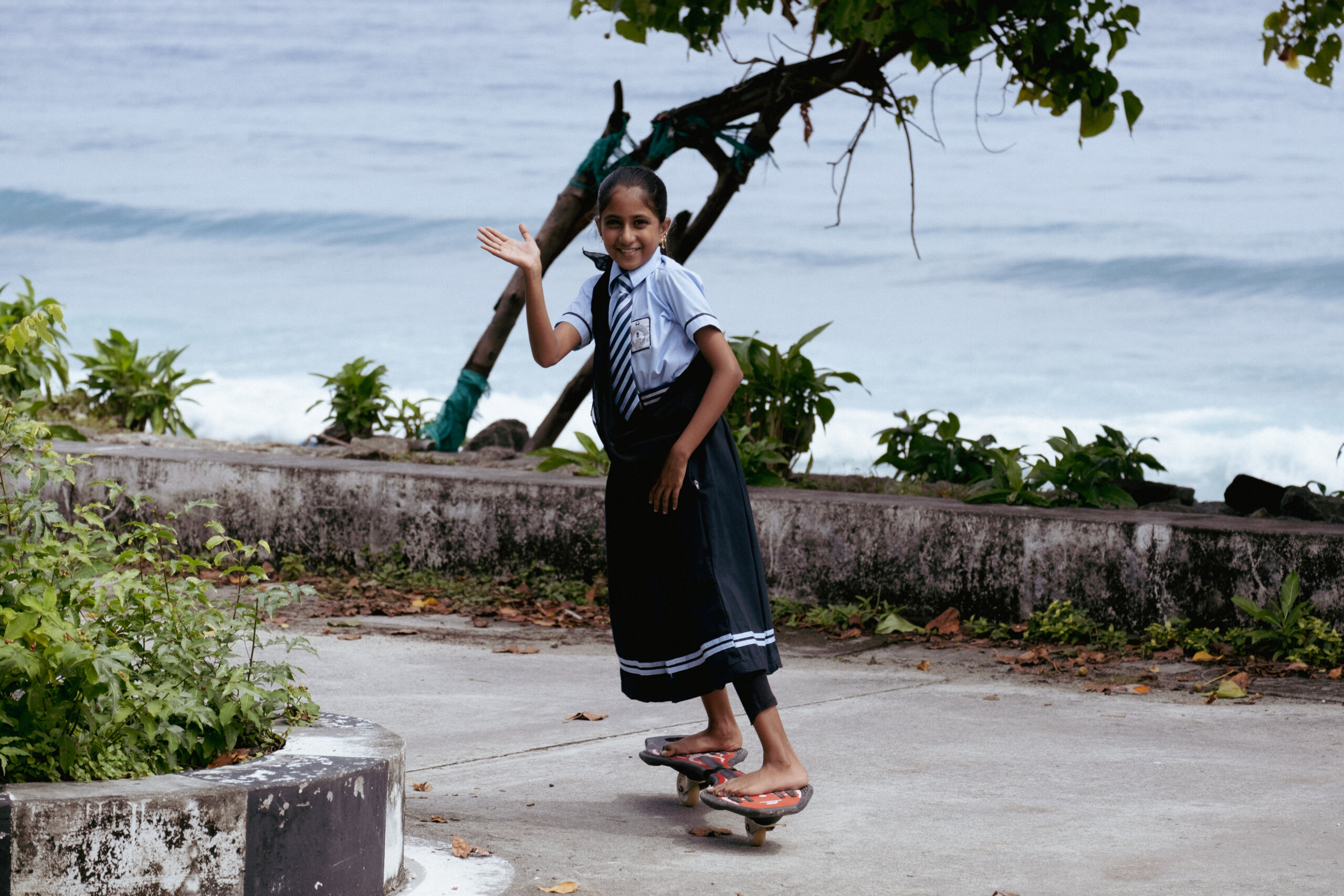
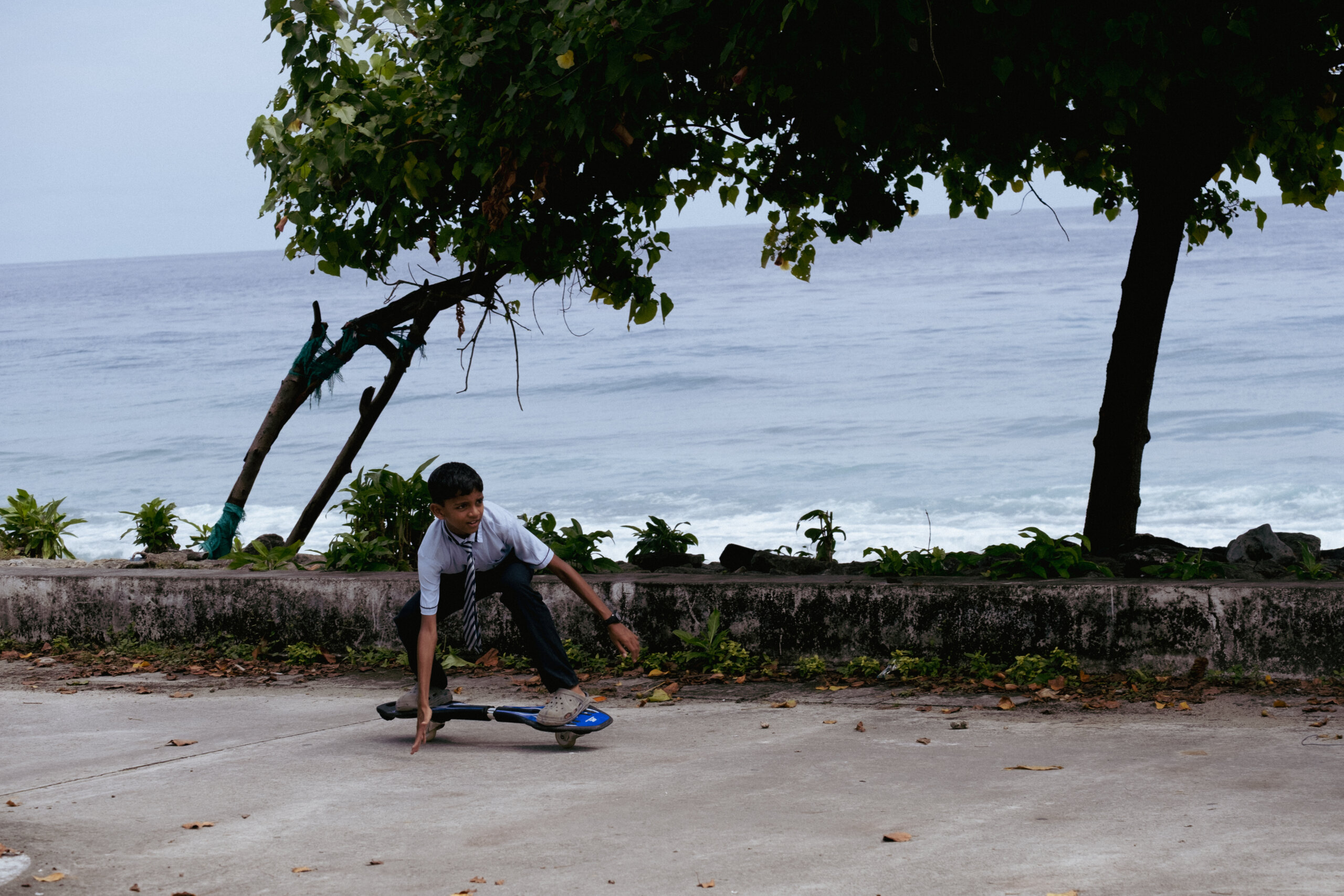
Viringili. A 20-minute boat ride from the lagoon side. Amir and his friends took two other visitors and me to this tiny island for a day out. We would walk around this piece of land, have lunch, fish, and make our way back before the sun sets.
“Saare village ke log pehle Viringili jaathe then, picnic ke liye. Lekin ab Navy ne iss island ko le liya, aur ab hume permission leni padthi hai, apne hi island mein jaane ke liye” (Earlier, all of us from the villages would go to Viringili for picnics. But now, the Navy has taken over, and we need permission to visit our own land), Amir told me, his face not betraying the dejection that his voice couldn’t hide. I helped him move food and water from the boat to the shore.
I found myself a spot under bent trees—the only place with passable shade on an otherwise canopy-free island. I sat on the rocky ground to read. Hermit crabs passed by me, walking over coral remnants like infants learning to take their first steps. I wondered how long these little creatures would have access to the only home they’ve known.
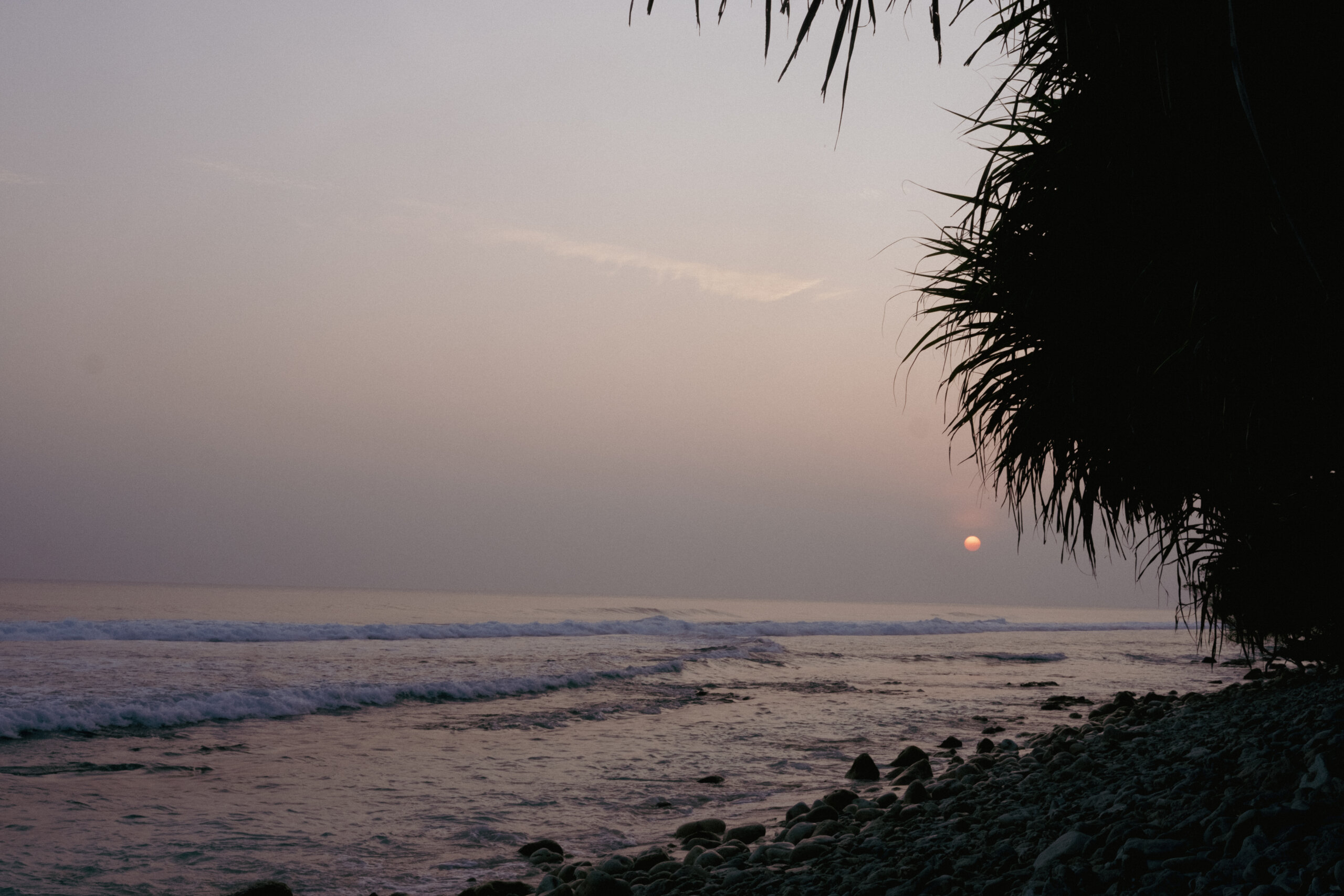
I met Zeba at the function in Boduathiri village. While I got along superbly with the women from older vilys, she was the only person from the younger vily I could speak to without inhibition.
Married at 18, she was 23 when I met her. She divorced her husband a few years ago, but got back together for the sake of their four-year-old daughter. In Minicoy, there are no taboos against divorce and remarriage, especially for women. As the people told me, multiple times, this is a place where women rule.
“Pehle bohut difficult tha uske saath, par dobara shaadi ke baad ab teek hai. Mujhe bohut proposals aaye, divorce ke baad. Lekin beti ka paapa toh woh akela hai, isliye maine phir se shaadi kar li” (Earlier, we had a lot of issues, but after we got remarried, things are better. I got many proposals after the divorce, but there’s only one father for my daughter, so we decided to remarry).
I asked her what she does, where she works.
I do nothing, she said. I’m a housewife. I didn’t study much after school.
My parents worried that I would mingle with guys and get spoiled if I were in the city, so they got me married early. But some people get married much later, she said.
”Apne mummy-papa ke ghar nahin gayi, dobara shaadi ke baad. Unko mera husband pasand nahin” (I haven’t gone to my parents’ place since I got married again. They don’t like my husband).
She asked me if I like paan. I said only the sweet kind. “Lekin kissi ko mat bolo, mein cigarette peeke aayi hoon” (But don’t tell anyone, I smoked and came here), I told her. “Arre maine bhi ek baar pee hai, mere husband ko nahin maalum” (Even I’ve smoked once, but my husband doesn’t know), she grinned, her face lit up with mischief.
It was past ten at night. We went to the jetty to walk around. She showed me luminous fish swimming in the water, and continued to tell me about how her family is angry with her for going back to the man whose family treated her badly.
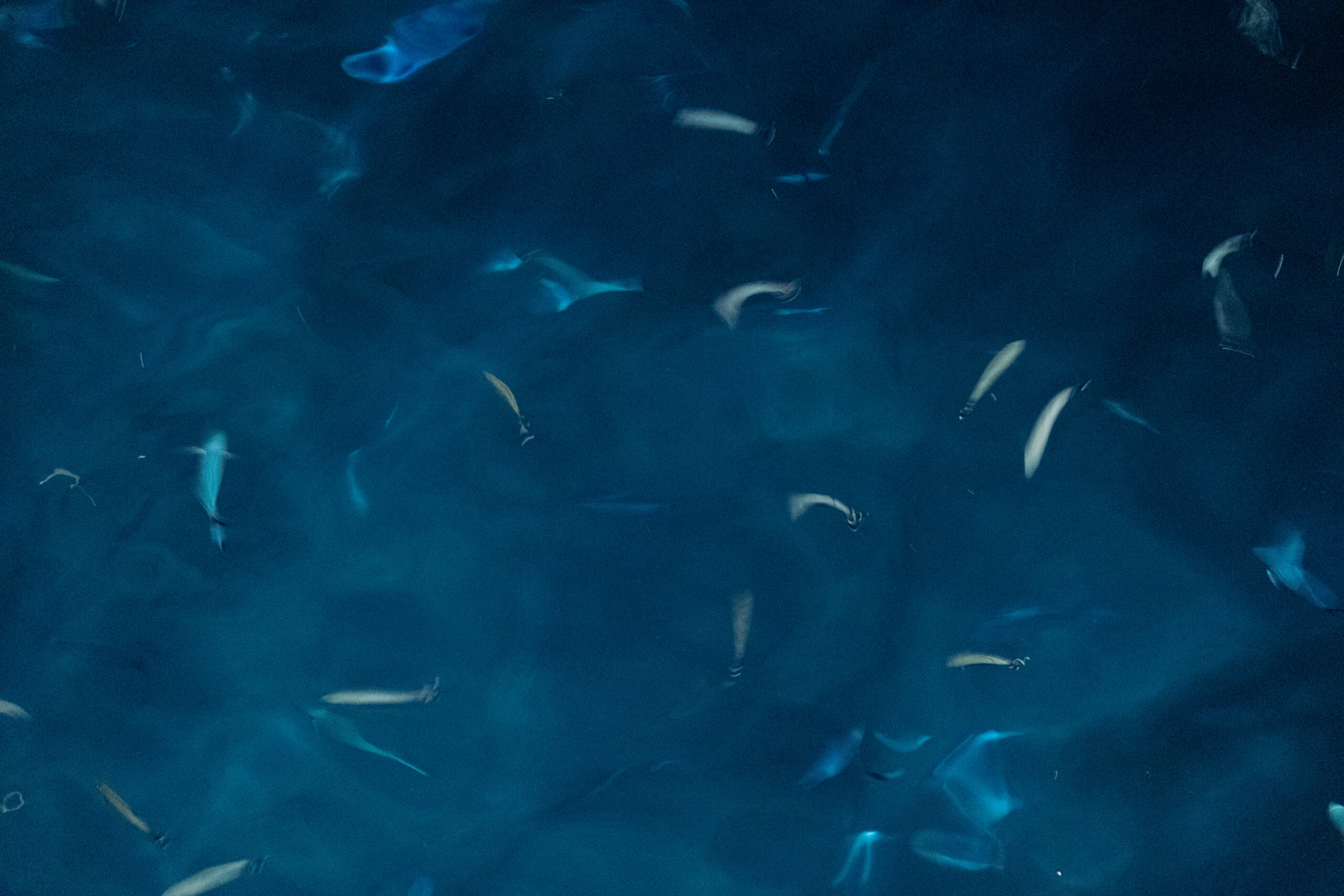
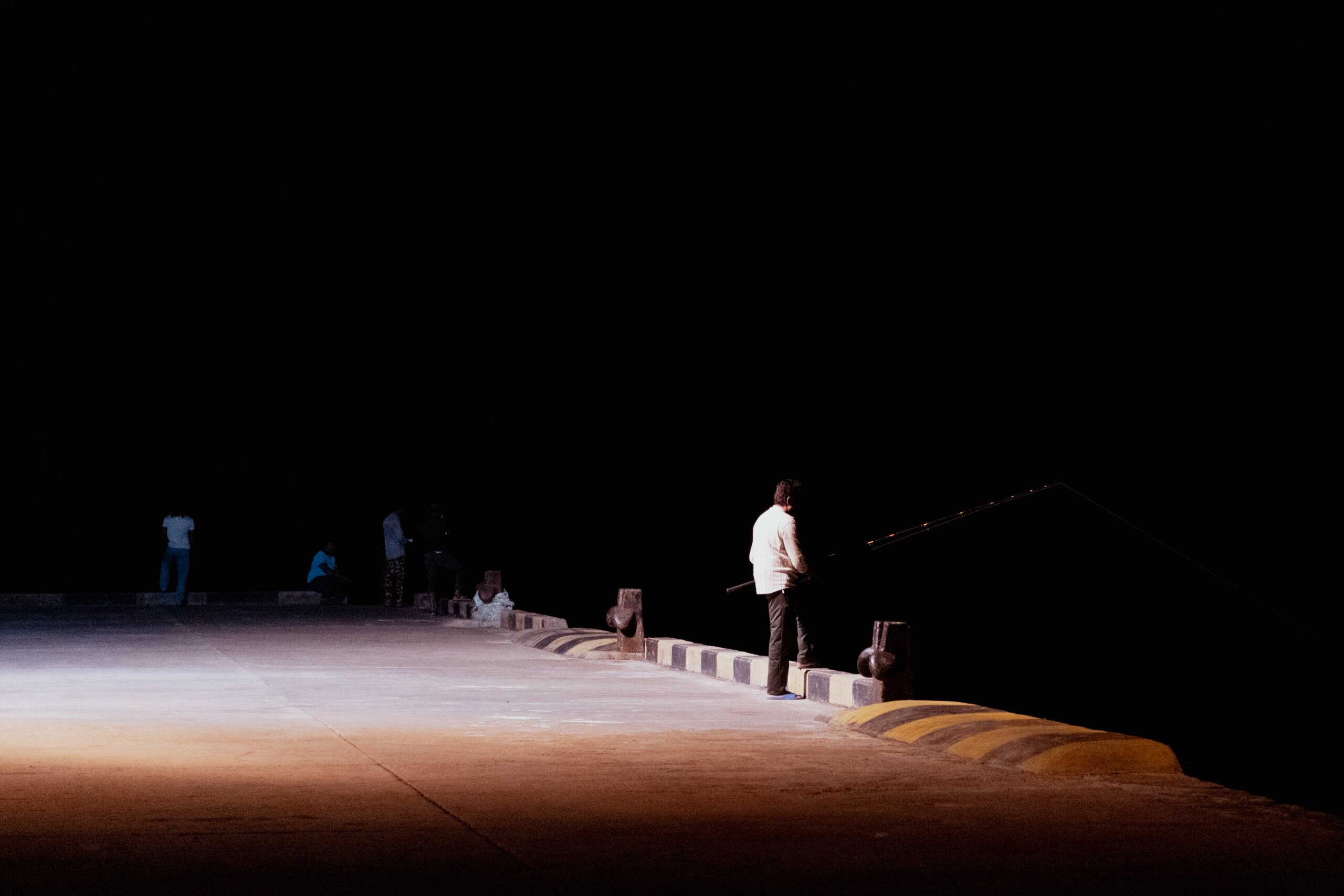
For the child, one has to make sacrifices. And it’s not like he’s not supportive now, and I like him. “Still, dard hota hai” (it hurts), she said, staring at fish nibbling at barnacles.
For all her marital troubles, Zeba was the only one who didn’t ask me if I was married.
A hundred thousand islands. That’s what Lakshadweep means.
Perhaps one of the last few places of India that remain untouched by mass tourism and unchecked development, Lakshadweep has stayed pristine, precious.
Until now.
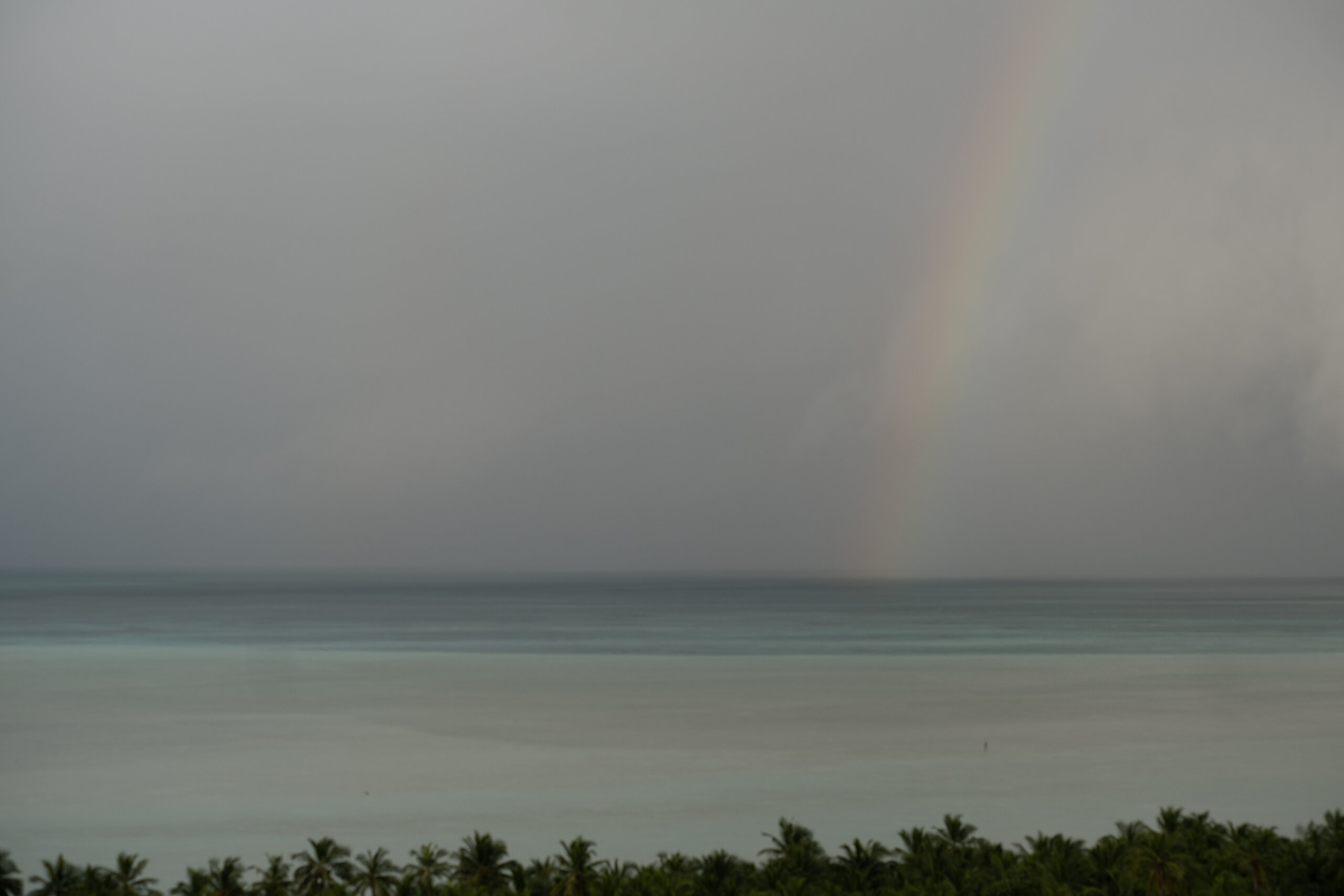
From the lighthouse, I watched a double rainbow gracing the grey skies, one end in the lagoon, the other fading into the atmosphere. It had rained not ten minutes ago, and there were signs that there would be showers again. Petrichor lingered, like the perfume of a lover on your sheets long after they’ve left.
“You know, they want to make Minicoy a resort-only island. Our supreme leader and his ideas!”
I turned to look at V. I could feel puzzlement carving my features.
“And he has a special place of hatred for Minicoy,” he continued.
“Why?”
“Because the people are different. You know, he hasn’t given construction contracts to any Muslim builders here? They’re all going to Hindus. No points for guessing from which state,” he laughed.
I instantly thought of dhoklas. I shouldn’t stereotype, I told myself.
Closer to mainland India, the island of Bangaram is a tourist-only spot; the only locals living there are the ones who work at the resort. Previously, a government-managed resort was the lone one in operation.
“Bangaram is ecologically delicate. There can’t be any permanent structures built there. So, they proposed stilt structures and named it Praveg Tent City,” V informed me.
I looked out of the lighthouse window. The rainbows were disappearing. Just like all good things, I thought.
“I heard they’re doing something similar in Agatti,” I told him.
In December 2023, Praveg Limited, a supposed eco-responsible luxury resorts company, had bagged the contract for at least 50 tents in Agatti.
“Tent city is misleading. The structures are more or less permanent. And guess where Praveg is from?”
I felt a deep sorrow in my stomach that soon grew into rage.
People in Agatti were at risk of losing their land, thanks to the Gujarat-based hospitality company. The administration had issued eviction notices to several residents, forcibly taking over coastal land measuring 5000 sq mts. They’ve razed fishing huts, citing encroachment in coastal areas under coastal regulation zone (CRZ) norms. Islanders used to use these areas to dry fish, dock boats, and repair nets. The same is happening in Bangaram and Thinakara. Minicoy is touted to be next.
The administration also amended the Laccadive, Minicoy, and Amindivi Islands Land Revenue Tenancy Regulations, 1965, to take over pandaram land (a type of land for which the government of India holds proprietary rights). The amendment removed section 15A, which previously provided “special provisions regarding the transfer of certain pandaram lands to Scheduled Tribe Islanders”—the inhabitants of Lakshadweep.
After a swim in the lagoon, I walked to the dive shop, hoping to chat with Majid and Hameed about extending my trip. And, as conversations are wont to flow, we spoke about tourism.
People in the mainland see the Prime Minister coming here and assume that the islands are developing, but that’s not the case. In fact, the administrator is removing jobs. Majid used to work in the resort by the lagoon, and he was let go. The same happened to me. We thought, “Good, at least now we can do our own thing and run our own dive centre well,” Hameed mentioned as he handed me a glass of juice to ease my parched throat.
“Idhar tourism bohut kam ho gaya. Pehle 3-4 din ka package le kar aathe the. Lekin ab log bas Kavaratti se ek din ke liye aathe hain, aur nikal jaathe hain” (Tourism has waned. Earlier, people would come here through a 3-4 days’ package. But now, people come from Kavaratti just for a day, and leave), he told me. Hameed has been diving since 2007 and got his trainer certification in 2013. He’s seen the waves of tourism, from then to now. And it does not look good for the islanders.
At Rahmath Cafe, we serve ourselves the snacks we want. Most cafes operate on a self-service basis. Trust is at the heart of their operations.
“Kya idhar ke logon ko tourists se problem hai?” (Do the people have a problem with tourists?) I asked Manija and Amir.
No, not at all, they replied. It’s just that development is so unplanned—they’re trying to do projects where the locals live, instead of in areas that have no people.
Like the lagoon side? I asked
Yes.
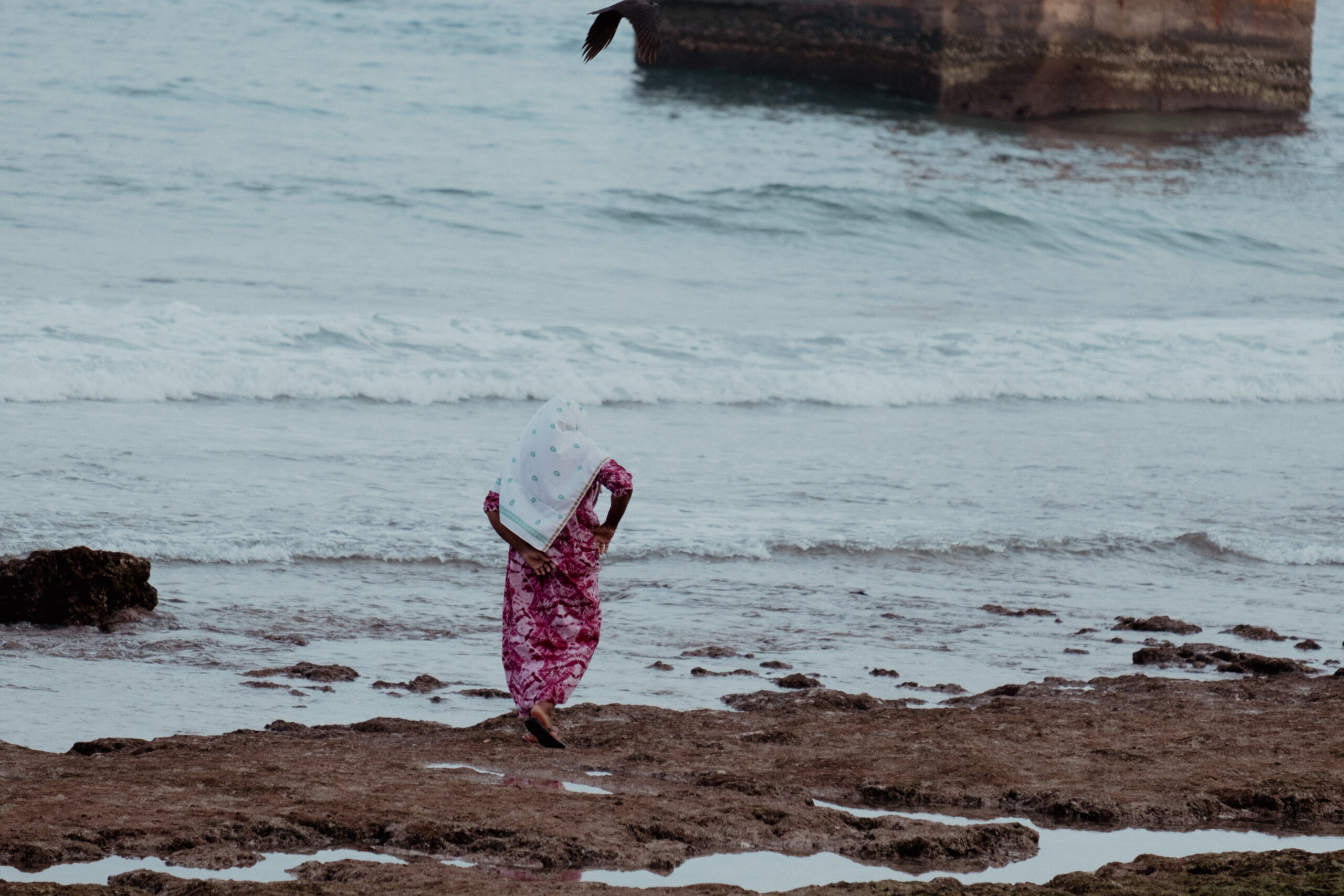
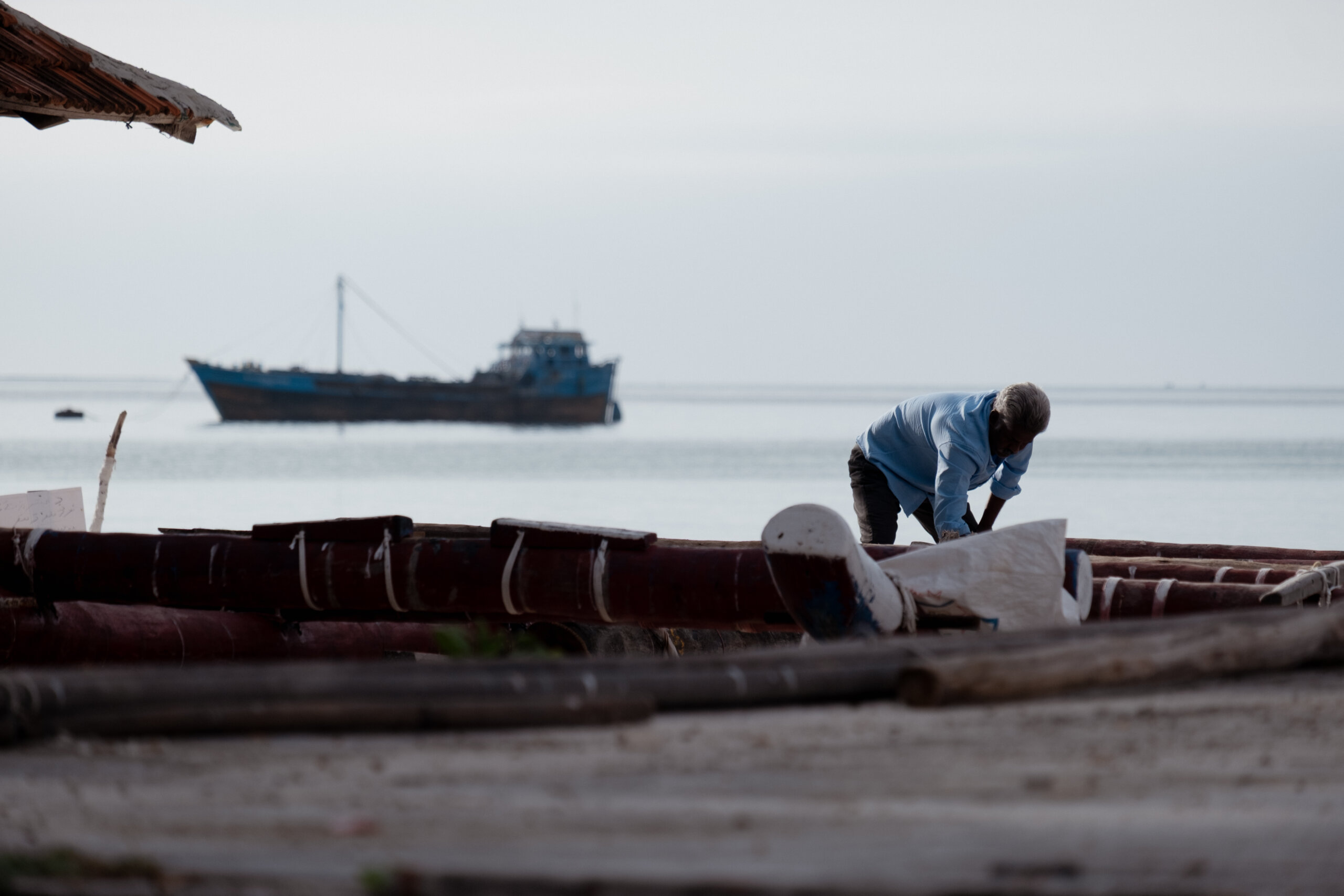
After dinner at Amir’s house, I went to Kodi beach to watch the Saghafee games. Tonight’s game: dog and the bone. The entire island seemed to be in attendance, sitting on the sand, cheering loud and proud for their teams. The team from Boduathiri played an impressive game against the Bada village boys. I made a mental note to tease Ishan bhai about his team’s terrible loss.
Ishan bhai had told me that he likes visiting Bangalore and Goa. Also employed in the merchant navy, he said that time just flies by in Minicoy, and his three months of shore leave always seem to end in the blink of an eye. He asked me if I’m married. I said no.
“Single life best hai” (The single life is the best), he said. “Jo chahe woh kar sakthe ho” (You can do whatever you like). Since I got married, I don’t get time for that; being alone is good, you can travel as you please. I told him I have cats, so I can’t really just up and run as I wish.
We spoke about tourism. He said that this is the season for it, and more tourists are good. But it’s difficult to get here, because it’s a day’s travel by ship from the mainland. The airstrip’s coming, so that could change a lot of things here. But they need to do all the development work in places where people don’t live, and there is space for that after the Coast Guard.
I told him about his team’s loss. He looked at me, smiled, and said—Kal dekhen ge (we’ll see tomorrow).
While far from underdeveloped, Minicoy is far removed from the rest of the country. In all senses, the island is secluded. Remote.
Being remote translates to facilities being hard to reach. The policeman in Amin Bhai’s tea shop said god knows how many people have died here due to a lack of connectivity for serious medical issues. Last year, a boy met with an accident, a bone out of the leg, and whatnot. The helicopter was called, but didn’t arrive for two days.
I offered to pay for his tea. He accepted after I insisted a few times.
Same with a pregnant woman, whose baby died in the womb towards the end of the gestation period, he said. The hospital facility here wasn’t equipped to handle such a case, so they said to take her first to Kavaratti, and if they can’t treat her, then take her to Kochi. That’s a huge delay, especially via ship.
At least now the new hospital is coming, I told him.
Yes, he said, but we have to see if it works, if there’ll even be staff. There was no trained gynaecologist earlier, he said. Now there’s the DC’s wife, and in her first month, she had a complicated surgery case. She seems capable.
He put his teacup down to play with the kittens who had been engaged with a leaf under the bench he sat on.
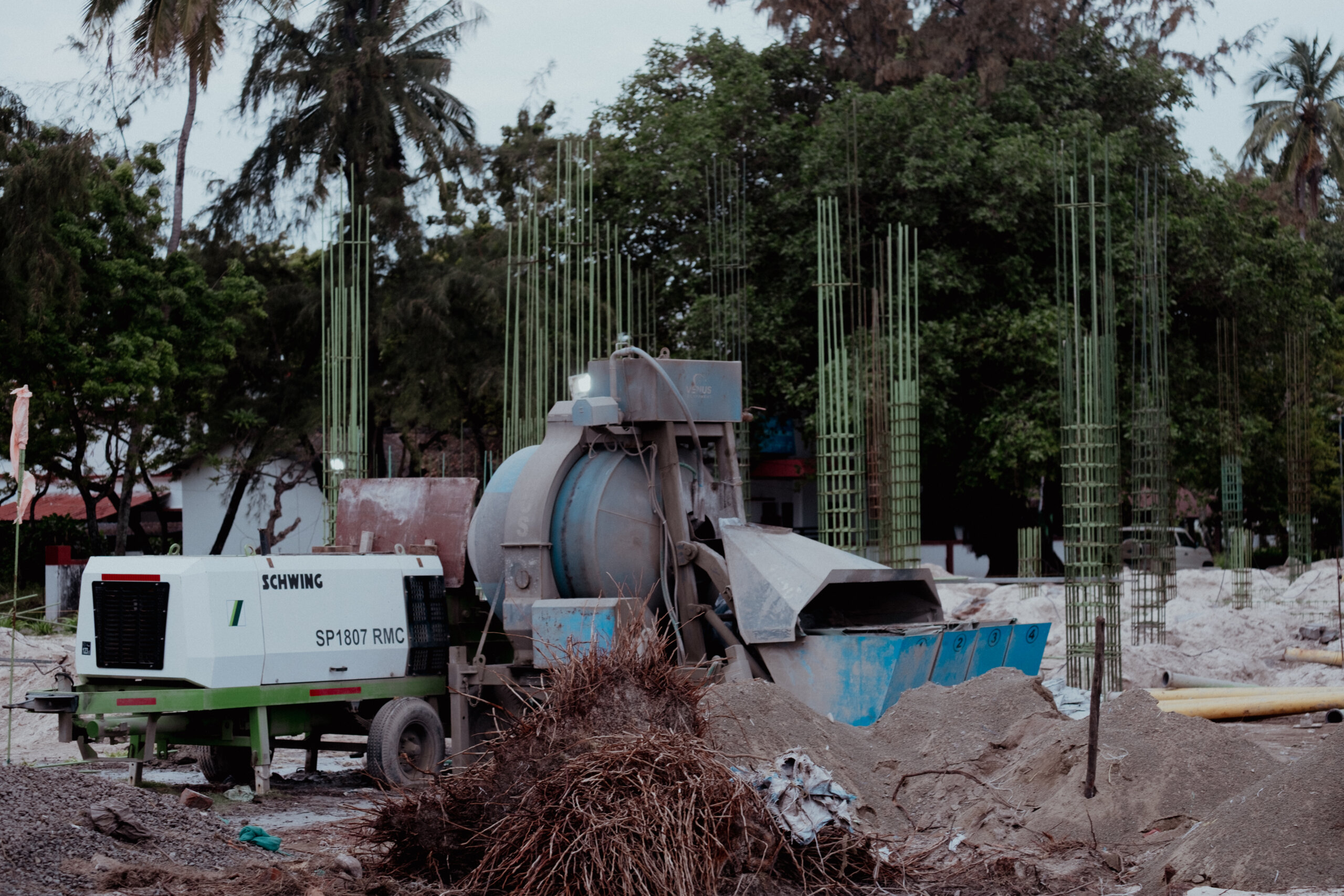
Later in the day, I would see the new hospital being constructed by the sea, opposite the current government hospital. The foundation had been laid, grotesque-looking poles shooting up from the ground. A tell-tale sign of large-scale construction. The owner of Hotel Tara had informed me that the area used to be a park.
“Lekin ek aspatal already hai na? Ek aur ki kya zaroorath?” (But there’s already a hospital, why is another one necessary?), I had asked him
“Yeh bada waala, tourist ke liye. Sab PM ka kaam hai” (this is a bigger one, for tourists. It’s all our PM’s work), he said, his voice tinged with light sarcasm.
A day before I was to depart from Minicoy, I met the gynaecologist on the jetty road. I asked her what she thought about the new hospital.
It’s stupid, she said. Who builds a hospital facing the sea? The equipment will corrode in no time because of the salty winds!
V had introduced me to the DC and his wife, the gynaecologist, one rainy evening. We decided to stop by Dilkush cafe for a quick bite as the unrelenting showers caused a tree to uproot and block the road.
“The new hospital is an extension of the old one. But the maternity operation theatre in the existing hospital is excellent. It has everything you need, even for painless delivery. In many ways, it’s superior to other hospitals. The problem? It’s the availability of medics. Sometimes a radiologist is unavailable, sometimes it’s the anaesthesiologist. Else, it’s a good place,” she told us as we waited for our order.
On the island, there’s no Instamart, no Zomato, no Swiggy, no Zepto. All supplies—rice, vegetables, fruits, eggs, produce, clothes, household items, hardlines—come by ship once every ten or fifteen days. And once they hit the market or the ration shop, islanders have to stock up for the next fifteen days before the ship comes again.
Fuel, too, comes via the barge. The island runs on diesel for electricity. The fuel station has come up only in the last few years, Amir told me. Then, he added—“Kal petrol bhar dena, petrol bunk mein khatham ho raha hai” (Fill fuel tomorrow. The petrol bunk is running out).
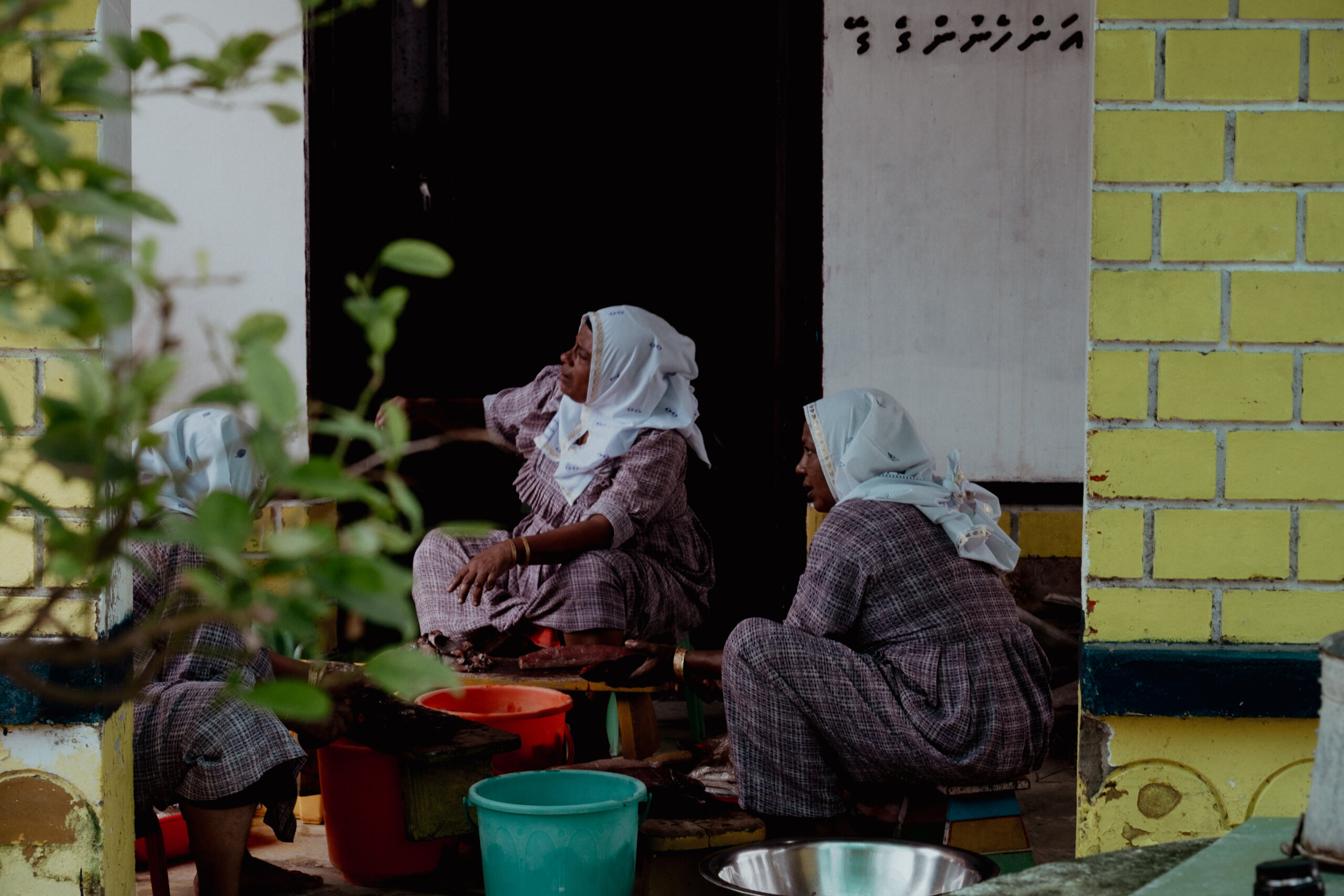
For lunch, I went to Amir’s house. His sisters and mother sat with me, served me a full plate of rice, dal, tuna curry, tuna fry, vegetables, pickles, and juice. I could barely hold back tears. Amir’s older sister, whom I call Didi, looked at me worriedly and asked if the food was not to my liking.
“Nahin didi, aisa kuch nahin hai” (No, that’s not it).
“Phir?” (then what is it?)
I was overwhelmed by the generosity of the people who have known me for a mere two weeks. Sharing their meals with me, even though they know that they will get the chance to replenish only when the next ship is bound for Minicoy.
I felt loved. I felt at home.
Words failed me, so I told her—“Maine mirchi chaba liya” (I bit into a chilli).
When I planned my travels to Minicoy, my mind was loud. I hoped the sea would quieten it as the days passed on the island. I needed peace. Just a bit. There was too much cacophony—good thoughts, bad ones, self-destructive ones, pitiful ones—these are the worst.
And on the ship, I needed to get away from the chatter in my brain, and from the stench of cheap cigarettes.
That’s when I met Haryana-born Deepak.
We chatted about the mundane—what we do, where we come from. He told me not to look down at the waves and surf too long, or else I’d get seasick. I told him that I like the sea, and I’ve travelled through the Western Ghats plenty, so I just might be immune.
He told me he’ll give me some homemade sweets to take with me.
Over the next two weeks, I’d meet Deepak regularly. At the jetty. Near the coast guard. In the chai shop.
We would sit behind the shop, in the garden area, and talk—about life, about escaping from home, about his marriage, about his officer being lonely and depressed because he isn’t happy in his marriage, about alcohol and Old Monk, about how I’m at peace with being who I am, about diving.
On December 3, the day I would leave Minicoy, he gave me a big plastic bowl filled to the brim with homemade, ghee-laden laddoos, and a smaller box with savoury tea snacks.
“Chai time ko yaad rahkna. Safe journey, aur agle bar jab tum aaogi, mil lena” (In remembrance of our tea time. Have a safe journey, and the next time you visit, meet me).
The day before my departure, I took my bike to Rahmath once again. The craving for rose milk and tuna rolls hit heavy—perhaps this was my way of trying to hold on to the island as my time here ended.
The owner asked me if I eat chicken.
Yes, I replied.
He went into the kitchen and, in about ten minutes, returned with a plate of crispy chicken.
On the house, he said. You’re leaving, this is us saying goodbye.
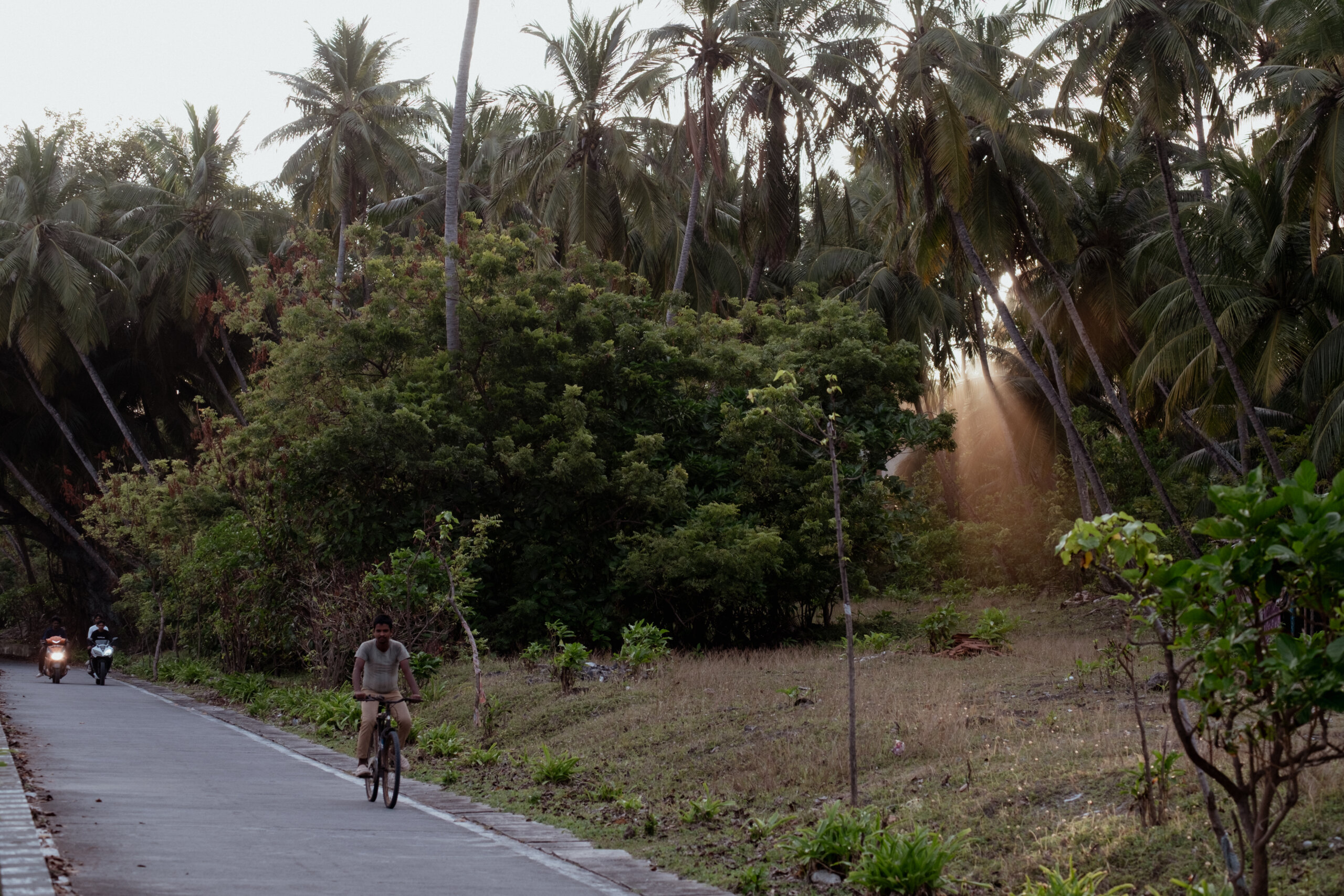
The next day, I woke up to see the sunrise over the sea. A jewel—hues of green and blue and yellow—unending shades merging and melting into each other.
Then, I left for Amir’s house for breakfast. Manija came by before she left for work. She handed me a bag filled with sweets. We hugged. I’d miss her. My friend. My vily.
Amir’s didi handed me a jar of tuna pickle. “Yeh meri taraf se” (this is from me), she said. She asked me to come back next year, husband in tow.
“Kiska husband?” (Whose husband?), I asked her. She laughed heartily, patted me on my back, and shook her head.
That day, I skipped lunch. I met Deepak again, for one last chai and sutta. We took a few photos and said we’d meet again. I hope we do. These are forged friends, unexpected intertwining of lives over days and nights with no plans or agendas. No expectations, no give-and-take. The best kind.
Amir, Manija, and little Hamza dropped me off at the ship, all the way to my bunk. My borrowed family in this borrowed home that I sometimes belong to.
I didn’t really want to go back to Bangalore. To that cold, grey, dull, traffic-logged, polluted, soulless city. But the people I love are there. My cats are there. I go back for them.
V once said that moving on is a superpower. But I’m a mere human sans power. I like to marinate in the goodbyes, to hold on to that tug that says stay for a while longer, we’ll pause time.
I will come back. I have to. Home is where my people are. Home is where I feel. It’s where I’m foreign, but don’t feel the weight of it. I’m weightless. No gravity. No tether. I’m free here.
I will come back.
All names have been changed to protect the people who shared their stories. In today’s India, free speech, including criticism of the government, is a myth. I hope that the stories of Minicoy’s people travel far and wide. And I hope to return to the island, to a time when things are better. And if things are still, for the lack of a better word, shit, then I will stand steadfastly in their support and solidarity.